To avoid these ads, REGISTER NOW!

Logan 200 lathe countershaft/bed ways damage

miketriv

Member
Joined
Apr 6, 2023
Messages
17
Hello
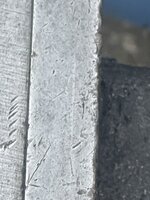
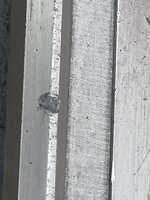
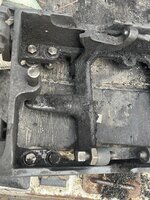
I recently picked up a Logan model 200 from an auction. I disassembled it for transportation and noticed a couple issues. First was a little damage on the bed ways, some nicks on the Vways and a little rough edges on the flat areas. Second, the countershaft(LA-353)has a broken section where the cone pulls assembly sits. I’m just getting into metalworking world and looking for some expert advice. I’ve noticed 2 styles of countershaft brackets for this model. One is the yolk style I have with the set screws and jamb nuts. The other is an enclosed style which seems to be available online for $40. Any help is appreciated. IMG_1285.jpegIMG_1286.jpegIMG_1284.jpegIMG_1289.jpegIMG_1291.jpegIMG_1292.jpegIMG_1294.jpeg
 
To avoid these ads, REGISTER NOW!

walta

Well-known member
Joined
Jan 13, 2017
Messages
2,309
Location
Dutzow Missouri
I am not an expert but I don’t think the dings and knicks in the bed will be a problem. Rub an oil stone on them and take off any raised metal.

Did you happen to get the broken part of the bracket?

Walta
 

The Cobbler

Super Moderator
Staff member
Joined
Oct 24, 2013
Messages
25,838
Location
Niagara Region, Ontario, Canada
for beginner, I don't think the ways will cause an issue . as above poster said just stone them to take off any high spots . more of an issue might be , is how worn they are overall ( as in worn badly @ the chuck end causing the carriage to drop )
I can't comment on the countershaft, but if you did get the broken piece, you could have it brazed back together
 

Firebrick43

Well-known member
Joined
May 12, 2015
Messages
14,004
Location
West central Indiana
Please don't just “rub an oilstone on it”.


I used to be a machine repairman is how I was taught to deal with damage on the ways I use a Norton India bench stone (IB8) and using a light 10 weight oil to liberally stone it without a lot of down pressure. Just move/push the stone. Use only the fine orange side. You will feel a lot of work being done at first, areas around the dings will get shiny. Wipe and reoil regularly. Once you feel work not being done with the light pressure stop. Most of the time it doesn't take much. The oil not only keeps the stone clean but floats the above the metal, only the peaks stick up above the oil film to be cut off.

I actually keep 3 of these stones together. I flatten them against each other with oil, switching between the three and turning 180 and moving in a figure 8 pattern. This keeps them dead flat. You don't need to do this for one job but don't use a beat up stone, get a new one and check it with a straight edge.
 
OP
M

miketriv

Member
Joined
Apr 6, 2023
Messages
17
Thanks for the suggestions. I do not have the piece that broke off, there are a couple counter shaft assemblies on eBay like mine but are between 250-300 bucks. The alternate style are listed for $45 this is a pic of that one:IMG_1306.jpeg
Please don't just “rub an oilstone on it”.


I used to be a machine repairman is how I was taught to deal with damage on the ways I use a Norton India bench stone (IB8) and using a light 10 weight oil to liberally stone it without a lot of down pressure. Just move/push the stone. Use only the fine orange side. You will feel a lot of work being done at first, areas around the dings will get shiny. Wipe and reoil regularly. Once you feel work not being done with the light pressure stop. Most of the time it doesn't take much. The oil not only keeps the stone clean but floats the above the metal, only the peaks stick up above the oil film to be cut off.

I actually keep 3 of these stones together. I flatten them against each other with oil, switching between the three and turning 180 and moving in a figure 8 pattern. This keeps them dead flat. You don't need to do this for one job but don't use a beat up stone, get a new one and check it with a straight edge.
 

alfadan

Well-known member
Joined
Mar 9, 2007
Messages
2,104
Location
Augusta, ks
Clean, stone as described above, assemble it. The bracket can be brazed.

The ways are worn, run it.
 

RoninB4

Well-known member
Joined
Jul 22, 2020
Messages
3,494
Location
Under My House
I spent (wasted?) most of my life in machine shops, early on I worked for Sheldon Lathe until they went bankrupt in the early 80's. I only mention this as a qualifier for my opinions, there are very few people I'd call "experts" at machine tool building so take all comments/replies as opinions that may be correct for their circumstances but not necessarily correct for what you want/need to do.

The dings to the bed-way may/may not affect accuracy but why leave them in there? Other comments about wear will indeed be a bigger factor in accuracy but there's little you can do about it right now besides learning compensating techniques we needn't go into just now.

The comments about taking a new, clean stone to the dings is good but I'd suggest starting with a smaller (maybe 4" x 1/2") fine India oilstone (water stones have particular methods) to work the raised surfaces of "dings". When there's crater below the surface there's also displaced metal above the surface that will show up as shiny, new metal type spots when stoning. Using the larger/wider stones is good for larger surfaces like once you've removed all the minor afflictions. Using a larger stone will have a tendency to abrade areas on the bed-way that don't need to be touched and/or might be original factory surfaces. The approach you want to take is to only remove the high spots where needed instead of giving the entire bed a rubdown. You'll need to examine just where the contact surfaces for the saddle-to-bed-way are, there are other surfaces (usually fairly rough surfaces) that aren't even contacted by the saddle. No point in working on those even if they have dings in them, working on non-contact surfaces is a complete waste of time/effort. Resist the urge to use a file on ANY precision surface.

Use light to medium pressure on the oilstone with just your fingers and only where there's a raised surface (very small areas). Keep the stone wet, avoid long stoking motions that will remove some of the factory made surface. If the stone starts getting dark, shiny spots then it's getting clogged up and will require a scrubbing with a brush to clean out the pores of the stone or it won't abrade/cut like it's supposed to.

When you think you've flattened all the raised areas then you can very lightly run a larger stone (Fine India, Washita, or Arkansas if properly flattened) the length of the bed a time or two, feeling for "bumps" or a slight drag on the stone that would indicate more selective stoning is in order. I often use a black magic marker on the afflicted area as a visual aid to when I'm abrading a raised surface or when it's been flattened to be flush to the original surface. When that's all done to your satisfaction a good cleaning is called for to remove all the abrasive slurry and a light oiling of the clean surfaces. If you feel adventurous it would be a good idea to remove the saddle and the cross slide for stoning/cleaning as well. Be aware of brass gibs/set screws on the slide surfaces. Remove the tailstock for similar treatment.

The broken shaft section is another matter. I'm not familiar enough with that model to determine whether your part needs repair or replacement. Better photos enhanced with arrows/circles (photoshop) will provide better information. If you don't have the broken off ear it appears that a welded sub-assembly (two plates and a threaded bushing) might work just fine. The other model yoke my/may not fit without further dimensional information. I should also state that Logan is still in business (Logan Actuator in Harvard Illinois), sells some parts, likely has all the records/manuals for your lathe. Repair parts where you can but some items (usually the bull gear) should be replaced if a qualified repair cannot be attempted. Logan made a decent quality hobby grade lathe for homeowners/farm use. It appears as though your model has thread cutting capacity, that's a real advantage over some industrial grade lathes that cannot (Hardinge for example). Your Logan should provide many years of capable service, especially for entry into metal working, depending upon the tolerance-per-length you hope to achieve. Hope you got some tooling with it that will open possibilities for you.

Do please pardon the length of my reply and the following statements that must be repeated. The lathe can be one of the more dangerous machines in the shop. There are safety HABITS you need to learn and understand to avoid bodily injury. The tiny 7 x 12 lathes from Horrible Freight will break fingers and/or gash into flesh. Your lathe is much larger, more powerful, and is capable pulling you into rotation that could result in being maimed/blinded/disfigured for life. Reading material on lathe operation is recommend and SHOULD have at least one section on safety. Stories of a guy getting sucked into the spindle are real, I have either witnessed or been a part of those stories. Safety glasses ALWAYS on, no long sleeves or gloves, no watches/rings, hair tightly secured in place, wait for the spindle to come to a stop before doing ANYTHING near it, stand clear of the debris field throw, chew your food 20 times, wear your galoshes if it's raining.........you get the idea. Do take safety seriously, it's not a matter of IF you'll get injured it's WHEN and how bad the injury. It happens to everybody but you can lessen the result by adopting safe working HABITS that will limit how serious the injury is. Take for example, pulling the tangled "birds-nest" of metal peeling off your workpiece. Resist the temptation to reach in to pull it out. Whether with pliers, a hook-on-a-handle, or a brush, it can/will get grabbed/pulled into the spinning chuck or the long stringers can curl/loop around your fingers/hand. All machines must come to a full stop.

Ask a lot of questions, I had to with grumpy old men that always told to me pass their knowledge/skills along to the next generation. Now that I am Grumpy Olde Man I feel obliged to honor those that taught me. Contact me off list if nobody will talk, some don't. Welcome to the world of precision metal working, it's a large room.
 
Last edited:

RoninB4

Well-known member
Joined
Jul 22, 2020
Messages
3,494
Location
Under My House
Logan beds are hardened and ground. The comments above on flattening divots are good. Overall wear shouldn't be that bad. Logan Actuator is still in business and Scott Logan can help you with parts. https://www.lathe.com/
-Not to dispute your info but the records I've seen list hardened beds as being either for the 14's or special order. The 14's with flame hardened beds would have an "H" designation after the model number. From the the factory literature I've seen most of the beds are listed as hand scraped, seasoned iron that's not necessarily ground. Some of the later, larger models were listed as ground. The marks on the OP's lathe appear to be in a (relatively) soft bed. I could be wrong about that. There is a test for this but whether it's hardened or not isn't a show stopper.
 
To avoid these ads, REGISTER NOW!
OP
M

miketriv

Member
Joined
Apr 6, 2023
Messages
17
I spent (wasted?) most of my life in machine shops, early on I worked for Sheldon Lathe until they went bankrupt in the early 80's. I only mention this as a qualifier for my opinions, there are very few people I'd call "experts" at machine tool building so take all comments/replies as opinions that may be correct for their circumstances but not necessarily correct for what you want/need to do.

The dings to the bed-way may/may not affect accuracy but why leave them in there? Other comments about wear will indeed be a bigger factor in accuracy but there's little you can do about it right now besides learning compensating techniques we needn't go into just now.

The comments about taking a new, clean stone to the dings is good but I'd suggest starting with a smaller (maybe 4" x 1/2") fine India oilstone (water stones have particular methods) to work the raised surfaces of "dings". When there's crater below the surface there's also displaced metal above the surface that will show up as shiny, new metal type spots when stoning. Using the larger/wider stones is good for larger surfaces like once you've removed all the minor afflictions. Using a larger stone will have a tendency to abrade areas on the bed-way that don't need to be touched and/or might be original factory surfaces. The approach you want to take is to only remove the high spots where needed instead of giving the entire bed a rubdown. You'll need to examine just where the contact surfaces for the saddle-to-bed-way are, there are other surfaces (usually fairly rough surfaces) that aren't even contacted by the saddle. No point in working on those even if they have dings in them, working on non-contact surfaces is a complete waste of time/effort. Resist the urge to use a file on ANY precision surface.

Use light to medium pressure on the oilstone with just your fingers and only where there's a raised surface (very small areas). Keep the stone wet, avoid long stoking motions that will remove some of the factory made surface. If the stone starts getting dark, shiny spots then it's getting clogged up and will require a scrubbing with a brush to clean out the pores of the stone or it won't abrade/cut like it's supposed to.

When you think you've flattened all the raised areas then you can very lightly run a larger stone (Fine India, Washita, or Arkansas if properly flattened) the length of the bed a time or two, feeling for "bumps" or a slight drag on the stone that would indicate more selective stoning is in order. I often use a black magic marker on the afflicted area as a visual aid to when I'm abrading a raised surface or when it's been flattened to be flush to the original surface. When that's all done to your satisfaction a good cleaning is called for to remove all the abrasive slurry and a light oiling of the clean surfaces. If you feel adventurous it would be a good idea to remove the saddle and the cross slide for stoning/cleaning as well. Be aware of brass gibs/set screws on the slide surfaces. Remove the tailstock for similar treatment.

The broken shaft section is another matter. I'm not familiar enough with that model to determine whether your part needs repair or replacement. Better photos enhanced with arrows/circles (photoshop) will provide better information. If you don't have the broken off ear it appears that a welded sub-assembly (two plates and a threaded bushing) might work just fine. The other model yoke my/may not fit without further dimensional information. I should also state that Logan is still in business (Logan Actuator in Harvard Illinois), sells some parts, likely has all the records/manuals for your lathe. Repair parts where you can but some items (usually the bull gear) should be replaced if a qualified repair cannot be attempted. Logan made a decent quality hobby grade lathe for homeowners/farm use. It appears as though your model has thread cutting capacity, that's a real advantage over some industrial grade lathes that cannot (Hardinge for example). Your Logan should provide many years of capable service, especially for entry into metal working, depending upon the tolerance-per-length you hope to achieve. Hope you got some tooling with it that will open possibilities for you.

Do please pardon the length of my reply and the following statements that must be repeated. The lathe can be one of the more dangerous machines in the shop. There are safety HABITS you need to learn and understand to avoid bodily injury. The tiny 7 x 12 lathes from Horrible Freight will break fingers and/or gash into flesh. Your lathe is much larger, more powerful, and is capable pulling you into rotation that could result in being maimed/blinded/disfigured for life. Reading material on lathe operation is recommend and SHOULD have at least one section on safety. Stories of a guy getting sucked into the spindle are real, I have either witnessed or been a part of those stories. Safety glasses ALWAYS on, no long sleeves or gloves, no watches/rings, hair tightly secured in place, wait for the spindle to come to a stop before doing ANYTHING near it, stand clear of the debris field throw, chew your food 20 times, wear your galoshes if it's raining.........you get the idea. Do take safety seriously, it's not a matter of IF you'll get injured it's WHEN and how bad the injury. It happens to everybody but you can lessen the result by adopting safe working HABITS that will limit how serious the injury is. Take for example, pulling the tangled "birds-nest" of metal peeling off your workpiece. Resist the temptation to reach in to pull it out. Whether with pliers, a hook-on-a-handle, or a brush, it can/will get grabbed/pulled into the spinning chuck or the long stringers can curl/loop around your fingers/hand. All machines must come to a full stop.

Ask a lot of questions, I had to with grumpy old men that always told to me pass their knowledge/skills along to the next generation. Now that I am Grumpy Olde Man I feel obliged to honor those that taught me. Contact me off list if nobody will talk, some don't. Welcome to the world of precision metal working, it's a large room.

Thanks for that information Ronin! I can totally understand, I’ve been a carpenter for 40 years and have a lot of respect for tools and machinery.
Good advice, I will definitely educate myself on safety precautions when using the lathe.
 

alfadan

Well-known member
Joined
Mar 9, 2007
Messages
2,104
Location
Augusta, ks
Logan only flame-hardened beds by special order. My 1957 is not hardened and has dings galore. My understanding on the 200s is the headstock bearings were a special matched set and the correct replacements are inordinataly expensive, or not available at all. If the incorrect ones are used, chatter will practically make it unusable.
 

john.k

Well-known member
Joined
Jun 4, 2024
Messages
1,004
I used to buy and sell lathes ...hundreds of them over the years ....I could see a hard or 'soft' bed from 20 feet away .......lots of dings and scores under the chuck.................however ,even non hardened beds arent actually soft ......they are cast with 'chills' in the mould to make the top surface hard ................as to replacement ball /roller bearings.........if you replace ball bearings with a good brand (SKF or Koyo),then often they will have near zero runout for standard production ............plain rollers are very problematic ,cause lathe rollers were specials with no clearance.........taper rollers if replaced with quality standard production typically will have less than half a thou runout.
 

WillyBoy

Well-known member
Joined
Nov 10, 2021
Messages
635
Location
Genesee valley area of New York state
My Logan 820 has a few dings in the bed. Nothing that affects the work that I do. The machine dates to 1946 according to Scott Logan and he provided the name of the company that was the original purchaser. I replaced the inboard and outboard bearings on the spindle with parts from Logan Actuator.
 

haveissues

Well-known member
Joined
Feb 9, 2011
Messages
379
Location
Hudson Valley NY
Ideally you would use a pair of stones that have been precision ground flat but that is probably not necessary for something of this of this vintage.
 
Last edited:
OP
M

miketriv

Member
Joined
Apr 6, 2023
Messages
17
I used to buy and sell lathes ...hundreds of them over the years ....I could see a hard or 'soft' bed from 20 feet away .......lots of dings and scores under the chuck.................however ,even non hardened beds arent actually soft ......they are cast with 'chills' in the mould to make the top surface hard ................as to replacement ball /roller bearings.........if you replace ball bearings with a good brand (SKF or Koyo),then often they will have near zero runout for standard production ............plain rollers are very problematic ,cause lathe rollers were specials with no clearance.........taper rollers if replaced with quality standard production typically will have less than half a thou runout.
Thanks John. I’ll look into those options. Appreciate the advice
 
OP
M

miketriv

Member
Joined
Apr 6, 2023
Messages
17
My Logan 820 has a few dings in the bed. Nothing that affects the work that I do. The machine dates to 1946 according to Scott Logan and he provided the name of the company that was the original purchaser. I replaced the inboard and outboard bearings on the spindle with parts from Logan Actuator.
Thanks willyboy
 
To avoid these ads, REGISTER NOW!
Top Bottom