Many mentioned skips, that is always a concern / bother with me. I never had any luck with sets with skips. I seem to always have the luck of needing one or more of the skips, then being annoyed. I am not a professional, but my use resembles more of an independent shop vs a dealer. I work on all sorts of cars for myself, family, friends and the occasional side job stuff. For me, there is no such thing as an unused size, at least in the 8-19mm range. I would however be just fine if the 21mm size was added as I see that size very often, and I would be ok with skipping the 20mm.
The 21mm is used a LOT, enough that I have multiple 21mm sockets in both 3/8 and 1/2 drive, as well as extra wrenches (duplicates). Used a lot on brakes for me, also suspension components. Just did brakes on a LaCrosse which uses 21mm for the front caliper bracket bolts. The 15 and 16mm are important, 18mm being also common on brakes and suspension. 15mm is used on a lot of random places, drain plugs come to mind. The 9 is big on brake bleeders, so is 11mm, which is also used on battery clamps and interiors. On my cars, I will often crack the bleeder screws when doing other things like an oil change. Not to open it, but just to make sure it moves then retighten it.
Bleeders are a big thing for me, especially in my location. When working on brakes, rust is the biggest factor. I rarely ever do a brake job where the brake pads are worn to the point of needing replacement. It is usually rust jacking, light fractures on the rotors, uneven wear due to frozen caliper pins, pulsating brake pedal complaint, etc. On occasion I see some stuck pistons, and have even seen one that was popped out, this photo is how the caliper came off:

Given the circumstances of the car shown above, I repaired that caliper, was able to reuse the piston sea and boot, but needed to hone the caliper a bit. For such things, the brake bleeder is required to do such a repair. While most would say that a repair on that is not proper, and I agree, it was done to give the owner time to get a new car, and it worked fine without leaks for a few months before that happened. I shared the above only to show a crazy example on why I like to keep bleeders in good shape, supporting the use for wrenches of this style in 9 and 11mm sizes. For those who are wondering how the above happened, I can only speculate. From what I saw, it seems one of the pads came apart due to rust jacking, and the pad material fell completely out, leaving only the metal backing plate. This caused the piston to extend too far, popping out of the caliper.
It is not about leverage for me with these wrenches, it is about reach. I recently replaced a passenger side Toyota CV and ended up with a setup using a wrench, wrench extender AND a wrench (box end to open end to extend) in order to reach a bolt. It was only a 14mm, but quite hard to get to. Socket use would not work, as space was too limited, I used a standard combo wrench on the fastener. If I had a flex head long wrench, I could have used only a wrench extender and been a lot safer. I don't like using the double wrench trick at all, much less in a series of other things. This CV had the worst damage I have ever seen:
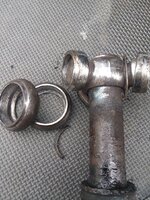
The bolt I needed to reach was to remove one of the bolts on the carrier bracket that hold/supports the bearing that exists on the passenger side CV. There was no way the CV would slide out, as the Toyota procedures suggest.
I over shared a bit, but I know people here like to see pictures of things

EDIT: I did not clean any grease off of that CV, that is what it looked like once I pulled the boot off.



