To avoid these ads, REGISTER NOW!

Looking to get a micron gauge for auto a/c

atikovi

Well-known member
Joined
Feb 14, 2009
Messages
2,025
Location
Suburban Washington DC
I've had many instances recharging a car and waiting the requisite 15 minutes after vacuuming to see if the system looses any vacuum, and it doesn't so assumedly there are no leaks, so I go ahead and charge it. Then a few days to a few weeks later I find the charge has leaked out. So I'm looking to get a micron gauge to help avoid this situation. Any suggestions among the these I've found so far or other options?

CPS:

Yellow Jacket:

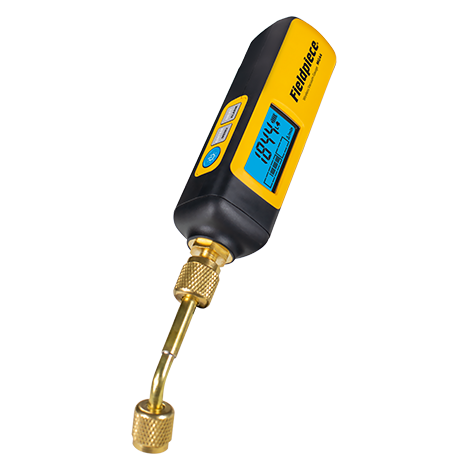
Fieldpiece:
 
To avoid these ads, REGISTER NOW!

Gozo

Well-known member
Joined
Oct 10, 2013
Messages
251
Location
Central VA
I can’t help you on the vacuum gauge but the UV dye you put in with the charge does work to help localize A/C leaks.
 

Jim greengo

Well-known member
Joined
Sep 3, 2018
Messages
7,415
Location
Behind my house
I've had many instances recharging a car and waiting the requisite 15 minutes after vacuuming to see if the system looses any vacuum, and it doesn't so assumedly there are no leaks, so I go ahead and charge it. Then a few days to a few weeks later I find the charge has leaked out. So I'm looking to get a micron gauge to help avoid this situation. Any suggestions among the these I've found so far or other options?

CPS:

Yellow Jacket:

Fieldpiece:
Pressure test it with nitrogen.
 

rockettauto

Well-known member
Joined
May 12, 2023
Messages
745
I don't think it's a matter of measuring the vacuum to a finer degree. Some things that would not let external pressure into a vacuum will absolutely let internal pressure out. Not to mention under vacuum you're looking at 14 psi pressure differential, while a charge makes for 175.

Pressure test is the answer.

Also if you don't already know, just go ahead change the Schrader's every time. Obviously no testing that still has lines hooked up will show the leak there and they're far and away the most common source of a leak.
 
Last edited:
OP
A

atikovi

Well-known member
Joined
Feb 14, 2009
Messages
2,025
Location
Suburban Washington DC
I would think a nitrogen pressure test would be an additional step. You have to vacuum anyway so why not stick a gauge in it and see if it gets down to a low enough level indicating it's tight? If it isn't, then you can pressure test.
 

cannuck

Well-known member
Joined
Nov 30, 2021
Messages
4,649
Location
Rural SK
"full" Vacuum is only 14.7 psi below standard atmosphere, not that hard to seal well. The big issue to me is pressure loads a seal very differently from vacuum. One can work just fine while the other direction load leaks like a seive. Put me down to pressurized system with dye.
 

American Locomotive

Well-known member
Joined
Jan 8, 2017
Messages
10,990
Location
Rhode Island
I would think a nitrogen pressure test would be an additional step. You have to vacuum anyway so why not stick a gauge in it and see if it gets down to a low enough level indicating it's tight? If it isn't, then you can pressure test.
Pressure test first, always.

There are two problems with leak testing using vacuum:
1) The system normally operates under pressure. So there are things (like compressor seals) that may hold just fine under pressure, but leak under vacuum.

2) Micron gauges are extremely sensitive devices. The oil off-gassing in the compressor, the slightest bit of moisture, individual oxygen and nitrogen molecules squeezing their way through the compressor shaft seal, etc.. can ruin the vacuum. Then what?

If you're losing the charge in a few days, pressure testing to 150-175 PSI or so will be the way to go. You probably wouldn't even need UV dye to find a leak that bad - soapy bubbles would be enough.
 

Buckaroo5

Well-known member
Joined
Oct 18, 2012
Messages
824
Location
Central Ohio
The standard auto a/c test is holding vacuum as the op describes after evacuating. I generally evacuate for 30 min and hold for 30 min using the standard manifold gauge. Have not invested in the digital micron gauge but it is a good option. I have used dye with good success for very small leaks recharging and driving for a period of time (1-2 weeks or more) before being able to detect the location of the leak. Checked the gauges - the Yellow Jacket had a number of bad reviews - I liked the CPS.
 

texasprd

Well-known member
Joined
Sep 6, 2010
Messages
376
Location
San Antonio, TX
Strictly addressing the OP's question...
The specs on the Yellow Jacket show a +/-20% accuracy - that's a ridiculously wide range. I always thought Yellow jacket stuff was good, but that's a very poor range. The Fieldpiece is +/-5%, which is about as good as I've been able to find, but it's considerably more than the sale price (as linked) of the CPS (+/- 10% accuracy). For the price/accuracy tradeoff, I'd go with the CPS. If you can pull down to a 450 micron reading on the CPS, you'll be at or under 500 microns (worst case) and I think that's pretty good.

I have a Supco (VG64, I think), and it's in the +/-10% range also.
 
OP
A

atikovi

Well-known member
Joined
Feb 14, 2009
Messages
2,025
Location
Suburban Washington DC
Pressure test first, always.

There are two problems with leak testing using vacuum:
1) The system normally operates under pressure. So there are things (like compressor seals) that may hold just fine under pressure, but leak under vacuum.

2) Micron gauges are extremely sensitive devices. The oil off-gassing in the compressor, the slightest bit of moisture, individual oxygen and nitrogen molecules squeezing their way through the compressor shaft seal, etc.. can ruin the vacuum. Then what?

If you're losing the charge in a few days, pressure testing to 150-175 PSI or so will be the way to go. You probably wouldn't even need UV dye to find a leak that bad - soapy bubbles would be enough.

So what kind of set up do you suggest? Found this for $255,


Can I buy just a nitrogen regulator and connect it to my gauge set? Would need to get a tank with either one.
 

Bert_

Well-known member
Joined
Dec 24, 2016
Messages
9,762
Location
NW Iowa
It will have to be a pretty big leak to catch it with vacuum. Had an ac that would pull pull a vacuum but not as good as I wanted. Put nitrogen to it and you could actually hear the leak 20 feet away. Didn't get a fitting brazed completely.
 

cannuck

Well-known member
Joined
Nov 30, 2021
Messages
4,649
Location
Rural SK
It will have to be a pretty big leak to catch it with vacuum. Had an ac that would pull pull a vacuum but not as good as I wanted. Put nitrogen to it and you could actually hear the leak 20 feet away. Didn't get a fitting brazed completely.
Not hard at all to find leaks under vacuum. The guage tells you its leaking and an acoustic leak detector will show you where. The low buck ones for refrigeration come in around $100/200 and the fancy imaging things we use (rented) are in the $5k/10k range - but can pinpoint a tiny leak in a 10,000 gal. tank from 20 feet away.

You are right, though: 100 psi or whatever you check your refrig circuits at make a hell of a lot more noise than 15 psi so leaks under pressure can be a lot easier to find.
 

dogdog

Well-known member
Joined
Nov 15, 2011
Messages
12,711
Just some food for thought. Unless you wanted to acquire more tools then go for it.
When I have that similar leak with the vw. I checked, double check every connections, check and rechecked the vacuum, waited 30 mins and up to 1 hours and even over night at one time. No leaks, but when I added the r134a, it’s gone in a week or so… long story short, it was the low port valve. Can not detect it while the gauge set was connected.
So….. that blue plastic cap is important.
 

AA/FC

Well-known member
Joined
Dec 9, 2010
Messages
2,080
I've used a micron gauge along with my normal manifold gauge set to charge automotive A/C for 20+ years now..... Sure, it's true that pressure loads a seal differently than vacuum and some leaks can't be noticed while performing a vacuum leak down test with just your standard manifold gauges. HOWEVER, you can easily notice a leaky system when vacuuming a system that is also connected to a micron gauge. The big round analog dial gauge that measures vacuum on that tiny little scale at one end on you manifold set doesn't have enough resolution to see if you're getting full vacuum, or if it stays there. It just doesn't. Think of it like this.... A micron gauge STARTS reading at the point when your big round analog manifold vacuum gauge STOPS reading. (pegged out) It becomes real easy to see if a system is fully sealed or not. Your big round vacuum gauge may be pegged at 29 inches of vacuum, and hold there for 10-20 minutes..... The micron gauge on that same system might only get down to 3000 micron (for example) and slowly rise over that same 10-20 minutes..... but your big round analog gauge still hasn't moved. That system is guaranteed to leak every time. At 3000 microns that car will have dead A/C within 1-3 months. Maybe sooner...

Some people say using a micron vacuum gauge on automotive A/C systems is overkill..... those are probably the same people who have never used a micron gauge on automotive A/C systems.

Just my $.02 cents.
 
OP
A

atikovi

Well-known member
Joined
Feb 14, 2009
Messages
2,025
Location
Suburban Washington DC
I've used a micron gauge along with my normal manifold gauge set to charge automotive A/C for 20+ years now..... Sure, it's true that pressure loads a seal differently than vacuum and some leaks can't be noticed while performing a vacuum leak down test with just your standard manifold gauges. HOWEVER, you can easily notice a leaky system when vacuuming a system that is also connected to a micron gauge. The big round analog dial gauge that measures vacuum on that tiny little scale at one end on you manifold set doesn't have enough resolution to see if you're getting full vacuum, or if it stays there. It just doesn't. Think of it like this.... A micron gauge STARTS reading at the point when your big round analog manifold vacuum gauge STOPS reading. (pegged out) It becomes real easy to see if a system is fully sealed or not. Your big round vacuum gauge may be pegged at 29 inches of vacuum, and hold there for 10-20 minutes..... The micron gauge on that same system might only get down to 3000 micron (for example) and slowly rise over that same 10-20 minutes..... but your big round analog gauge still hasn't moved. That system is guaranteed to leak every time. At 3000 microns that car will have dead A/C within 1-3 months. Maybe sooner...

Some people say using a micron vacuum gauge on automotive A/C systems is overkill..... those are probably the same people who have never used a micron gauge on automotive A/C systems.

Just my $.02 cents.
I'll probably get the micron gauge, but after watching this Scanner Danner video, (there is also a part 1 if you want see all of it)


I decided to start with nitrogen testing. Got this Uniweld regulator made in USA off Facebook for $50 and a filled 20 cf tank from a local supply house for $115.

Nitrogen tank.JPG

What pressure should I test too? Like 150 psi? The low side never gets that high so I don't want to blow something there. Any idea how long a 20 cubic foot tank should last? How much volume is there in a system? Maybe less than 1/10th of a cf, multiplied by 10 times atmosphere = 1 cubic foot per test?
 

AA/FC

Well-known member
Joined
Dec 9, 2010
Messages
2,080
Yeah, don't get me wrong... A micron gauge will not help you FIND a leak like nitrogen will, it just helps you know IF you have a leaky system before charging with refrigerant.
 

theoldwizard1

Well-known member
Joined
Feb 22, 2011
Messages
43,218
Location
SE MI
Never heard of an auto tech pressure testing with Nitrogen or using a micron gauge. Most just use an automatic recovery/vacuum pump. The system pulls a vacuum down to (?). You are lucky if they hold that vacuum for longer than 10 minutes !
 
To avoid these ads, REGISTER NOW!

AA/FC

Well-known member
Joined
Dec 9, 2010
Messages
2,080
Never heard of an auto tech pressure testing with Nitrogen or using a micron gauge. Most just use an automatic recovery/vacuum pump. The system pulls a vacuum down to (?). You are lucky if they hold that vacuum for longer than 10 minutes !
You don't know much about auto A/C do you?

"Pull a vacuum down to (?)"

"You are lucky if they hold that vacuum for longer than 10 minutes !"


:lol:
 

AA/FC

Well-known member
Joined
Dec 9, 2010
Messages
2,080
So enlighten me !
It's obvious you don't know much about this topic but you still couldn't stop yourself from dropping a smart *** comment. lol.

That's fine. This is a discussion forum. You're welcome to post a comment in any thread on this entire site. But when you make youself look silly, don't be suprised by the replies that you might get. That is all.
 

purplezr2

Well-known member
Joined
Jun 1, 2010
Messages
5,297
Location
Central MN
It's obvious you don't know much about this topic but you still couldn't stop yourself from dropping a smart *** comment. lol.

That's fine. This is a discussion forum. You're welcome to post a comment in any thread on this entire site. But when you make youself look silly, don't be suprised by the replies that you might get. That is all.
Curious to how long those AC machines really hold vaccuam, guessing it is not long as time is money. I'm guessing that is what Wizrd is referring too.

I have the Fieldpeice gauge shown above, I used it for my Mini-split. I have had no issues.
 

dscheidt

Well-known member
Joined
Apr 26, 2017
Messages
2,905
You don't know much about auto A/C do you?

"Pull a vacuum down to (?)"

"You are lucky if they hold that vacuum for longer than 10 minutes !"


:lol:
I mean, that matches my experience of reality, as opposed to what the rule book says you're supposed to do. I know modern recovery/fill machines include a partial fill, where the tech is supposed inspect for leaks with a leak tester. I know how often I think that actually happens....

I have dealt with shops that were good at finding and fixing leaks in AC systems, usually in cars that had come there after someone else had done a charge w/o fixing the real problem. They did nitrogen testing as part of their process (often more than once, after fixing a leak).
 

AA/FC

Well-known member
Joined
Dec 9, 2010
Messages
2,080
Curious to how long those AC machines really hold vaccuam, guessing it is not long as time is money. I'm guessing that is what Wizrd is referring too.

I have the Fieldpeice gauge shown above, I used it for my Mini-split. I have had no issues.
If your A/C system can't hold a vacuum for even 10 minutes then there is absolutely NO WAY the system will hold refrigerant. If the A/C machine won't hold a vacuum, then it needs to be repaired. It's hard to properly fix broken cars with broken tools.
 
Last edited:

AA/FC

Well-known member
Joined
Dec 9, 2010
Messages
2,080
I mean, that matches my experience of reality, as opposed to what the rule book says you're supposed to do. I know modern recovery/fill machines include a partial fill, where the tech is supposed inspect for leaks with a leak tester. I know how often I think that actually happens....

I have dealt with shops that were good at finding and fixing leaks in AC systems, usually in cars that had come there after someone else had done a charge w/o fixing the real problem. They did nitrogen testing as part of their process (often more than once, after fixing a leak).
Right.... but according to "theoldwizard1" nobody uses nitrogen for testing A/C system in the automotive world.
 

AA/FC

Well-known member
Joined
Dec 9, 2010
Messages
2,080
I put in 150 psi nitrogen. In half an hour it was at 100 psi. Found this leak at the upper condenser line. I assume it's a bad 0-ring?
Nice job, sir! Yep, probably a bad O-ring.
 

Wrench97

Well-known member
Joined
Jun 23, 2018
Messages
12,137
Location
Southeastern Pa
Years ago it was true that nobody bothered using nitrogen, after all a bottle of R12 was $29.95 just as easy to fill it with 12 and look for leaks.
Hence one of the reasons the EPA is raising taxes/fees on refrigerant. If the price of a "gas and go" gets high enough those that can't figure out how to cost effectively fix A/C systems will stop doing so.
 

AA/FC

Well-known member
Joined
Dec 9, 2010
Messages
2,080
Years ago it was true that nobody bothered using nitrogen, after all a bottle of R12 was $29.95 just as easy to fill it with 12 and look for leaks.
Hence one of the reasons the EPA is raising taxes/fees on refrigerant. If the price of a "gas and go" gets high enough those that can't figure out how to cost effectively fix A/C systems will stop doing so.
When our family was in the commercial HVAC business, our service guys used 30 pound tanks of refrigerant AS IF it was a tank of compressed air. If they needed to blow the dust or cotton seed out of a condensing coil, (for example) they used a hose with a blow gun attached to an R22 tank. It was cheaper than buying an air compressor. It was $.25 cents per pound back then. So yeah... you're right, why would they bother to use nitrogen to find a leak. lolol :lol:
 

engineer2

Well-known member
Joined
Dec 13, 2009
Messages
11,814
Location
Chicago burbs
Good info here.
If the system is low, first thing I'll look for is oil stains. If nothing, hunt with my Yokogawa H10PM leak detector and pray it's not the evap.

I use an old Supco VG-60 with my vacuum pump. Common micron gauges are all pirani types. They have a tiny heating element. The most important thing is to keep it clean. Follow the manufacturer's instructions, but generally you rinse the sensor with denatured alcohol before every use.

If possible, pump the system down as long as time permits. That was my dad's advice. It helps pull more moisture out, especially if you aren't changing the dryer. I did one car for an hour and got 400, but overnight got it down to 50 microns.

Our Civic was low and I found oil around the high port. Changed the valve core under pressure and all is good now except 1234yf is still damn expensive.

Never needed to use pressure testing, but with refrigerant prices way up it sounds very useful for mystery leaks. What's the argument against using filtered, dried, and desiccated compressed air? You're only going to leave it for a short time and then evacuate it afterwards.
 

Wrench97

Well-known member
Joined
Jun 23, 2018
Messages
12,137
Location
Southeastern Pa
When our family was in the commercial HVAC business, our service guys used 30 pound tanks of refrigerant AS IF it was a tank of compressed air. If they needed to blow the dust or cotton seed out of a condensing coil, (for example) they used a hose with a blow gun attached to an R22 tank. It was cheaper than buying an air compressor. It was $.25 cents per pound back then. So yeah... you're right, why would they bother to use nitrogen to find a leak. lolol :lol:
I remember installing pinion bearings by putting the bearing in the toaster oven and hitting the shaft with liquid R12 press fit bearing dropped right on............................
 

cannuck

Well-known member
Joined
Nov 30, 2021
Messages
4,649
Location
Rural SK
Never needed to use pressure testing, but with refrigerant prices way up it sounds very useful for mystery leaks. What's the argument against using filtered, dried, and desiccated compressed air? You're only going to leave it for a short time and then evacuate it afterwards.
Personally, I would have no problem using dry air, but to buy extra dry (certified -60C dew point) air or nitrogen is about the same cost. Yes, you can make you own dry air but systems made for breathing air come no where near their claimed dew point. We use an extra stage of much larger desicant to get there - or for continuous flow a refrigerated system on screw compressor and then an automatic regernerative dessicating column (VERY expensive, but also breaks the -80 dew point limit on our moisture detectors). Important thing to know: gas compression companies don't make different runs for regular, dry and extra dry, they just test the bottles to be able to certify the dew point you paid for. In case you hadn't guessed we test a LOT of dry gasses, dried hydrocarbons and dried out spaces.

While room temp water boils off around 15 Torr absolute, or 20 milibars = 1000 microns but reality is unless you are trying to dry a perfectly clean metal surface it won't flash off the moisture (thus the need to hold for quite a while to be effective). This is particularly true for the oil residue and expecially the dryer. Weak intermolecular forces do not allow the water vapour to simply walk away without quite a struggle.
 

cannuck

Well-known member
Joined
Nov 30, 2021
Messages
4,649
Location
Rural SK
This is why time is your friend when pumping down a system.
That is true not only for the pressure vessel you are trying to dry, but particularly for the oil that seals your vacuum pump. It can take many hours to fully dehydrate and degass that oil - especially since it will absorb the moisture and gasses from the vessel as you pump it down.
 
To avoid these ads, REGISTER NOW!
Top Bottom