I don't want to argue with the OP who stated that the store inventory count and the website inventory count are not the same, but that's really a fairly stupid concept. The amount of time, money, and logistics necessary to build and maintain that kind of database would make it pretty silly to try and maintain 2 separate ones.
I don't work for Lowe's or have any insight, but I own my own business and we have to deal with similar inventory and keeping our website counts accurate with our physical inventory. We use ONE tool to do both and I could never imagine trying to use/keep/maintain 2 - and I have WAY less inventory than a Lowe's.
Just my $.02, nothing more.
Considering the guy who did that DID work at Lowes and knew that... the only question is whether or not it's still the case. I'd bet it still is

It's not really a stupid concept at all. Companies like Lowes had an existing inventory system and built a basic website, then they continue to add e-commerce and additional features to the site. They're still separate systems. The previous-generation inventory systems did not need long product systems, custom reviews or images, nor did they need to know how to pick, order from distribution centers, etc.
It's QUITE common that these are still separate, especially in large retail establishments like Lowes/HD/etc. You'll notice that the inventory controls at these companies are largely on ANSI terminals (whether virtual or not) and they use their own website for product info - two separate systems in place, each with various levels of integration. Sometimes the inventory is real-time, sometimes not. Even with the same vendor for both, they are still often isolated systems - a website bug/crash/database issue/etc. on a frequently updated website is kept far away from the core logic that runs the business. You'll note the Lowes, Sears, etc. websites are often down with "maintenance" messages - you won't find that at cash registers or warehouse picking terminals
When I worked for Venator Group (Footlocker, Champs, Eastbay, NFL Shop at the time, etc.) it was the same deal - the physical inventory/warehousing/etc. was all done in
Sigma's Controller+ (since probably the 80s or early 90s), and the website was completely separate.
So yeah... doesn't make sense for a small business to have two separate systems, a nation-wide Fortune 500 often has 2.


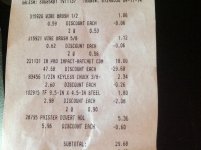
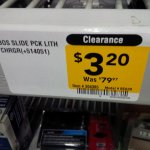
 The few other misc things he gave me to take for free.