

You are using an out of date browser. It may not display this or other websites correctly.
You should upgrade or use an alternative browser.
You should upgrade or use an alternative browser.
Lug nut thread lubrication - what do you use?
- Thread starter roc_on_the_rocks
- Start date
like2wheel
Well-known member
What are you rusty wheel stud people driving?
I live in the corrosion capital of the northeast, & wheel studs are about the only thing I don't have dissolving on my vehicles. Haven't had a problem with lugs seizing since open lug nuts & hubcaps.
Clean & dry for me.
I live in the corrosion capital of the northeast, & wheel studs are about the only thing I don't have dissolving on my vehicles. Haven't had a problem with lugs seizing since open lug nuts & hubcaps.
Clean & dry for me.
Would that be because of Porsche using aluminum lug nuts and the dissimilar metals would cause corrosion?
maybe and that makes sense - but I just do what the engineers who designed the car tell me to do
there are titanium lug nuts sold for them in the aftermarket, but the stock ones are aluminum
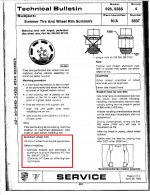
BTW, Porsche tells you to use a special Optimolly anti-seize which does not alter torque values - I'd have to look it up, but it's TA I think
Please refer to Porsche Technical Bulletin 4-8506.
I don't care what is on a "forum" - if you have an update to Porsche Technical Bulletin 4-8506, or some engineering testing to refute it then post that.
Searched, but couldn't find it - any chance you want to share this with us?
What are you rusty wheel stud people driving?
I live in the corrosion capital of the northeast, & wheel studs are about the only thing I don't have dissolving on my vehicles. Haven't had a problem with lugs seizing since open lug nuts & hubcaps.
Clean & dry for me.
Exactly ^^^^^^^^^
Few modern wheels have exposed threads, if they do add the grease to the threads after nut and torque is completed.
As for the debate:
Just because it’s been hashed and rehashed a dozen times does not change the specification, facts and certainly opinions are well Entrenched.
maybe and that makes sense - but I just do what the engineers who designed the car tell me to do
there are titanium lug nuts sold for them in the aftermarket, but the stock ones are aluminum
BTW, Porsche tells you to use a special Optimolly anti-seize which does not alter torque values - I'd have to look it up, but it's TA I think
No offense but I find this kind of funny.
Listen to the engineers that designed the car, yet when we repair cars, we ***** about the engineers that design these cars. . . . " what idiot designed this ? "
I use a little bit of anti-seize and my torque wrench.
Chuckster in NJ
Well-known member
Nothing on the wheel studs for me and I have NEVER had a problem with lug nuts seized HOWEVER, I do "smear" a LIGHT coat of Never Seize on the wheel contact points (after a good cleaning) because I have had a problem with removing wheels....... I live in "Salty Winter Road NJ" and wash my cars weekly.
sberry
Banned
[QUOTE Clean and dry is the industry standard. Clamping force is the goal........Lube introduces uncontrollable variables.
Lube and torque spec how it effects clamping force:
https://www.engineeringtoolbox.com/torque-lubrication-effects-d_1693.html[/QUOTE]
Dry is uncontrollable, can never tell where it's going to seize. Never seize is not good either. Wedges alum wheels tight
Snap on torque wrench book of old says,, all values for clean lightly lubed bolts. I have seen truck wheels fall right off, dry nuts never clamp them tight.
Part of all this is lack of mechanic training. We got to decide on one way and we cant train all the chimps to do It the same way.
I consulted on a job with concrete trucks, I had to ask,, why you putting them on dry? The answer , well we scared to oil them as they might come loose. I had to ssk,, why am I here? Well the wheels are coming loose. You got to love this logic. They are coming loose but we don't want to oil them because they might come loose.
Started spraying them and they stay tight ,, duh
There was a forum started over this bit it was short lived but one of the engineers said,,, some will never get it. John Deere had a manual for tech training splained this quite well. The nature of how a thread works and sticking right up to the point of seizure. Bolt stops turning, doesn't clamp correctly. We oil every bolt we install, has stopped the seizures.
I had a master come to work for me, asked when he started if I had and particulars,, I said,, spray all bolts. He came back later,, said, you make me a believer. Common penetrating spray is really good. WD does work and prevents moisture intrusion.
Lube and torque spec how it effects clamping force:
https://www.engineeringtoolbox.com/torque-lubrication-effects-d_1693.html[/QUOTE]
Dry is uncontrollable, can never tell where it's going to seize. Never seize is not good either. Wedges alum wheels tight
Snap on torque wrench book of old says,, all values for clean lightly lubed bolts. I have seen truck wheels fall right off, dry nuts never clamp them tight.
Part of all this is lack of mechanic training. We got to decide on one way and we cant train all the chimps to do It the same way.
I consulted on a job with concrete trucks, I had to ask,, why you putting them on dry? The answer , well we scared to oil them as they might come loose. I had to ssk,, why am I here? Well the wheels are coming loose. You got to love this logic. They are coming loose but we don't want to oil them because they might come loose.
Started spraying them and they stay tight ,, duh
There was a forum started over this bit it was short lived but one of the engineers said,,, some will never get it. John Deere had a manual for tech training splained this quite well. The nature of how a thread works and sticking right up to the point of seizure. Bolt stops turning, doesn't clamp correctly. We oil every bolt we install, has stopped the seizures.
I had a master come to work for me, asked when he started if I had and particulars,, I said,, spray all bolts. He came back later,, said, you make me a believer. Common penetrating spray is really good. WD does work and prevents moisture intrusion.
Last edited:
sberry
Banned
Pipe threads exaggerate this for a couple reasons and this isn't that hard to prove out. You can dry seize a 2 inch by hand.
Second, cause Porshe specs it for some special nuts doesn't mean it applies to the rest of a trillion steel nuts.
Anyone have a copy of the Deere fastener manual?
This is nothing new, engineers of old understood this well,, wayyy before the puter was a *********. Snap published this with the first torque wrench instruction manuals.
Second, cause Porshe specs it for some special nuts doesn't mean it applies to the rest of a trillion steel nuts.
Anyone have a copy of the Deere fastener manual?
This is nothing new, engineers of old understood this well,, wayyy before the puter was a *********. Snap published this with the first torque wrench instruction manuals.
Last edited:
BlakeTheCarGuy
ALLIANCE MEMBER
Well I was trained in school to use nothing then when I started working it was policy we used anti seize and a torque wrench but for my personal stuff nothing on mine.
Sent from my iPhone using Garage Journal
Sent from my iPhone using Garage Journal
50pascals
Well-known member
All of you folks mentioned anti-seize, which IMO is better than nothing. But you all should look into synthetic disc brake grease. Made by many brands. usually purple, green, or blue.
It doesn't harden up and it cleans off your hands easier.
We use it on everything.
It doesn't harden up and it cleans off your hands easier.
We use it on everything.
GirchyGirchy
Well-known member
Nothing on the studs, but some on the rotor to hub surfaces.
Same here. I've never had trouble getting lugs on or off. I'm more concerned about the wheels getting glued to the rotors, so I smear some grease on that joint.
GirchyGirchy
Well-known member
Listen to the engineers that designed the car, yet when we repair cars, we ***** about the engineers that design these cars. . . . " what idiot designed this ? "
There's a huge difference between having to compromise while designing components for cost/ease of assembly, and following standard torque specifications.
Just an FYI to everyone saying that they use lube and a torque wrench.
You have to reduce the torque on lubricated fasteners if the spec assumed dry.
Yep, usually use the 20-30% less rule of thumb for nickel anti sneeze.
Bluedodge
Well-known member
I used a petroleum based lube....

Yep, usually use the 20-30% less rule of thumb for nickel anti sneeze.
Not saying you are wrong, Rule of thumb on thread lube dosen't really apply. Look on any bottle of anti seize of spray lube, they will almost always have a K factor number on them.
That is the co efficient of friction, you use that number to calculate the correct torque value.
BlakeTheCarGuy
ALLIANCE MEMBER
Just an FYI to everyone saying that they use lube and a torque wrench.
You have to reduce the torque on lubricated fasteners if the spec assumed dry.
Yep that’s right except where I worked at they still had us do what the book said even with the anti seize which I thought was stupid.
Sent from my iPhone using Garage Journal
Searched, but couldn't find it - any chance you want to share this with us?
sure - here is one for the 928 too
Attachments

gayler
Well-known member
Nothing on the studs, but some on the rotor to hub surfaces.
This
like2wheel
Well-known member
I used a petroleum based lube....
Excuse me but that is a water based lubricant.

Bigblockyeti
Banned
I use WD40 .. lubricates enough to put on the lug nuts and the stuff more or less evaporates ..
No, it doesn't.
engineer2
Well-known member
The last time I showed up at a tire shop with never-seize on my lug studs, this was their reaction. I was used to US cars where lug nuts routinely rusted in place. Now I have Hondas and it's not an issue. They usually plate their fasteners and use looser tolerance threads.
Attachments

Last edited:
nbpt100
Well-known member
I've worked on too many cars and trucks that had been previously "professionally" serviced where I had to use a breaker bar with an extension to break lug-nuts loose.
Very true! How many people on here from time to time do things different from the service manual advice? And why?
Four pages of replies in a day. Apparently there is a lot of interest in this topic.
nbpt100
Well-known member
If you are going to tell someone they are wrong. Give them the courtesy and explain why. Maybe we can all learn something.No, it doesn't.
frank001
Well-known member
I always put a little anti-seize on the wheel bolts and wipe most of it off. And also some on the wheel/rotor mating surfaces. All my cars except the Ford Ranger use wheel bolts instead of lug nuts.
Four pages of replies in a day. Apparently there is a lot of interest in this topic.
We should do it all over again in a few weeks

Renegade1LI
Well-known member
I'll just throw this in, off of tire racks site,
Torque specifications are for dry threads only. The fastener threads should be free of oil, dirt, grit, corrosion, etc. The hardware should turn freely without binding when tightened by hand. It is important NOT to lubricate hardware threads or seats. The friction at which torque is measured against should come from the hardware seats. Lubricating hardware threads and seats alters the friction generated at the lug seat which will result in inaccurate torque readings and/or over-torqueing of the hardware.
From Permetx..
Permatex® does not recommend the use of any anti-seize product on wheel studs. Many people have used anti-seize for this applications, however, there is the potential for over-torqueing and therefore, higher clamp loads and potentially dangerous bolt stretch. Because of the lubricity of anti-seize, there is a tendency to over-tighten because of the ease with which the nut will bear down on the lug. For this reason, even if you try to torque the nuts to factory specs, the clamp load may become too high depending on the type of bolt, size and manufacturer.
I was taught not to use any lube, if the studs or nuts are that rusty then replace them & the contact faces should be clean & rust free also
Torque specifications are for dry threads only. The fastener threads should be free of oil, dirt, grit, corrosion, etc. The hardware should turn freely without binding when tightened by hand. It is important NOT to lubricate hardware threads or seats. The friction at which torque is measured against should come from the hardware seats. Lubricating hardware threads and seats alters the friction generated at the lug seat which will result in inaccurate torque readings and/or over-torqueing of the hardware.
From Permetx..
Permatex® does not recommend the use of any anti-seize product on wheel studs. Many people have used anti-seize for this applications, however, there is the potential for over-torqueing and therefore, higher clamp loads and potentially dangerous bolt stretch. Because of the lubricity of anti-seize, there is a tendency to over-tighten because of the ease with which the nut will bear down on the lug. For this reason, even if you try to torque the nuts to factory specs, the clamp load may become too high depending on the type of bolt, size and manufacturer.
I was taught not to use any lube, if the studs or nuts are that rusty then replace them & the contact faces should be clean & rust free also
ixlr8
Well-known member
I live on the coast of Maine, lost cars to being rusted out it is so bad here. I wire brush the threads lug nuts/bolts and put together dry, per spec. IF I clean up the threads every time, I have no issues with lug nuts/bolts sticking. I took my truck into get aligned and for some reason they pulled the wheels. Next time I changed the tires I found some lug nuts were basically loose, others needed a breaker bar to get free. All the studs were lubricated, something I have never done. Not sure what happened, but it reaffirmed my procedure to clean up the threads and reassemble dry.
In general I pull and reinstall all wheels myself, torquing to spec. I took my car in to have wheels balanced and had the shop remove/replace the wheels. NEVER again, they got the balance correct, but I had trouble getting the lug bolts loose with a 2 foot breaker bar. They certainly were not torqued to spec, 79 ftlbs.
In general I pull and reinstall all wheels myself, torquing to spec. I took my car in to have wheels balanced and had the shop remove/replace the wheels. NEVER again, they got the balance correct, but I had trouble getting the lug bolts loose with a 2 foot breaker bar. They certainly were not torqued to spec, 79 ftlbs.
Johnny chaos
Well-known member
clean and dry
LS6 Tommy
Well-known member
Nothing on the studs, but some on the rotor to hub surfaces.
This. Every wheel lug and stud manufacturer strongly advise not to use ANYTHING. Having your lugs sheared off from over torquing is annoying. Having a wheel fall off when the stressed fasteners finally snap while you're driving is just plain dangerous.
Tommy
Last edited:
BlakeTheCarGuy
ALLIANCE MEMBER
I'll just throw this in, off of tire racks site,
Torque specifications are for dry threads only. The fastener threads should be free of oil, dirt, grit, corrosion, etc. The hardware should turn freely without binding when tightened by hand. It is important NOT to lubricate hardware threads or seats. The friction at which torque is measured against should come from the hardware seats. Lubricating hardware threads and seats alters the friction generated at the lug seat which will result in inaccurate torque readings and/or over-torqueing of the hardware.
From Permetx..
Permatex[emoji768] does not recommend the use of any anti-seize product on wheel studs. Many people have used anti-seize for this applications, however, there is the potential for over-torqueing and therefore, higher clamp loads and potentially dangerous bolt stretch. Because of the lubricity of anti-seize, there is a tendency to over-tighten because of the ease with which the nut will bear down on the lug. For this reason, even if you try to torque the nuts to factory specs, the clamp load may become too high depending on the type of bolt, size and manufacturer.
I was taught not to use any lube, if the studs or nuts are that rusty then replace them & the contact faces should be clean & rust free also
Yeah and yet on the Permatex anti seize containers it says you can use it for lug nuts or studs LOL. So they need to decide which one.
Sent from my iPhone using Garage Journal
rburke65
Well-known member
Anti-sieze on the mating surfaces....threads are to be dry and clean.
Last edited:
sure - here is one for the 928 too
Thx!
Anti seize or some foaming spray lube I have from way back when called lube-oil. Agree with MikeF2316, had a couple studs snap on me taking lug nuts off a car that wasn't that old, have been lubing one way or the other evere since and no problems.
I never use a torque wrench (or impact wrench either) to tighten down lug nuts. Read a neat wrenching book once called "It Came With Oil" where the author said the shop he in worked as a young man trained the new mechsanics by putting various fasteners in vices and having them tighten them until they broke to get a feel for such things. I never really practiced like that, but broke enough things in my reckless youth to get a feel for it.
I never use a torque wrench (or impact wrench either) to tighten down lug nuts. Read a neat wrenching book once called "It Came With Oil" where the author said the shop he in worked as a young man trained the new mechsanics by putting various fasteners in vices and having them tighten them until they broke to get a feel for such things. I never really practiced like that, but broke enough things in my reckless youth to get a feel for it.
Last edited:
InsanePyro
Well-known member
Anti sieze and run 'em down with the ol' impact. Only time I had trouble was with turd *** new Chevys when I worked at the dealer.
Yeah and yet on the Permatex anti seize containers it says you can use it for lug nuts or studs LOL. So they need to decide which one.
Maybe you have an old container, but mine says specifically not to use it on lug nuts or studs.
As for me, I don’t put anything on them and have never had trouble getting the lug nuts off.
Attachments

The correct torque ........It comes down to clamping force.
So the crowd that insists on lube on the lug nuts.
Would that lube theory carry over to head bolts where correct and even clamping force is critical ? Or the main bearing and rod bolts ? Transmission valve body ? Crank pulley bolt ? Flywheel bolts ? Pressure plate bolts ?
So the crowd that insists on lube on the lug nuts.
Would that lube theory carry over to head bolts where correct and even clamping force is critical ? Or the main bearing and rod bolts ? Transmission valve body ? Crank pulley bolt ? Flywheel bolts ? Pressure plate bolts ?