To avoid these ads, REGISTER NOW!

Machining an 'anvil-shaped object'

Jack Olsen

Super Moderator
Staff member
Joined
Mar 22, 2009
Messages
6,678
Location
Los Angeles
All right. I'm not a blacksmith, and don't have plans to get a forge anytime soon.

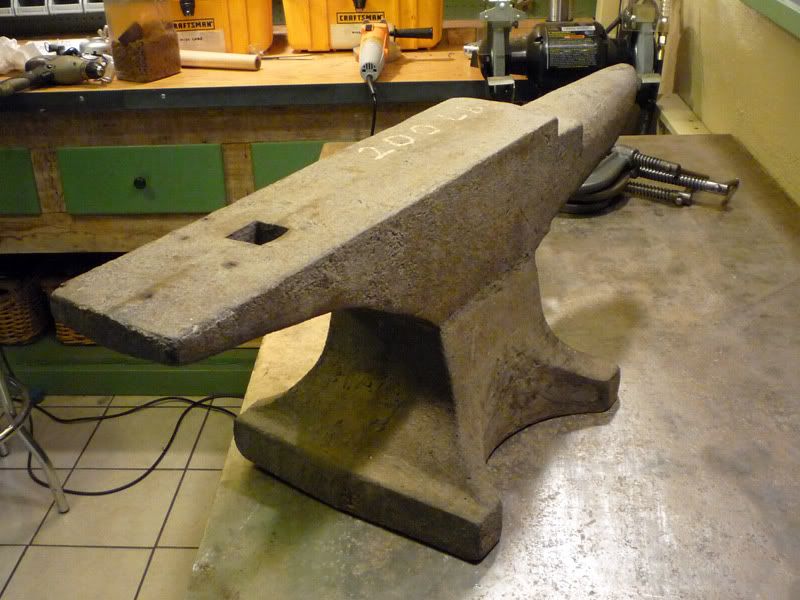
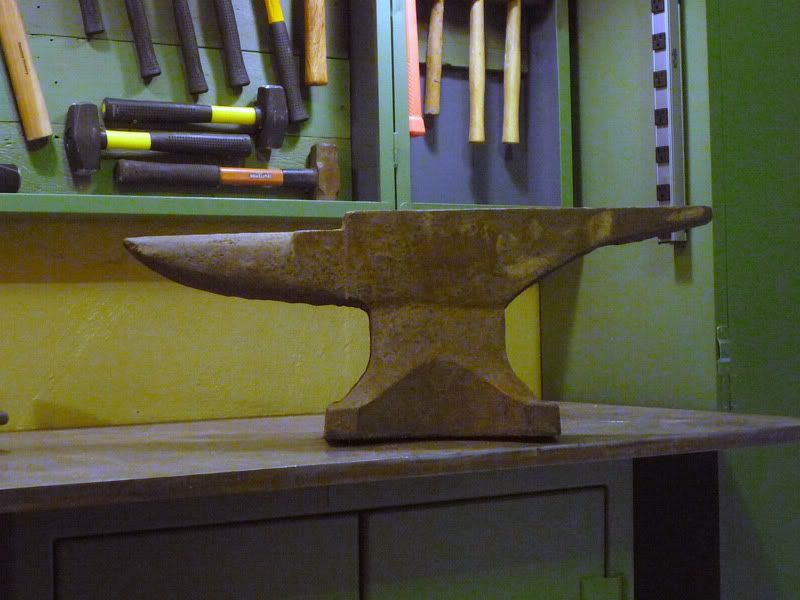
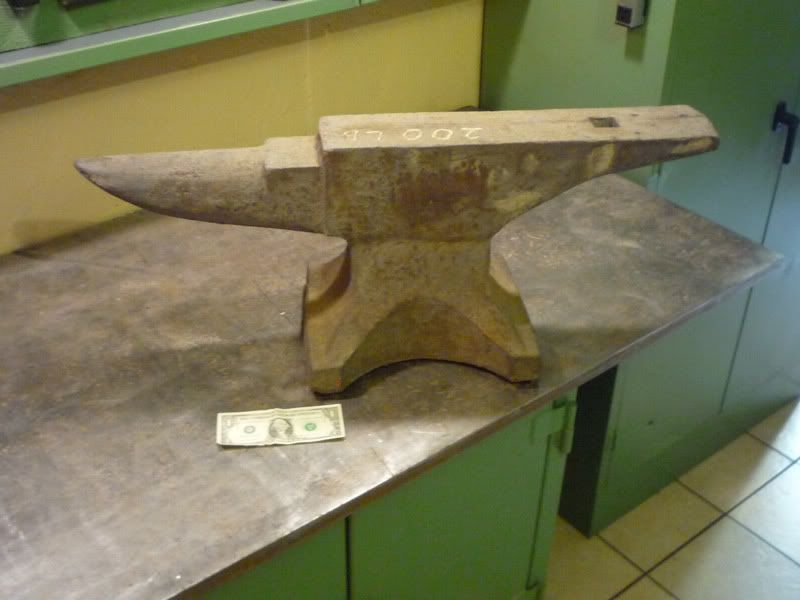
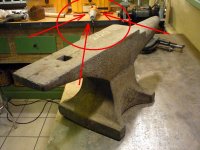
I recently learned to weld, and built a bench that I could pound stuff on. While I was working on that, I ended up making an impulsive purchase of what I'm sure is a useless lump of cast iron -- what blacksmiths would call an anvil shaped object
Anvil01.jpg


The dollar is to show scale.

Anvil02.jpg


Anvil03.jpg


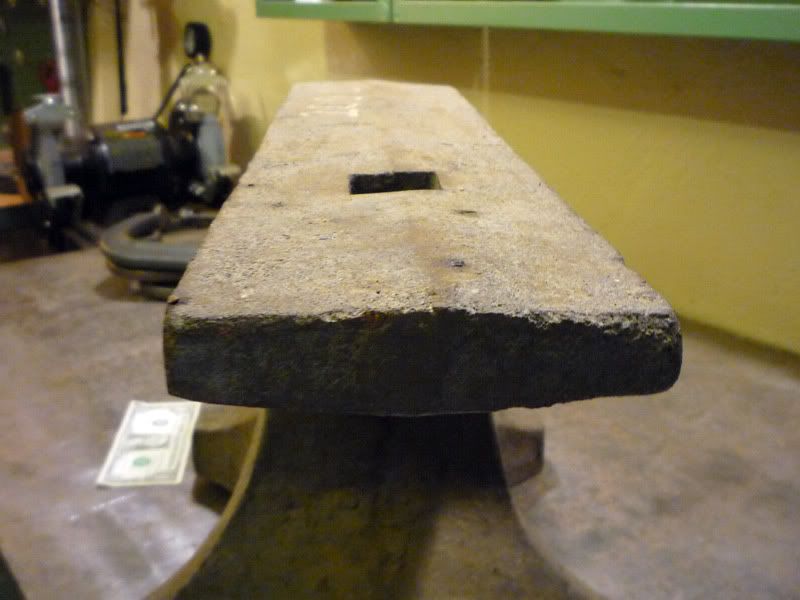
Still, if I could mount this thing on something about stump height, I think it would have some use when I need to flatten/bend/break something in my garage. It weighs 202 pounds and is 12" high and 32" long. The most immediate problem is that the face of the thing isn't flat. It looks to have been cast one half at a time and joined together -- poorly.
Anvil04.jpg


My question: is there a cheap/free/reckless way to machine down the face of this thing? It's too heavy to lift easily, much less ship. I'm hoping someone's got a clever suggestion for grinding the rise out of the center by repurposing my existing tools. Any ideas?
 
To avoid these ads, REGISTER NOW!

dankeenan

Well-known member
Joined
May 21, 2008
Messages
180
I would guess you are seeing the core shift in the casting process. When they put the two casting cores together they did not match them up very well... but hey it is an anvil. A mill is your best bet for machining it flat, but that may not be free. I would say the "free" way is a angle grinder and straight edge.
 

eborcim

Well-known member
Joined
Apr 5, 2009
Messages
2,425
Location
Central, MO
I've usually seen these mounted on a stump as you suggested, at the level where you would hold your work with your elbow at a 90 degree angle or just a little lower. I would imagine the stump could be hollowed out a little to fit the bottom of the anvil. Just get a big ol' green (not cured) ash, oak, or hedge stump and you should be fine. I do not see why you could not just grind it smooth, though.
 
Last edited:

bimmer1980

Well-known member
Joined
Feb 5, 2009
Messages
2,103
Location
York, PA
I think the square hole was for putting various "dollie" tools onto the anvil. I'm sure that some of those had a true flat surface. It may be easier to puchase or make a drop in dollie than it is to grind the top flat.... not sure of the technical name for what I'm calling "dollies"......

Also, I think you are refering to a casting line, not necessariily that the anvil was actually two pices.

how flat do you really need or want the top? you might be able to grind it down by hand, but that will be tedious, even if you use a 24 grit disc...... For true flat it would need a pass off of it with a milling machine and then put on a surface grinder....

Just a thought, would the local automotive shop that does engine maching work be able to do it for a reasonble price? They regularily mill the tops of engine blocks and heads to a few thousands of an inch of flat. They use a fairly large diameter cutter head that could mill the whole width in one pass (they would take multiple passes of .020 to .050" per pass).
 

Steve from Socal

Well-known member
Joined
Jan 27, 2009
Messages
3,490
Location
Hutchinson Ks.
In the old days apprentices would learn the trade from bench work up; that meant by starting with a file and filing a block square and flat. A file would be good but to rough the hump out a grinder will do the grunt work. That is a nice looking Anvil; another way to go is to weld up the face with a hard surface, grind and file/scrape. To do fine work many anvils are polished on the horn as well.

You are on the right track with a stump for a mount and burring the stump in a few feet of sand is even better, then lash the anvil to the stump.
 
Last edited:

Zrexxer

Well-known member
Joined
Jan 23, 2007
Messages
5,058
Location
Pflugerville, TX
I think the square hole was for putting various "dollie" tools onto the anvil. I'm sure that some of those had a true flat surface. It may be easier to puchase or make a drop in dollie than it is to grind the top flat.... not sure of the technical name for what I'm calling "dollies"......
It's called a "hardie hole." Can be used to hold hardie, swages, dies, etc.
 
OP
J

Jack Olsen

Super Moderator
Staff member
Joined
Mar 22, 2009
Messages
6,678
Location
Los Angeles
Thanks, guys. I was afraid that the angle grinder was going to be the answer. The trick -- for someone with my limited ability to patiently and slowly grind -- is going to be making it actually flat. I wonder if I could (or should) make some reference cuts so I don't drift below the level I want. I'm thinking to first establish a fixed position for the anvil, then put together a pair of level guides above it that would let me guide a circular saw with a metal-cutting blade to cut level lines that I could match to as I grind.

Does that make any sense?

And thanks, fixerup. I also posted this in their forum.
 

rwhite692

Well-known member
Joined
Mar 4, 2008
Messages
1,850
Location
Central Valley, CA
I don't think you need to call that an "Anvil shaped object", I think it would be safe to call that an Anvil...LOL

Useless? hardly!

That "hump" in the center of the anvil is there by design, it is useful when striking hot iron when the goal is to make subtle shape changes.

If the hump bothers you, you could take this to any good machine shop equipped with a surface grinder...not a big deal to do...

Doing it yourself with a grinder would be a sentence, but, whatever floats your boat...

or Anvil, as the case may be
 

Daniel Dudley

Well-known member
Joined
Sep 4, 2009
Messages
3,546
Thanks, guys. I was afraid that the angle grinder was going to be the answer. The trick -- for someone with my limited ability to patiently and slowly grind -- is going to be making it actually flat. I wonder if I could (or should) make some reference cuts so I don't drift below the level I want. I'm thinking to first establish a fixed position for the anvil, then put together a pair of level guides above it that would let me guide a circular saw with a metal-cutting blade to cut level lines that I could match to as I grind.

Does that make any sense?

And thanks, fixerup. I also posted this in their forum.

Yeah. I would make two parallel runners, one on each side of the anvil that would hold a deck that I could run a circular saw across. I would set up the blade in the saw so that it just kissed the runners. That way you have an index to reset the blade to as it wears down.

In reality, I would probably use an angle grinder, a belt sander, and then make lapping boards with oil and wet/dry sandpaper. But if you had reference lines, that would be very cool.

You would have to blow all the dust out of a belt sander to use it this way, and remove the collector bag. They are not made for this, and do not like it particularly.

Really, if you had a sliding deck for a circular saw, there are a lot of ways you could get it to simulate a milling machine.
 

caper

Well-known member
Joined
Feb 12, 2006
Messages
3,185
Location
cape breton
Thanks, guys. I was afraid that the angle grinder was going to be the answer. The trick -- for someone with my limited ability to patiently and slowly grind -- is going to be making it actually flat. I wonder if I could (or should) make some reference cuts so I don't drift below the level I want. I'm thinking to first establish a fixed position for the anvil, then put together a pair of level guides above it that would let me guide a circular saw with a metal-cutting blade to cut level lines that I could match to as I grind.

Does that make any sense?

And thanks, fixerup. I also posted this in their forum.

I would just use the grinder freehand stopping regularly to check my progress with a square or straight edge.Shouldn't take anymore than a half hour with a decent sized grinder.Start with a regular disc and finish up with a blending disc.
 

Torque1st

MEMBER EMERITUS
Joined
Sep 14, 2008
Messages
5,668
Location
KC Metro, Kansas
It looks like rough unfinished anvil casting. I usually use the front (horn) of the anvil to make odd shapes. The top can be ground down with a angle grinder or a belt sander. You could also take it in and have it blanchard ground on a big machine set up to grind objects flat. You may also need to heat treat the anvil. The final smoothing on the top can be performed by draw-filing. While the old way of mounting an anvil was to affix it to a tree stump you may want to consider mounting it to a 4x4 tubing stand fastened to an old wheel and tire filled with concrete.
 

rsanter

Well-known member
Joined
Dec 22, 2007
Messages
18,490
Location
visalia ca
well, what you see is the parting line of the two halves of the mold
the slight angle you see is a 'casting taper' so that the item will release or come out of a perminent mold or the release angle to get the core out of a sand mold

options:
you can take a grinder and make the surface mostly flat and then take a belt sander to finish it up and make it nice

find someone with a mill and they can mill it flat for you.
I have a mill in Visalia, so if you wanted to bring it over we could work something out.

a base
you weld....so get some angle iron and make a base for it that places it at the height you want. mount 2 wheels on one side so you can pick it up from the pointed end and whel it around. when you put it down there should be no weight placed on the wheels or you will wrech them when you pound on the anvil

bob
 

yhprum

Well-known member
Joined
Jul 27, 2006
Messages
1,380
Location
Brisbane Australia
I'm thinking the raised area is a (steel) forging line,which is much better than cast iron. Does it ring if you hit it with a hammer? I think grinding sparks can indicate the material too, going by the color of the sparks.
 

rsanter

Well-known member
Joined
Dec 22, 2007
Messages
18,490
Location
visalia ca
I'm thinking the raised area is a (steel) forging line,which is much better than cast iron. Does it ring if you hit it with a hammer? I think grinding sparks can indicate the material too, going by the color of the sparks.

perhaps, but I dont think so.
a forging line will be wider than that

bob
 
To avoid these ads, REGISTER NOW!

gorilla

Well-known member
Joined
Dec 13, 2007
Messages
1,650
Your local welding supply store should be able to sell you a cupped grinding disc that you can hold down flat on the surface much like you use a DA sander. I think that this is best way to accomplish what you want to do with the lowest cost.
 

c39er

Well-known member
Joined
Mar 23, 2008
Messages
1,661
Location
Seattle, Washington
I thought anvils had a special hardened top surface, later ones with a 1/2-1" thick flat plate forged to the top of the anvil. Maybe someone never finished this anvil. If it was flat you could drop a steel 3/4" ball on it to check the ring! Kinda Tells how good an anvil is. On the anvil should be markings as to who/when it was made.
Bob
 

kindyr

Well-known member
Joined
Apr 25, 2009
Messages
117
Location
Springfield IL
what is the approximate weight on that anvil?

and are there any marks on the side?

it looks like it's in pretty rough shape, but I'm not sure i'd go so far as ASO for it.

you may want to post the pic over on a blacksmith forum to see if anybody recognizes the pattern and can tell you more about it. the shape reminds me more of the good anvils than the cast iron HF style junk.

As for getting it flat, I guess it depends on what you're going for. the anvil I have is old and abused, but it give it character and gives the work I do on it character.

for dead flat, you can also look at building a hardened plate to go on the top and fit in the hardie hole. look at cutting plates for the basic idea.

Also, if you don't already know, there is a difference between a hardie tool and a forming stake. basically a hardie tool will have a square shank on the tool and a stop that rests on the face of the anvil. A stake will have a tapered shank designed to fin in a stake plate. using a tapered stake in the square cut hardie can lead to the tool becoming impossibly wedged in the anvil, or actually splitting the anvil at the hardie hole.
not saying I haven't done it, but better to make an informed decision about using a tool in an improper way.
 

Falcon67

Well-known member
Joined
Jun 11, 2009
Messages
18,371
Location
Merkel, TX
An anvil is most likely made out of whatever scrap **** was laying around the foundry. I doubt very much that an automotive machine shop would risk their very expensive cutting tools on an anvil. Chip a tooth on the head surfacer and its a few hundred bucks to correct it. So grinding it by hand is a decent option. Anvil's fer beatin' on, so perfection wouldn't be required anyway.
 

X1 Mike

Well-known member
Joined
Dec 4, 2008
Messages
8,389
Location
Flagler, Fl
This is how to make it flat if you do decide to grind it by hand.

First you need a flat piece of metal like an angle plate.

Apply spotting blue to the bottom of the plate and rub the top of the anvil.

Any areas of the anvil that have blue on them are high spots and need to be ground down.

With a methodical approach pretty soon the whole top will be covered in blue.

When people talk about learning to square a block with a file as an apprentice, this is how we did it.
 
OP
J

Jack Olsen

Super Moderator
Staff member
Joined
Mar 22, 2009
Messages
6,678
Location
Los Angeles
Thanks for the replies and suggestions. The lack of any foundry markings (or a pritchel hole) makes me think the safe bet is that it was made (cheaply) in Mexico from cast-iron. It weighs 202 pounds on my bathroom scale.

I recently got a set of 'flat *******' files, but I don't know that my own day job is going to allow the kind of time I'd need to pay those apprenticing dues by doing this the old-fashioned way. I'll see if there's a way to get reference lines cut with one of my metal-cutting blades. From there, I'll try a grinder. I've also thought it might be possible to adapt my drill press in some way (either with a cupped grinding disc or some kind of milling tool?) to do some of the cutting. I'll finish up with a belt sander. It doesn't have to be 'flat' flat when I'm done, just closer to flat.

I'll also take a grinding wheel to the horn. I'll probably paint the rest, then weld together a base out of some 2"x4"x1/8" square tubing I've got. I like the idea of wheels that can touch the ground only when I lift the horn part. But I'll tell you, lifting this thing isn't easy. (Imagine someone handing you four 55 lb anvils.)

As I understand it, the worst anvils are cast iron, and then there's a hierarchy moving up from cast iron with a steel plate for the face, to cast steel and then to forged steel at the top of the anvil pyramid. I'd love to have something at the top of that pyramid, but those things don't come cheap.

As it happens, someone sent me this video today of two pieces of an anvil being joined together at some kind of blacksmithing convention:

Pretty impressive.
 

Steve from Socal

Well-known member
Joined
Jan 27, 2009
Messages
3,490
Location
Hutchinson Ks.
How wide is the face of the top? If you want to drag that out to my shop I could put it my mill and rough face it. I am out by Calabasas/ Hidden Hills.

Steve
 
OP
J

Jack Olsen

Super Moderator
Staff member
Joined
Mar 22, 2009
Messages
6,678
Location
Los Angeles
Steve, that's very generous of you.

The face is 4-3/8" wide, 19-1/2" long.

I'll send you a PM.
 

bgott

Well-known member
Joined
Oct 31, 2005
Messages
3,512
Location
Houston, TX.
Lightly smack the top with a hammer. Does the hammer bounce? Does it ring? A cast iron anvil that doesn't have a tool steel insert will have no, or very little, rebound. It also won't ring. There are decent cast iron anvils out there that have a cast steel insert. they don't ring but they do have good rebound. You don't have one of those.
 

shovel

Well-known member
Joined
Dec 26, 2008
Messages
477
Location
Port Neches, Texas
There is a knifemakers supply shop in Houston that displays its Anvils with a big ball bearing sitting in the hardie hole. You drop the ball bearing on the anvil and it bounces and rings like a bell! It sounds beautiful and sure pisses off the girls that work the store! I gotta do every time I go there.
 

slopecarver

Well-known member
Joined
Dec 29, 2008
Messages
342
Location
Erie, PA
I've used spirakut disks on granite to make the surfaces fairly smooth. Get it close to flat with the angle grinder, spray adhere a piece(s) of 24 grit sandpaper to a chunk of plywood or other flat surface (your workbench), flip the anvil over and move it back and forth across the sandpaper to make it fairly flat, this will use the anvils weight but might be hard to actually do by hand, you could flip the setup over too.
 
To avoid these ads, REGISTER NOW!
Top Bottom