
To avoid these ads, REGISTER NOW!

Machinist's chests replacement felt drawer liner

timdp

Well-known member
Joined
Jan 7, 2015
Messages
203
Location
Northern California
Searched a bit and did not find anything about replacing felt drawer liners in machinist's chests

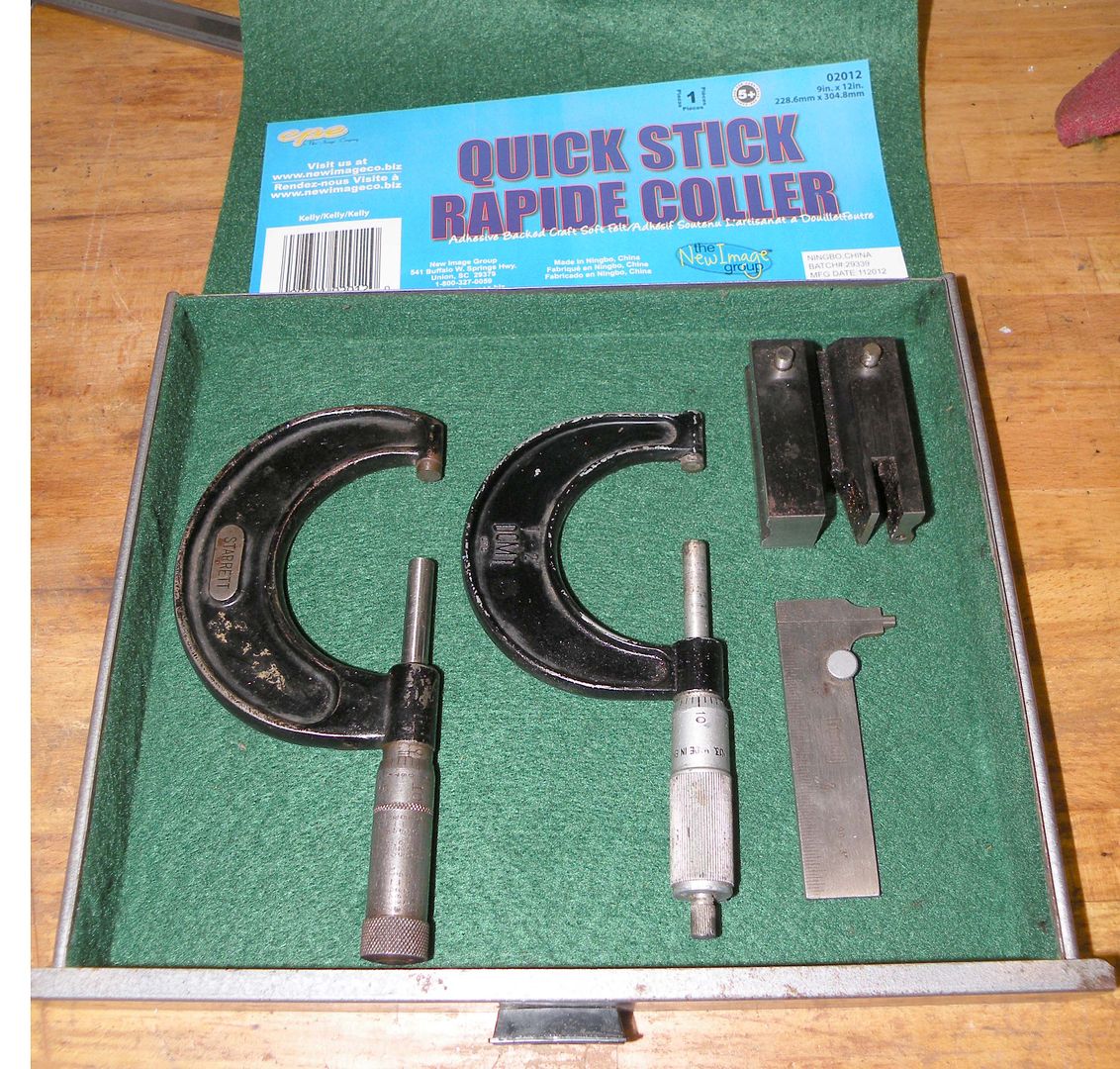
Neither my Huot or Craftsman machinist's chests had much in the way of original drawer bottom padding so I thought I would give replacing the felt a try. Found some green self adhesive felt at Beverly's Craft online store: http://www.beverlys.com/quick-stick..._medium=shopping+engine&utm_campaign=nextopia

Tried it on a Craftsman drawer. Cutting and sticking works pretty well. Adhesive is sticky, but removable, so if you don't quite get the location right it can be moved. Each small drawer takes a sheet and the large drawers will take two sheets, so it looks like I will need to get more felt.
 
To avoid these ads, REGISTER NOW!

nine4gmc

Well-known member
Joined
Mar 24, 2012
Messages
14,357
Location
Dallas
Something about synthetic vs cotton/wool for holding moisture, my mind is not working right now so I apologize but someone should be along shortly to fill you in.

Gerstner supplies felt but they are proud of it or you can go to a fabric supply house for yards of it cheap and glue it on yourself with 3M.
 
OP
T

timdp

Well-known member
Joined
Jan 7, 2015
Messages
203
Location
Northern California
Something about synthetic vs cotton/wool for holding moisture, my mind is not working right now so I apologize but someone should be along shortly to fill you in.

Gerstner supplies felt but they are proud of it or you can go to a fabric supply house for yards of it cheap and glue it on yourself with 3M.

Eagerly awaiting the synthetic vs cotton/wool info, although I'm pretty sure I would not want to use cotton, even in dry California. Wool has lanolin oil in it so will not absorb moisture easily. Might be worth thinking about misting some oil into the synthetic fabric if moisture might be a problem. For the record the fabric content is: "100% Ecospun Polyester made from plastic."

True about buying the raw fabric, but cutting bulk felt into pieces that have very square corners and correct dimensions is very tricky for us non-upholsterers, although I may be thinking of cutting thin pieces of synthetic felt. The stiff backing paper on the adhesive backed pieces makes square cuts and correct dimensions very easy.

Perhaps you have some tricks for cutting felt accurately?

Thanks,

Tim
 

larry_g

Well-known member
Joined
Apr 28, 2007
Messages
16,879
Location
oregon
I'd suggest that you google toolbox felt as there is a lot of information out there. One known problem is that some adhesives out-gas fumes that will promote rust. So before you invest a fortune in your materials check out compatibility of your adhesive with tools.

lg
no neat sig line
 

nine4gmc

Well-known member
Joined
Mar 24, 2012
Messages
14,357
Location
Dallas
I use a metal ruler as a straight edge and a sharp new razor blade to cut it. Press down with one hand on the ruler and cut with the other, make damn sure your thumb is not sticking out past the ruler. ;)

I have cut the drawer liners two ways, first is take a piece of scrap and use it to measure the length/width of the inside of the drawer bottom/sides and cut the max dimensions first, then cut a square from each of the corners to create the sides of the drawers with the bottom all one piece. The second way was use the scrap to measure front/center and back, sides are simple strips cut to length so a 3 piece basically.
 

Air21

Well-known member
Joined
Nov 3, 2013
Messages
372
Someone said before that you can get felt drops and removed sections from billiard repair places. But nobody ever offered me any take-offs for less than $60
 
To avoid these ads, REGISTER NOW!
OP
T

timdp

Well-known member
Joined
Jan 7, 2015
Messages
203
Location
Northern California
I'd suggest that you google toolbox felt as there is a lot of information out there. One known problem is that some adhesives out-gas fumes that will promote rust. So before you invest a fortune in your materials check out compatibility of your adhesive with tools.

lg
no neat sig line


Thanks Larry. Googled it and came up with:
No white glue or wood glue. White glue is hydroscopic and both are corrosive.
No wool as it is corrosive.
Kennedy replacement drawer liners from MSC are Polyethylene Foam or PVC Coated Polyester.
Anti-Tarnish Silver Cloth is treated cotton flannel.

I use a metal ruler as a straight edge and a sharp new razor blade to cut it. Press down with one hand on the ruler and cut with the other, make damn sure your thumb is not sticking out past the ruler. ;)

I have cut the drawer liners two ways, first is take a piece of scrap and use it to measure the length/width of the inside of the drawer bottom/sides and cut the max dimensions first, then cut a square from each of the corners to create the sides of the drawers with the bottom all one piece. The second way was use the scrap to measure front/center and back, sides are simple strips cut to length so a 3 piece basically.

Re cutting, that is what I would do too, although I use Exacto blades. First cut is not too bad but making the second cut square with the first cut is the trick...

I used the cut-out-the-corners method on the one I did.

So it looks like synthetic felt will be fine. The only question is whether the adhesive might be corrosive. Could use plain synth. felt with 3M spray cement, but who knows whether it might be corrosive of not? I guess I will completely clean a piece of polished steel and put it in my lined drawer for a while and inspect it regularly.

Tim
 
OP
T

timdp

Well-known member
Joined
Jan 7, 2015
Messages
203
Location
Northern California
A good alternative is cork, superior to felt IMHO.

The Huot box drawers are lined with cork and most of the drawer liners are in better shape than I thought. Had not looked carefully at all the drawers until today, so will only need to work on three of the drawers. Will be looking for some 1/16" cork.


Seeing the slight rust starting on your tools you may want to look into http://www.amazon.com/dp/B000K3EB7A/?tag=atomicindus08-20

Cypher

Cypher, I just picked up those micrometers over the weekend and what you see is the results of cleaning off a fair amount of surface rust. Tools had been stored outdoors, under cover in a drawer for at least 20 years and probably quite a bit longer. The vise I also bought there was dated 1976. Very dry Sonoma Valley climate probably saved them from total destruction.

Before cleaning pic:
 
Last edited:

Adam.C

Banned
Joined
Jan 29, 2013
Messages
1,490
100% wool is said to be best. The reason why seems to be that the dyes or mordants used to color synthetic fibers are not pH neutral and themselves can cause corrosion. Wool is both easier to dye, and also conatins natural lanolin oil that helps prevent rust.

I've also heard that some glues off gas stuff that accelerates corrosion. Gerstner used to use thinned hide glue for this reason. Or so legend has it. The side benefit of hide glue is that it can be reversed to allow felt replacement using hot water.

When I did my chest I used wall paper paste, which works just as well as hide glue and was very easy to work with. I cut the wool felt with a knife and smoothed it in place using an old credit card.

The other advantage of using wool felt is that the surface wears better, doesn't pill like cheap synthetics do. I say, if you are going to do it, do it right- source some wool felt from Amazon or ebay and used wall paper paste or something similar. Don't use headliner adhesive or the next poor slob will have to scrape it out.

Should look like this. This is a Schmidt grind vise, btw, but I used the same technique and material as when I built my chest.
 
Last edited:

Adam.C

Banned
Joined
Jan 29, 2013
Messages
1,490
Just a tip regarding cleaning old mics and such. I find the satin chrome finish is dramatically easier to read. But this is a relatively new finish. I believe the old non-satin finish was intended to corrode slightly and be dull looking- kinda as you have done. I over polished some tools and they became so shiny I had trouble reading them.

Now when I clean old scales for example, I use fine arkansas which leaves a dull gray finish. When I used fine sand paper, I polished tools to a near mirror finish (using similar grit). Arkansas, being a natural product must have a range of grit size that produces that dull luster.

You can kinda see the difference between the new 6" square (far right) the 4" satin chrome bladed square next to it, the die maker's square blade I cleaned with sand paper, (it was pretty corroded when I got it) and the depth gage and bevel I did just with arkansas. I tried to preserve as much of the original salt bluing on the depth gage as possible. The locking screw and washer I touched up with cold gun blue.
 
Last edited:

buba

Well-known member
Joined
Jan 27, 2015
Messages
135
Location
Bucksnort USA
The Huot box drawers are lined with cork and most of the drawer liners are in better shape than I thought. Had not looked carefully at all the drawers until today, so will only need to work on three of the drawers. Will be looking for some 1/16" cork.

Thanks, my next project is an old Huot bottom and top box. I was not sure what was used as liners in those, as the original liners are completely missing (just glue residue left).

The other boxes I have worked on where SK machinist chests and they used single sided cotton flannel. I have had good luck with Elmers acid-free fabric glue (thinned a bit with water) in the past. I used a plastic bondo spreader to get the glue spread very thin and even.
 
Last edited:

Ed ke6bnl

Well-known member
Joined
Aug 1, 2005
Messages
495
Location
Agua Dulce, Calif.
wow this got too technical for me, my wife took me to Michael's and I pick up some they had wool and synthetic. cheep about $8 will do a couple
 
To avoid these ads, REGISTER NOW!
Top Bottom