To avoid these ads, REGISTER NOW!

Machinists level.

MushCreek

Well-known member
Joined
Jan 14, 2015
Messages
9,747
Location
Upstate South Carolina
I once scraped three 36" iron surface plates. There's a special technique of rotating the plates (you need three of them) so that they all come out flat. Took me about 100 hours, and they were pretty close to begin with. When I took a class at Moore Special Tool, the plant tour was eye opening. The guys that do the rough scraping on their jig bores and jig grinders bring them in within about .0002", then the specialists finish them. They hand lap the lead screws to a maximum error of .000025" (25 millionths) over the whole range of the machine.
 
To avoid these ads, REGISTER NOW!

Demon69

Well-known member
Joined
May 29, 2024
Messages
138
Location
Surrey UK
Bed twist isn't a concern on my 10ee.
True, unless previous hands tossed a few shims in trying to fix one error by introducing another 😅
(sorry, couldn't resist)

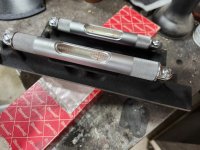
For those interested, a quick look a Kingway tool loading up with two adjustable vials doing its thing, can indicate from it also making things very convenient.
 
Last edited:

Demon69

Well-known member
Joined
May 29, 2024
Messages
138
Location
Surrey UK
I once scraped three 36" iron surface plates. There's a special technique of rotating the plates (you need three of them) so that they all come out flat. Took me about 100 hours, and they were pretty close to begin with. When I took a class at Moore Special Tool, the plant tour was eye opening. The guys that do the rough scraping on their jig bores and jig grinders bring them in within about .0002", then the specialists finish them. They hand lap the lead screws to a maximum error of .000025" (25 millionths) over the whole range of the machine.
I can only imagine (y)
Reading through Foundations of Mechanical Accuracy is an experience all by itself for those interested.

Also Testing Machine Tools by Georg Schlesinger (the bible), useful for required specs of new tools and various testing methods.
Fuzzy PDFs for both usually findable.

 
Last edited:

Ultradog MN

Well-known member
Joined
Jan 20, 2024
Messages
749
Location
Twin Cities
I can only imagine (y)
Reading through Foundations of Mechanical Accuracy is an experience all by itself for those interested.

Also Testing Machine Tools by Georg Schlesinger (the bible), useful for required specs of new tools and various testing methods.
Fuzzy PDFs for both usually findable.

I didn't watch the videos so am not knocking them - or you.
But I'm curious.
What are you machining that you need this high a level of accuracy?
 

Demon69

Well-known member
Joined
May 29, 2024
Messages
138
Location
Surrey UK
I didn't watch the videos so am not knocking them - or you.
But I'm curious.
What are you machining that you need this high a level of accuracy?
Ah im just a hobby joe in the machining department, have always had an interest in machining/mechanical engineering tho and love to learn. Metrology and machine reconditioning became the main interest so I started out tearing down a 1930s new to me DSG 13" lathe, was an educational trip that fuelled further interest. One of the results of this interest ive mentioned previously.

Owner uses it to deck heads mostly.
shou.jpg

Owners complaint was that despite best efforts it wasn't accurate enough for the inline 6 jag heads he was doing a lot of att, not something you can fix with a file or emery cloth I think you'll agree. With two 20sec inclinometers and about 30mins measuring we managed to quantify why that was, the saddle was dipping and yawing traversing the worn slideways, normal and expected wear. With 3 days onsite effort and about 4 cubic inches of cast iron taken out of the worn slideways and the saddle refitted, the machine was back to cutting like new.
Apart from the obvious getting paid, the various satisfactions of getting an old machine like the above back into service are many. Topping the list, the looks on casual observers faces as you carve into precision surfaces with an angle grinder - Priceless! 🤣. A close second was helping a young man with family in tow getting his new business off the ground after being laid off from the old firm.
 

Ultradog MN

Well-known member
Joined
Jan 20, 2024
Messages
749
Location
Twin Cities
Ah im just a hobby joe in the machining department, have always had an interest in machining/mechanical engineering tho and love to learn. Metrology and machine reconditioning became the main interest so I started out tearing down a 1930s new to me DSG 13" lathe, was an educational trip that fuelled further interest. One of the results of this interest ive mentioned previously.

Owner uses it to deck heads mostly.
shou.jpg

Owners complaint was that despite best efforts it wasn't accurate enough for the inline 6 jag heads he was doing a lot of att, not something you can fix with a file or emery cloth I think you'll agree. With two 20sec inclinometers and about 30mins measuring we managed to quantify why that was, the saddle was dipping and yawing traversing the worn slideways, normal and expected wear. With 3 days onsite effort and about 4 cubic inches of cast iron taken out of the worn slideways and the saddle refitted, the machine was back to cutting like new.
Apart from the obvious getting paid, the various satisfactions of getting an old machine like the above back into service are many. Topping the list, the looks on casual observers faces as you carve into precision surfaces with an angle grinder - Priceless! 🤣. A close second was helping a young man with family in tow getting his new business off the ground after being laid off from the old firm.
It sounds like you are pretty well grounded. I respect that.
I mentioned having been a machinist for 4 years but that was over 50 years ago. I never followed that trade afterwards so I too am just a hobby Joe.
If I had any advantage over others who are trying to learn this stuff it was having a slight leg up on buying a lathe that suited my purposes.
I have a 14-1/2 x 30 Monarch 12CK. They were very good, very ridgid machines. Mine is 82 years old, weighs most of 2 tons and despite it having some wear and being on a shifting slab it will still do better work than I am capable of.
I'm not embarrased to admit I use files and emery cloth to make the things I need and I don't trouble myself with the minutiae of "precision" machining.
 

Cruzan80

Well-known member
Joined
Jul 22, 2015
Messages
4,176
Location
Denver, CO
I'm not embarrased to admit I use files and emery cloth to make the things I need and I don't trouble myself with the minutiae of "precision" machining.
Why would you be embarrassed? Doing it "to the level needed" is a skill that separates most professionals from hobbyists. If that level is sufficient, then carrying it past that is "wasted money" from a work perspective.

The joke I heard once was: "How do you tell if someone is a hobby machinist? They make sure all the edges are faced off, shiny and smooth before doing any actual work on the piece, not just the reference edges they need."
 

rsanter

Well-known member
Joined
Dec 22, 2007
Messages
18,492
Location
visalia ca
I have always been curious about the machine shops aboard ships. I know many navy ships have pretty well equipped machine shops, at least the LPD that I crossed the pacific on did. But at the time I wasn't as aware of how to use a machine level like I do now. Do they put the machines on a substantial sub base on land and install base/machine as a unit? Or is it just done in place in dry dock?
It’s an interesting thought about how this is done.
a number of years ago I met e guy that had been in the military and his job was to service and level the machines on the ships.
many machines such as a mill does not actually need to be level. Technically they can sit at a 45degree and still get their job done as long as they base is rigid and the machine is in good condition. I have had my Bport mill and a roller base for many years with no issues.

then we get to lathes. Watchmakers lathes are a unique sort of lathe that often has a rather stout bad and bed and only has one connection foot to the bench. This is done so all their precision is in the machining, grinding, scraping, and fitting of the parts of the machine. Once it’s bolted down there is nothing more to do.
then you get to the larger lathes that have their beds supported at multiple locations. These machines don’t actually have to be level, they have to be setup with no bow or twist in the bed. They can be at any angle or incline as long as they base is bed has no bow or twist.
so why level a lathe? It’s because the easiest way to check for no bow or twist os to make everything “level” to everything else.

so back to machines on ships.
the machines were leveled to the “ship plate” which was the center of gravity of the ship. The center of gravity is the point on the ship that it will rotate or pivot around regardless of the direction the ship is rocking or rotating. Having the machines level to the CG of the ship will cancel out any errant forces going on when the ship is moving and provides a base known location to level to wherever the ship is.

ok so how do you actually level the machine if the ship is moving (not at dry dock).
they use two levels , two guys, and radios.
you put the two levels in the same direction (for-aft, or side to side) and then the guy at the ship plate calls out on the radio as the bubble crosses the line. The guy at the machine listens to the radio and adjusts the machine till the bubbles are “in sinc”.

the guy said it was a pain in the ***, but the machines were on a regular maintence/service schedule and he would be sent ship to ship to get it done
 

whateg01

Well-known member
Joined
Mar 13, 2006
Messages
11,199
Location
doo dah, kansas, usa
It’s an interesting thought about how this is done.
a number of years ago I met e guy that had been in the military and his job was to service and level the machines on the ships.
many machines such as a mill does not actually need to be level. Technically they can sit at a 45degree and still get their job done as long as they base is rigid and the machine is in good condition. I have had my Bport mill and a roller base for many years with no issues.

then we get to lathes. Watchmakers lathes are a unique sort of lathe that often has a rather stout bad and bed and only has one connection foot to the bench. This is done so all their precision is in the machining, grinding, scraping, and fitting of the parts of the machine. Once it’s bolted down there is nothing more to do.
then you get to the larger lathes that have their beds supported at multiple locations. These machines don’t actually have to be level, they have to be setup with no bow or twist in the bed. They can be at any angle or incline as long as they base is bed has no bow or twist.
so why level a lathe? It’s because the easiest way to check for no bow or twist os to make everything “level” to everything else.

so back to machines on ships.
the machines were leveled to the “ship plate” which was the center of gravity of the ship. The center of gravity is the point on the ship that it will rotate or pivot around regardless of the direction the ship is rocking or rotating. Having the machines level to the CG of the ship will cancel out any errant forces going on when the ship is moving and provides a base known location to level to wherever the ship is.

ok so how do you actually level the machine if the ship is moving (not at dry dock).
they use two levels , two guys, and radios.
you put the two levels in the same direction (for-aft, or side to side) and then the guy at the ship plate calls out on the radio as the bubble crosses the line. The guy at the machine listens to the radio and adjusts the machine till the bubbles are “in sinc”.

the guy said it was a pain in the ***, but the machines were on a regular maintence/service schedule and he would be sent ship to ship to get it done
You can't have "level" without 3 points, or a plane. How do you level something to a single point? 🤦‍♂️
 

Demon69

Well-known member
Joined
May 29, 2024
Messages
138
Location
Surrey UK
It’s an interesting thought about how this is done.
a number of years ago I met e guy that had been in the military and his job was to service and level the machines on the ships.
many machines such as a mill does not actually need to be level. Technically they can sit at a 45degree and still get their job done as long as they base is rigid and the machine is in good condition. I have had my Bport mill and a roller base for many years with no issues.

then we get to lathes. Watchmakers lathes are a unique sort of lathe that often has a rather stout bad and bed and only has one connection foot to the bench. This is done so all their precision is in the machining, grinding, scraping, and fitting of the parts of the machine. Once it’s bolted down there is nothing more to do.
then you get to the larger lathes that have their beds supported at multiple locations. These machines don’t actually have to be level, they have to be setup with no bow or twist in the bed. They can be at any angle or incline as long as they base is bed has no bow or twist.
so why level a lathe? It’s because the easiest way to check for no bow or twist os to make everything “level” to everything else.

so back to machines on ships.
the machines were leveled to the “ship plate” which was the center of gravity of the ship. The center of gravity is the point on the ship that it will rotate or pivot around regardless of the direction the ship is rocking or rotating. Having the machines level to the CG of the ship will cancel out any errant forces going on when the ship is moving and provides a base known location to level to wherever the ship is.

ok so how do you actually level the machine if the ship is moving (not at dry dock).
they use two levels , two guys, and radios.
you put the two levels in the same direction (for-aft, or side to side) and then the guy at the ship plate calls out on the radio as the bubble crosses the line. The guy at the machine listens to the radio and adjusts the machine till the bubbles are “in sinc”.

the guy said it was a pain in the ***, but the machines were on a regular maintence/service schedule and he would be sent ship to ship to get it done
Holy hell shipmate, I be thinking the largest truth revealed in that there info be that the lulz are strong with sea goin folk! :LOL:
 

Firebrick43

Well-known member
Joined
May 12, 2015
Messages
13,992
Location
West central Indiana
You can't have "level" without 3 points, or a plane. How do you level something to a single point? 🤦‍♂️
Single point? I assume you are talking about the ship plate? That would be a single plane.

It’s an interesting thought about how this is done.
a number of years ago I met e guy that had been in the military and his job was to service and level the machines on the ships.
many machines such as a mill does not actually need to be level. Technically they can sit at a 45degree and still get their job done as long as they base is rigid and the machine is in good condition. I have had my Bport mill and a roller base for many years with no issues.
Depends on the mill, many bed mills need leveled as they can have twist if not. While knee mills are common in the home shop, and I imagine even on a ship, in industry they are a fraction of what is used. I have even seen small bed mills, like a tree that had some twist after years setting with a soft foot.

Some of our mills had x axis at 40' long and not only leveled but the bed supports to the foundation had jacks to make sure they had no bow in them every 16" or so. We strung pieces of piano wire on end brackets for that purpose and tensioned them to a specified frequency. At that point we used indicators off of that wire to set the ways to. One guy running a truck on the way with the indicator on it and one (or more) adjusting jacks 3' down on their bellies in the bowels of the machine.
the machines were leveled to the “ship plate” which was the center of gravity of the ship. The center of gravity is the point on the ship that it will rotate or pivot around regardless of the direction the ship is rocking or rotating. Having the machines level to the CG of the ship will cancel out any errant forces going on when the ship is moving and provides a base known location to level to wherever the ship is.

ok so how do you actually level the machine if the ship is moving (not at dry dock).
they use two levels , two guys, and radios.
you put the two levels in the same direction (for-aft, or side to side) and then the guy at the ship plate calls out on the radio as the bubble crosses the line. The guy at the machine listens to the radio and adjusts the machine till the bubbles are “in sinc”.

the guy said it was a pain in the ***, but the machines were on a regular maintence/service schedule and he would be sent ship to ship to get it done
Thats crazy. I would have to imagine that it still had to be glass smooth (as far as the ocean goes) to do it that way.
 
To avoid these ads, REGISTER NOW!

rsanter

Well-known member
Joined
Dec 22, 2007
Messages
18,492
Location
visalia ca
You can't have "level" without 3 points, or a plane. How do you level something to a single point? 🤦‍♂️
You use a machine level to test varoius areas of the bed in both the X and Y directions. That’s why you can get away with a relatively short level to use on a lathe bed
 

rsanter

Well-known member
Joined
Dec 22, 2007
Messages
18,492
Location
visalia ca
Depends on the mill, many bed mills need leveled as they can have twist if not. While knee mills are common in the home shop, and I imagine even on a ship, in industry they are a fraction of what is used. I have even seen small bed mills, like a tree that had some twist after years setting with a soft foot.

Some of our mills had x axis at 40' long and not only leveled but the bed supports to the foundation had jacks to make sure they had no bow in them every 16" or so. We strung pieces of piano wire on end brackets for that purpose and tensioned them to a specified frequency. At that point we used indicators off of that wire to set the ways to. One guy running a truck on the way with the indicator on it and one (or more) adjusting jacks 3' down on their bellies in the bowels of the machine.
true.
fin fact is that the bridgeport mill was actually designed as a small, lightweight mill to be used on military ships for maintence and service use
 

Ultradog MN

Well-known member
Joined
Jan 20, 2024
Messages
749
Location
Twin Cities
A little off topic maybe...
I don't know how in the heck they leveled our machines.
I was on two old WWII era repair ships.
USS Howard W. Gilmore (AS16)
and USS Hector (AR7)
They were both pretty similar.
~ 550' long and ~ 70' wide at the beam (widest part.)
And about 10,000 tons.
Our machine shops were at the beam and pretty much square.
The Hector had two machine shops - Upper for lighter work and Lower - where I worked most of the time, for bigger, heavier stuff.
We did travel around quite a bit but mostly stayed in port and other ships came along side us for repairs.
Keep in mind here that ships don't only pitch up and down and roll side to side but they also twist between the front and rear. So there are 3 kinds of movement going on even in port though of course to a Much lesser degree. We never did much machining while at sea and never in heavy seas.
We mostly stood underway watches and/or maintaining and deep cleaning our machines and shop while at sea.
Anyway, maybe this helps explain some of my ambivalence about so precisely leveling things.
PS, we didn't only have machinists in the crew. The 900 man crew made electronic, electrical, steam and boiler, engine, welding, optical, radio, torpedo, radar, etc, etc, etc repairs and we also provided fuel, clothing, medical, food to other ships when needed.
 
Last edited:

MongoTA

Well-known member
Joined
Mar 10, 2018
Messages
993
Location
CT
I have two Starrett 98s, they came in a stacked set of Kennedy boxes I picked up at auction. Not a well attended auction, a small shop, didn't find out until later that the owner died. nearly nonexistent bidding so I picked up the boxes and a 12" lathe. Lathe is still sitting outside on a trailer. I was actually making floor space for it today, it's been on the trailer for over a year. o_O

Starrett Machinist level.jpg
 

Demon69

Well-known member
Joined
May 29, 2024
Messages
138
Location
Surrey UK
For a two pedestal lathe, at a push I could imagine 2 levels, perp to the bed at either end of the machine, with a eyes on each looking to sync a min max/number in a millpond, for longer stuff add an alignment scope or taut wire. But guys on radios? Calling to the shop floor?? 😂

100.gif
 

Demon69

Well-known member
Joined
May 29, 2024
Messages
138
Location
Surrey UK
Thinking about it, a transfer gauge would be a quick and easy to use tool to check machine twist on a ship. A simple rectangular frame that sits on 3 points and indicates the 4th, set zero from a reference (surface plate) and place on the machine, adjust the indicated foot to zero, return gauge to surface plate to confirm zero.
 
Last edited:
To avoid these ads, REGISTER NOW!
Top Bottom