To avoid these ads, REGISTER NOW!

Mechanics: Tips and tricks you've learned

Copymutt

Well-known member
Joined
Sep 3, 2016
Messages
3,381
Location
Colorado
Back to basics.
When she overheats on a long haul, turn off the AC & turn on the heater. That extra radiator saved me going across the southern Nevada desert. A dry sauna doesn’t begin to compare, but she made it w/o seizing.
Cause as follows: 73 Celica, gas tank upright behind the rear seat. Fail of the power valve diaphragm. When parked nose down on an incline the gas will siphon thru the carb and fill the crankcase. If it starts & doesn’t blow up the wash down of the cylinder walls will wear the bore to the point of excess friction.
 
Last edited:
To avoid these ads, REGISTER NOW!

MikeF2316

Well-known member
Joined
Dec 29, 2012
Messages
9,605
Location
Thornhill, ON
The talk of screwdrivers and wood chisels as pry bars reminds me of another (mis)use of wood chisels. They are fantastic as gasket scrapers on cast iron. Not so good on aluminum, unless you're very careful.

I don't think I've ever used a wood chisel as a pry bar, I have plenty of screwdrivers!
 

Sevenhills1952

Well-known member
Joined
Aug 30, 2018
Messages
1,750
Location
Virginia
I work on something until I get frustrated or mad, stop and do something else. An hour later it seems everything is fine then.
It's best to complete one project before starting on another. If I put it off a few weeks it's now a mess, remembering where I left off, what goes where, etc.
With a multimeter remember ohms (resistance) tests are with power off, best if you disconnect battery. Amps (current) test goes in series (power to load), start with highest range first.
Pictures are great, masking tape and marking pens are cheap.
Some things before taking apart scribe a line across or make two punch marks so it goes back together the way it was.
Right now I'm putting a cab on my tractor. There are so many parts it's easier watching a YouTube video one being installed, pausing the video with each step. When installed I'll go back over every bolt making sure they're all tightened properly.
"The hurrieder I go the slower I get" I remember seeing that sign as a kid. So true trying to save time wringing off a bolt or breaking something, trying to save 30 seconds now hours of work to do. Accidents happen trying to save a few seconds also.
Simple quick little stupid things are so easy, like checking oil level before starting a motor.
A mechanic friend in his 70s buys school notebooks (they're always cheap in August).
Step one before working on any car he writes down steps to do the job. Very simple like 1) drain coolant 2) remove fan belt 3) remove water pump, etc. There's room to add notes, then reassembly crosses through steps after doing it. Nothing gets forgotten or left out. He also has bins of new hardware. Most times he tosses old, uses new bolts/screws rather than using old.
Never ever assume a new part means it's good.
To me it's foolish to buy an expensive tool for one job, maybe rent it or pay someone to do it.
I'm not a mechanic by trade, just work on things and retired for years.
In automotive class another lifetime ago students couldn't leave until all tools were cleaned and put away.

Sent from my SM-S205DL using Tapatalk
 

cherrybomb

Well-known member
Joined
Oct 18, 2016
Messages
887
Location
Near Madison Wi.
I have learned living in the Wi.rust belt that PB Blaster can be a savior.Six point quality sockets and wrenches.If a fastener is head damaged,or threads feel compromised,replace.certainly heat carefully applied helps.A thread restorer kit is another great tool.And when things really go south,left hand drill bits on a broken fastener.When I start a project,I always ask myself,What if this happens?And when I get done,is their a tool or technique that would of done a better job?If it is acceptable,I use a dab of never seize.This discussion of tips has been a joy to read.
 

Ralf11

Well-known member
Joined
Feb 29, 2016
Messages
2,275
oh yeh - PB Blaster...

whenever I buy a used car, I get under there and hose down every fastener I can see with PB Blaster, or Kroil, etc. I do it every time I'm underneath. Years later, if I need to redo bushings or something I find the parts will come loose pretty easy...
 

MikeF2316

Well-known member
Joined
Dec 29, 2012
Messages
9,605
Location
Thornhill, ON
Just used another one today, one my father taught me. We were trying to dismantle some trim, and position light and some rusty body panels. The screws were rusty as will, and Phillips head. They wouldn't come out with a screwdriver, the panels weren't solid enough for an impact screwdriver and there was plastic/rubber seal we wanted to save, so no heat. You could get vice grips on the screw heads, but they also wouldn't take them out. What worked - screwdriver and vice grips together. Both of the other guys there hadn't seen or thought of using 2 tools on one screwhead. There was a total of 8, and this loosened all 8 of them.
 

jbjhillbilly

New member
Joined
Nov 9, 2020
Messages
1
Location
In the garage
Just used another one today, one my father taught me. We were trying to dismantle some trim, and position light and some rusty body panels. The screws were rusty as will, and Phillips head. They wouldn't come out with a screwdriver, the panels weren't solid enough for an impact screwdriver and there was plastic/rubber seal we wanted to save, so no heat. You could get vice grips on the screw heads, but they also wouldn't take them out. What worked - screwdriver and vice grips together. Both of the other guys there hadn't seen or thought of using 2 tools on one screwhead. There was a total of 8, and this loosened all 8 of them.

Please post a picture of this setup. Were you using the vice grips to hold the screwdriver to allow more leverage?
 

unslow1

Well-known member
Joined
Mar 3, 2012
Messages
7,879
Location
Illinois
Sounds like visegrips on the outside like normal. Then also a screwdriver in the nromal way also. I've done that with two people before. Also impact driver and visegrips.
 

bwringer

Well-known member
Joined
Jan 1, 2013
Messages
10,242
Location
Indianapolis
Never ever assume a new part means it's good.

Yup.

People like to ***** about parts "these days", but the truth is that the situation has never been good.

I've been wrenching as a reasonably competent amateur for well over 30 years, and DOA, defective, or just plain crappy and short-lived parts have always been a pretty constant headache. There's just no such thing as "the good old days".

I'd argue that things are actually quite a bit better now, since we have far more access to information. I can tell beforehand which store might have what I need, and roughly assess the odds of success with that part. And I'm no longer at the sole mercy of the grumpy parts monkey who wasn't listening when I told him which engine I was working on, or who grabbed the wrong part from memory instead of looking it up.

Similarly, people complain about remans "nowadays", but remans have always been absolutely terrible, a last resort.

An exception might be alternators; in days of yore, many alternator remans were done in local shops, and you could often just take yours in to be rebuilt, so generally the workmanship was good. Now most of the auto electric shops are gone, and cores are shipped to Mexico or China for the quickest, shoddiest possible "spray and pray" job.

Outright scams have always been a problem; it's not a new thing at all. I learned very early on to look in the box when buying parts, because people love to get free parts by returning the old broken part in the new part's box. I've even seen jugs of dirty old oil on the shelf at Walmart. I've caught old spark plugs in new boxes more than once, old ball joints, and several instances of buying a new part, stealing the hardware or components, and returning the rest of the ruined part. The frequency of this is no better or worse now than it was in the '80s.

I suppose the overall point is that getting good at parts selection and procurement is just as important as diagnostic and wrench skills.
 

Sevenhills1952

Well-known member
Joined
Aug 30, 2018
Messages
1,750
Location
Virginia
Latest example:
I have a 60 yo British car no spark. I ordered (quality I thought) points and condenser. A test drive down our road, turn around going back it cuts off. I push it along then up driveway (thankfully almost level [emoji2]).
Guess what...no spark, Lucas ignition. I check condenser and it's open! Take it apart and inside the coiled capacitor was just laying inside. When I pushed meter probe into it, it was 0.2ufd. Assembled they relied on top touching cap to "work"!
I had some original Lucas caps 60 years old new in boxes that still checked good.
Works fine now.
I bet most people would say they tried, it didn't work, I'll switch it to electronic ignition. 20210427_184210.jpg20210427_184104.jpg

Sent from my SM-S205DL using Tapatalk
 

Attachments

  • 20210427_184210.jpg
    20210427_184210.jpg
    64.3 KB · Views: 171
  • 20210427_184104.jpg
    20210427_184104.jpg
    75.3 KB · Views: 115

2ndGearRubber

Well-known member
Joined
Mar 24, 2014
Messages
14,185
Location
Pittsburgh
The above is why I hate working on old cars. Parts are a massive PITA to get, and typically low quality. Which has me chasing faults a second time, to re-confirm the new part is bad.
 

dscheidt

Well-known member
Joined
Apr 26, 2017
Messages
2,880
Outright scams have always been a problem; it's not a new thing at all. I learned very early on to look in the box when buying parts, because people love to get free parts by returning the old broken part in the new part's box. I've even seen jugs of dirty old oil on the shelf at Walmart. I've caught old spark plugs in new boxes more than once, old ball joints, and several instances of buying a new part, stealing the hardware or components, and returning the rest of the ruined part. The frequency of this is no better or worse now than it was in the '80s.

The grouchy old dudes that ran the parts store where I first started buying parts looked at everything that got returned. no slipping a used part past them. They'd grumble that cores were too dirty.
 

MikeF2316

Well-known member
Joined
Dec 29, 2012
Messages
9,605
Location
Thornhill, ON
Please post a picture of this setup. Were you using the vice grips to hold the screwdriver to allow more leverage?

Here's a pic. Note this is a re-enactment. Sometimes you can get more torque using the vise grips on the screw, and that's all you need. However, snap the vise grips on, grab the screwdriver, and apply torque to them at the same time.

attachment.php
 

Attachments

  • ViceScrew.jpg
    ViceScrew.jpg
    82.5 KB · Views: 924

wafrederick

Well-known member
Joined
Jul 3, 2010
Messages
6,044
Location
Holton,Mi
Small dab of grease in the socket to hold a nut or bolt in to prevent dropping them in the engine compartment.This is when you don't have a magnetic socket set.Full size trucks and SUVs,take the tires off if you have to work in the engine compartment,saves your back.Those bushings in the power steering brackets holding the alternator in on GM trucks,don't use a hammer on.Instead get a 3 inch 5/16 bolt and nut.The head of the bolt goes towards the back and find a socket that fits over the bushing easily in the front.Put a nut on and tighten that nut up watching the bushing move.This prevents damage to the bracket hitting them with a hammer.
 

McGR

Active member
Joined
May 8, 2021
Messages
40
Location
Illinois
When changing a transmission filter... Particularly on pans that are sealed with only RTV... Make sure you clear out any excess RTV from the screw holes before installing the pan screws. Don't be like me and try to drive in screws into globs of cured RTV.

Unless you really enjoy performing contortions under a car while trying to install helicoils with transmission dripping all over you.
 

anndel

Well-known member
Joined
Oct 28, 2015
Messages
3,270
Location
Hawaii, USA
Removing a passenger-side CV shaft with the bearing holder could be a bear. Tapping with a hammer and brass punch yielded no results. Sprayed with WD-40 instead of a penetrant because of the strong smell of PB Blaster, Kroil, etc. Came back after 30 min lunch and it slipped right out.
 

setfocus

Well-known member
Joined
Jan 15, 2020
Messages
413
Location
rust belt
Removing a passenger-side CV shaft with the bearing holder could be a bear. Tapping with a hammer and brass punch yielded no results. Sprayed with WD-40 instead of a penetrant because of the strong smell of PB Blaster, Kroil, etc. Came back after 30 min lunch and it slipped right out.
Must not have been an older Toyota from the rust belt. Last few I've done, I've had to get it glowing hot and air hammer the **** out of it

Sent from my SM-G920V using The Garage Journal mobile app
 
To avoid these ads, REGISTER NOW!

2ndGearRubber

Well-known member
Joined
Mar 24, 2014
Messages
14,185
Location
Pittsburgh
I normally cut those axles bearings into pieces with the torch, dislodge the stump of axle, then mess with the outer race still in the bracket. Those ****. The best is when you can't drop the exhaust for access, because the flex pipe is all rotted and there's no flanges left.
 

AldeanFan

Well-known member
Joined
Sep 9, 2014
Messages
2,577
Location
Niagara on the Lake
One I used on the weekend that a very old man showed me years ago.

For very stuck rusty bolts, heat till glowing then cool with water. The change in temperature will break the rust bonds.


Sent from my iPhone using Tapatalk
 

Radio Flyer

Well-known member
Joined
Mar 28, 2010
Messages
1,683
Location
Suburban Chicago
Yup.

People like to ***** about parts "these days", but the truth is that the situation has never been good.

I've been wrenching as a reasonably competent amateur for well over 30 years, and DOA, defective, or just plain crappy and short-lived parts have always been a pretty constant headache. There's just no such thing as "the good old days".

I'd argue that things are actually quite a bit better now, since we have far more access to information. I can tell beforehand which store might have what I need, and roughly assess the odds of success with that part. And I'm no longer at the sole mercy of the grumpy parts monkey who wasn't listening when I told him which engine I was working on, or who grabbed the wrong part from memory instead of looking it up.

Similarly, people complain about remans "nowadays", but remans have always been absolutely terrible, a last resort.

An exception might be alternators; in days of yore, many alternator remans were done in local shops, and you could often just take yours in to be rebuilt, so generally the workmanship was good. Now most of the auto electric shops are gone, and cores are shipped to Mexico or China for the quickest, shoddiest possible "spray and pray" job.

Outright scams have always been a problem; it's not a new thing at all. I learned very early on to look in the box when buying parts, because people love to get free parts by returning the old broken part in the new part's box. I've even seen jugs of dirty old oil on the shelf at Walmart. I've caught old spark plugs in new boxes more than once, old ball joints, and several instances of buying a new part, stealing the hardware or components, and returning the rest of the ruined part. The frequency of this is no better or worse now than it was in the '80s.

I suppose the overall point is that getting good at parts selection and procurement is just as important as diagnostic and wrench skills.

My tip based on this.....

Don't throw anything away for at least a week after the job is done....Just in case.
 

MikeF2316

Well-known member
Joined
Dec 29, 2012
Messages
9,605
Location
Thornhill, ON
My tip based on this.....

Don't throw anything away for at least a week after the job is done....Just in case.

It's amazing how many times this rule isn't followed, or at least don't throw anything away or return the core until the job is done. More than once an alternator has come without a fan and pulley and a trip back to the parts store to get the old ones off the core has been made.
 

ooba tooba

Well-known member
Joined
Jan 13, 2014
Messages
744
Just changed the pads and rotors on my daughters ‘10 Charger. I didn’t notice the lug caps were rounded when I slightly tightened them. When I lowered the car and tried to really tighten them they just would spin. Of course they wouldn’t come out either. The lugs are 21 mm, so I took a 21 mm deep 12 point socket and pounded into the lug with a 5 Lb sledge until it wouldn’t go anymore. Put a 1/2 breaker bar on the socket and it came right out. Had to do it with 4 of 10. I replaced them all. Pics are of one that came out without the 12 point socket, and one with.
 

Attachments

  • FF00A372-1CC8-4272-9570-3E8B4BAD5C67.jpeg
    FF00A372-1CC8-4272-9570-3E8B4BAD5C67.jpeg
    204.8 KB · Views: 60
  • 5633B442-F45A-4A07-976E-EB2C75360332.jpeg
    5633B442-F45A-4A07-976E-EB2C75360332.jpeg
    200.9 KB · Views: 73

dscheidt

Well-known member
Joined
Apr 26, 2017
Messages
2,880
Just changed the pads and rotors on my daughters ‘10 Charger. I didn’t notice the lug caps were rounded when I slightly tightened them. When I lowered the car and tried to really tighten them they just would spin. Of course they wouldn’t come out either. The lugs are 21 mm, so I took a 21 mm deep 12 point socket and pounded into the lug with a 5 Lb sledge until it wouldn’t go anymore. Put a 1/2 breaker bar on the socket and it came right out. Had to do it with 4 of 10. I replaced them all. Pics are of one that came out without the 12 point socket, and one with.
A number of companies sell 19.5 and 21.5 (and proably other sizes) sockets, for taking off swelling lug nuts.
 

Bighead38

Well-known member
Joined
Nov 11, 2012
Messages
5,612
Location
Rockland County NY
One I used on the weekend that a very old man showed me years ago.

For very stuck rusty bolts, heat till glowing then cool with water. The change in temperature will break the rust bonds.


Sent from my iPhone using Tapatalk
You can skip the the water. I just get them glowing and zip them out. Makes it more exciting when a glowing red bolt goes bouncing around.
 

ooba tooba

Well-known member
Joined
Jan 13, 2014
Messages
744
Normal for FCA and Ford products any more, if the cap comes off a 20mm will usually fit the leftover nut(18mm for fords)
I was expecting to have just the caps come out and then have to remove the smaller lug but probably since they weren’t initially tightened all the way they all came out intact for me.
 
Last edited:

gearhead1

Well-known member
Joined
Oct 14, 2013
Messages
1,935
Location
NC
Good thread, I can’t remember all of mine at once. Might have more.

-First thing I do with a test light, put it on the battery to make sure it works. Otherwise you potentially waste a lot of time.

-To test weak spark caused by either weak plug or coil pack, I take the spark plug out and put it in the coil pack if I can (in bolt the coil back) and use a jumper cable to put a ground from the battery (-) to the body (wrench flat) of the spark plug. I position the spark plug such that I can see it from the drivers seat between the cowl and hood. Wait until night time and look at the spark. Depending on the car, I can test more than one at a time and can tell which one is weak. Swap plugs and you know if the plug or coil pack is the problem. Friend took a minivan to an independent shop, and then dealer, neither could find the running a little rough sometimes condition. Thats because the spark plug was still sparking but weak, so it never threw a code. Yes you can use a spark gap tester, but the method I mention can test more at one time (depending on the car) and I’m looking for the delta in spark quality anyway.

-Removing rear axle housing bearing on a GM, remove axles and spider gears, and get a long 1/2” rod that goes all the way from the opposite side to the bearing you want to remove. Take a pry bar to hold the end of the 1/2” rod on the back of the bearing and have friend hit the other end. Remove pry bar and reposition pry bar 180 degrees from the last hit, tell friend to hit it. This is the fastest way I’ve found to remove those axle tube bearings.

-For replacing distributor gears, put the distributor in the freezer and the gear in the oven before assembly. Makes assembly easier.

-For a floppy u-joint (the tool, not the car part) you want to stiffen, wrap it in tape.

-Basics, basics, basics-don’t forget mechanical troubleshooting on newer cars. Gas engine has to have compression, fuel, and spark at the right timing. Diesel has to have compression and fuel at the right timing. If you don’t have that, forget the computer stuff. Example: Friend’s wife’s car running so rough, won’t get out of its own way. Exhaust stinky. (This should already be telling you something.) He takes it to dealer, they run codes and they tell him the codes, he buys a mass air flow sensor. Still running rough. I run the codes, idle air control circuit, mass air flow, and oxygen sensor popped up. I told him, you can try the mass air flow sensor but be prepared to take it back. Too many codes, something else is going on. I will be out of town for work for a couple days, I’ll look at it more this weekend. He takes it back to the dealer, this time they tell him it’s throwing the codes because of the non-OEM parts he put on it. I trailer it to my shop, took out all 4 plugs. 2 are wet 2 are not. Compression test showed dry plug cylinders have normal compression, wet plug cylinders do not. Was going to pull the valve cover, but oil cap was in the middle. With oil cap removed, and engine running, with a flashlight, I could look in the valve cover and see one rocker arm moving and the other side of the cap rocker arm not moving. The cam shaft was broke in the middle! Well of course the mass air flow threw a code, not because the sensor is bad, because it is out of limit, only flowing half what it should. Of course the idle air circuit threw a code, and of course the oxygen sensor threw a code - unburned fuel, ratio was off. Of course that’s the rotten egg smell, because the catalytic converter was working extra due to the unburned fuel........ Basics, basics, basics.
 

gearhead1

Well-known member
Joined
Oct 14, 2013
Messages
1,935
Location
NC
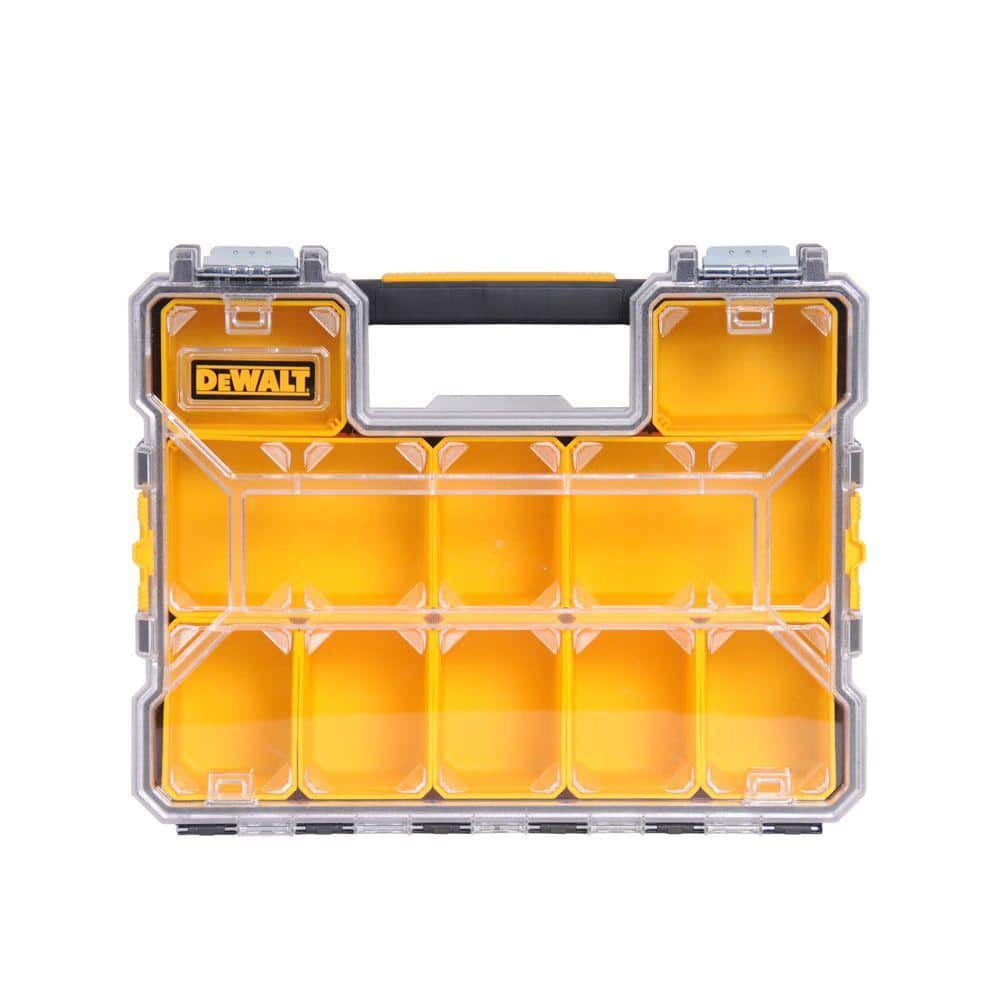
I agree that putting all the bolts in a bucket wastes some time sorting later. I also agree that you need to be able to figure out where they go, look at wear patterns, thread engagement, etc. I use the magnetic dishes, parts organizers, etc. to keep them separated. Lately I’ve leaned towards parts organizers like this:

They go on sale for $10 on Black Friday.

So let’s say it’s a home project and you work on it piece meal. This is big enough to get some long bolts in there and close and lock the lid so stuff doesn’t get lost.
 

gearhead1

Well-known member
Joined
Oct 14, 2013
Messages
1,935
Location
NC
Blaster is good for rusted fasteners, but I think Kroil is better. I will pre-spray with Kroil something I plan to work on in the future. I do that especially on older cars, stuff that hasn’t been loose for 30 years.
 

WVBrady

Well-known member
Joined
May 5, 2005
Messages
1,679
Location
WV
When my riding mower threw the drive belt, working alone, I was having trouble getting the belt past the spring keepers and onto the pulley. I removed the shield over the flywheel and then used a ratchet with a long handle to turn the engine as I guided the belt onto the pulley with my fingers.
 

junkyardwarrior

Well-known member
Joined
Nov 17, 2014
Messages
174
I'd like to learn as many things as I train to be a mechanic.

Find something else to do.

mechanics life: work all day out in the heat/humidity for a few pennies. Go home, eat, relax, go to bed, do it the next day. You get up in the morning and dread the fact that your customers think of you as always too expensive, always too slow, and always the bad guy. You get to work, and sure enough that vehicle that left the shop yesterday is back and the customer is bent out of shape because you left a smudge on the door frame. If you're lucky your boss will stick up for you. If you're like me and your boss is a jerk, the vehicle will go through detail and YOU get charged for it (out of your commission).

I no longer work for that boss. He was a boss. He was not a manager. My first boss was a super guy. He was the type that would bring you down when needed, but at the same time build you back up. If you had a problem whether it be personal or professional, he'd talk you through it such that you had a good idea which direction to go, but he never gave a clear-cut answer to your problem-he only helped you decide, and 99.9% of the time the right way. He built us all up to be good techs and our customers actually enjoyed coming to see. Then 2 1/2 years ago the new company took over and I got a boss and that was IT. They hired a crankhead for a service manager who doesn't know his **** from a hole in the ground when it comes to mechanic'ing, don't know how to handle good customers or bad customers or any customers for that matter, can't manage his own time, can't show up for work on time, can't go home on time, yet he's the one who gets a raise ever 30 days because the departments numbers are up. Well guess what the numbers don't come up because of the service manager they come up because the mechanics that are actually doing the work are working. Duh! But--the "boss" (I can think of many words to describe him), being a dyckhead who grew up just like the service manager, doesn't see things that way....mechanics are grease monkeys that don't get a thank you, kiss my ****, nothing-they're just behind-the-scenes necessary employees that, in that old boss's eyes, were a number that was easily replaceable. I heard that statement out of his mouth and set my sights on moving to another employer which I did and liking almost everything about the move. 26 years at the old place, 2 1/2 at the "new" place, and now coming up on a year at the most recent.

If you're dead set on mechanicing get yourself good at what you do such that you become an asset to the company you're working for. Then when the shop up the road wants you to go to work for them, you have a lot of leverage and a good reputation. I ain't gloating or anything but that's exactly what I did for 26 years, built the company service dept up from basically nothing to an award winning and customer-friendly profitable business that fell to an unappreciated back story when the new company took over. The day I left, for the next week (5 days) I had over 70 phone calls of former customers calling my cellphone wanting me to work on their stuff, side work. SEVENTY! I was humbled, and overwhelmed. The majority of them all say the same thing, that the "new" service manager is a jerk, and can't get anything right. With that, in the 28 1/2 years I was with both of the companies combined, I never did side work on equipment that we sold. In the few weeks of my leaving, I did more side work in that small amount of time than I ever did in 28 1/2 years prior, and made really good money doing it. Along with that came getting to know a more personal side of some of these folks and I have several that have expressed interest in helping me open up a place of my own which ain't out of the question. Another suggestion don't set foot on the tool trucks unless they have a tool that you need right now to do a job. IF it can wait til tomorrow pick that tool up after work, or on your lunch break, from somewhere else. My box is mostly off branded stuff with decent quality, but nothing snap on or mac or matco or cornwell-I have a very few matco tools that I had to buy for jobs I was doing, but it's like a special sized wrench or whatever. A 8mm ratcheting wrench with 15 degree offset comes to mind, doing recalls and broke the old one, had to have it right then. On the subject of side work, don't do it unless you KNOW them quite well. YOu get married to the equipment-and the customer. If there's a problem, and there will be if you do enough, you're (1) gonna have to eat some parts and labor and (2) may end up in a courtroom without much to stand on since you're not a business. So just don't do side work, period.
 

Lwel9226

Well-known member
Joined
Jun 7, 2014
Messages
764
Location
So Oregon
Spit on the hose to lube it for an easier fit.

Use needle nose pliers to stretch hoses as you're about to put them back and either use spit, soapy water and silicone spray to make them slide easier.
Use hand lotion to lube hoses.... parts go on easier and the lotion dries up and goes away....

LynnW
 

Jlarson

Well-known member
Joined
Mar 27, 2015
Messages
738
Location
AZ
It's amazing how many times this rule isn't followed, or at least don't throw anything away or return the core until the job is done. More than once an alternator has come without a fan and pulley and a trip back to the parts store to get the old ones off the core has been made.

When I take something like an alternator off equipment or a truck I toss it in the back if the service truck when I go to the dealer or parts place. If I need the pulley I'll just blast the nut off and then dump the core on them lol.


Find something else to do.

I think that sometimes when we're out working on something and its 115 degrees lol.
 

gearhead1

Well-known member
Joined
Oct 14, 2013
Messages
1,935
Location
NC
Removing stuck hoses: I use channellock pliers and rotate the hose from the tube it is over, in other words, break the seal. Then it pulls right off. Of course don’t squeeze too hard and collapse the tube it is on.

Putting on hoses: I take the spray bottle I use to snoop a tire leak that has a high concentration of soap and spray the tube the hose is going over.

Removing a part several times (like on a race engine): For something like a valve cover that has to come off many times to adjust valves, put a very light skim coat of high temp grease on the gasket surface. That way it is less likely to stick to the cylinder head and you can remove the valve cover several times and not have to use new gaskets each time. For some components they make non-stick gaskets now that do this like for carburetors. Obviously that won’t apply to new cars, but you may end up working on an old one.
 

bonneyman

Well-known member
Joined
Apr 22, 2010
Messages
8,752
Location
Desert SW
I discovered sanding pens (can't remember if it was this forum or not) and dang they work great of cleaning small or delicate parts. They're pen-sized cases with highly compressed fiber glass fibers jammed in there. Like ultra fine sandpaper. great for surface cleaning stainless and gunked up contacts on things like thermostats. Cheap and widely available.
Only catch - wash your hands thoroughly after using them. Microscopic fiber remnants can get on your hands and if you rub your eyes - OUCH!
 
To avoid these ads, REGISTER NOW!
Top Bottom