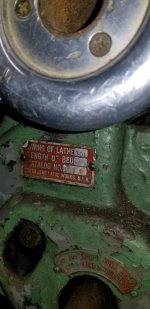
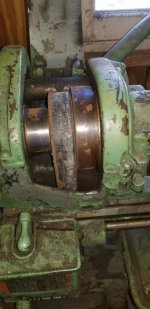
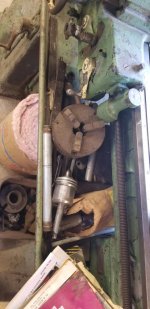
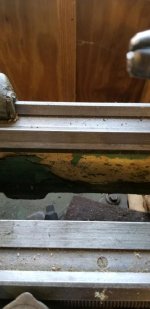
Tooling can easily exceed the value of the lathe, so do not gloss over what it comes with or assume a cheaper price is always the better deal.
I've seen many ads where my first thought is that guy is dreaming until I see all that it comes with, and in some cases I change my view all the way to that wow guy is giving it away.
Some tooling is more critical than others, yes you will want a 3 and 4 jaw chuck, but unless it has a weird spindle you can buy chucks.
A steady rest is very dependent on the machine, both brand and size, sometimes even model specific. For example a steady rest for a Southbend 10K "light 10" probably won't work on a Southbend 10L "heavy 10" because of differences in the bed and swing (Heavy 10 is actually a 10-1/2" swing vs an actual 10" on the "light 10).
A quick change gear box is very handy, but if you get a change gear type you want the gears that go with it, buying them separately adds up.
Some accessories can be worth more than the lathe due to rarity / desirability.
A 9-10" swing is a very nice and handy size, while still being pretty compact.There are some 11" lathes which are to me a real sweet spot as far as size often having the short length of the 9-10" size but often comparable to a 12-13" lathe in power and capacity, but it is not a common size and may be a bit of an orphan parts wise.
Another thing that is nice with the smaller bench top lathes is they are pretty easy to sell if you later decide it isn't big enough. Almost anybody can find room in their garage for one, which isn't true with the larger lathes so you have a wide open market of people looking for a first lathe. If you buy well, you almost have to try and lose money reselling it.
For vintage US lathes Southbend, Logan (PowrKraft - sold through Montgomery Wards), Atlas (Craftsman - Sold through Sears) and Clausing are common and parts are easy to fairly easy to find. Atlas / Clausing (they merged) is still in business and offers some support for their old machines. Logan no longer makes machine equipment, but they do provide parts and technical support.
There are tons of less well known brands, most pretty good machines but finding parts, literature etc may be more difficult.
I see a lot of people who really fuss about the price, and yes, I'd rather pay $500 than $1500 too, I'm a bit of a miser so I love a good deal. However if everything but price clicks with a machine, think about it don't just walk away. A vintage lathe will probably outlive you. Even paying an extra $1000 is peanuts over the long run. That said, there will always be another one, so don't jump on the first thing that looks nice if the price seems wrong.
Don't worry about not knowing lot about running a lathe, there are tons of youtube videos, books etc available. I had a little bit of experience running a wood lathe in highschool and have pretty much been self taught running machine tools. After 3-ish years now I almost look like I know what I'm doing and I still have all my fingers.