To avoid these ads, REGISTER NOW!

Metal siding outlets and switches

Soccer918843

Well-known member
Joined
Aug 16, 2020
Messages
52
Location
Upstate ny
I’ve decided to cover my ceiling and walls with metal roofing/ siding material what is the best way to do outlets and switches while making sure they don’t land on a large Knub on the metal. I don’t want to do conduit at all thanks
 
To avoid these ads, REGISTER NOW!

Kaizen

Well-known member
Joined
Jan 9, 2015
Messages
6,948
Location
New England
Sorry to say conduit is your best choice. Other choice is mount boxes as you are installing siding but you will have to frame where necessary to move the box in a flat. Just not worth the aggravation


Sent from my iPhone using Garage Journal
 

karoc

Well-known member
Joined
Dec 19, 2017
Messages
2,012
Location
Hemphill Tx
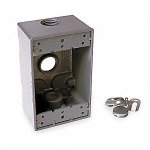
If I am understanding question right,how about using those nice weather type elec boxes and surface mount them so that all you need to do is drill hole for wire in metal then mount box.
 

Attachments

  • bell.jpg
    bell.jpg
    15.6 KB · Views: 175

Sawlog

Well-known member
Joined
Aug 5, 2020
Messages
69
Location
Illinois
Surface mount the boxes and run emt conduit. It looks great when your done. It it doesn't take long to learn how to make your bends and offsets look good.
We have done a few machine sheds this way for some farmers in our area.
 

flippin

Well-known member
Joined
May 24, 2010
Messages
740
Location
Montreal - Ottawa
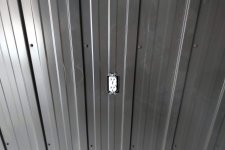
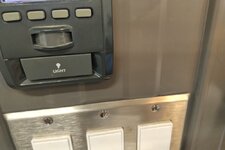
Just finished another steel panel job and we ran everything in-wall. It looks way cleaner and certainly makes hanging anything on the wall a lot easier. It does take some planning. Just get a small piece of your steel panel (must be full width) and use it to help with your spacing. Decide what corner you're going to start your panels and use the cut-off piece to help identify where the "high ribs" will land on the studs. Select the appropriate studs to install your electrical boxes. If you need to install electrical in a specific location which may coincide with a "high rib" you can always add some blocking on the stud to move your electrical far enough away to avoid the rib. Make sure to add a bit more clearance for your cover plates.
 

Attachments

  • IMG_20200905_0855295.jpg
    IMG_20200905_0855295.jpg
    123.2 KB · Views: 297
  • IMG_20200905_0855352.jpg
    IMG_20200905_0855352.jpg
    82.4 KB · Views: 305
  • IMG_20200905_0855449.jpg
    IMG_20200905_0855449.jpg
    115 KB · Views: 342
  • IMG_20200905_0855519.jpg
    IMG_20200905_0855519.jpg
    90.3 KB · Views: 300
  • IMG_20200905_0856197.jpg
    IMG_20200905_0856197.jpg
    114.4 KB · Views: 285

ScaldedDog

Well-known member
Joined
Jan 15, 2008
Messages
1,065
Location
Sedalia, CO/NSB, FL
Now owning a steel walled building, I'd think a long time before making that decision. If that's what you want, though, the post above is the way to do it. Note that the wall plates won't sit flush on the small ribs, so you'll get dirt and bugs behind them.

Mark

Sent from my SM-G986U using Tapatalk
 

karoc

Well-known member
Joined
Dec 19, 2017
Messages
2,012
Location
Hemphill Tx
My plan is to do the same as flippin,I also like the clean look. But I also plan on grounding the metal and make sure all plugs and switches are also grounded. I may also put the rms with metal on a GFI breaker just be on safe side.
Flippin thanks for pics very nice job
 

flippin

Well-known member
Joined
May 24, 2010
Messages
740
Location
Montreal - Ottawa
My plan is to do the same as flippin,I also like the clean look. But I also plan on grounding the metal and make sure all plugs and switches are also grounded. I may also put the rms with metal on a GFI breaker just be on safe side.
Flippin thanks for pics very nice job
I have been so pleased with the steel panels which I have used for both the walls and ceilings. The first project has been up for more than a year and despite all of the grinding and welding, the panels have withstood the abuse perfectly. I use extra large microfiber floor duster (24") on the walls and ceilings to knock down the dust and the panels look like new.

A few tips about the installation:

(1) we strapped the wall with 1x3, 20" oc.

(2) use a cover sheet to create drill template and pre-dill your sheets. Makes the installation much easier.

(3) use j-track to finish around doors and windows.

(4) inside corner (2") covers up any irregularities at the vertical corners and where the steel panels meet the walls (horizontal).

(5) if your going to do the ceiling keep your panels short (12'). Use back2back j-track to make the joints. Lap joints on the ceiling are never perfect especially where 4 panels intersect. Unlike a roof, gravity is working against you on the ceiling and the panels want to separate. Long panels are a pain to work with overhead and they really amplify any imperfections if your walls aren't square. 1/4" may seem small but 20' away.....

Hope this helps,

-Paul e89733da2d145fc2975cba6abdcdc108.jpge912414b3ee4fe0c758d133dc858aa90.jpgfd710cadef39d86203ebebb38a8eaea9.jpgcd5230482cc36cfbe23d3ff7a91c350f.jpg215f2691ea3df9af358d2de56fcf3591.jpgeb8ad086fca945e370fcc3958334aea6.jpg

Sent from my BBF100-2 using Tapatalk
 

Attachments

  • eb8ad086fca945e370fcc3958334aea6.jpg
    eb8ad086fca945e370fcc3958334aea6.jpg
    459.7 KB · Views: 124
  • 215f2691ea3df9af358d2de56fcf3591.jpg
    215f2691ea3df9af358d2de56fcf3591.jpg
    324.2 KB · Views: 99
  • cd5230482cc36cfbe23d3ff7a91c350f.jpg
    cd5230482cc36cfbe23d3ff7a91c350f.jpg
    333.1 KB · Views: 90
  • fd710cadef39d86203ebebb38a8eaea9.jpg
    fd710cadef39d86203ebebb38a8eaea9.jpg
    321.9 KB · Views: 89
  • e912414b3ee4fe0c758d133dc858aa90.jpg
    e912414b3ee4fe0c758d133dc858aa90.jpg
    365.2 KB · Views: 83
  • e89733da2d145fc2975cba6abdcdc108.jpg
    e89733da2d145fc2975cba6abdcdc108.jpg
    337.9 KB · Views: 80

pmiranda

Well-known member
Joined
Jul 15, 2008
Messages
1,504
Location
Austin, TX
I'm planning on using old work boxes so I can clamp the wiring to the girts and cut holes in the panels after they're up
 
To avoid these ads, REGISTER NOW!

yeldogt

Well-known member
Joined
Jan 2, 2012
Messages
18,184
Now owning a steel walled building, I'd think a long time before making that decision. If that's what you want, though, the post above is the way to do it. Note that the wall plates won't sit flush on the small ribs, so you'll get dirt and bugs behind them.

Mark

Sent from my SM-G986U using Tapatalk

Do you find the space to be loud? .... that's been a fear of mine with doing part of my new build w/ metal inside
 

ScaldedDog

Well-known member
Joined
Jan 15, 2008
Messages
1,065
Location
Sedalia, CO/NSB, FL
Do you find the space to be loud? .... that's been a fear of mine with doing part of my new build w/ metal inside
Actually not, though mine has a perforated ceiling, which I highly recommend. The thing I hate about it is that hanging things on the walls is a real pain, and every screw hole you put in will be there forever. I've partially solved the issues with a mile of Unistrut and duct tape, but it's nowhere near as easy to work with as drywall over OSB.

Mark

Sent from my SM-G986U using Tapatalk
 

imjustdave

Well-known member
Joined
Apr 9, 2014
Messages
204
Location
Sumner WA
How would you consider the cost difference, install time etc?
in the plan stages and from a wet dirt mud point of view seems like way better then sheetrock.
 

Firebrick43

Well-known member
Joined
May 12, 2015
Messages
14,117
Location
West central Indiana
Use 2-1/4 deep 4x4 square open boxes. They are fairly cheep, durable, and have plenty of room for wires. On the face you can use either single or double mud rings for single or double devices. You can buy different depth mud rings. For the flat areas put a 1/2”, if a rib is there use a 1”.(depending on height of rib). I saved off cuts of 3/4” pvc trim and would make a block for around the mud ring/under the face plate in two pieces. Used some white silicone to adheare the pvc to the steel tightening the face plate and then seal any gaps with the silicone and wiping with a rag with mineral spirts(don’t use acetone on pvc)
 

455hota

New member
Joined
Apr 20, 2012
Messages
2
Use 2-1/4 deep 4x4 square open boxes. They are fairly cheep, durable, and have plenty of room for wires. On the face you can use either single or double mud rings for single or double devices. You can buy different depth mud rings. For the flat areas put a 1/2”, if a rib is there use a 1”.(depending on height of rib). I saved off cuts of 3/4” pvc trim and would make a block for around the mud ring/under the face plate in two pieces. Used some white silicone to adheare the pvc to the steel tightening the face plate and then seal any gaps with the silicone and wiping with a rag with mineral spirts(don’t use acetone on pvc)
Firebrick43, would you have some pics of the process you described in your post above? I think in am understanding what you did, but a couple pics would make it crystal clear! Thanks in advance... Steve
 

ycgoat

Well-known member
Joined
Mar 28, 2020
Messages
971
Location
S.E. Va
LOL, I sat here and read through the whole thread and was about to make a comment.
 

455hota

New member
Joined
Apr 20, 2012
Messages
2
Yes i do realize it is an older thread. Maybe some people are like me and have many archived pics. I am trying to see what the finished product on pole barn interior steel will look like using his suggested method. It can hurt to ask…
 
To avoid these ads, REGISTER NOW!
Top Bottom