To avoid these ads, REGISTER NOW!

mig welding technique

btamkel

Active member
Joined
Dec 3, 2012
Messages
31
Location
abilene tx.
would like to start a tread on technique i really would like to hear from tfab his welds are something else. Different styles for diffrent applications and positions and also for apperance.
 
To avoid these ads, REGISTER NOW!

sberry

Banned
Joined
Jun 18, 2005
Messages
35,747
Location
Brethren, Michigan
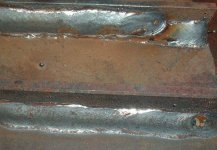
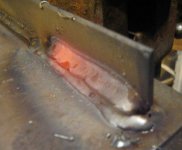
I had a small wire in for the first pic, the operator has to "work" a little, I really like to turn the machine up hot enough to let it do the work. For general work like the heat and speed, fast and hot enough to be fluid to take most of the rippling right out.
 

Attachments

  • hobart wire 3.JPG
    hobart wire 3.JPG
    47 KB · Views: 546
  • Hob set test.JPG
    Hob set test.JPG
    79.7 KB · Views: 507
  • Larry weld 1.jpg
    Larry weld 1.jpg
    154.7 KB · Views: 489
  • Hot fillet.10 JPG.JPG
    Hot fillet.10 JPG.JPG
    28.8 KB · Views: 494

cattleranchmarch

Active member
Joined
Nov 10, 2012
Messages
42
sberry those are beautiful welds! I like to get it nice and hot. Anything above 16 gauge I use kinda a continuous cursive e pattern; it helps me to see the gap and it can look similar to 7018. On the smaller stuff and when I am really moving along I trace the puddle. I like the stuff Jody at welding tips and tricks does. On that sheet on the trailer I was going downhill holding the arc mostly on the channel or angle then pulsing over onto the sheet and it rippled really nicely. Sorry those were the best close up pictures I could find.
 

Attachments

  • P8170693.jpg
    P8170693.jpg
    59.2 KB · Views: 280
  • P8170692.jpg
    P8170692.jpg
    58.8 KB · Views: 949
  • 105_0334.jpg
    105_0334.jpg
    48 KB · Views: 283
  • 104_1303.jpg
    104_1303.jpg
    56.9 KB · Views: 251

zmotorsports

ALLIANCE MEMBER
Joined
Oct 20, 2009
Messages
21,312
Location
Northern Utah
If this turns into anything like most other forums it will get heated. I hope it doesn't but just prepare yourself. You will get the NASA certified folks going on and on about how you shouldn't see any ripples in the welds and they are bad welds and then there is the other side who argues their perspective.

Here is my take. I am not a full-time weldor but I do a fair amount of welding and fabricating both at work and my home shop/business. I am 100% self taught and was certified about four years ago for a work job that came up. The company sent me to get certified rather than hire a certified weldor for this particular job. I am certified in AWSd1.1 for SMAW steel, GMAW steel, GTAW steel, aluminum and stainless steel all in 4G. That said, in my opinion the welding certifications don't mean **** for the most part. If you are working for a company that requires you to be certified then get certified for that application, otherwise I don't think it is necessary but being a good competent weldor who knows the risks and his own limitations IS necessary. On many things lives hang in the balance, you need to know that and accept that responsibility. A couple of the best weldors that I know personally are not certified and they are probably a better weldor than I am.

Paul (aka ZTFab) is also one of the best fabricators/weldors I have seen although I don't know him personally.

Keep in mind there are different applications and many times expectations from customers. Currently in the motorsports arena the "stack of dimes" is all the craze and that is what my customers are asking for and demanding. I am sure others in the same industry can chime in and they would agree. I can also lay down a smooth MIG (GMAW) weld that the ripples are not visible and no stress inclusions/risers, however, that is not what my customers are demanding so that is not the manner in which I weld most of my parts/modifications.

I guess that would be the disclaimer. Paul (aka ZTFab) has passed much of this information on to me as well as a few others on another welding forum. I have been welding in this manner for about 3+ years now with great success and many repeat customers. I also am not 100% satisfied with my welds therefore I am always striving to become better. I am sure most are the same way. I will probably never be as good as I actually want to be, that could be why I am getting so much repeat business as well.

Now on to the process in which I use and I will give credit where credit is due.

I use a process most of the time which is a series of small cursive "e"s to produce that stacked of dime look. I have seen many people do the individual tak, tak, tak, method which nets them the look they may be after but is not the real way to accomplish it. Granted on very thin material it works and is acceptible, on thicker material it is better to squeeze the trigger once and proceed to weld using torch manipulation to get the desired results.

If I have a small gap I do a moving "C" motion across the gap but I try not to have gaps in the fitment to begin with.

I hope that makes sense and maybe Paul (ZTFab) will chime in or others who can explain it better than I can.

Mike.

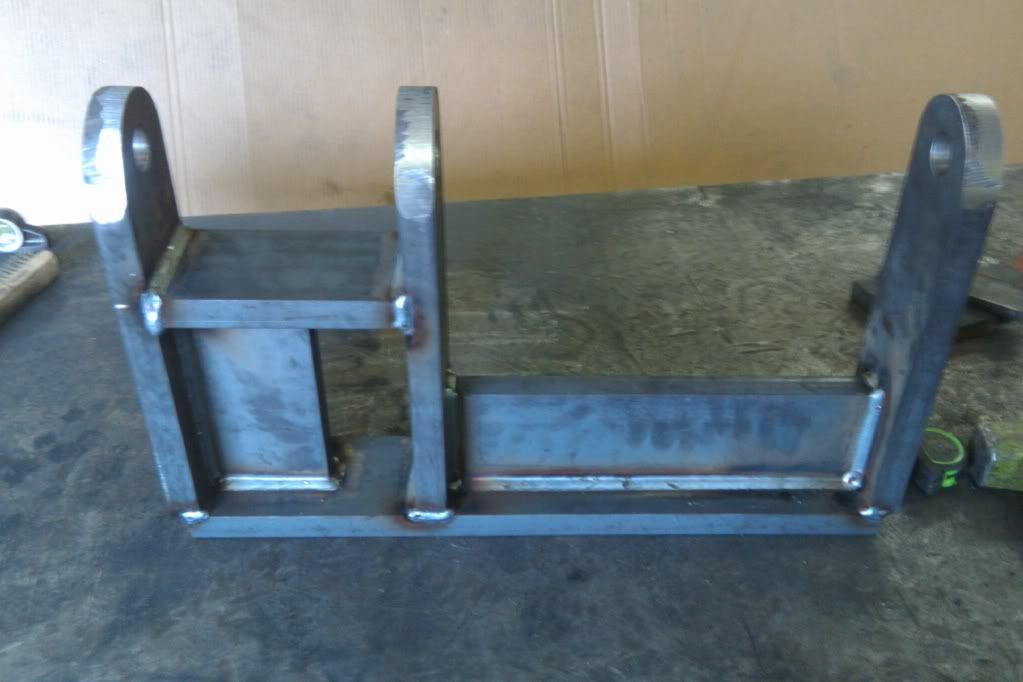
Here is a picture of a small bracket that a client brought in the other night just for reference as to the cursive "e" method and the results it nets. This was in the pulling fashion but pushing will deliver similar results dependent on gun angle. I generally have around a 20 degree lean on the gun evenly spaced across both pieces of parent material being welded.
116np1j.jpg


woc2b.jpg
 

tdkkart

Well-known member
Joined
Jun 17, 2006
Messages
6,887
Location
Eastern Iowa
A couple things to remember:

Seldom does a good weld look really bad.

It is however possible to make a bad weld look good.

A MIG weld that looks like a TIG weld, while possibly good, is likely wrong in an attempt at appearance.

Tak, Tak, Tak is WRONG, you simply cannot get the proper continuous heat in successive tack welds.

Bad welds are BAD, no matter how high you pile the goose ****.
 

Perrorojo

Well-known member
Joined
Jun 8, 2012
Messages
1,762
Location
Northern IN
I had a small wire in for the first pic, the operator has to "work" a little, I really like to turn the machine up hot enough to let it do the work. For general work like the heat and speed, fast and hot enough to be fluid to take most of the rippling right out.

Do you have any tips for welding overhead?

I can run solid welds vertical up to down and down to up all day long without much problem. For the life of me, when I am welding something overhead I might as well be pouring molten steel on the ground. I try adjust the heat and the speed with no luck. The metal is clean, the ground is good but the second I try to do more than tack, it goes to ****.
 

2manytoyz

Well-known member
Joined
Sep 20, 2011
Messages
419
Location
Central FL
I'm a newbie at MIG welding, so I'll be following this thread for any tips.

I'm also using the cursive 'e' loop technique. Seems to do a good job, and puts plenty of heat in both pieces of metal being fused together.

Built an acoustic enclosure for a pump unit at work:

dscn8615.jpg


dscn8624.jpg


dscn8629.jpg


Same technique, made a light duty hitch for my riding mower:

dscn6572.jpg


dscn6599.jpg


mower.jpg


I did watch a number of videos on YouTube on MIG welding techniques. Heat control being the biggest area of concern.

I'd like to know how some of you get those VERY consistent loops in your welds. Is there a trick, or just years of practice?
 

Murphy4570

Well-known member
Joined
Feb 27, 2012
Messages
2,821
Location
West Deptford NJ
I learned with FCAW welding first, then got into MIG and later stick welding, and now also have a TIG welder. I have found that learning how to stick weld, and all the different welding techniques for that, has made me better with FCAW and MIG. Learn and be proficient with stick, and you'll be awesome with MIG.

I have been welding about 4 years now.
 

vpd66

Well-known member
Joined
Mar 1, 2010
Messages
709
Location
Central Wisconsin
Ok, I'll play. I'm a welder by trade and have some weld certifications, don't remember what ones I'd have to dig them up. Weld certifications are just mostly for liablity reasons. I once was working at a local mill and had to weld some tie back brackets and the safety inspector came over and had me do a tee weld, then came back later and handed me a piece of paper and said I was certified! LOL The shop I work in now doesn't like us to whip or weeve our MIG welds. They call it hanging back in the puddle and says it hurts penatration. I do agree you have to turn your setting down to do the "e" or "c'" techinic. They preach hot and fast on everything and do random weld audits to make sure we are welding in the correct settings and using the right techinics. Afer 7 years of working in this shop I have to agree with them. Too many people get caught up on weld apparence and give up strength. I think not welding straight beads in MIG welding is a bad habit to form. I've seen Youtube videos of people making suspension components and MIG welding them using the tack,tack,tack method. Sure the welds look pretty, they are scarry to me!
 

vpd66

Well-known member
Joined
Mar 1, 2010
Messages
709
Location
Central Wisconsin
I'm a newbie at MIG welding, so I'll be following this thread for any tips.

I'm also using the cursive 'e' loop technique. Seems to do a good job, and puts plenty of heat in both pieces of metal being fused together.

Built an acoustic enclosure for a pump unit at work:

dscn8615.jpg


dscn8624.jpg


dscn8629.jpg


Same technique, made a light duty hitch for my riding mower:

dscn6572.jpg


dscn6599.jpg


mower.jpg


I did watch a number of videos on YouTube on MIG welding techniques. Heat control being the biggest area of concern.

I'd like to know how some of you get those VERY consistent loops in your welds. Is there a trick, or just years of practice?

The welds on that hitch look cold. In the future, grind off any mill scale where you are going to weld. It takes like 3 times the heat of the base metal to burn through mill scale.
 

vpd66

Well-known member
Joined
Mar 1, 2010
Messages
709
Location
Central Wisconsin
I learned with FCAW welding first, then got into MIG and later stick welding, and now also have a TIG welder. I have found that learning how to stick weld, and all the different welding techniques for that, has made me better with FCAW and MIG. Learn and be proficient with stick, and you'll be awesome with MIG.

I have been welding about 4 years now.

I agree 100%. Thats how I was taught when I took the Welding course at Tech school. Learn the basics first.
 

zmotorsports

ALLIANCE MEMBER
Joined
Oct 20, 2009
Messages
21,312
Location
Northern Utah
I learned with FCAW welding first, then got into MIG and later stick welding, and now also have a TIG welder. I have found that learning how to stick weld, and all the different welding techniques for that, has made me better with FCAW and MIG. Learn and be proficient with stick, and you'll be awesome with MIG.

I have been welding about 4 years now.

I started stick (SMAW) when I was about twelve years old. Living/working on a farm there was always something that needed to be welded and my dad thought I should know how to weld.

He taught me what he could but my interest and devotion to becoming better and better has driven me to pursue welding and fabrication as an added skill to my resume and an extra service to provide to people looking to hire me and my shop.

After getting pretty good with stick I saved up and purchased my first MIG welder while in high school and became proficient but TIG was what I really wanted to learn. I bought a TIG (GTAW) about ten years ago but really struggled learning. I had an old timer tell me to go back and practice/get proficient at gas welding (oxy-actylene) and then TIG would come right to me. Lo and behold he was right. I picked up TIG quite well after that. I then upgraded my TIG welding machine about four years ago and probably do about 70/30 percent (70 TIG/30 MIG) at my home shop and just the opposite at my full-time job.

Ok, I'll play. I'm a welder by trade and have some weld certifications, don't remember what ones I'd have to dig them up. Weld certifications are just mostly for liablity reasons. I once was working at a local mill and had to weld some tie back brackets and the safety inspector came over and had me do a tee weld, then came back later and handed me a piece of paper and said I was certified! LOL The shop I work in now doesn't like us to whip or weeve our MIG welds. They call it hanging back in the puddle and says it hurts penatration. I do agree you have to turn your setting down to do the "e" or "c'" techinic. They preach hot and fast on everything and do random weld audits to make sure we are welding in the correct settings and using the right techinics. Afer 7 years of working in this shop I have to agree with them. Too many people get caught up on weld apparence and give up strength. I think not welding straight beads in MIG welding is a bad habit to form. I've seen Youtube videos of people making suspension components and MIG welding them using the tack,tack,tack method. Sure the welds look pretty, they are scarry to me!

Not necesserily. Again, like I said this will get opinions at every extreme and many of them are just that, opinions. I mentioned needing to know the method for the job at hand and ability to perform that is what makes a good weldor.

That said, my customers want one thing and that is what I will provide. It is not a bad weld it is merely a different approach. I also said that this is more apparent in the motorsports industry than general industrial which it sounds like the field you are in. There are way to many off-road and NASCAR vehicles out there welded in this manner that have proven it to be strong to say it is a bad form of welding. Merely a different technique.

You can't get on any weld forum without this topic being beaten to death. I posted the differences of the various techniques in my first comment in hopes that this wouldn't get turned into another one of "those" threads but I guess I was wrong.

Mike.
 

2manytoyz

Well-known member
Joined
Sep 20, 2011
Messages
419
Location
Central FL
Here's the video where I saw this technique demonstrated:


Miller's MIG training video also shows a zig-zag technique. Jump to minute 1:40. They do say to STAY ON THE LEADING EDGE OF THE PUDDLE, which is different than the cursive 'e' method I've been trying:


There's a couple of good videos here for fellow newbies to watch. Explains the heat management (weld penetration) techniques.


ImLow78

Active member
Joined
Sep 23, 2012
Messages
28
Location
in a state of confusion.
image-46.jpg


image-44.jpg


That weld profile you see in those two picture was done by pushing the wire forward of the weld then slightly pulling back and allowing the puddle to fill then moving forward and repeating the process. That was Short circuit.

IMAG0056.jpg


IMAG0057.jpg


That weld profile on those two picture was done with a steady and constant speed while pushing the wire. (Zero movement). But that is on Mig Pulse.

Your joint fit up makes a big difference also. <--- just some food for thought

Shannon
 
Last edited:

Mike007

Well-known member
Joined
Dec 4, 2010
Messages
2,590
I have seen many people do the individual tak, tak, tak, method which nets them the look they may be after but is not the real way to accomplish it.

I find it amazing people are actually using this method on heavier material to get a look. Common sense would tell even the not-too-bright people the weld will not be nearly as strong and it can't be good for the machine running it like that. :eyecrazy:
 
OP
B

btamkel

Active member
Joined
Dec 3, 2012
Messages
31
Location
abilene tx.
thanks zmotorsport said it well and thats why i wanted to start this tread. Alot of my jobs i use mig due to speed, materials and size just to start with. I also have customers wanting the stack of dime look on my mig jobs so i figure if thats what i have to do i want them to look as best as i can. i can get close but i think im still missing an important step in there somewhere to get the look paul does, im not saying i am in his leauge by no means but i do have some skills! Also i have to admit it really looks cool! i just dont want to have to tig everyjob i do.
 

vpd66

Well-known member
Joined
Mar 1, 2010
Messages
709
Location
Central Wisconsin
I started stick (SMAW) when I was about twelve years old. Living/working on a farm there was always something that needed to be welded and my dad thought I should know how to weld.

He taught me what he could but my interest and devotion to becoming better and better has driven me to pursue welding and fabrication as an added skill to my resume and an extra service to provide to people looking to hire me and my shop.

After getting pretty good with stick I saved up and purchased my first MIG welder while in high school and became proficient but TIG was what I really wanted to learn. I bought a TIG (GTAW) about ten years ago but really struggled learning. I had an old timer tell me to go back and practice/get proficient at gas welding (oxy-actylene) and then TIG would come right to me. Lo and behold he was right. I picked up TIG quite well after that. I then upgraded my TIG welding machine about four years ago and probably do about 70/30 percent (70 TIG/30 MIG) at my home shop and just the opposite at my full-time job.


Not necesserily. Again, like I said this will get opinions at every extreme and many of them are just that, opinions. I mentioned needing to know the method for the job at hand and ability to perform that is what makes a good weldor.

That said, my customers want one thing and that is what I will provide. It is not a bad weld it is merely a different approach. I also said that this is more apparent in the motorsports industry than general industrial which it sounds like the field you are in. There are way to many off-road and NASCAR vehicles out there welded in this manner that have proven it to be strong to say it is a bad form of welding. Merely a different technique.

You can't get on any weld forum without this topic being beaten to death. I posted the differences of the various techniques in my first comment in hopes that this wouldn't get turned into another one of "those" threads but I guess I was wrong.

Mike.

First off, my post was not an attack at yours or anyones welds. I never said your welds were bad. I simply stated what my current place of employment wants for weld beads and why.
 

Murphy4570

Well-known member
Joined
Feb 27, 2012
Messages
2,821
Location
West Deptford NJ
thanks zmotorsport said it well and thats why i wanted to start this tread. Alot of my jobs i use mig due to speed, materials and size just to start with. I also have customers wanting the stack of dime look on my mig jobs so i figure if thats what i have to do i want them to look as best as i can. i can get close but i think im still missing an important step in there somewhere to get the look paul does, im not saying i am in his leauge by no means but i do have some skills! Also i have to admit it really looks cool! i just dont want to have to tig everyjob i do.

Hah, charge extra for TIG if that's what the customer wants.

People for some reason think ALL types of welding should look like TIG welds. I inform them otherwise if they ask. I want PENETRATION and HEAT in the weld, I don't give a damn how it looks as long as the bead is run straight, true, and HOT. The bead does usually look very good, just not that "stack of dimes" look. I try to set the machine to an amperage just below the point where I would melt the base metal excessively. Takes a bit of finesse.
 
To avoid these ads, REGISTER NOW!

vpd66

Well-known member
Joined
Mar 1, 2010
Messages
709
Location
Central Wisconsin
Hah, charge extra for TIG if that's what the customer wants.

People for some reason think ALL types of welding should look like TIG welds. I inform them otherwise if they ask. I want PENETRATION and HEAT in the weld, I don't give a damn how it looks as long as the bead is run straight, true, and HOT. The bead does usually look very good, just not that "stack of dimes" look. I try to set the machine to an amperage just below the point where I would melt the base metal excessively. Takes a bit of finesse.

This is exactly what the company I work for wants. We've had customers comment about the looks of our welds ,but my company stands behind our straight weld beads and if they really want a stack of dimes they say it will cost more and have it TIG welded. Before anyone else jumps on me about this, remember I'm just stating what the company I work for wants. I not saying anyones welds are bad. I would just like people to know the theory behind it, and try to realise that a good MIG weld doesn't alway look like a stack of dimes. Next time your doing a weld. Take a piece of scrap the same thickness of what your welding and weld a tee weld with your settings and techinic. Then put it in a vise or press and break it. Look at the pieces and see if you have penetration in the root of the joint. Better yet post the picture of the broken weld joint for everyone to take a look at. Anytime someone disputes the weld settings and techinics at work they challenge it with a break test and the company is always right.
 

zmotorsports

ALLIANCE MEMBER
Joined
Oct 20, 2009
Messages
21,312
Location
Northern Utah
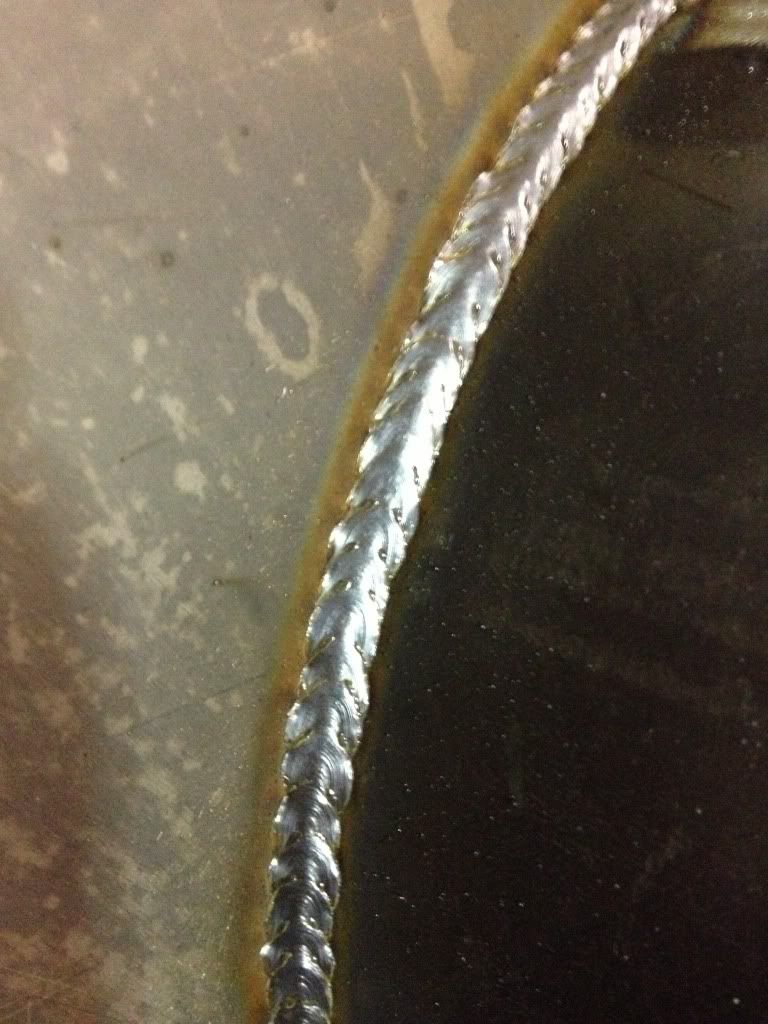
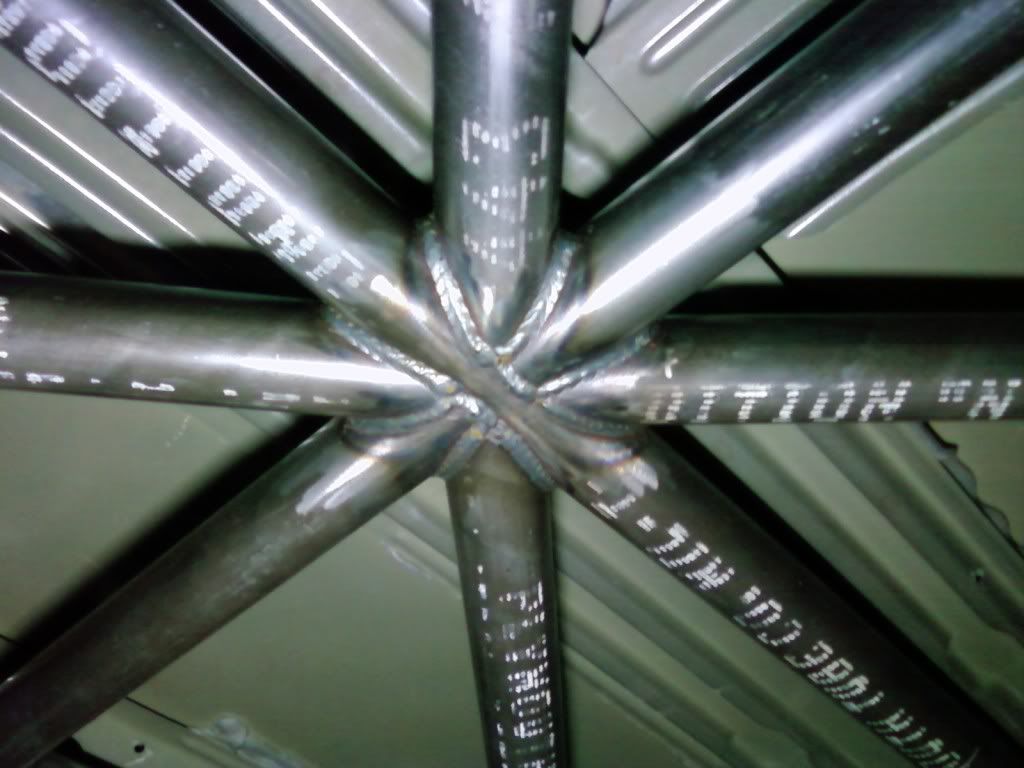
Couple more welds using the cursive "e" method.

Mike.

33z5to4.jpg


Tube joint on a bicycle rack/rail that I fabricated for a local company to put outside their front door. When finished I had it powdercoated in silver vein.
15dkn0z.jpg


219e6s.jpg


5vwrqx.jpg


Completed prior to sending off to powder coater.
5otda1.jpg
 

vpd66

Well-known member
Joined
Mar 1, 2010
Messages
709
Location
Central Wisconsin
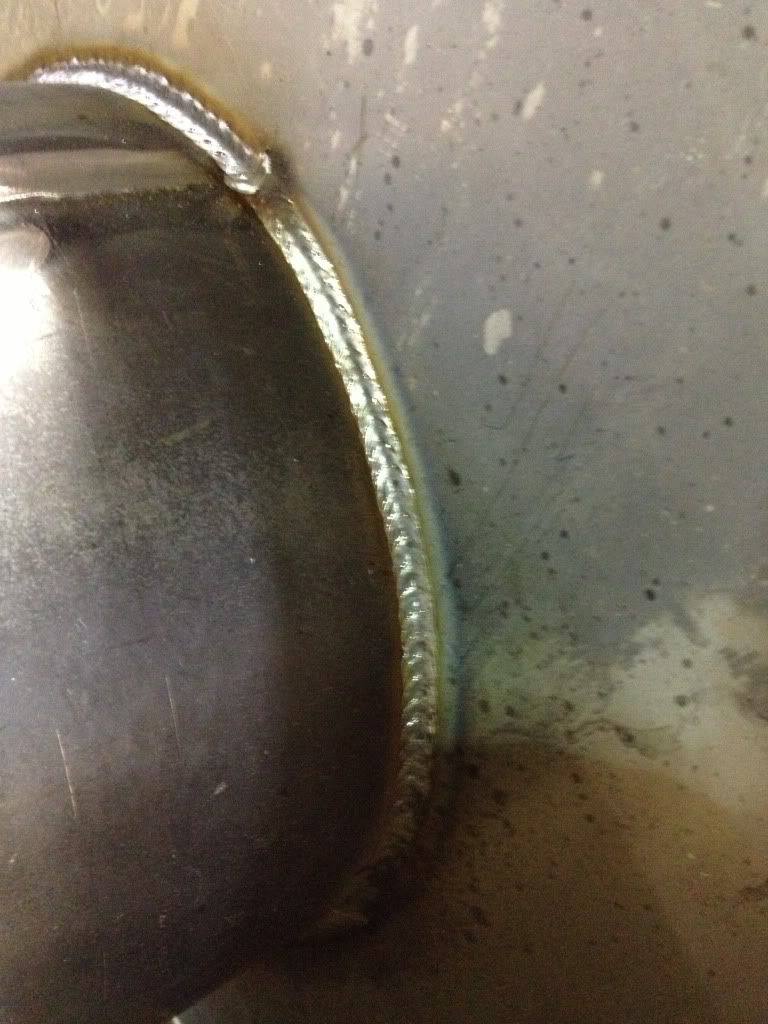
On the picture of the pipe welded to the plate. you will notice that the weld bead is just laying on the plate. this is where the weld bead makes contact with the plate. The reason it looks like this is because the plate has mill scale on it. Not saying it is a bad weld, but a potential problem. Try to get into the habit of grinding the mill scale off. Otherwise the welds look good.
 

TwetoGAC

Member
Joined
Dec 8, 2012
Messages
13
Welding has been VERY, VERY , VERY good to me. I spent more then 30 years in welding manufacturing on the engineering side. I have a degree in welding. I have been a certified in MIG and stick. I'm now retired, but one of my hobbies is welding. 90% of all the welding that I do at home is TIG.

All I want to do is add a little perspective to the conversation. MIG welding is designed to go fast, if you have been told that MIG welds should have a nice pattern about them then whoever is telling you that does not understand the welding process. When you get the machine dialed into the base material thickness and the heat and wire speed are correct and the angle of the torch correct you go. No patterns are necessary. The size of the weld in relation to the parent material is very important also. If you put in a weld too small for the required strength then it is a bad weld no matter what kind of pattern you use. We randomly tested to destruction and found that the best welds are the straight welds with no patterns.

The original idea of welding a pattern (roll of nickles} was to over come the lack of having the correct heat, wire speed, gas etc. for the weld. By slowing way down and spending more time in the area to build a puddle and then slowly working a pattern down the seam is inefficient and if the management of the company requires it then they are losing a lot of money.

In my 30 years, I was always working the politics of this. Whenever I had to break-in a new boss, I had to sit down with them and show them the test results and the welding speeds that were required to make money. As soon as I explained the bottom line to them then they understood why patterns are bad.

On a side note. Some where in this thread the question of proper training was brought up. Here's a question for you what's a "keyway". If you know the answer then you have been well trained.

OK, now you are free to attack me.
 

jhn9840

Well-known member
Joined
Mar 11, 2007
Messages
1,189
Location
Northern Panhandle of WV
I was taught that the hey hole was formed when the sides of the material being welded burn away on either side of the puddle. The hole that is left allow penetration and the two materials to be tie into each other. This is dependent on proper heat,speed & rod/wire angle.

jhn9840
John
 

t100

Well-known member
Joined
Sep 3, 2009
Messages
6,101
People for some reason think ALL types of welding should look like TIG welds. I inform them otherwise if they ask. I want PENETRATION and HEAT in the weld, I don't give a damn how it looks as long as the bead is run straight, true, and HOT. The bead does usually look very good, just not that "stack of dimes" look. I try to set the machine to an amperage just below the point where I would melt the base metal excessively. Takes a bit of finesse.

just ask them to look at some robotic mig welds, you rarely see any ripples in them.
 

Heavy Metal Doctor

Well-known member
Joined
May 26, 2010
Messages
5,417
Location
Mason Dixon Line
On a side note. Some where in this thread the question of proper training was brought up. Here's a question for you what's a "keyway". If you know the answer then you have been well trained.

OK, now you are free to attack me.

I LOVE IT!:lol_hitti We get rocket scientists all the time who want to buy a "keyway" from us to go with the shafts / sprockets etc for the machines....
 

zmotorsports

ALLIANCE MEMBER
Joined
Oct 20, 2009
Messages
21,312
Location
Northern Utah
didnt really go well so we will call this tread dead!


Sad but you are correct. I told you in my first post the direction it would go. I don't think there is a weld thread on the internet than can exist due to all of the "only right way" to weld participants. Too many keyboard professors out there who say their way is the only way because they have been to school or have a degree or saw a guy one time do it this way.

If a good weldor can only weld the one way they were taught in school and nothing else will change their mind then I guess I am not a good weldor. I have developed a feel for my customers and have enough common sense to know when to weld in which manner and have made a good living in doing so. I can feed the keyhole, not keyway, with the best of them.

Like I mentioned the motorsports industry is totally different than the industrial industry. I work in both and can weld to satisfy both industries. In the motorsports industry welding and fabrication is just as much art as it is fuction. The industrial industry is function 100%.

I can see why Paul (aka ZTFab) chose not to dive into this thread. I apologize to the OP being a new member that this was his inaugural thread.

Mike.
 
Last edited:
OP
B

btamkel

Active member
Joined
Dec 3, 2012
Messages
31
Location
abilene tx.
Thanks Z but you dont need to apoligize for anything i knew what i was getting in to. I'm the one who should apoligize especialy to paul for even bringing his name up, but i do think you for your input i think you are the only one who understood what this tread was about, that being techiques to acheive a certain apperance and yes i do more automotive fab than I do ship building and I havent had a chance to practice my keyhole technique lately. Like i said before i just wanted to know how paul made his mig welds look like they do cause there is a place in my small shop for the need to know how to weld in this style. As far as being a weldor i wasnt looking for right are wrong just a how he did it!
 
Last edited:

vpd66

Well-known member
Joined
Mar 1, 2010
Messages
709
Location
Central Wisconsin
Thanks Z but you dont need to apoligize for anything i knew what i was getting in to. I'm the one how should apoligize especialy to paul for even bringing his name up, but i do think you for your input i think you are the only one who understood what this tread was about, that being techiques to acheive a certain apperance and yes i do more automotive fab than I do ship building and I havent had a chance to practice my keyhole technique lately. Like i said before i just wanted to know how paul made his mig welds look like they do cause there is a place in my small shop for the need to know how to weld in this style. As far as being a weldor i wasnt looking for right are wrong just a how he did it!

I'd be more interested in what machine he is running and his settings. Every machine has a different arc quality and he seems to have a machine with a real soft arc. Or he has a machine with adjustable inductence. I doubt he could lay down the same weld with your welder.
 

rwhite692

Well-known member
Joined
Mar 4, 2008
Messages
1,850
Location
Central Valley, CA
....I had an old timer tell me to go back and practice/get proficient at gas welding (oxy-actylene) and then TIG would come right to me. Lo and behold he was right.


^^^ Absolutely! I found the same to be true.

I'd also add, for folks just starting out with TIG, that when learning TIG, learn on aluminum first.

As challenging as it is, you will develop more control and consistency (out of necessity) on Aluminum, and it will be easier to get good results sooner (because you will have developed better habits/control) than if you had learned on (more forgiving) steel first.

I'd also like to point folks to Jody Collier's web pages and videos, as well as the WeldTalk message boards, for tons of great info, much more than it is possible to find here on GJ:

www.weldingtipsandtricks.com

http://www.hobartwelders.com/weldtalk/forum.php
 

zmotorsports

ALLIANCE MEMBER
Joined
Oct 20, 2009
Messages
21,312
Location
Northern Utah
I'd be more interested in what machine he is running and his settings. Every machine has a different arc quality and he seems to have a machine with a real soft arc. Or he has a machine with adjustable inductence. I doubt he could lay down the same weld with your welder.

For MIG he uses a Lincoln Powermig 200. He has many of his specifications in his shop thread. He really is an artist with a welder. Here is a link to his garage/shop thread where he reveals all of his "secrets".
http://www.garagejournal.com/forum/showthread.php?t=87159&page=2

I agree but lets not ask i dont think we need to start a riot over red vers blue!

Yeh, we don't need to throw another splash of fuel on the fire and start that debate. There seems to be pros and cons to just about every make model out there.

I am sure it boils down to what everyone has in their own shop as to which is the best.:lol:

I am sure everyone has already heard this before but I cannot emphasize it enough, use some scrap of the same thickness you will be welding and get voltage and wire speed set before welding on the actual part as even the same exact welders will have different "personalities" and will require different settings. I keep a notepad in my toolbox at work and a small chart near my welders at home that has many of the settings for various things that I weld at work just so once I get the machine dialed in spot on I can come back a week or a year later and duplicate it.

Mike.
 

kc-steve

Well-known member
Joined
Jun 22, 2010
Messages
4,240
Location
Kansas City
Actually, I was thinking vpd66 had a good idea so we know what welder was used for the examples shown, so people can see what to expect from a specific welder. I currently have a stick welder, top quality, but I'm in the market for a new MIG. If anyone has a Hobart's welds, please post them up with the settings used. I could be wrong but I think sberry is using a Hobart.

The fact is, some of us cannot afford the $1500 pro migs. You get the idea I hope, otherwise the thread is of no real benefit to me.

Thanks,
Steve
 
Last edited:

sberry

Banned
Joined
Jun 18, 2005
Messages
35,747
Location
Brethren, Michigan
I got most of them too and yes a Hobart 210, a very good machine and a guy would have to be pretty discriminating to find a flaw if running it within its parameters. There is always an argument about voltage taps etc but to tell the truth in this class of machine,, those say designed for common 50A service I like taps, I like it way better than fine. My old
SPT is almost perfect for the 030 it was tuned for. The 255 with variable i got to fuss with constant and easy to forget that the dial may have got bumped tweaked etc when it goes to ****, the little tap machine is spot on every time. I dont need to test or reset.

K C, As for pro migs these little compacts are pro in every sense they can deliver better than most operators they were designed for and 1500 doesnt cover the top of these, I dont recall what a MM252 cost these days??? If I wanted a full size unit to use big spools etc, longer cycles, hi use in a small shop would have to consider the IM230 in that 1500 range. If I wanted a compact any of the other Hobart products would be fine and although I am an ITW fan the Lincolns at the box store are super, same machine they always made with different model numbers and they work well.

I can put whippy dippys in it too and get fusion like these other guys do, that looks fine especially with the experienced operators that realize what they are looking for in regards to fusion,,, I can but dont do it unless I have to, I generally have the machine turned up to do the work without much help from me and not every weld has to be perfect or ulitmate strength, many heavy pieces held on in this world with smaller welds, adequate is a good word sometimes, part timers tend to add extra and is common with design build, easier to run a little more than calculate the minimums etc.
 
Last edited:

sberry

Banned
Joined
Jun 18, 2005
Messages
35,747
Location
Brethren, Michigan
I am going to put some typicals in, most were not intended to get picture perfect pics but of real work. 1st pic, the face, second the rood with a defect to aid breaking but this is not both sides welded but from one side, the root is what it is.

This is a 1/4 open ****, no bevel welded from one side, tried to leave a little, can see the bend and had to hammer it flat to get a break.
 

Attachments

  • wire feed ****.JPG
    wire feed ****.JPG
    97.4 KB · Views: 88
  • wire feed **** back.JPG
    wire feed **** back.JPG
    101.2 KB · Views: 83
To avoid these ads, REGISTER NOW!
Top Bottom