To avoid these ads, REGISTER NOW!

Mini-Split Prep

fordluver4x4

Active member
Joined
Jan 20, 2020
Messages
28
Location
Pennsylvania
I'm getting ready to insulate and drywall my shop. Before I do I'd like to run wires for a future mini-split. this means I need to know what size wires to run and where to run them.

My shop is 32x30 with 10' ceiling. I have 2x6 walls and will be doing R21 insulation, the ceiling will be blown insulation. I'm looking at 24,000 BTU units as they seem to cover roughly the correct sq ft. I'm in it mostly for the heating, but it may be used to cool once in a while as well. I'm planning to get a unit with the frost prevention mode to keep the shop just above freezing most of the time, and just heat it up more when I'm actually going to work out there. I'm in south central PA.

I'm new to mini-splits but most that I'm looking at seem to in the 240 volt 10 amp range. From what I know of electrical 12 gauge wire should be more than enough correct? The wiring stuff I've looked at for mini-splits seem to show that they use 2 conductor (plus ground) wire even for 240, two hots and no neutral, is that correct? that seems odd to me but it seems to be what I've found. So I guess what I'm asking is, will 12/2 w/ ground be sufficient for most/all mini-splits of this size? If so, can I use standard romex like I use for wiring outlets (which I have), or do I need something else since it's going to be 240 volt and have two hots?

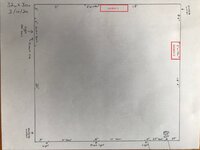
As for location. I'm thinking either centered on the back wall ("Location 1") or over the window on the right wall ("Location 2). The location 1 wall is west facing and location 2 wall is north facing. I'm thinking location 1 is probably best because it's more centralized and further from the garage doors. Location 2 is over my work area however it's closer to the garage doors, has cabinets etc near it which could effect air flow, and it's on a north wall which means the outside unit would almost never get sun (for melting snow etc off the unit). I could also do the west wall but closer to the corner where my work area is, but then it's less centralized. Thoughts? how much does location matter?

Thanks for any insight.
Garage Drawing Mini Split.jpg


IMG_2180 mini split.jpg
 
Last edited:
To avoid these ads, REGISTER NOW!

jjrbus

Well-known member
Joined
Dec 8, 2018
Messages
616
Location
Florida
The 220 line will be run to the outside unit, for my application I used 2 12 gauge stranded w ground THHN in conduit, cannot put romex in conduit in wet location. A communication wire will be run for the outside unit to the inside unit. I would like to specify a wire but it gets a bit confusing, more so if an inspection is called for. I know my Daikins used a 4 conductor 16 ga tray cable. Would have to use 14 ga over a certain footage and you may need more conductors???. HTH
 

quickfarms

Well-known member
Joined
Feb 14, 2021
Messages
1,027
Location
Southern California
I have a 2.5 ton mini split down stairs.

it started out with two 12,000 btu cassettes attached and an extra capacity that was used for the living room.

thus runs on a 30 amp 220 circuit so I would run 10 gauge wire and get the next larger unit
 
OP
F

fordluver4x4

Active member
Joined
Jan 20, 2020
Messages
28
Location
Pennsylvania
The 220 line will be run to the outside unit, for my application I used 2 12 gauge stranded w ground THHN in conduit, cannot put romex in conduit in wet location. A communication wire will be run for the outside unit to the inside unit. I would like to specify a wire but it gets a bit confusing, more so if an inspection is called for. I know my Daikins used a 4 conductor 16 ga tray cable. Would have to use 14 ga over a certain footage and you may need more conductors???. HTH
To my understanding I will need a disconnect on the outside of the building, I'm currently only planning to run the wire that goes to that disconnect. I'll probably just coil the wire behind the drywall and leave that section of drywall unfinished for now. I'll also leave the section of drywall at the electric panel unfinished with the other end of the wire coiled behind it. I suppose I could go ahead and install the disconnect, that way I could hook the wire up and finish all the drywall. Either way, the wire I'll be running now will be run inside the wall/ceiling and will only go through the wall to the disconnect. Would romex be fine from the panel to the disconnect?
I'm not currently concerned with the communication wires or the wire from the unit to the disconnect, as they'll be run later and from what I've seen, most units come with those wires.
Thanks
 
OP
F

fordluver4x4

Active member
Joined
Jan 20, 2020
Messages
28
Location
Pennsylvania
I have a 2.5 ton mini split down stairs.

it started out with two 12,000 btu cassettes attached and an extra capacity that was used for the living room.

thus runs on a 30 amp 220 circuit so I would run 10 gauge wire and get the next larger unit
Are you saying I should run 10 gauge to be sure I'm covered for a 24,000btu unit or that I should go with a bigger unit thus needing bigger wire?
 

jjrbus

Well-known member
Joined
Dec 8, 2018
Messages
616
Location
Florida
Bigger is not always better! Need a local electrician to make the call on wire. the whip from the disconnect to unit to my understanding would be wet location. NOw that I read it, romex to the disconnect and THHN from the disconnect to the unit. Or is the outside disconnect considered a wet location? Don't mean to confuse, it is not me it is the NEC, to me depends on inspection or not, no inspection romex to the disconnect, THHN in waterproof flex conduit to the unit? Inspection, need to get it right by local code.
 

Toomanytools?

Well-known member
Joined
Nov 4, 2010
Messages
855
Location
Washington
If you have an idea what brand and model, MrCool, Mitsubishi and so on, you can look up installation requirements. I think location 1 works better, but might consider if the outdoor unit is on a southern side. You need power to outdoor unit with a disconnect and a 120v outlet to the head unit inside.
 
OP
F

fordluver4x4

Active member
Joined
Jan 20, 2020
Messages
28
Location
Pennsylvania
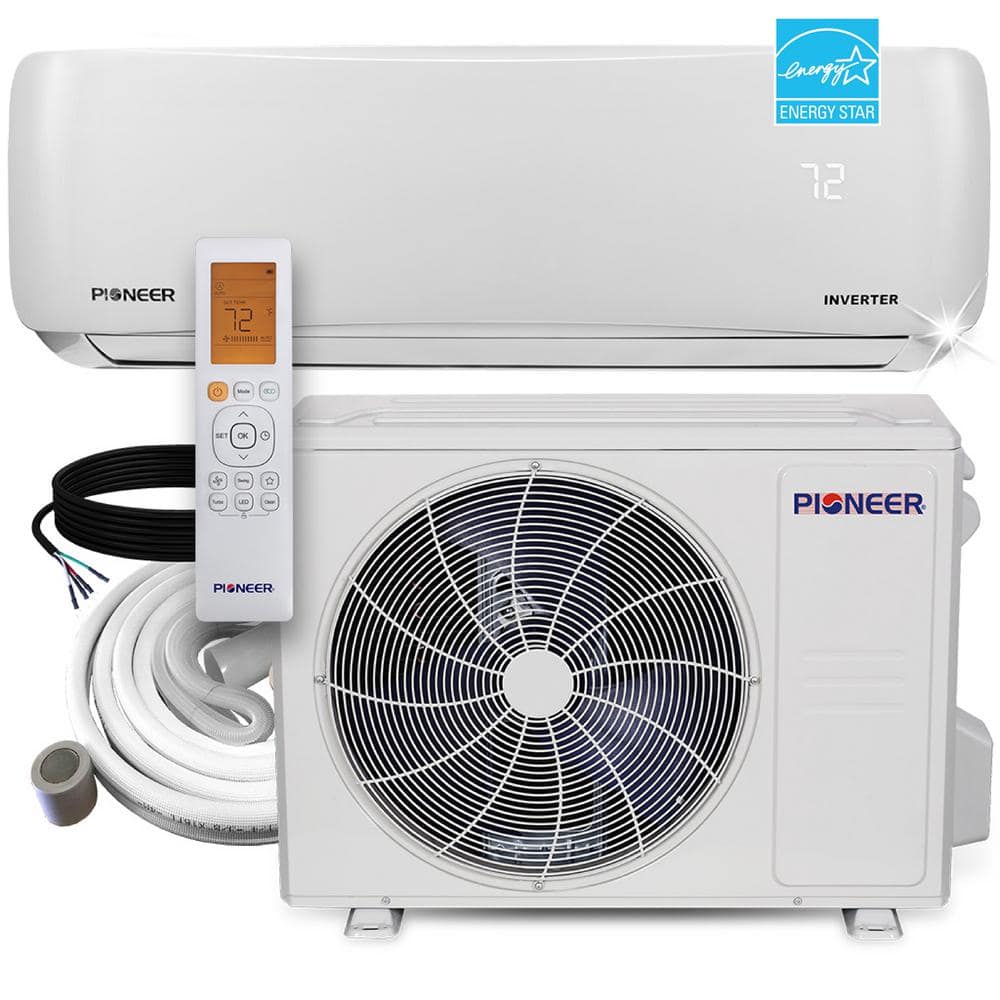
At this point I'm leaning towards a Pioneer as I know they have a frost prevention mode (heat to 46 degrees) and they can operate down to -13 degrees (their better models, not their cheapest). Their specs say 8.4 amps and their chart shows that would only need an 18 gauge wire. I'm not ready to buy yet, at best I'll be buying one next summer, so I don't want to limit myself to this as I could change my mind on what unit or it could be unavailable when I'm ready to buy. But it seems to me that 12 gauge should be ok. Also it was mentioned that I need an outlet for the indoor unit, I was under the impressing it got it's power from the outdoor unit. Below is the wiring diagram for the Pioneer unit, it looks like the only wires going to the indoor unit come from the outdoor unit. Can anyone confirm?


mini split pioneer wiring.jpg
 
To avoid these ads, REGISTER NOW!
OP
F

fordluver4x4

Active member
Joined
Jan 20, 2020
Messages
28
Location
Pennsylvania
so I can run my normal 12/2 romex and just mark the white wires on each end as hot correct?
I can run it from a double pole 20 amp breaker to a disconnect box like this https://www.homedepot.com/p/Square-...use-AC-Disconnect-QO200TRCP/202353314#overlay ? I'll just leave the breaker off till I install the unit, but that way it's all in and I can finish up all the drywall. Would there be any reason I shouldn't go with a 20 amp breaker? From my understanding that wiring setup should cover pretty much any mini-split I want to put in, correct?

Separate question that pertains to closing up the drywall. I had been thinking of running the a/c lines inside the 2x6 wall, now I'm thinking I won't bother as it seems like more work and would prevent me from finishing the drywall first. Any pros or cons to running the lines inside the wall?
 

Poltax

Well-known member
Joined
Mar 23, 2007
Messages
223
Location
UT
We just finished building a house. I had all of the electric, A/C, & drain lines run before drywall for the two units in the garage. Was not sure when I was going to install. We just had the Mistubishi units installed. The installer loved the fact that everything was pre run. The best part was no extra finish work after install.
 
OP
F

fordluver4x4

Active member
Joined
Jan 20, 2020
Messages
28
Location
Pennsylvania
We just finished building a house. I had all of the electric, A/C, & drain lines run before drywall for the two units in the garage. Was not sure when I was going to install. We just had the Mistubishi units installed. The installer loved the fact that everything was pre run. The best part was no extra finish work after install.
did you run the lines inside the wall cavity?
 

shade

Well-known member
Joined
May 5, 2010
Messages
335
Location
Phoenix, AZ
Down side to inside the wall...
1. If theres a drain line issue you could get your walls wet (asuming you run your drain lines in the wall cavity as well.
2. What about if the copper line sweats? I would think you then again run into water behind the drywall...
 

kelpaso1

MEMBER EMERITUS
Joined
Sep 28, 2009
Messages
3,962
Location
New Brunswick
When you set up the outside unit, DON'T use wall brackets screwed to the side of the garage wall for the outside unit. The vibration and hum will drive you nuts. Best is to get a 24x24 patio stone and make a metal stand for it to sit on its own not connected to the garage wall.
 

Jackfre

Well-known member
Joined
Dec 26, 2010
Messages
4,407
Location
N CA
As to location 1 or 2, consider that in the cooling mode, the air will be blown horizontally out of the unit to settle into the space, cold air being heavier than warm. In heat, the air blows almost straight down to the floor and will run across the floor. My Fujitsu’s blow 130* air in heat. Where are your work benches? Most 24k units will have 4-way air sweeps. Picking mini-splits can be tricky as specs vary greatly even within the same brand. Pretty sure you will need 30 amps for a 24. An 18, which I think will be sufficient for your space, will run on a 20 amp…but what was I saying about checking specs;)
 

C2F

Well-known member
Joined
Nov 5, 2018
Messages
101
Location
New Jersey
As a heavy commercial Hvac mechanic. I install and service a lot of mini splits and VRF systems in the Philadelphia region. With that said here is some advice. And a submittal sheet for a 24k Fujitsu.


per a 24 submittal a 2 pole 20 amp circuit breaker is needed. Minimally 12/2 is needed (consult electrical code). You can run the wire through to the outside wall and install your disconnect box now if you want. Have the box go to the right of the condenser. I don’t know of a single modern mini split with electric on the left side.
You can run the line sets and drain in the wall. Get the line sets with the good insulation. Looks plastic like on the outside for the vapor barrier on it. Please keep in mind the line set must be a minimal length of 10’ from the evaporator to condenser. I’ve run line sets in a U shape to get the 10 feet within the wall and hide the unsightly line sets for a nice clean look. No need to worry about moisture in the wall. Proper insulation on line sets will not condense moisture. The drain is 5/8 vinyl tubing. Nothing to leak that Either.
Since you are mounting the evaporator on an exterior wall you could run the line set and drain directly outside from the evaporator. You’ll just need to spend $30ish on line set covers.


hit me up if you need any advice.
 

tny

Member
Joined
May 2, 2021
Messages
11
Location
Minnesota
Are you saying I should run 10 gauge to be sure I'm covered for a 24,000btu unit or that I should go with a bigger unit thus needing bigger wire?
I have been going through this planning exercise for a while. I am finishing wiring of third garage space, 15x25, as a shop, still unfinished, but plan to insulate and close. I had a vendor look at it and initially talked about a 18K btu but came with proposal for 24K, two options, GREE and FUJITSU middle of line. I have looked at manuals for requirements.

As said above, you need two wires plus ground, and an exterior disconnect following NEC spacing. There should not be a need for fuses on the disconnect. You can take the wire up to the disconnect and later the installer will use proper exterior wiring. You will need a two pole breaker. Most 18K btu seem to use #12 with a 20A breaker. For 24K btu I think the FUJITSU model was #12, but the GREE spec is #10 with a 30A breaker. Would a 24K btu unit be enough, if not #8/??. In my case, due to Minnesota cold, I will have a 5KW backup heater, just above the panel, to avoid the more expensive mimi-split models. I am getting the heater now and I will see about the heat pump later.

How far, in wiring distance will be the exterior disconnect to panel? In my case I have 35-40'. I started wiring the shop last summer, taking it slow. Lots of 12/2 NM-B inside walls. Recently, I was horrified when I saw the price of 10/2. $140 for 50' roll. I priced 100' of #10 THHN at $45+ shipping, so doing EMT in wall and over attic is cheaper but some how harder. If #8, there is the option of aluminum, but I found impossible to find in short lengths, and may be trickier that copper.
 
To avoid these ads, REGISTER NOW!
Top Bottom