To avoid these ads, REGISTER NOW!

Minimum metal thickness for machine screw threads?

atikovi

Well-known member
Joined
Feb 14, 2009
Messages
1,995
Location
Suburban Washington DC
I'm trying to fab up a 2 piece mounting plate for a lights and siren controller head unit to go into an overhead console. I need the inner piece to attach to the outer piece but won't have access to the back so can't use screws and nuts. The outer one is 2mm thick. Is that thick enough to drill and tap M4 threads for M4 screws? There will be four mounting holes and the head unit I'm mounting weighs under half a pound.
 
To avoid these ads, REGISTER NOW!

garfunkle24

Well-known member
Joined
Mar 18, 2008
Messages
3,428
Location
Saskatoon, Canada
You can google for rules of thumb or even some calculators (factoring in required shear/tensile strength etc) but I was taught 1.5 times screw diameter or at least 3 full threads of engagement in steel. More for aluminium. Pitch of M4 is 0.7mm so that's not even 3 threads. Idk how heavy duty you need it to be but if I couldn't find a way to get to the backside I'd use rivnuts (also called nutserts or rivet nuts) or even just some rivets.
 
Last edited:

Walkers

Well-known member
Joined
May 17, 2021
Messages
3,912
Location
Cave Creek Az
Millimeters mean virtually nothing to me. However, a general rule for threads is that you should have the diameter of the bolt as the thickness of what it is tapped through. A more practical rule is that you should have at least one complete thread in the tapped portion. I regularly tap 1/4-20 threads into 3/16” thick steel. I am not sure how my rules of thumb measure up to my application.
 

bsaint

Well-known member
Joined
Apr 26, 2010
Messages
5,109
Location
Manchester, CT
Yea use rivnuts in sheet metal like a pro. You don't need to buy the tool just use a hardened bolt and oil and you can squish them easy. You need 10mm of space to install

Rivet Nuts, M4 x .7 Internal Thread,.5-2.0mm Material Thickness


gsloan

Well-known member
Joined
Nov 6, 2012
Messages
67
Location
Campbell, CA. Valley of hearts delight
You didn’t say what material this will be. If it’s steel, I would use a roll forming tap. This will increase the material thickness slightly around the threaded hole and produce stronger threads than conventional cutting taps. 2 mm (.080”) should be fine for this application. These taps can be purchased on amazon for $5.
 
To avoid these ads, REGISTER NOW!
OP
A

atikovi

Well-known member
Joined
Feb 14, 2009
Messages
1,995
Location
Suburban Washington DC
I was able to tap it successfully and it mounted fine.

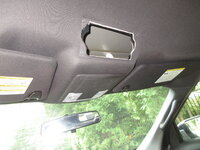
Before with an inner backup plate barely visible,

roof interior.JPG

That opening was too tall for the new controller so I had to mount the new controller's mounting plate to a new large blank mounting plate that I had to cut the center out of.

IMG_3148.JPG

The inner M4 x 5mm socket head cap screws go into the tapped threaded holes behind them. Turned out cleaner than I expected.
 

Jlarson

Well-known member
Joined
Mar 27, 2015
Messages
738
Location
AZ
If you're gonna do a lot of upfit work definitely invest in the world of rivnuts. Makes for a lot cleaner installs and easier maintenance down the road.
 

gearhead1

Well-known member
Joined
Oct 14, 2013
Messages
1,935
Location
NC
I’ve used the rules of thumb for thread engagement where the metal thickness had to be 1.5 x diameter for steel, 1.5 x for cast iron, and 2 x for aluminum.

Looks good!
 

Toolmaker51

Well-known member
Joined
Nov 26, 2015
Messages
176
Location
Missouri
Millimeters mean virtually nothing to me. However, a general rule for threads is that you should have the diameter of the bolt as the thickness of what it is tapped through. A more practical rule is that you should have at least one complete thread in the tapped portion. I regularly tap 1/4-20 threads into 3/16” thick steel. I am not sure how my rules of thumb measure up to my application.
20 TPI = 0.050 Pitch, roughly, common practice is minimum x 1.5 in steel (0.075), 2.0 cast iron and aluminum (0.100).
Personally, choice is to add equivalent of one pitch to either result, and reliance on fine series threads. To anything getting periodic R&R; sheetmetal screws, or Riv-Nuts, or caged nut plates, or self-clinching fasteners are 1st choice.
Thin materials offer too little axial alignment, degrading the fit with every replacement.
 

Toolmaker51

Well-known member
Joined
Nov 26, 2015
Messages
176
Location
Missouri
I've never seen a roll form tap used on steel. Learn something new every day.
Form taps work on any ductile material I can think of; and better than cutting taps in many, plastics for example. There are sufficient references to drill correct size to use forming taps. They do appreciate a drop of tapping fluid; essentially they 'knurl' the threads in, by material displacement. However, may not be prime choice in hand drilled hole of depth.
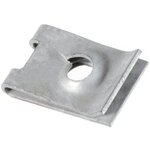
Of all the recommendations offered, tinnerman nuts as shown by 'garajmahal' post *2 are best choice. They last over repeated removals, and have a degree of self alignment too.
 
To avoid these ads, REGISTER NOW!
Top Bottom