To avoid these ads, REGISTER NOW!

Modulating wall boiler for hydronic losing fire during heat call?

HoosierBuddy

Well-known member
Joined
May 9, 2006
Messages
2,922
Location
Southern Indiana
Hey guys,

Hoping someone has experienced a similar issue and can advise on "next steps".

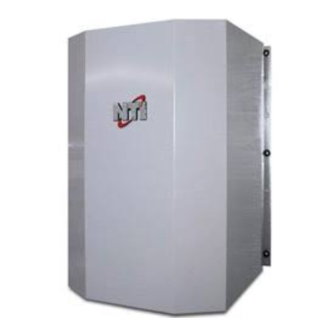
I have a 2006 NY Thermal Trinity TI150 fully condensing, modulating wall boiler that provides heat to 3 zones. My garage floor, my breezeway, and the bonus room above the garage.

It is short cycling. What I see is when the boiler sees a heat call from any of the thermostats (wired into a taco 3 zone control box), pumps (zone and circulation) start up and the boiler goes into it's ignition cycle. It lights correctly and throttles up to maximum BTU. The water temperature through the boiler begins to rise. When the water temperature reaches the boiler set point, the boiler begins to throttle back the input BTU.

I can watch the gas valve setting as a 3 digit number on the display. It will begin to drop and when it gets down to about 60% (60% of 150,000 = 90.000 BTU)...the burner just cuts out. The boiler doesn't set any codes. It just immediately goes into a reignition sequence. It relights and throttles to full...but as the water temperature is still very near the set point, the 2nd time it will try to throttle down and cut out within about 30 seconds. At that point it's just relighting and shutting down maybe once a minute continuously.

So far I have cleaned the combustion chamber thoroughly and replaced the flame rod (flame sensor). Neither seemed to change the way the boiler acts at all.

Buddy at work says "Gas Valve" might be the issue. $400 is the best price I see on that....so not something I want to just try unless someone else has had this problem and that fixed it.

Honestly, I don't know if it's losing the flame sensor and that's causing the burner to shut down OR if the burner is shutting down on it's own....BUT I lean towards the first....because it seems to be burning, throttling down fine and then WHAM it just goes out completely. A few seconds later the boiler begins a purge cycle, and then an ignition cycle, relights....and repeat repeat repeat.

Any advice is much appreciated. I have called my HVAC guy this morning to get on his list, but at the time we put this in back in 2006 he had almost no experience with them. I've been maintaining it myself since then.
 
To avoid these ads, REGISTER NOW!

Jackfre

Well-known member
Joined
Dec 26, 2010
Messages
4,410
Location
N CA
If you have a multi meter capable of it read the micro amps off the flame rod circuit. Unhook one leg at the PCB and put your meter in series. I’d pull, clean & ohm all HX sensors as well. Do the easy things before jumping at the gas valve or spending any money. NYT is a pretty good outfit. have you called them?
 

4x4Pete

Well-known member
Joined
Aug 26, 2019
Messages
791
Location
Stroud
If it isn't setting a code, it is more than likely a setup problem. I think it should start ramping down sometime before setpoint. Not ramp down at setpoint. I would review the control settings and see how it is set up to cycle. If you have the manual it will have directions on how to set it up. Why has it changed? Who knows, but strange things happen.
 

TurnipTruck

Well-known member
Joined
Aug 28, 2005
Messages
1,561
Location
Southcentral Alaska
My Burnham K2 shortcycled sorta similarly late in its first quarter of operation. I found gunk had built up on the screen upstream of the only mixing valve then in use. It did take a week of short cycles before I finally found the problem (wintertime, ya know). My particular boiler grounds the flame signal when the condensate trap onboard fills up, I don’t know how other boilers operate. Mine also has a microamp display that I monitor infrequently.
You may have a flow switch failing at that age.
 
OP
H

HoosierBuddy

Well-known member
Joined
May 9, 2006
Messages
2,922
Location
Southern Indiana
If it isn't setting a code, it is more than likely a setup problem. I think it should start ramping down sometime before setpoint. Not ramp down at setpoint. I would review the control settings and see how it is set up to cycle. If you have the manual it will have directions on how to set it up. Why has it changed? Who knows, but strange things happen.
The boiler manual calls the "HI" setting the target setpoint. As long as 1 or more t-stats are calling for heat the boiler will attempt to modulate to maintain temperature between the HI setting and HI setting + 10 degrees.

I have a good understanding of the different settings I can adjust.

One of note is if I change the HFS (HIGH FAN SPEED) (able to set between 50 and 240) below about 130, the heater cannot complete an ignition cycle. In other words, the burner kicks out exactly like it does if the burner tries to throttle down. The fan speed determines the gas valve setting. So another possibility is the combustion fan isn't putting in enough air at low settings?

I will attempt to check the screen and micro amps on the flame rod tonight. Supposed to be 0.7 micro amps per the manual.

I haven't heard back yet from my HVAC guy, but that isn't unusual. He stays very busy.
 

4x4Pete

Well-known member
Joined
Aug 26, 2019
Messages
791
Location
Stroud
Can you accurately measure the TD across the boiler? Sounds like it doesn't have enough water flow and is shutting down abruptly as the setpoint is satisfied. How does it act when all 3 zones are calling? Are there 3 zone pumps and a main circulator? The main circulator not working properly could cause this problem. I wouldn't adjust any parameter of the fan or gas yet.
 

brewchief

Well-known member
Joined
Sep 20, 2008
Messages
2,370
Location
Michigan
It sounds like it can't modulate down without shuting off either when it's called for by temp or when you reduce the combustion blowers speed.
I've not worked on that brand of modulating boiler but the ones i have worked on have a mesh type burner, when those get old they get plugged up and may not burn evenly, as the combustion blower slows down it may not have enough force to keep it burning in the area of the flame sensor and it will drop out.
 
OP
H

HoosierBuddy

Well-known member
Joined
May 9, 2006
Messages
2,922
Location
Southern Indiana
Can you accurately measure the TD across the boiler? Sounds like it doesn't have enough water flow and is shutting down abruptly as the setpoint is satisfied. How does it act when all 3 zones are calling? Are there 3 zone pumps and a main circulator? The main circulator not working properly could cause this problem. I wouldn't adjust any parameter of the fan or gas yet.
I had the same thought, and a spare circulator pump so I swapped it in. The old pump assembly looked OK. Putting on the new pump didn't change anything.

The issue kind of IS NOT that it is getting up to heat and shutting off.

The issue is that it's getting up to heat, throttling down to try to maintain heat and going out before reaching the end of it's heating cycle.

If the boiler gets up to heat, throttles correctly and the temperature keeps rising, it will go ahead and shut down and wait until the circulator loop temperature drops to HI-DIFF (I have DIFF set to 30 degrees). So the loop would have to cool down 30 degrees before re-ignition. That's not what's occurring. When the boiler goes out the water temp is maybe HI +/- 3 degrees, and it's going back into ignition as if to say "I'm not done yet".
 
OP
H

HoosierBuddy

Well-known member
Joined
May 9, 2006
Messages
2,922
Location
Southern Indiana
If you have a multi meter capable of it read the micro amps off the flame rod circuit. Unhook one leg at the PCB and put your meter in series. I’d pull, clean & ohm all HX sensors as well. Do the easy things before jumping at the gas valve or spending any money. NYT is a pretty good outfit. have you called them?

I attempted this measurement last night. I was getting 2-3 uA on my cheep-o DMM. The lowest amp scale it has is 0-2000 uA so I don't trust the reading.

1. I borrowed a better DMM from my buddy at work. It reads down to 1/10th uA.
2. Is it valid to jump in series from the terminal on the end of the fire rod (kind of looks like a spark plug) to the boot that plugs on it?

If I need to pull the cover off the PCB to get to where the flame sensor wire plugs into it, I can do that too.

THANKS!
 
OP
H

HoosierBuddy

Well-known member
Joined
May 9, 2006
Messages
2,922
Location
Southern Indiana
Open question for you guys:

When I cleaned out the combustion chamber prior to this year's heating season, it was really dirty. What I think I'm looking at with the cover off is a stainless coil that forms the outside of the chamber. I cleaned off the surface of all of that thoroughly with water and a stiff nylon brush. Probably took a good hour. When I finished everything I could see looked really clean.

Question: Are there gaps in this coil between all the stainless that could also be full of crud that need to be OPEN to allow hot combusted air to exit the boiler?

I'm wondering if I need to pull the front of the combustion chamber and try to get something in between the coil loops to clean more.
 

fitter30

Well-known member
Joined
Jun 23, 2019
Messages
2,972
Location
Peace Valley,mo
When has full yearly service been done including cleaning the heat exchanger with either vinegar, citric acid or commercial cleaner? You tube has videos how to clean the heat exchanger. Page 55
 
Last edited:
OP
H

HoosierBuddy

Well-known member
Joined
May 9, 2006
Messages
2,922
Location
Southern Indiana
When has full yearly service been done including cleaning the heat exchanger with either vinegar, citric acid or commercial cleaner? You tube has videos how to clean the heat exchanger. Page 55

I cleaned the heat exchanger about a month ago. I did not use any cleaner as NTI recommends cleaning with water and a brush only. They say not to use anything else.

They sell a special $100 kit to do this with. I went ahead and ordered their kit this morning that comes with a recommended brush and a shield to protect the insulation at the back of the unit. When I did it a month ago, I just used brushes I had on hand. I'm concerned it's possible that even though I got visible surface of the heat exchanger tubes clean, they may have deposits between them (in the cracks). Maybe this is keeping the burner from burning right, and the flame sensor is dropping out because of this during low firing conditions.

Just another guess.

However, in all the inspections and such I've done trying to figure this thing out, the only thing I've found that stood out was "Man that heat exchanger is super dirty". Everything else has checked out good. Makes me wonder if I just didn't clean it well enough.
 

fitter30

Well-known member
Joined
Jun 23, 2019
Messages
2,972
Location
Peace Valley,mo
I cleaned the heat exchanger about a month ago. I did not use any cleaner as NTI recommends cleaning with water and a brush only. They say not to use anything else.

They sell a special $100 kit to do this with. I went ahead and ordered their kit this morning that comes with a recommended brush and a shield to protect the insulation at the back of the unit. When I did it a month ago, I just used brushes I had on hand. I'm concerned it's possible that even though I got visible surface of the heat exchanger tubes clean, they may have deposits between them (in the cracks). Maybe this is keeping the burner from burning right, and the flame sensor is dropping out because of this during low firing conditions.

Just another guess.

However, in all the inspections and such I've done trying to figure this thing out, the only thing I've found that stood out was "Man that heat exchanger is super dirty". Everything else has checked out good. Makes me wonder if I just didn't clean it well enough.
Water side not burner side.
 
OP
H

HoosierBuddy

Well-known member
Joined
May 9, 2006
Messages
2,922
Location
Southern Indiana
Update on this:

You could eat off the heat exchanger now it is so clean, but the unit still loses fire when throttling down to match input vs temperature after the loops get near the target set point. Nothing I've done to this point seems to have helped at all.

With a DMM hooked in series with the flame sensor, I'm showing 3-4 uA at high fire (NTI recommends 2.5 minimum). As the combustion fan speed slows down during throttling, amperage drops to 0 and the burner kicks off.

I have located a combustion analyzer I can borrow. Next step is to monitor that and see if the gas/air screw needs adjusted.

In the distant past (2007) I contacted NTI Tech Support and they basically told me that unless I had a way to check CO2 and CO they couldn't help me with firing issues. Once I have some good readings, and it still won't run right (pretty pessimistic gas/air is the issue) I'll give them a call and see what they say.
 

TurnipTruck

Well-known member
Joined
Aug 28, 2005
Messages
1,561
Location
Southcentral Alaska
Can you raise the lowfire stop, just as a test? It won’t modulate down as far, so it will have to modulate by shutting off/restarting more often on small loads. I have never had a gas valve apart, maybe it just has some trash in it.
 

Jackfre

Well-known member
Joined
Dec 26, 2010
Messages
4,410
Location
N CA
Flame rods are pretty simple devises, being only the rod and the insulator but as a low cost item I’d replace it. Perhaps the insulator is cracked or abraded over time and not giving the real reading. The PCB doesn’t care what the problem is. If it sees below the min it drops out. It is a primary safety. Go ahead and check the inlet screen on your gas valve but do not get into it. I’d examine the inducer side as well. If the HX was dirty, so too is the inducer wheel.
 

4x4Pete

Well-known member
Joined
Aug 26, 2019
Messages
791
Location
Stroud
After looking at the Trinity Ti manual it appears that a loss of flame signal should cause a lock out after 3 flame failures and cause a code. I also noticed that it uses a Fenwal ignition control. Of all controls Fenwal seemed to have the most problems. Does the Fenwal board show a flame signal problem? If the boiler satisfies the demand before 3 flame failures you might not get a code. If the boiler isn't locking out or producing codes one other possibility is that the boiler is set to look for an outdoor temperature, reset mode.
 
OP
H

HoosierBuddy

Well-known member
Joined
May 9, 2006
Messages
2,922
Location
Southern Indiana
Thanks guys,

I have replaced the flame rod. It made no difference.

I have had all of the air piping apart from the inlet to the boiler to the gas valve. It looked completely clean everywhere. Not even dust.

While I had it all apart, I blew out the combustion fan. It had some dust on it, but not a lot. It's completely clean now and spun freely.

Regarding the lowfire stop, I don't know what that is.

This boiler does not set a code for a single loss of flame. It just goes into the ignition cycle again. It will sucessfully relight every time....but then quickly tries to throttle down (say within 30 seconds), loses the flame sensor again, shuts down and repeats until the heat call ends.

Honestly, if you didn't physically stand next to the boiler, and know what it is supposed to be doing, the layman would assume it is working properly, because it is actually holding the heating loops at temperature. But instead of it doing it by throttling down and matching the input btu to the loss of temperature in the return water, it's doing it by coming on full until water reaches target temp, throttling down and shutting off anytime the fan speed drops below about 120 on the display (should be able to run between 205 and 60).

I can set the minimum fan speed higher than 60....but 100 is the highest number I can program and it won't run at that speed (not enough amperage from flame sensor to prove flame)

If I lower the maximum fan speed to 120 it can't successfully light at all. At 130 it can light and will happily burn until it tries to throttle down.
 
Last edited:

Jackfre

Well-known member
Joined
Dec 26, 2010
Messages
4,410
Location
N CA
What is the firing range of this boiler, low to hi? Perhaps it heats to set point and the low fire is not low enough to allow it to continue running. In the older mod/cons and furnaces that was not uncommon.
 
OP
H

HoosierBuddy

Well-known member
Joined
May 9, 2006
Messages
2,922
Location
Southern Indiana
What is the firing range of this boiler, low to hi? Perhaps it heats to set point and the low fire is not low enough to allow it to continue running. In the older mod/cons and furnaces that was not uncommon.
Output is 23,000 to 138,000 BTU.

So...I can watch it modulate on the digital display. 23,000 BTU/Hour should be a fan speed of 60. 138,000 is a fan speed of 205.

At any fan speed under about 125, the burner goes out....so as I watch the digital display and it shows first water temperature and then fan speed it will look like this:

Target Temperature 140:

Temp 135
FS 205

Temp 136
FS 205

Temp 138
FS 205

Temp 140
FS 150

Temp 141
FS 130

Temp 142
FS 110

At that point EVERY SINGLE TIME the burner shuts off. When I'm watching it on a DMM, the flame sensor will drop from 3 uA to 0 uA just before the flame shuts down (maybe 1 second).
 
To avoid these ads, REGISTER NOW!

brewchief

Well-known member
Joined
Sep 20, 2008
Messages
2,370
Location
Michigan
Has the burner ever been replaced? Looking it up it looks the same as a lochivar, I think every one of those we have installed has needed a burner by year 10.
The flame sensor can't sense flame if it's not present at that part of the burner because its corroded or otherwise plugged up.
 
OP
H

HoosierBuddy

Well-known member
Joined
May 9, 2006
Messages
2,922
Location
Southern Indiana
Has the burner ever been replaced? Looking it up it looks the same as a lochivar, I think every one of those we have installed has needed a burner by year 10.
The flame sensor can't sense flame if it's not present at that part of the burner because its corroded or otherwise plugged up.

Are you talking about this part?

82657-2.jpg

$275 is the best price I see for that sucker.
 
Last edited:
OP
H

HoosierBuddy

Well-known member
Joined
May 9, 2006
Messages
2,922
Location
Southern Indiana
So...some progress here.

I got a better DMM last night that allowed me to exactly read the uA on the flame rod.

At max fire I was seeing 3.7 uA. Spec says it should always stay above 2.5uA and flame shuts down at 0.7uA

I set my firing rate down manually to get a steady fire a different fan speeds. The amperage looked good until I got down to a fan speed of 120. At that point the flame sensor amperage dropped rapidly until it was about 1.7 uA.

I'm still waiting on ability to borrow a combustion analyzer. Should be able to get it a couple of days next week. But I was curious if adjusting the fuel mix would even affect my reading, so I leaned it out 1 full turn on the adjustment screw. That raised my flame sensor reading to 3.1 uA. So, just trying to get the boiler to cycle right, I kept leaning out the mix and slowly lowering my firing rate until I got it where it would maintain about 2uA at a fan speed of 85. That took 2 3/4 turns (leaner) on the adjustment screw.

At that point, I raised the minimum fan speed setting on the controller to 90 (adjustable 60 - 100). I put the maximum fan speed back up to the maximum it can be set at (205).

Set up like that, it will reliably burn and will not shut down until all zones are satisfied OR it fires with a fan speed of 90 and the water temperature continues to rise above the target. If the temp gets above target for several seconds and is rising, the boiler shuts off the burner. Pumps continue to run. The boiler won't refire until the water temperature drops to below the low temperature set point (Hi-Diff where I have Hi = 150 (lowered by outdoor reset) and Diff = 35 degrees).

At that point I turned off the boiler as I was worried about running it after messing with the mixture with no way to check anything.

@brewchief may have the real fix here. I cleaned out the exsiting premix burner with low pressure air, but it definitely exhibits age, just giving it the eye test.

I finally got an HVAC tech by this morning to look it over. He's never seen one of these NTI boilers before. His related experience is with similar on demand water heaters. He kind of thought maybe the bearings are dragging the combustion blower down and it's not putting out enough air at lower settings....but we agreed to hold off on ordering any parts until I can:

1. Check the exhaust with an analyzer.
2. Call NTI and see what they say.
 
Last edited:

PoorUB

Well-known member
Joined
Mar 29, 2021
Messages
11,632
Location
Fargo, ND
I will bet if you go through the boiler set up, like it is a new boiler using the combustion analyzer it will run fine. These high efficiency boilers are finicky.

I used to sell NTI, but at this time I am not much help. I have forgotten most of the details and would just read it out of the manual. I never had to do much trouble shooting as we had a couple equipment techs in the office that worked with them every day. But it was funny, they would talk to a contractor that couldn't get one to run claiming he had tried everything, and our tech would end up driving out to help him. Most of the time when all the parts were good, our guy would just start at the beginning, and do set up and it wold run.

Simply, you need a combustion analyzer to work on any high efficiency boiler.
 

Jackfre

Well-known member
Joined
Dec 26, 2010
Messages
4,410
Location
N CA
Also, fiddling with the gas pressures just gives you something else to backtrack on. I never worked on an NTI but they are a good outfit. Do they say you need a differential manometer? If you are using a single pipe manometer but need a diff, you can check high and low all day long and still be wrong on the settings. I’ve demonstrated this many times in seminars. On the analyzer, yes, you need it and you know how to handle it. Do you? You can mis-interpret readings that can set you back. Be vary careful. I say this as I have tied myself in knots with analyzers. Life is a humbling experience:) NTI should be able to give you component by component V/ohm readings. Disconnect each component at the PCB and ohm it out. These are the best tests as you have the power plug in your pocket for them. Testing at the board connection lets you test that leg and the connecting wire.
 
OP
H

HoosierBuddy

Well-known member
Joined
May 9, 2006
Messages
2,922
Location
Southern Indiana
An interim update on this for anyone interested.

So, I was able to borrow a Testo 310 combustion analyzer over the Thanksgiving holiday and weekend. I worked through the OEM boiler set up procedure. First step was to verify NG pressure remained in range during boiler operation. No issues there. Pressure never dropped below 6.9 inches wc (4.0 minimum spec).

Then I set up and did a flue analysis in a port in the flue just above the boiler. It was burning slightly rich, so I adjusted the gas valve until CO2 and CO were well within spec at maximum modulation rate.

Then I reprogrammed the maximum modulation rate (actually what you set here is the maximum combustion fan speed) and reran the check at about 75% max. This caused the CO2 and CO to go above maximum spec. Then I reprogrammed to about 50% and checked it again. At that rate CO2 and CO are well over spec.

Armed with numbers and data I called NTI and tech suggested the next move would be to adjust the offset screw on the gas valve to lean out the mixture for lower fan speeds.

I printed out and followed the procedure to lower CO2 for lower settings. Adjusting the screw by first 1/8 turn and then 1/4 turn "leaner" made no improvement and actually seemed to make the situation worse.

I returned the offset to the original mark and did some more investigation. It's possible there is a vacuum leak near one of the hookups for the pressure switch. I went ahead and ordered a replacement PVC elbow that has that connection on it (NTI replacement part) to eliminate that as a potential (unlikely) cause before calling NTI tech support back with my findings.

BEST GUESS at this point is the gas valve is faulty and not lowering gas input properly as the combustion fan slows down to match the boiler output to the load. This (in theory) would cause the excessive CO2 and CO readings I'm getting. As a point of reference, I'm seeing 02 readings as low as 0.5% during these high CO2 - High CO measurements.

I don't mind buying a new gas valve if that will fix it. Just trying to avoid throwing parts at it and hoping.
 

fitter30

Well-known member
Joined
Jun 23, 2019
Messages
2,972
Location
Peace Valley,mo
Need to look at flow sensor. Also remove flue sensor
Update on this:

You could eat off the heat exchanger now it is so clean, but the unit still loses fire when throttling down to match input vs temperature after the loops get near the target set point. Nothing I've done to this point seems to have helped at all.

With a DMM hooked in series with the flame sensor, I'm showing 3-4 uA at high fire (NTI recommends 2.5 minimum). As the combustion fan speed slows down during throttling, amperage drops to 0 and the burner kicks off.

I have located a combustion analyzer I can borrow. Next step is to monitor that and see if the gas/air screw needs adjusted.

In the distant past (2007) I contacted NTI Tech Support and they basically told me that unless I had a way to check CO2 and CO they couldn't help me with firing issues. Once I have some good readings, and it still won't run right (pretty pessimistic gas/air is the issue) I'll give them a call and see what they say.
 
OP
H

HoosierBuddy

Well-known member
Joined
May 9, 2006
Messages
2,922
Location
Southern Indiana
Page 34 13.0 #8. should be done every year and they don't always make noise.

Right. But how would poor water flow/scale cause the issue I'm having with good combustion at high modulation but mixture becoming more and more rich as combustion fan slows down?
 

fitter30

Well-known member
Joined
Jun 23, 2019
Messages
2,972
Location
Peace Valley,mo
Right. But how would poor water flow/scale cause the issue I'm having with good combustion at high modulation but mixture becoming more and more rich as combustion fan slows down?
Sensor in the water have a coating of minerals on them and if there's a flow sensor it might not be reading correctly. If the hx is coated enough and it only takes a few thousands the flue temp will be off. Tried to find a service manual couldn't find one.
Manufacturer of your heater is really doing their customers a disservice not requiring a hx cleaning once a year. When hx is fouled enough the tubes can overheat and twist up like a pretzel and leak. You tube has videos on other brands haven't look for yours but there all the same.
 
OP
H

HoosierBuddy

Well-known member
Joined
May 9, 2006
Messages
2,922
Location
Southern Indiana
Sensor in the water have a coating of minerals on them and if there's a flow sensor it might not be reading correctly. If the hx is coated enough and it only takes a few thousands the flue temp will be off. Tried to find a service manual couldn't find one.
Manufacturer of your heater is really doing their customers a disservice not requiring a hx cleaning once a year. When hx is fouled enough the tubes can overheat and twist up like a pretzel and leak. You tube has videos on other brands haven't look for yours but there all the same.

OK. Thanks!
 

Jackfre

Well-known member
Joined
Dec 26, 2010
Messages
4,410
Location
N CA
Fitter is right again. Understand that when you heat water the higher you run the temp up the more precipitant comes out of the water and if yoou have an immersion sensor, that is where it will settle. That curve gets very vertical once you pass about 130*F. It is common on wall hung units to find the sensors crapped up.
 
OP
H

HoosierBuddy

Well-known member
Joined
May 9, 2006
Messages
2,922
Location
Southern Indiana
The temperature display on the Sentry 2100 has not shown any data that causes me to question the water temperature in the boiler, but I can verify with a temperature gun, I suppose.
 

fitter30

Well-known member
Joined
Jun 23, 2019
Messages
2,972
Location
Peace Valley,mo
Without a accurate sensors the unit is in the weeds. Without a service manual that would have a wiring diagram and temperature to resistance scale for the different sensors to check them out. Your hvac guy might have a service manual or can get one down loaded from the factory rep.
 

brewchief

Well-known member
Joined
Sep 20, 2008
Messages
2,370
Location
Michigan
Sensor in the water have a coating of minerals on them and if there's a flow sensor it might not be reading correctly. If the hx is coated enough and it only takes a few thousands the flue temp will be off. Tried to find a service manual couldn't find one.
Manufacturer of your heater is really doing their customers a disservice not requiring a hx cleaning once a year. When hx is fouled enough the tubes can overheat and twist up like a pretzel and leak. You tube has videos on other brands haven't look for yours but there all the same.
Where is all the mineral content coming from? A tankless water heater will get scaled up because of constant fresh water going through it, a boiler should have practically no new water unless the system is opened for service or there is a leak.
 

brewchief

Well-known member
Joined
Sep 20, 2008
Messages
2,370
Location
Michigan
I believe that boiler uses a vacuum signal from the combustion blower to the gas valve to control gas pressure output, if you have the means to measure both the vacuum signal and the output gas pressure and if you can find documentation as to what they should be at high and low blower speeds you would be able to see if the gas valve is working properly, maybe NTI can supply that info, maybe not. FWIW we have installed hundreds of furnaces with that same idea of controlling the gas pressure via the inducer speed and have never had a gas valve failure of that manner.
 

kj_mustang

Well-known member
Joined
Feb 9, 2011
Messages
1,213
Location
Harrisonburg, VA
Where is all the mineral content coming from? A tankless water heater will get scaled up because of constant fresh water going through it, a boiler should have practically no new water unless the system is opened for service or there is a leak.
But if the initial fill water is very high in calcium, it will cause scaling over time.
 
OP
H

HoosierBuddy

Well-known member
Joined
May 9, 2006
Messages
2,922
Location
Southern Indiana
I believe that boiler uses a vacuum signal from the combustion blower to the gas valve to control gas pressure output, if you have the means to measure both the vacuum signal and the output gas pressure and if you can find documentation as to what they should be at high and low blower speeds you would be able to see if the gas valve is working properly, maybe NTI can supply that info, maybe not. FWIW we have installed hundreds of furnaces with that same idea of controlling the gas pressure via the inducer speed and have never had a gas valve failure of that manner.
Good info. I noted a small crack in a plastic elbow in the inlet piping. Not 100% sure it is leaking, but it is between the vacuum connection for the gas valve and the gas valve. If leaking it could affect the vacuum signal the gas valve is getting. Currently waiting for the replacement elbow. Luckily it's only a $15 part plus shipping.
 
OP
H

HoosierBuddy

Well-known member
Joined
May 9, 2006
Messages
2,922
Location
Southern Indiana
Brief update here but no resolution.

Armed with data I called tech support and they suggested the issue could me misadjustment of the offset screw. The offset screw is a regulator adjustment setting. That regulator is built into the gas valve and reduces input BTU at lower modulation settings.

So, as the boiler throttles down, the boiler's control electronics lower the speed setting on the combustion blower (through a variable frequency device). The gas valve senses this through a clear plastic tube connected to the inlet air piping. The regulator then reduces inlet gas pressure to the gas valve lowering input BTU. That offset regulator can be adjusted.

I was able to fire the boiler with a combustion analyzer at low modulation and noted that CO2 and CO were both well out of range (HIGH). No amount of adjustment of the offset made the slightest difference to the readings. This led me to think "Gas Valve is faulty". I called NTI Tech Support back, described the findings, and they independently came up with the diagnosis "faulty gas valve".

New gas valve is on order. I'll put it in when it arrives and see what's up.

I have a feeling that when I get the new gas valve installed I'll have to return the throttle screw in the venturi to the original setting it had back before I cranked it in. We shall see.
 
OP
H

HoosierBuddy

Well-known member
Joined
May 9, 2006
Messages
2,922
Location
Southern Indiana
FIXED

Final update. Got the new gas valve from SupplyHouse for right at $300. Installed this morning. I backed the main throttle screw off about 2/3 of what I had leaned it down to get the boiler to limp along.

Fired it up. Ran good. Hooked up the combustion analyzer. CO2 is right in the middle of spec at hi mid and low firing ranges. CO is well under max at all times.

So…it was in fact a “bad” gas valve.

It was dumping too much gas into the burner, causing it to go way rich at low fire and the lazy flame wouldn’t hold the flame rod on. Secondary symptom was high CO and CO2 out of spec. Final symptom was inability to tune low fire at all.
 
To avoid these ads, REGISTER NOW!
Top Bottom