
7th Kahuna
Well-known member
My latest collection of mystery tools. Any idea what these are? Sorry the lighting wasn't the best.
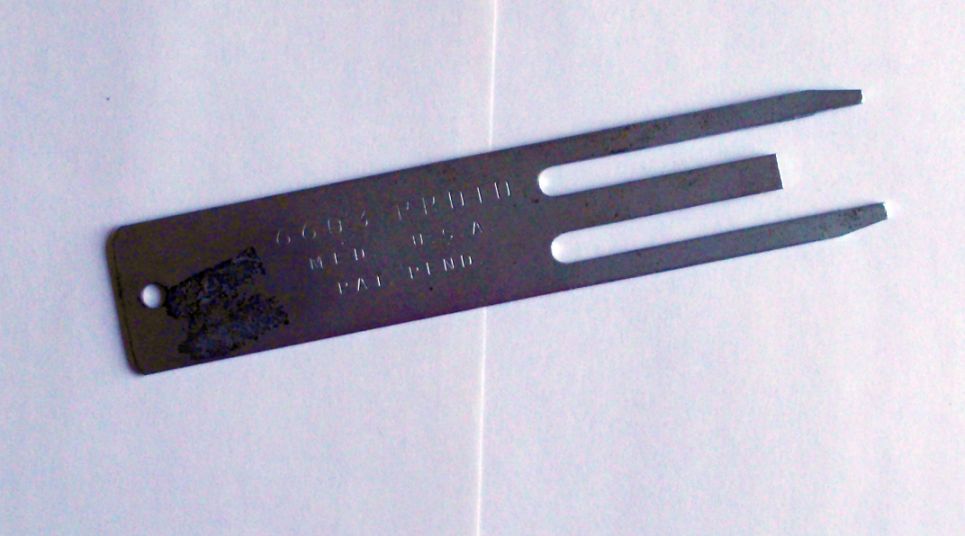
The first one here is identified as Proto 6603 but I haven't turned up any information on it and don't have an old Proto catalog. It is just under six inches long.
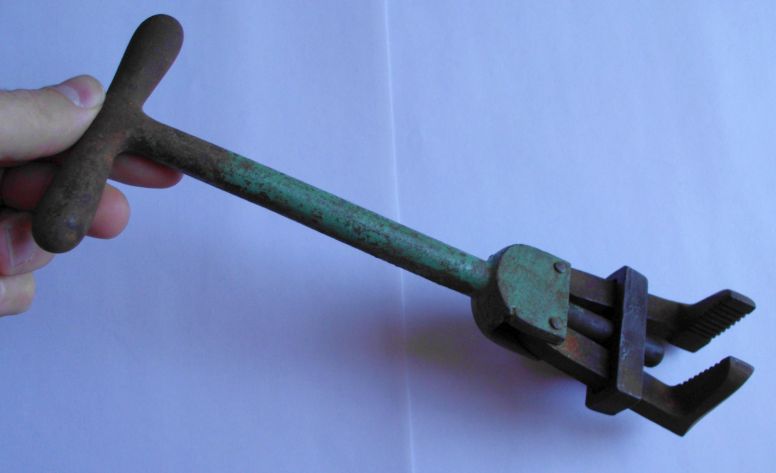
This next one I am guessing is just a variation on a pipe wrench, perhaps for opening and closing a valve in a shallow box but that is just a guess. The only markings on it are the letters PSF stamped in one face. The color looks like US Forest Service green. The cross bar slides up and down and is used to lock the appropriate size. I have found several similar wrenches online but no description of it's specific use.
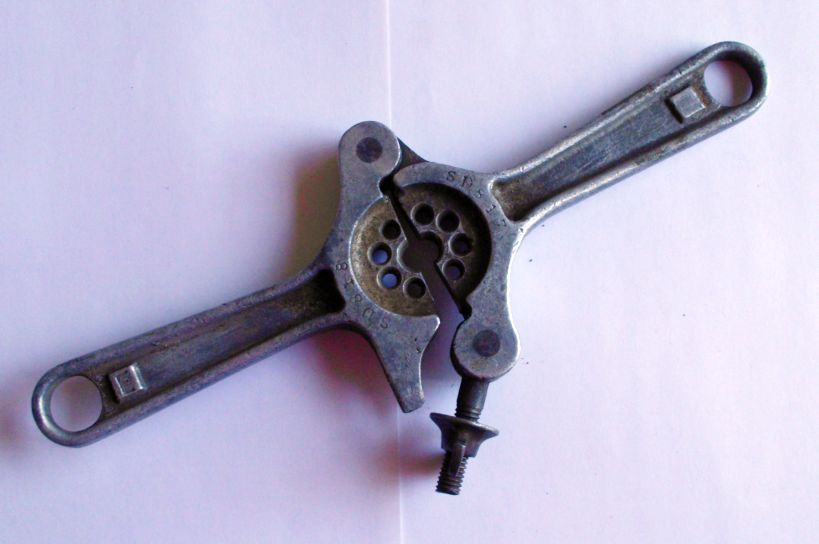
With this one I can't help but think spaghetti. I don't even have a guess. There is a square box at each end stamped 'E' and around the center, one half is stamped SD817 and the other SD818. No other marks. It appears to be cast of aluminum.
This one is interesting. It is stamped 'Lightning-Wrench / Hampton Mach & Tool Co' The spring loaded button allows the user to select one of 4 fixed sizes for the wrench. There is no other adjustability or fine tuning. At the other end you have a simple ground chisel or prybar. The pre set sizes are 1/8", 1/2", 7/8", and 1.25" or maybe 1 and 5/16" The length is only a little more than 9" so there isn't much leverage available.
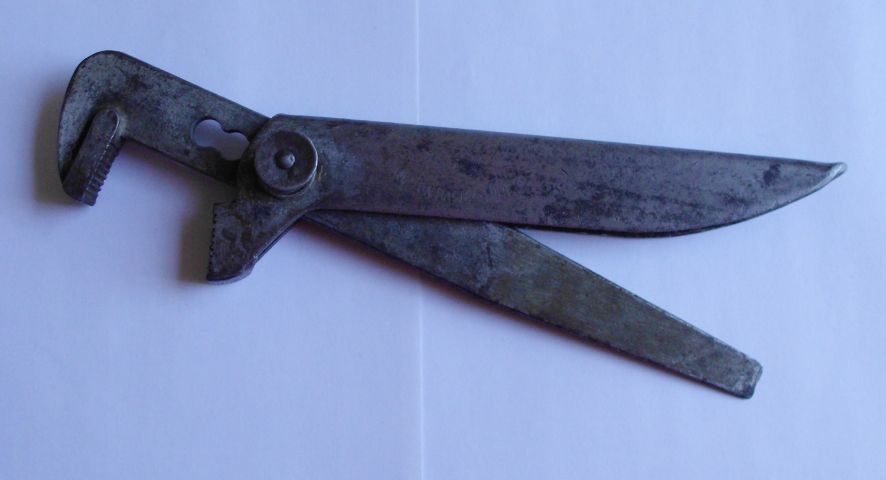
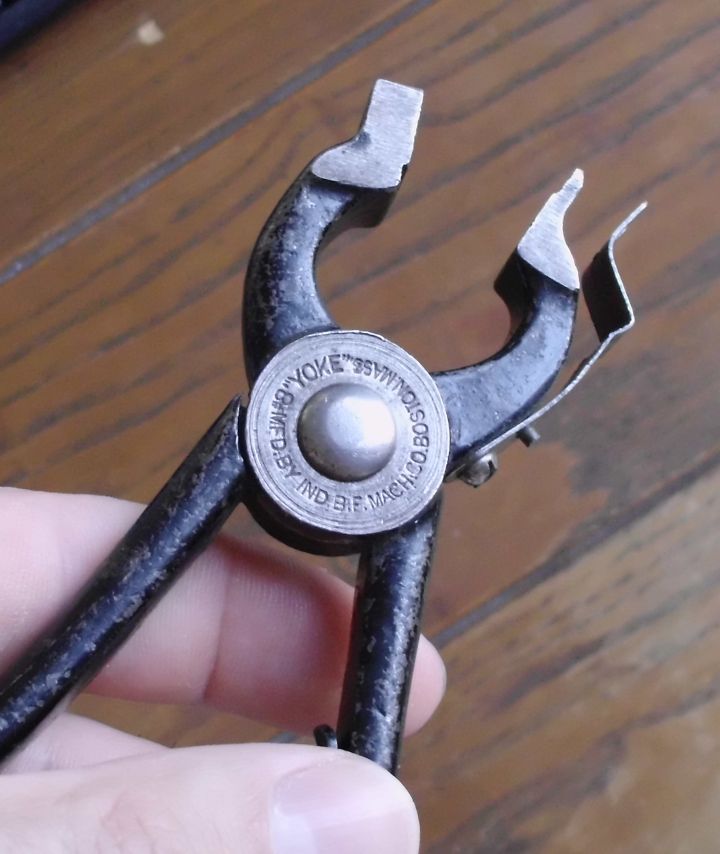
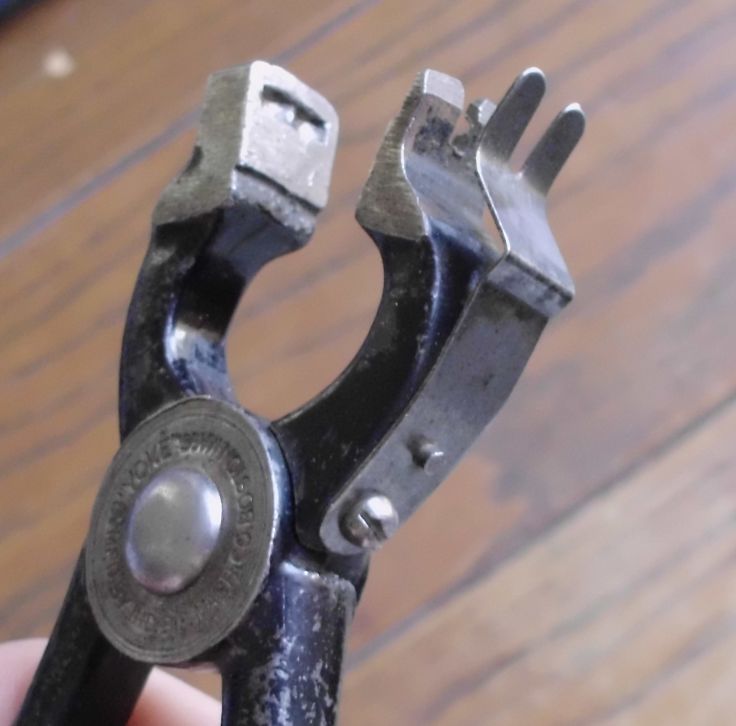
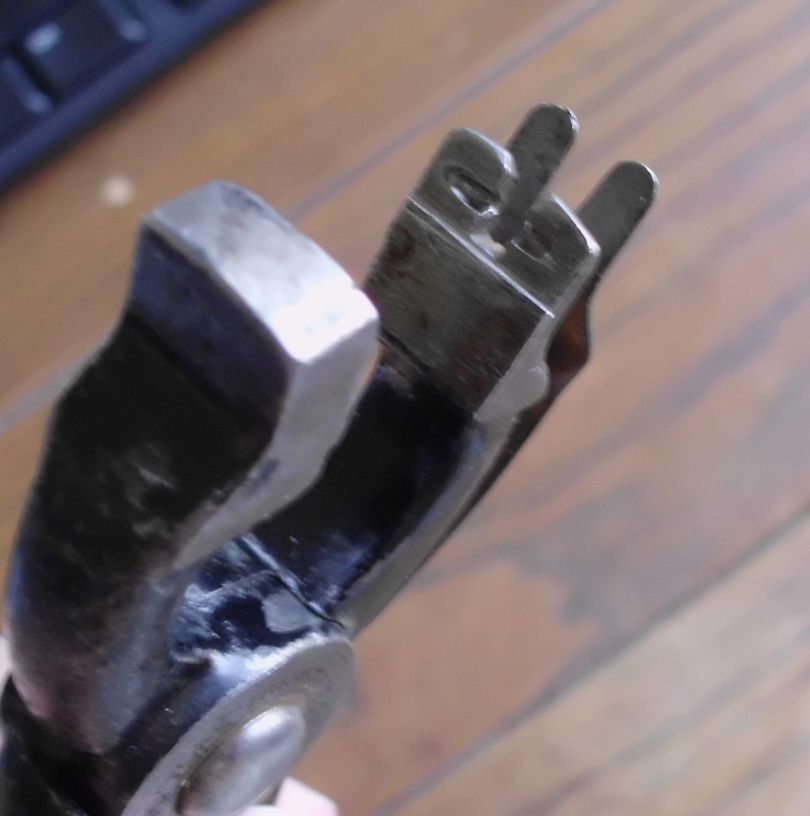
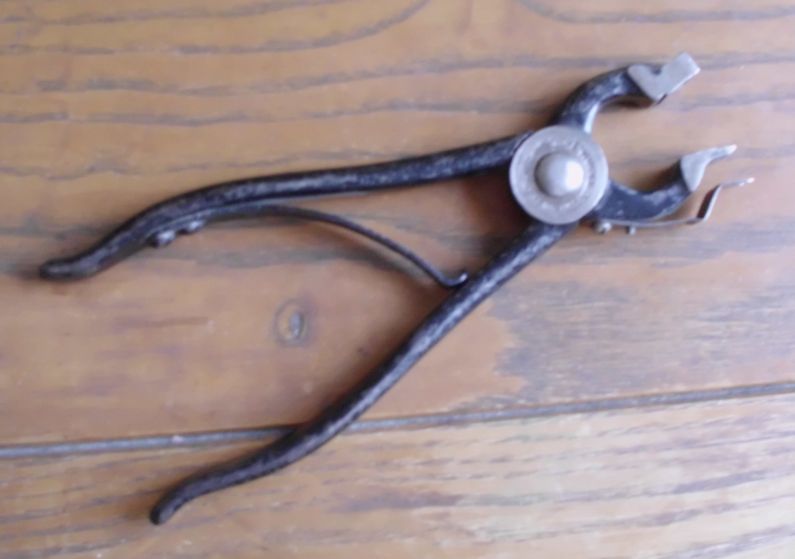
And this one I posted once before but it didn't result in any satisfying proposals. Maybe the second time is the charm. It says '#8 "YOKE" MFD. BY IND. B.F. MACH CO BOSTON MASS'. I suspect it was used to secure something into leather or heavy fabric, maybe rubber. Maybe 1930's? The guy who sold it had an odd mix of old woodworking and automotive tools. It looks like the spring perhaps held the post, pin or staple in place until it was secured. Again, I have no idea. My dad imagined it being used to lace a belt for machinery but I think the anvil would be too small. I found one example listed on eBay but clearly the seller knew no more about it than I.
The first one here is identified as Proto 6603 but I haven't turned up any information on it and don't have an old Proto catalog. It is just under six inches long.
This next one I am guessing is just a variation on a pipe wrench, perhaps for opening and closing a valve in a shallow box but that is just a guess. The only markings on it are the letters PSF stamped in one face. The color looks like US Forest Service green. The cross bar slides up and down and is used to lock the appropriate size. I have found several similar wrenches online but no description of it's specific use.
With this one I can't help but think spaghetti. I don't even have a guess. There is a square box at each end stamped 'E' and around the center, one half is stamped SD817 and the other SD818. No other marks. It appears to be cast of aluminum.
This one is interesting. It is stamped 'Lightning-Wrench / Hampton Mach & Tool Co' The spring loaded button allows the user to select one of 4 fixed sizes for the wrench. There is no other adjustability or fine tuning. At the other end you have a simple ground chisel or prybar. The pre set sizes are 1/8", 1/2", 7/8", and 1.25" or maybe 1 and 5/16" The length is only a little more than 9" so there isn't much leverage available.
And this one I posted once before but it didn't result in any satisfying proposals. Maybe the second time is the charm. It says '#8 "YOKE" MFD. BY IND. B.F. MACH CO BOSTON MASS'. I suspect it was used to secure something into leather or heavy fabric, maybe rubber. Maybe 1930's? The guy who sold it had an odd mix of old woodworking and automotive tools. It looks like the spring perhaps held the post, pin or staple in place until it was secured. Again, I have no idea. My dad imagined it being used to lace a belt for machinery but I think the anvil would be too small. I found one example listed on eBay but clearly the seller knew no more about it than I.
Last edited:
 Of course, most of the easy ones I've figured out on my own. I was really hoping someone would know what that middle one was though. The pattern reminds me of a vacuum tube base but that makes no sense at all.