723Monolythic
Member
- Joined
- Sep 7, 2011
- Messages
- 7
Hello all.
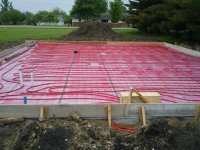
I've got a question about a concrete slab. I'm building a 16' x 24' workshop/garage. I'm currently working on the slab. Currently, I have a trench 2 ft wide dug 18 inch deep around the perimeter.
My contractor/neighbor wants to pour a footer approx. 8" thick, THEN later on form the edges and pour the rest of the slab in one pour. Essentially, pouring the stem walls and floor together...in some sort of a hybrid monolythic pour. Has anyone heard of pouring like this, or should I just stop my neighbor now, and form up for a conventional monolythic pour?
The reason my neighbor wanted to pour this way...He said he has done this before, and it allows the slab to "float" on the footers and reduce the chance of cracking.
By the way, I have contacted my local building inspector and they are no help. They keep asking me what my plans say, and I keep telling them my plans only say pour a concrete clab without any details. Then they ask me how my plans ever got approved (by THEM!!!). So, that is frustrating. However, they do encourage me to just do a full monolythic.
Thank you very much.
I've got a question about a concrete slab. I'm building a 16' x 24' workshop/garage. I'm currently working on the slab. Currently, I have a trench 2 ft wide dug 18 inch deep around the perimeter.
My contractor/neighbor wants to pour a footer approx. 8" thick, THEN later on form the edges and pour the rest of the slab in one pour. Essentially, pouring the stem walls and floor together...in some sort of a hybrid monolythic pour. Has anyone heard of pouring like this, or should I just stop my neighbor now, and form up for a conventional monolythic pour?
The reason my neighbor wanted to pour this way...He said he has done this before, and it allows the slab to "float" on the footers and reduce the chance of cracking.
By the way, I have contacted my local building inspector and they are no help. They keep asking me what my plans say, and I keep telling them my plans only say pour a concrete clab without any details. Then they ask me how my plans ever got approved (by THEM!!!). So, that is frustrating. However, they do encourage me to just do a full monolythic.
Thank you very much.
Last edited: