To avoid these ads, REGISTER NOW!

Mostly adjustable wrench pin removal

crankshaftdan II

Well-known member
Joined
Feb 25, 2009
Messages
1,293
Location
Milwaukee, burbs.
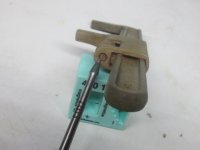
Maybe this has been discussed before? Looking for a fairly easy-non destructive method of removal of the pushed-in or pressed-in pins for holding the adjustment screws on adjustable wrenches? Picture attached-thanks any help appreciated........Cranky
 
To avoid these ads, REGISTER NOW!

scubadoober

Well-known member
Joined
Aug 15, 2017
Messages
511
Just so we are clear that pin is pressed into a blind hole? Meaning it cannot be pressed out from the opposite side. I am not aware of a non-destructive option.
 
To avoid these ads, REGISTER NOW!
OP
C

crankshaftdan II

Well-known member
Joined
Feb 25, 2009
Messages
1,293
Location
Milwaukee, burbs.
Just so we are clear that pin is pressed into a blind hole? Meaning it cannot be pressed out from the opposite side. I am not aware of a non-destructive option.

You are correct-it is a blind hole-as most mfgrs wanted to make it cheaper so they did not have to slot the pin-tap the hole or thread the pin-thus a one step operation thinking that the owner would never have to disassemble, clean, repair said tool! Other than drilling out, or welding a pulling pin to the pressed pin-I don't know how it can be accomplished-thus why I posed the question on here!!:thumbup:
 

steaks&anvils

Well-known member
Joined
Oct 15, 2016
Messages
2,470
Location
Colorado
Maybe this has been discussed before? Looking for a fairly easy-non destructive method of removal of the pushed-in or pressed-in pins for holding the adjustment screws on adjustable wrenches? Picture attached-thanks any help appreciated........Cranky

I have a wrench like this. Mine was moderately rusted, but nothing moved.

I soaked it in white vinegar over night (watch this as it's very aggressive!). The next morning the pin looked to be closer to the end opening. So I fiddled with the adjustment screw and then tapped the working end of the wrench with my hand. Low and behold the pin moved out of the hole enough for me to get a grip on it. Pulled right out. I think I got lucky...

I think the rust being oxidized (?) and the bubbling of the chemical reaction moved the pin. And the oxidized rust (black stuff) instead of red rust, allowed there to be room in the hole for the pin to move.

You might try the vinegar or a electrolysis tank. If those don't help then do something destructive?

FYI, my pin was then too loose to hold nicely. But when I used a thick grease on it, seems to hold the pin and let the adjustment screw work smoothly. I had thought to use a little lock-thread or JB Weld to hold it in, but I haven't needed to with how I use it.

BTW, I use my wrench as a hand vise. To hold stuff to drill and file, etc.

-jeff
 
Last edited:
To avoid these ads, REGISTER NOW!
Top Bottom