To avoid these ads, REGISTER NOW!

MP&C Shop Projects

Wcs6363

Member
Joined
Feb 4, 2016
Messages
11
In reference to your quote ---Let's say we are installing a lower door skin to repair some rust. The repair panel has been trimmed for zero gap, and the panel is tacked on, starting at one end, and working progressively toward the other. Don't skip around from one end to the other as you have a greater chance of misalignment in that you may have more metal on one side than the other, which will result in a buckle from the excess metal on the one side. Start at one end, tack, move a cuppatree inches, align the panels together, make another tack, repeat. This insures the panels are correctly aligned as you work progressively from one side to the other.

Have you ever started a tack in the middle and worked your way out towards the ends when working with a large patch, instead of starting at the end? And, if so could you comment on your result(s) warpage comparison, misalignment ,etc.

Thanks Bill
 
To avoid these ads, REGISTER NOW!
OP
M

MP&C

Well-known member
Joined
Oct 21, 2009
Messages
4,396
Location
Leonardtown, MD
Have you ever started a tack in the middle and worked your way out towards the ends when working with a large patch, instead of starting at the end? And, if so could you comment on your result(s) warpage comparison, misalignment ,etc.

Thanks Bill

Bill, I guess part of my thought process with installing the patch panel is to insure that the edge of the door skin (for example) is aligned with the adjacent part. Given shrinking that may occur, if planishing is not where it should be, starting in the middle may move the edge into misalignment. Not will, but may. If you find it works for you to start in the middle, then don't change what's working for you.


Next time I get the car out of it's shed I'll bang off a couple of photos.
Thanks for taking an interest.
Cheers!
Mark

Thanks Mark! You know what they say, pictures worth a thousand words.
 

strike a poser

Well-known member
Joined
Nov 17, 2008
Messages
84
Robert, FYI I got my new issue of The Rodder's Journal in the mail today and on the cover is the '35 Chevy that Cody Wells has been building. I haven't read the article yet but you got a mention in the photo captions for the hood side louvers.

It's one of their bare metal features and it show cases Cody's metal talents very well. Defiantly worth checking out.
 
OP
M

MP&C

Well-known member
Joined
Oct 21, 2009
Messages
4,396
Location
Leonardtown, MD
Sorry for the hiatus, the day job had me travelling, two weeks in UK and two weeks in HI. Got back this past Sunday.

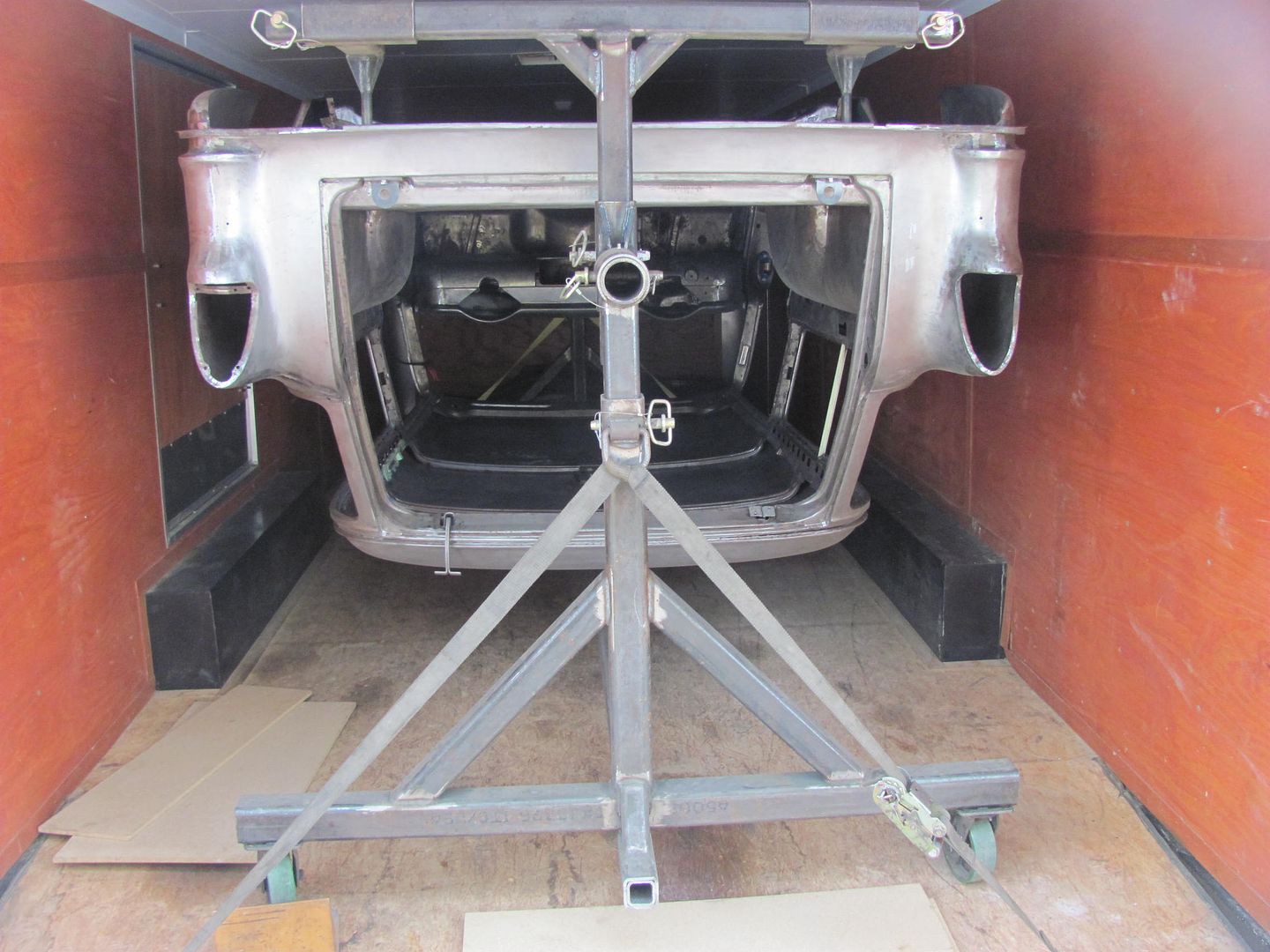
Tuesday afternoon we loaded up the wagon and dropped it off for media blasting.. should pick it up this weekend.


Picture%204391.jpg


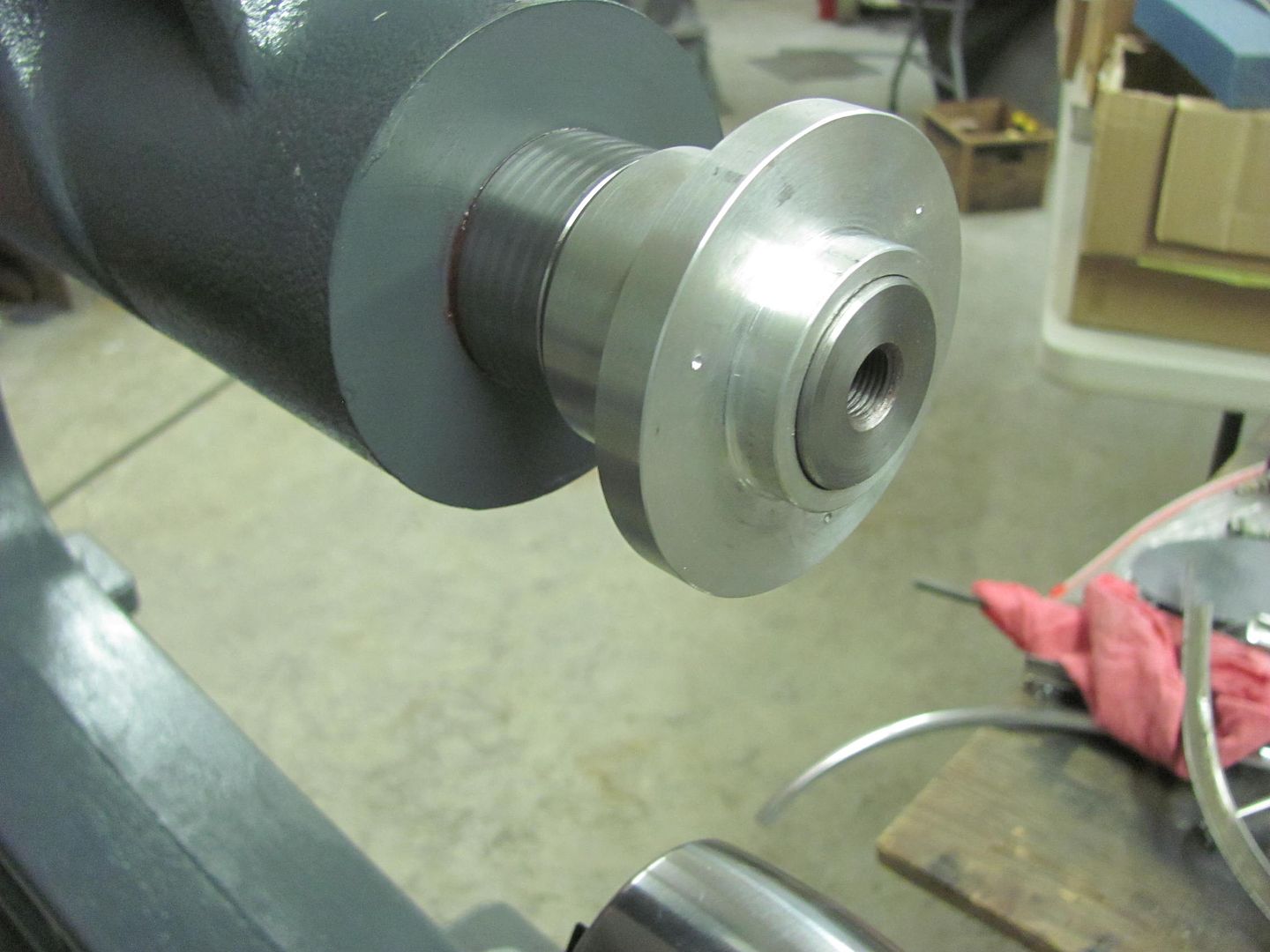
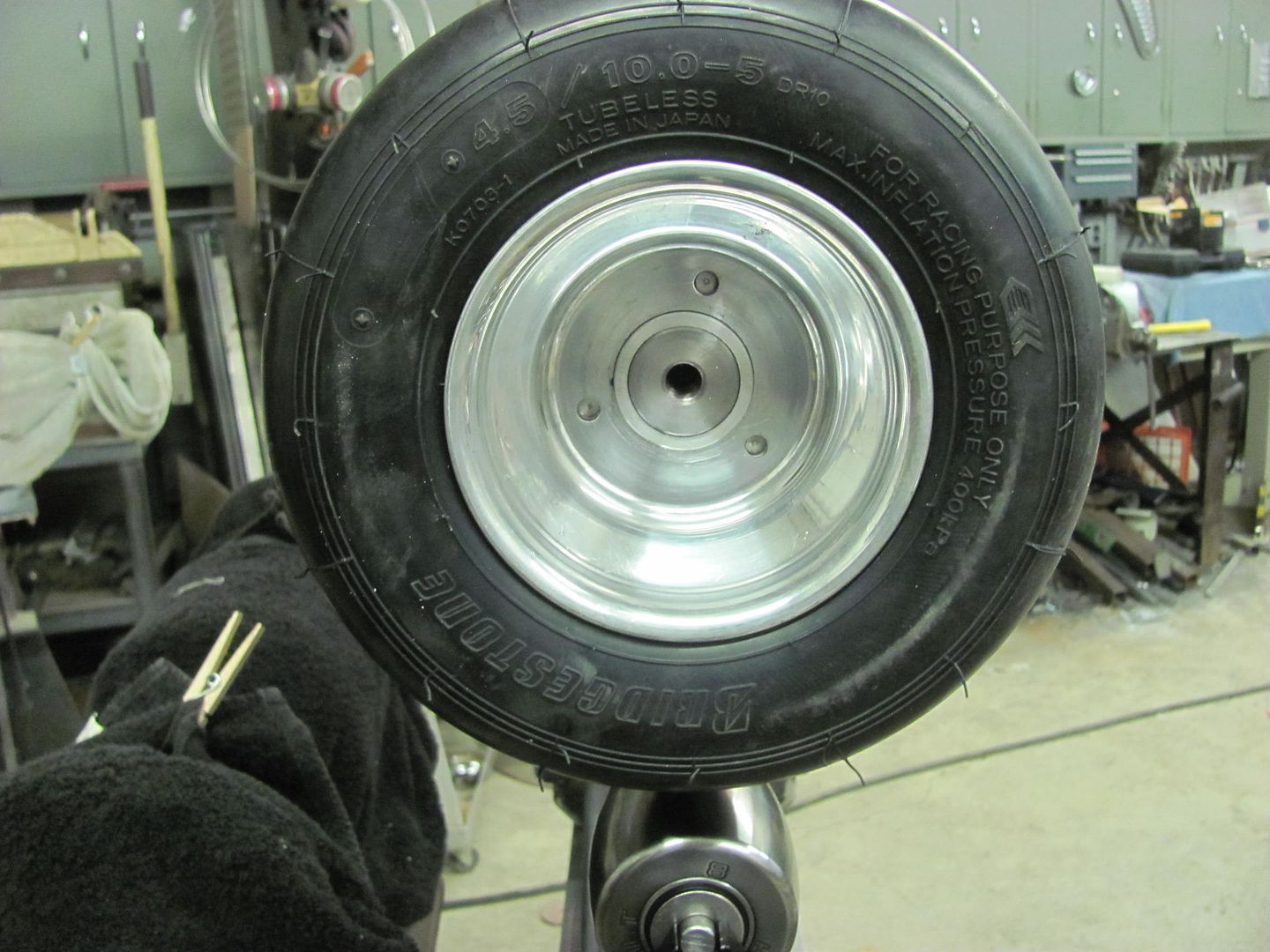
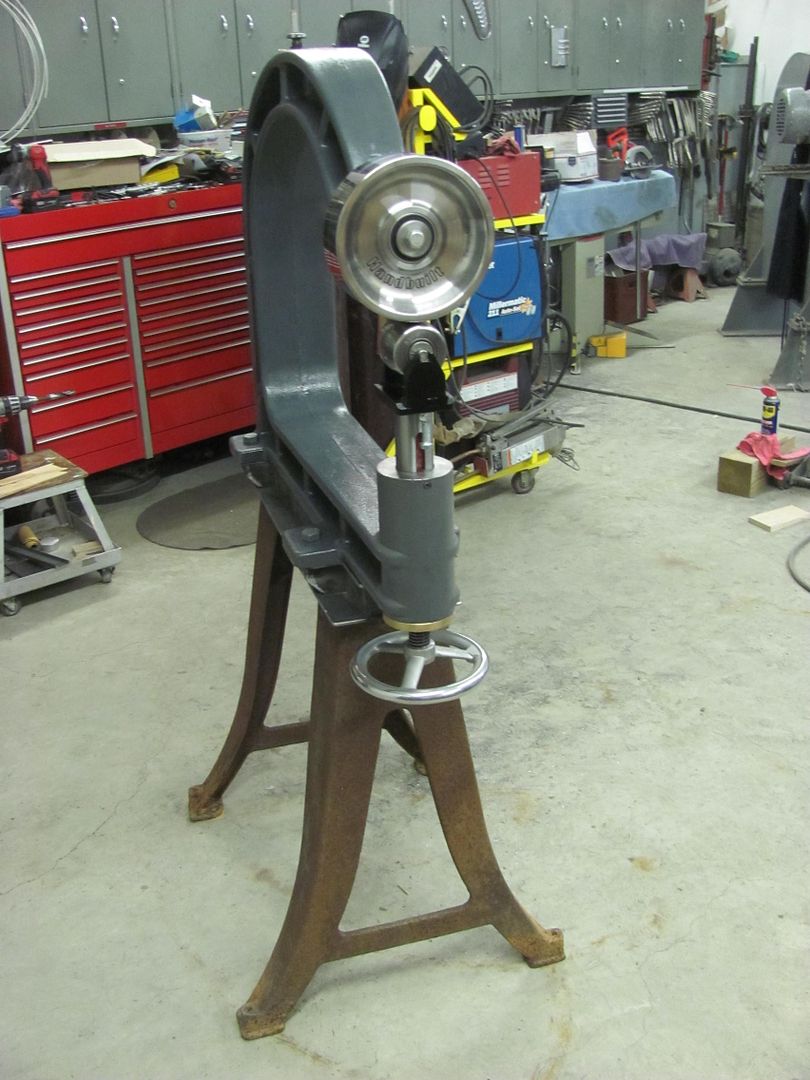
Tonight I worked on getting the Go Kart Slick hub fabricated for the wheeling machine..


English%20Wheel%20026.jpg


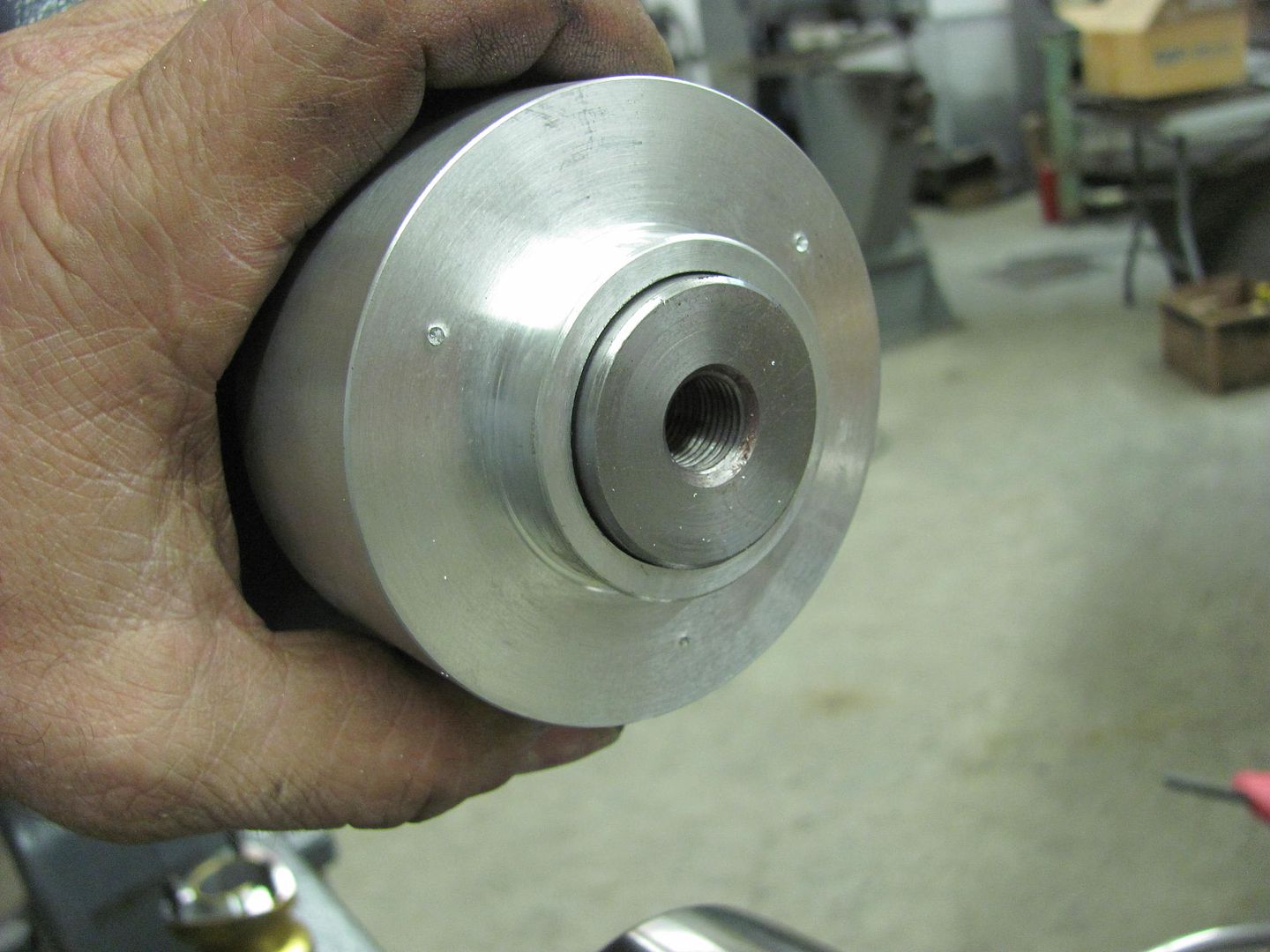
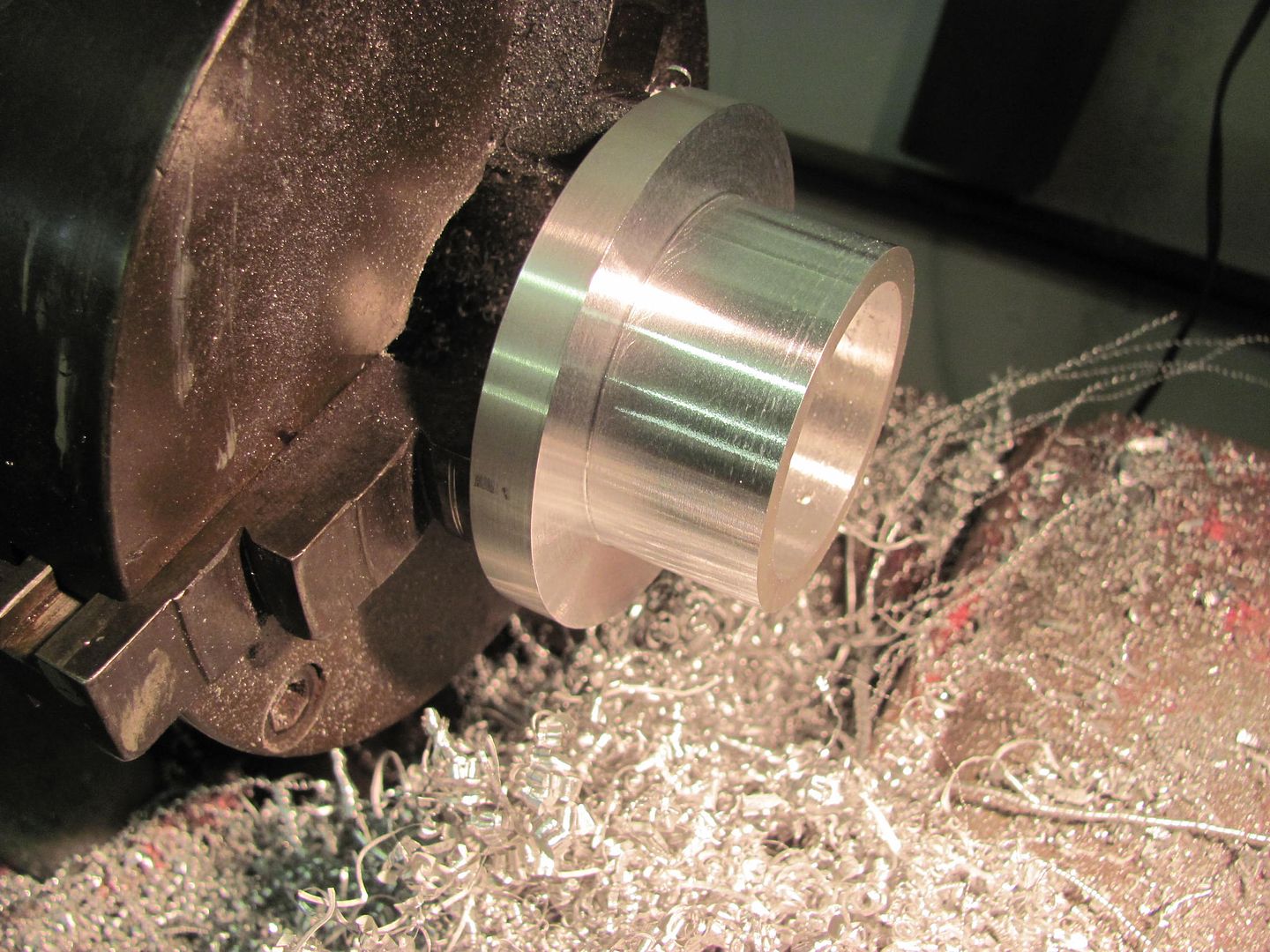
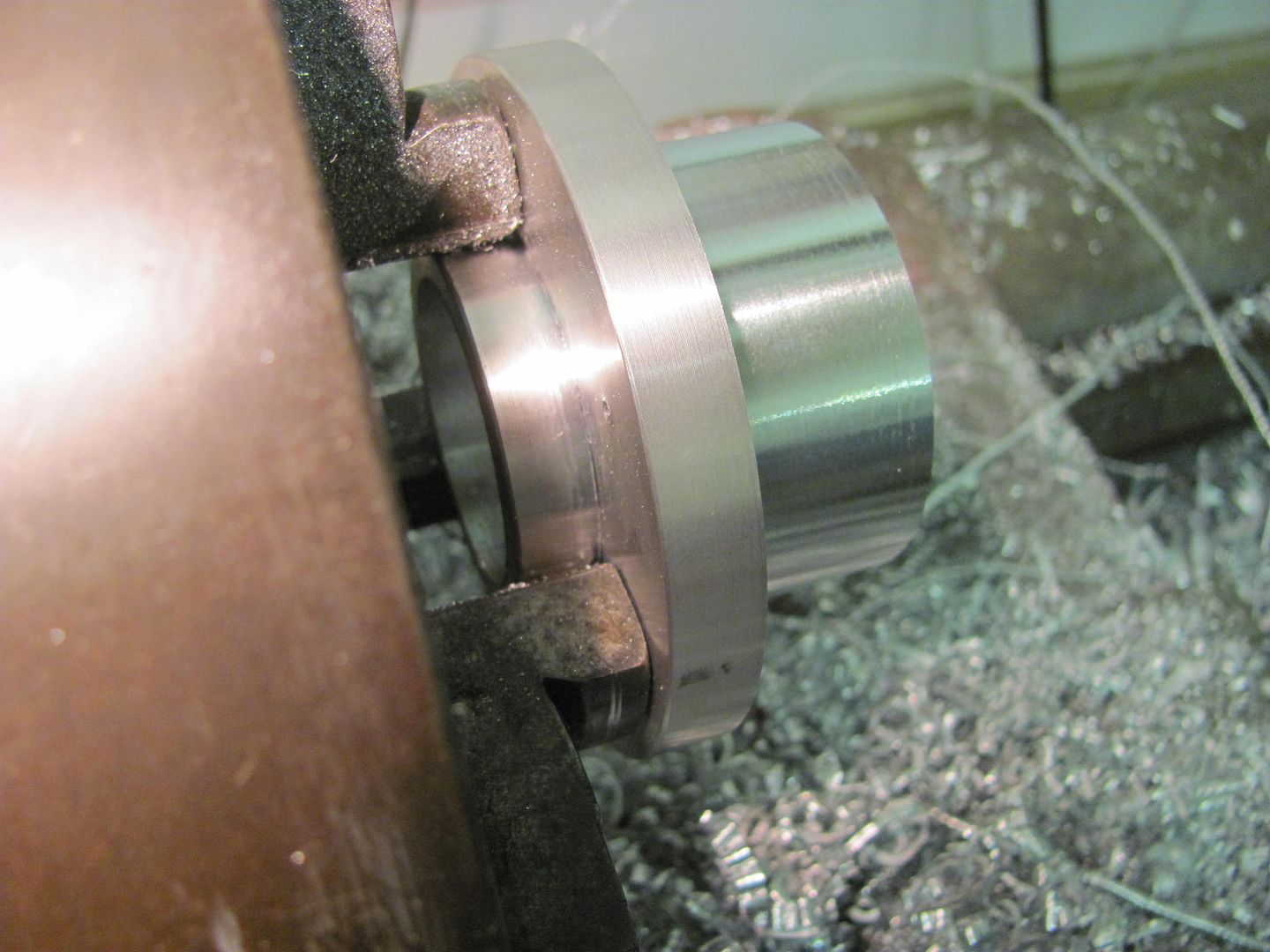
I had stopped at a local machine shop and picked up a 3-1/2" diameter slug left over from their water jet. After some cleanup work on the South Bend, and a clearance hole for the 35mm upper shaft on the wheeling machine...


Picture%204393.jpg


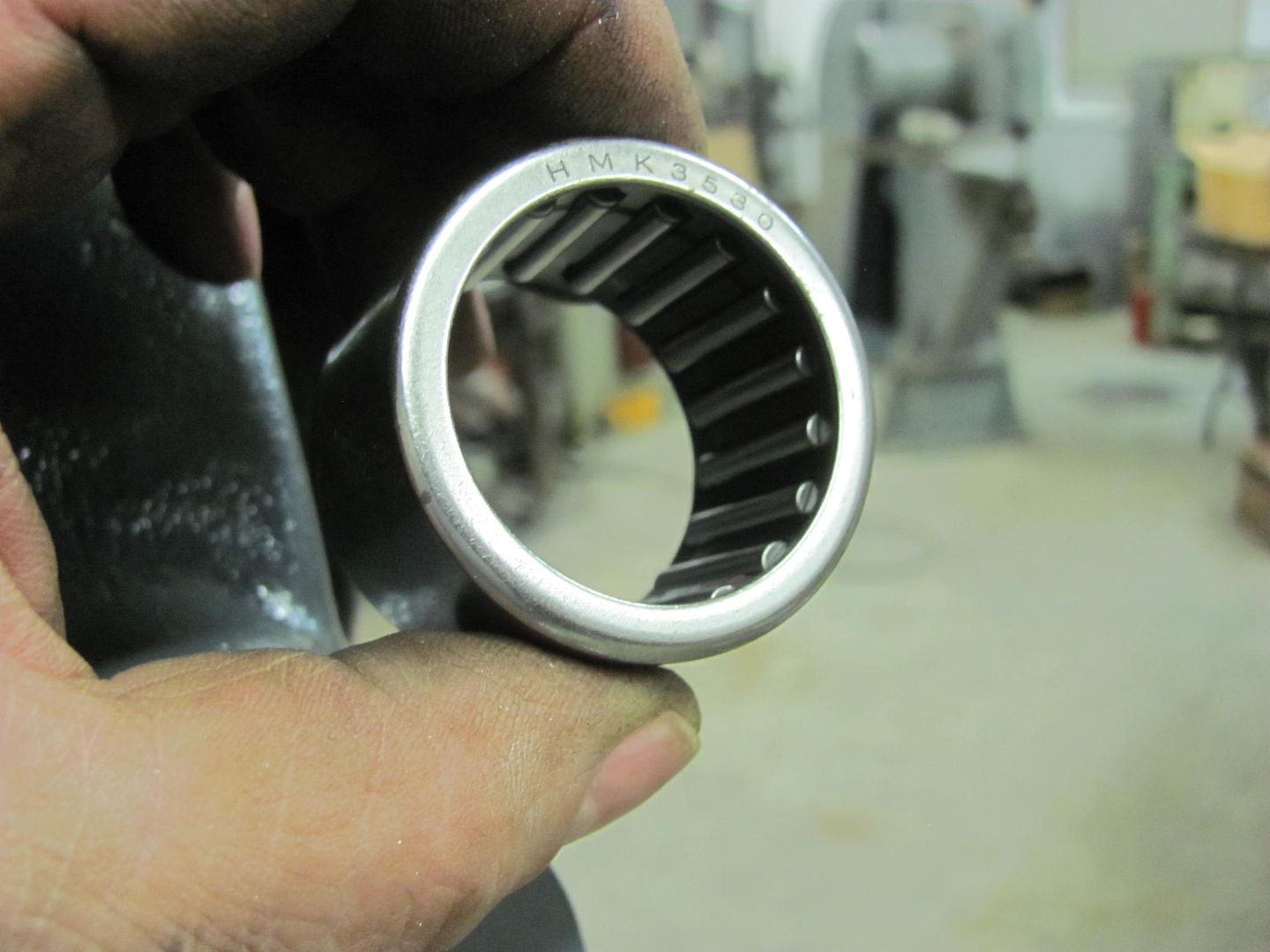
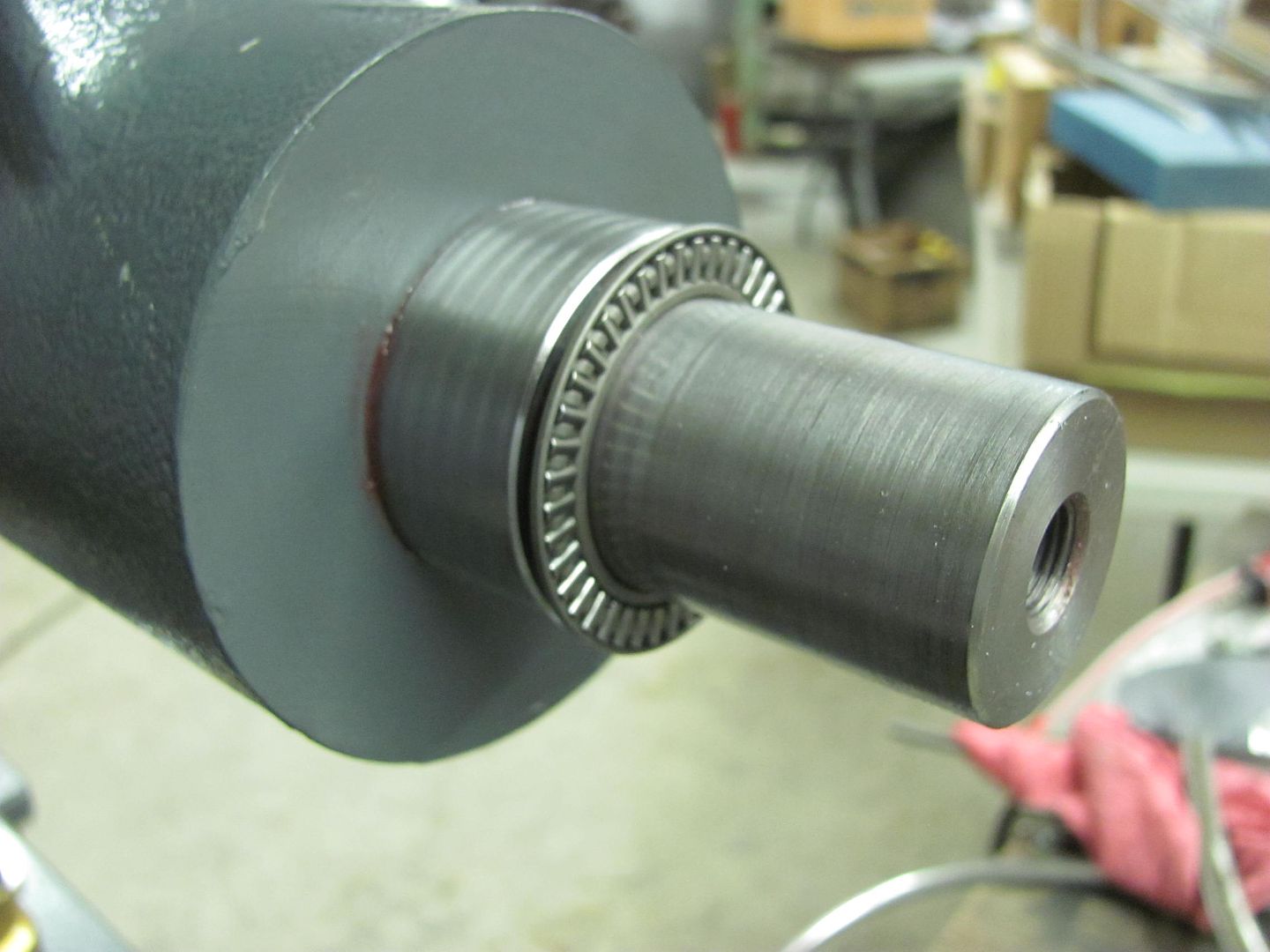
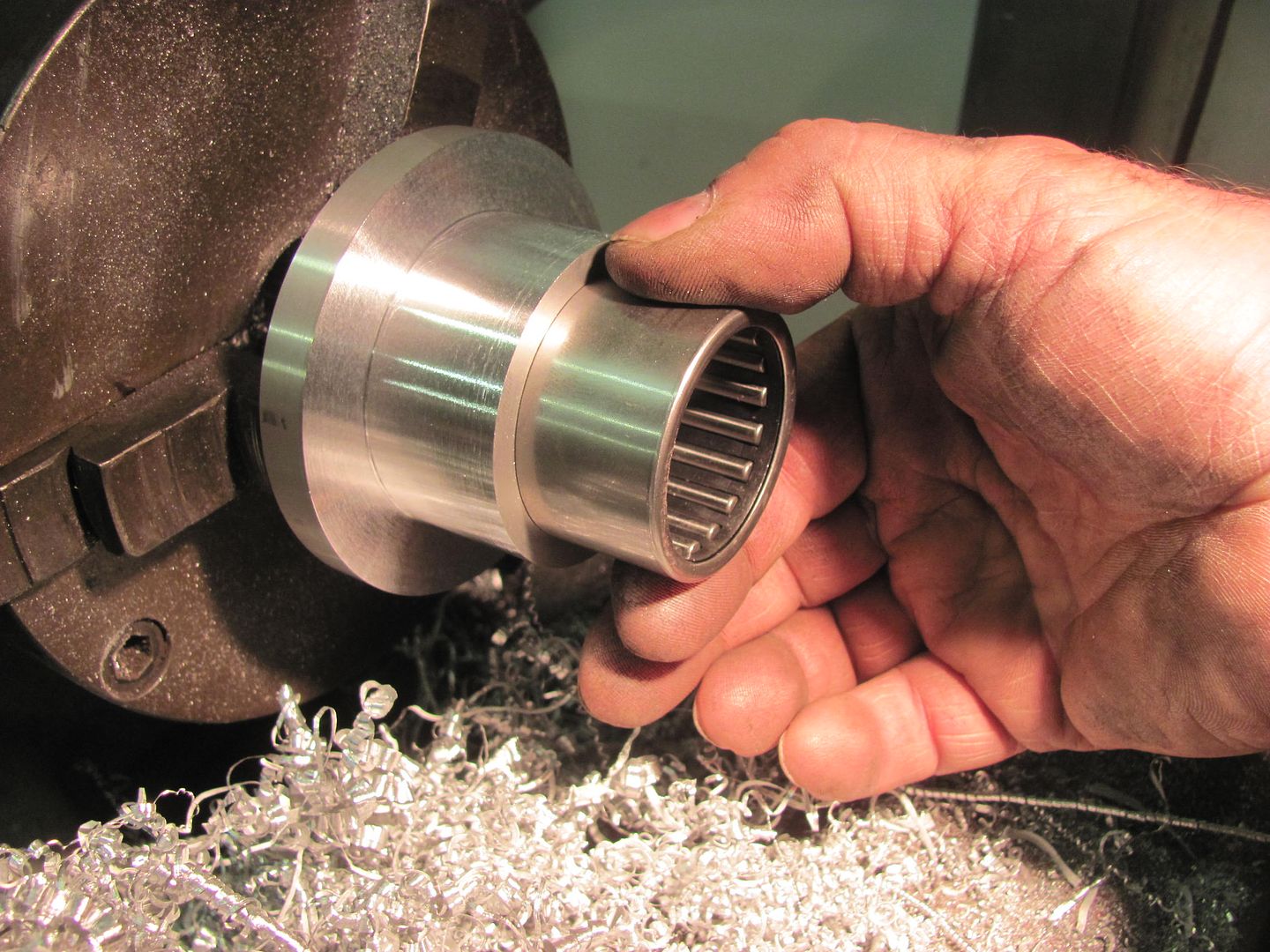
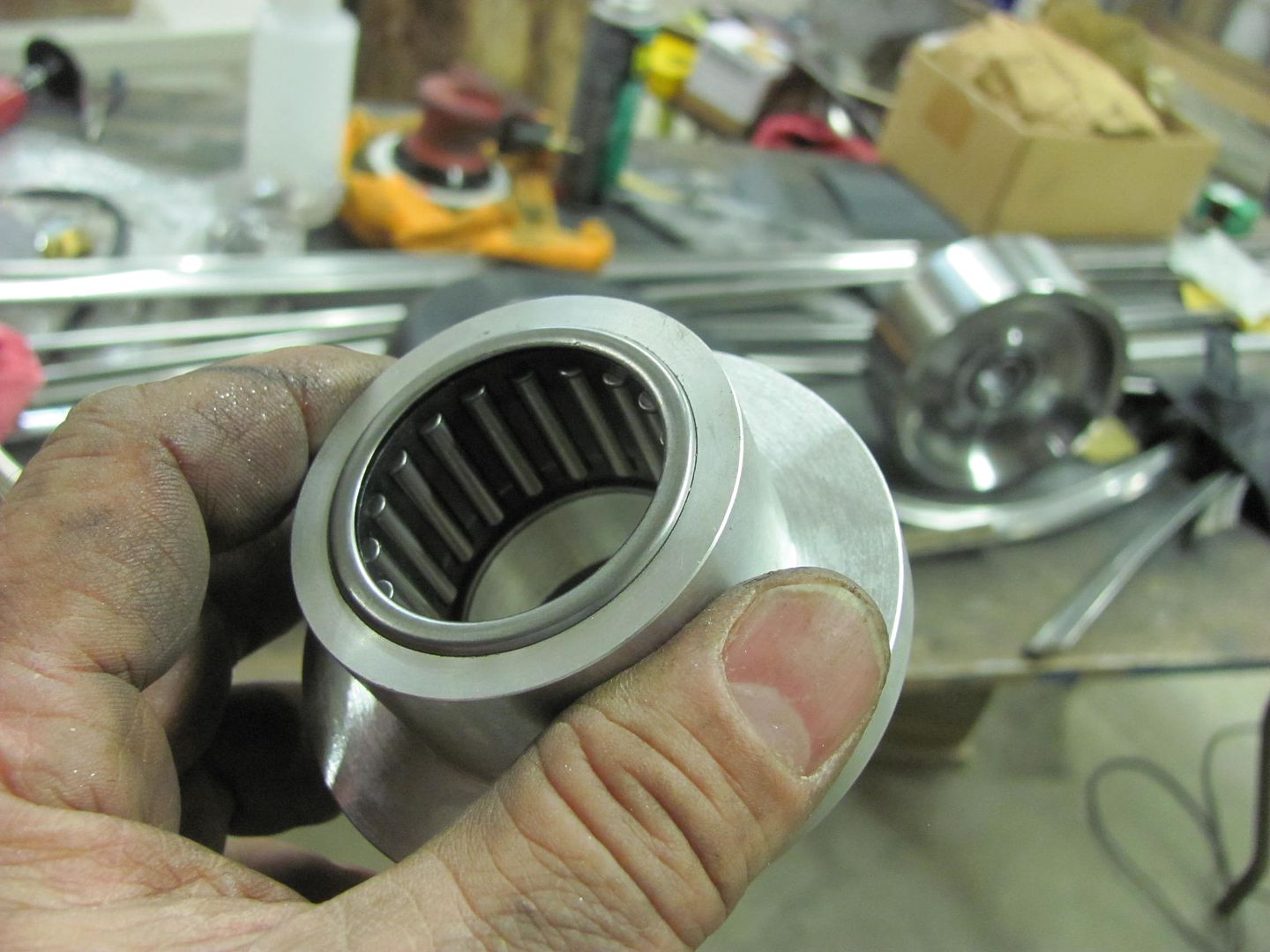
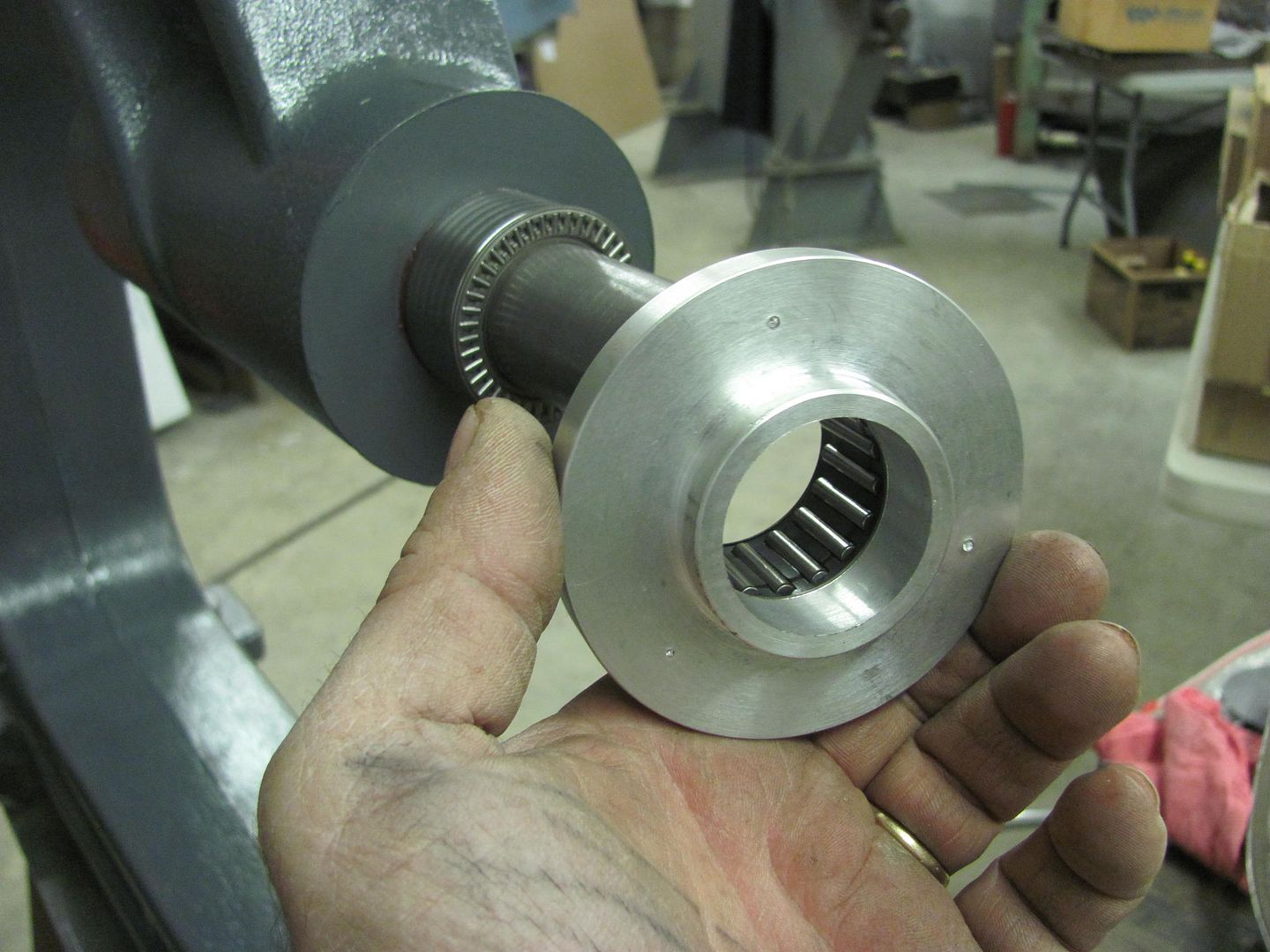
I had found this roller bearing (35mm ID) on ebay, as well as this thrust bearing...


Picture%204394.jpg


Picture%204392.jpg


Getting close...


Picture%204397.jpg


Picture%204398.jpg


Picture%204400.jpg


Bearing installed....


Picture%204404.jpg


Picture%204408.jpg


Picture%204409.jpg


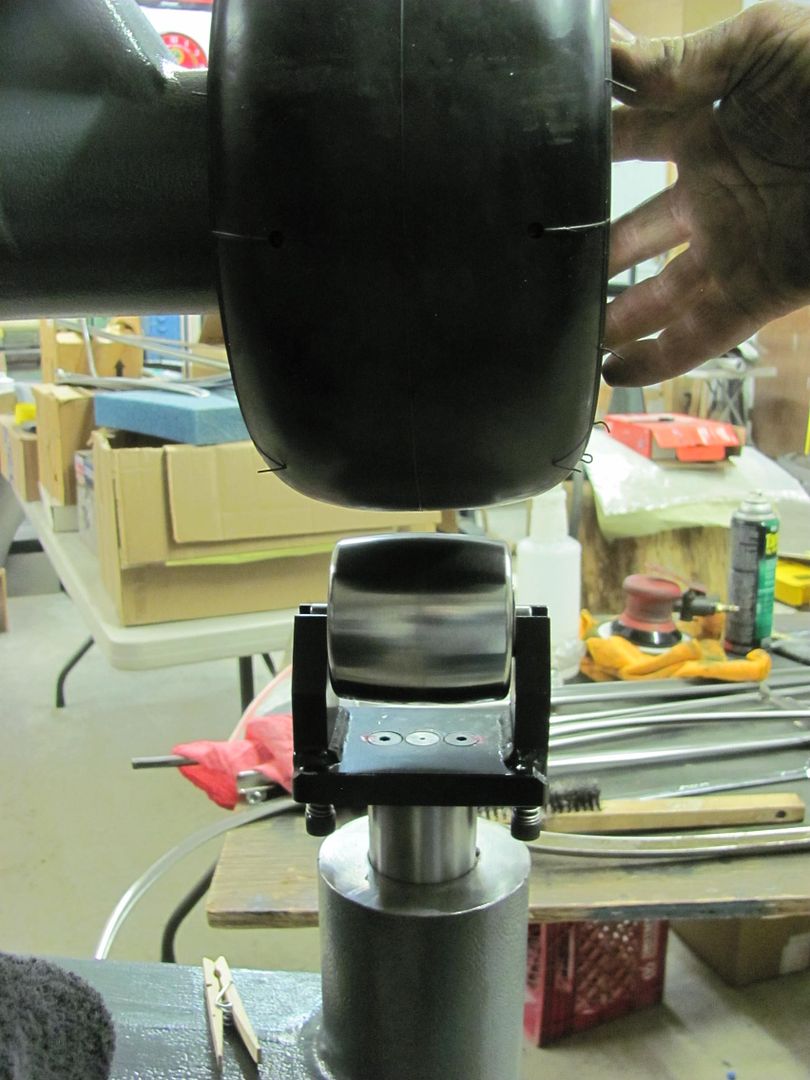
With slick held in place, the alignment looks pretty good...


Picture%204402.jpg


Picture%204403.jpg


Motion picture version....


Still need to drill and tap the three lug holes and install the outer thrust bearing.. and then we can get working on the re-skinning of the glove box door..
 

rockwithjason

Well-known member
Joined
Jan 8, 2006
Messages
2,633
Location
Las Vegas
are you using the slick for shaping the metal without stretching it sort of like lazze does with the rubber band on his upper wheel?
 

TimeWarpF100

Well-known member
Joined
Aug 21, 2010
Messages
6,784
Location
not here
Sorry for the hiatus, the day job had me travelling, two weeks in UK and two weeks in HI. Got back this past Sunday.

Tuesday afternoon we loaded up the wagon and dropped it off for media blasting.. should pick it up this weekend.


Picture%204391.jpg


Tonight I worked on getting the Go Kart Slick hub fabricated for the wheeling machine..


English%20Wheel%20026.jpg


I had stopped at a local machine shop and picked up a 3-1/2" diameter slug left over from their water jet. After some cleanup work on the South Bend, and a clearance hole for the 35mm upper shaft on the wheeling machine...


Picture%204393.jpg


I had found this roller bearing (35mm ID) on ebay, as well as this thrust bearing...


Picture%204394.jpg


Picture%204392.jpg


Getting close...


Picture%204397.jpg


Picture%204398.jpg


Picture%204400.jpg


Bearing installed....


Picture%204404.jpg


Picture%204408.jpg


Picture%204409.jpg


With slick held in place, the alignment looks pretty good...


Picture%204402.jpg


Picture%204403.jpg


Motion picture version....


Still need to drill and tap the three lug holes and install the outer thrust bearing.. and then we can get working on the re-skinning of the glove box door..

Lookin' Good! What is your next project after the wagon is done?
 
OP
M

MP&C

Well-known member
Joined
Oct 21, 2009
Messages
4,396
Location
Leonardtown, MD
That's going to take a long time shaping anything only being able to go one way. Do they have a non directional wheel? :lol_hitti

I'm going to just add an arrow the other direction and hope the tire doesn't notice!


The good thing is that it is made in Japan!

Nice job, looks great MP&C.


Thanks! It's pretty good in concentricity also..


are you using the slick for shaping the metal without stretching it sort of like lazze does with the rubber band on his upper wheel?

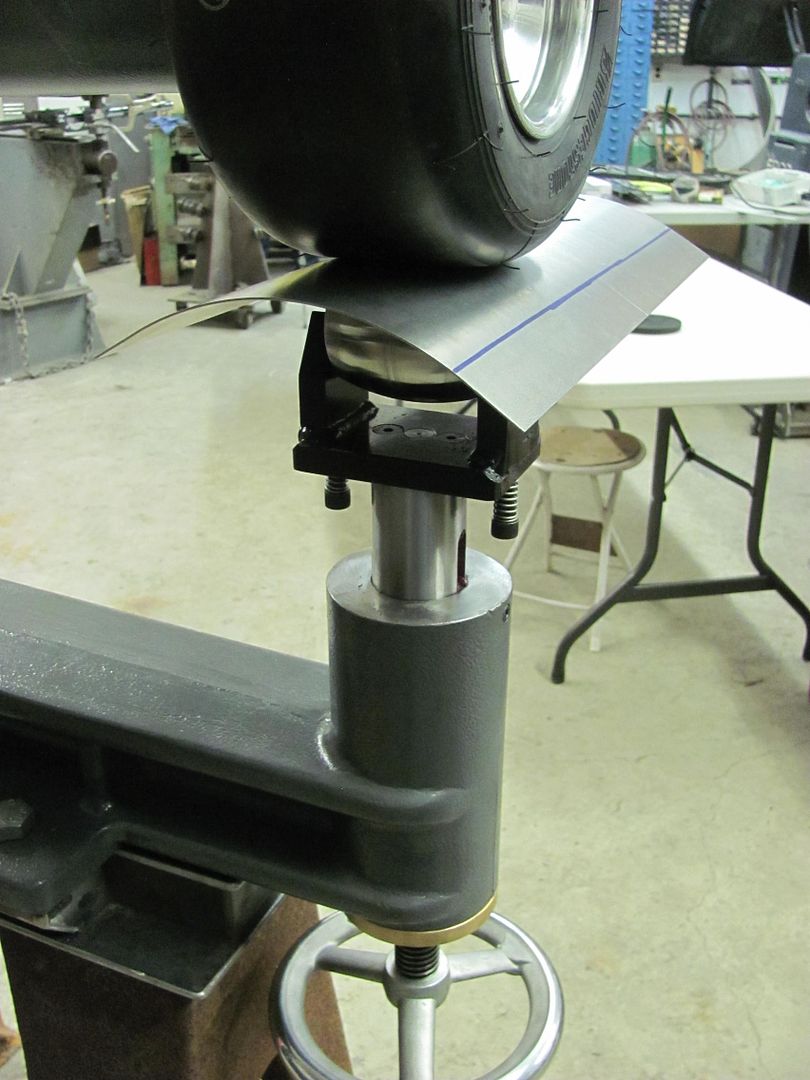
Exactly Jason. Acts like a long slip roll, adds a radius to match the lower anvil in the side to side direction and lengthwise it will all but stay straight. Good for fabricating long rocker panels..


Lookin' Good! What is your next project after the wagon is done?


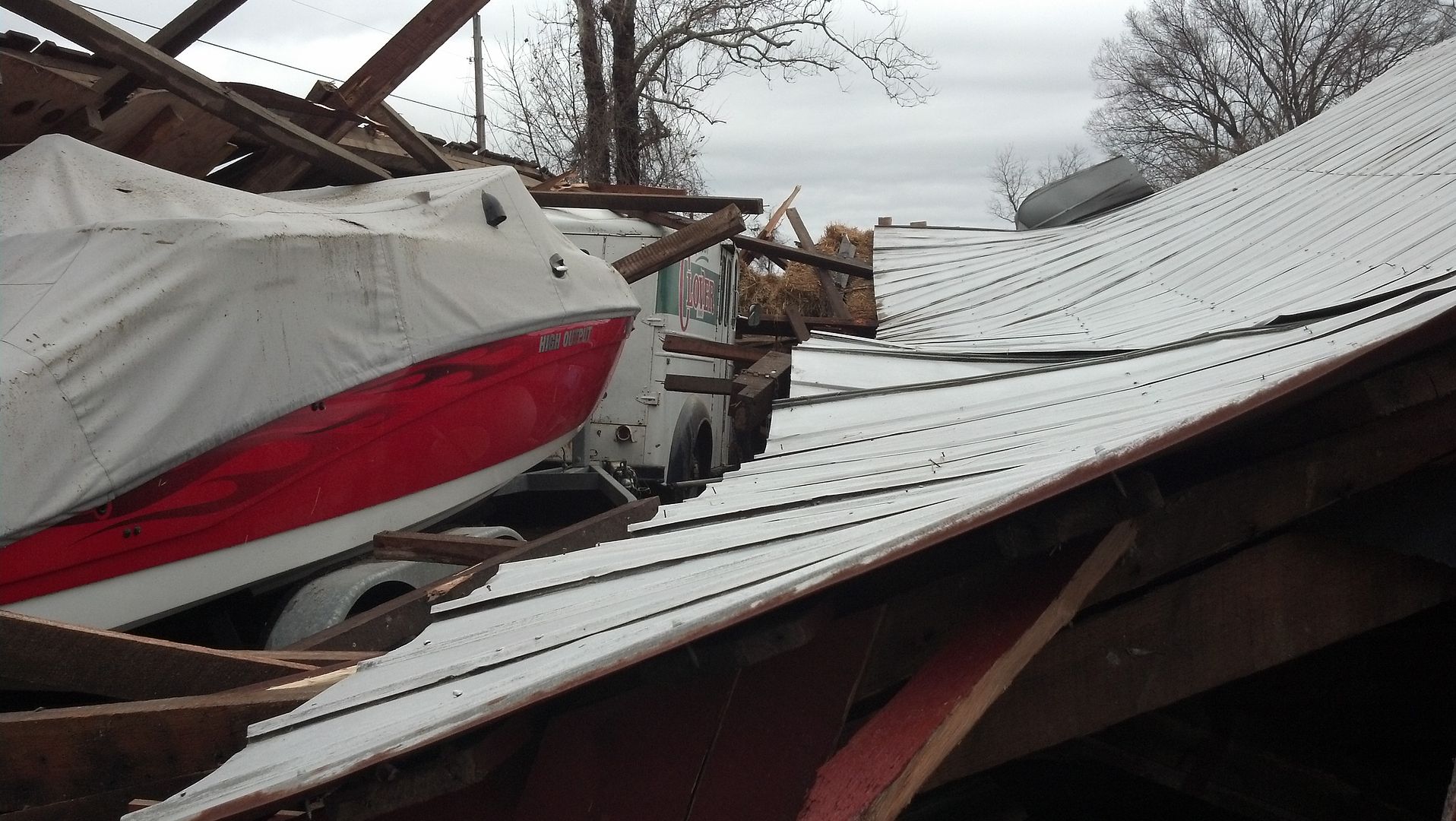
Next long term project is the Divco Milk truck that had the barn fall on it..


2014-02-21_002.jpg
 
OP
M

MP&C

Well-known member
Joined
Oct 21, 2009
Messages
4,396
Location
Leonardtown, MD
Well with our deluge of precipitation the media blaster has not started yet, so it looks like tonight we will be starting on the next louver job, we have some louvers to install in a piece of polished stainless 18 ga....


IMG_0028.jpg


.....and since the Go Kart Slick is now in business, we can work on the new "door skin" for the stretched glove box door...


Picture%204358.jpg
 
OP
M

MP&C

Well-known member
Joined
Oct 21, 2009
Messages
4,396
Location
Leonardtown, MD
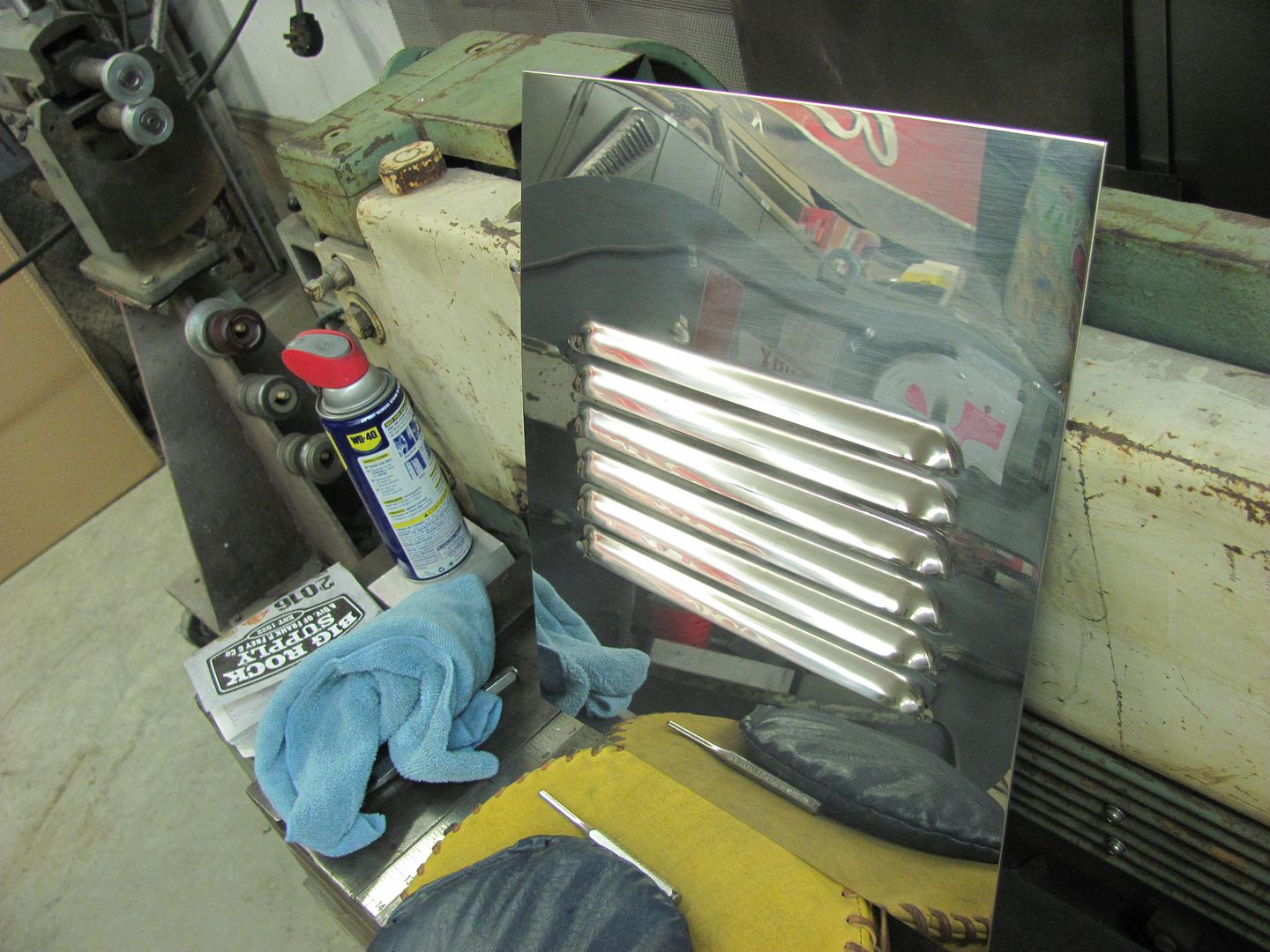
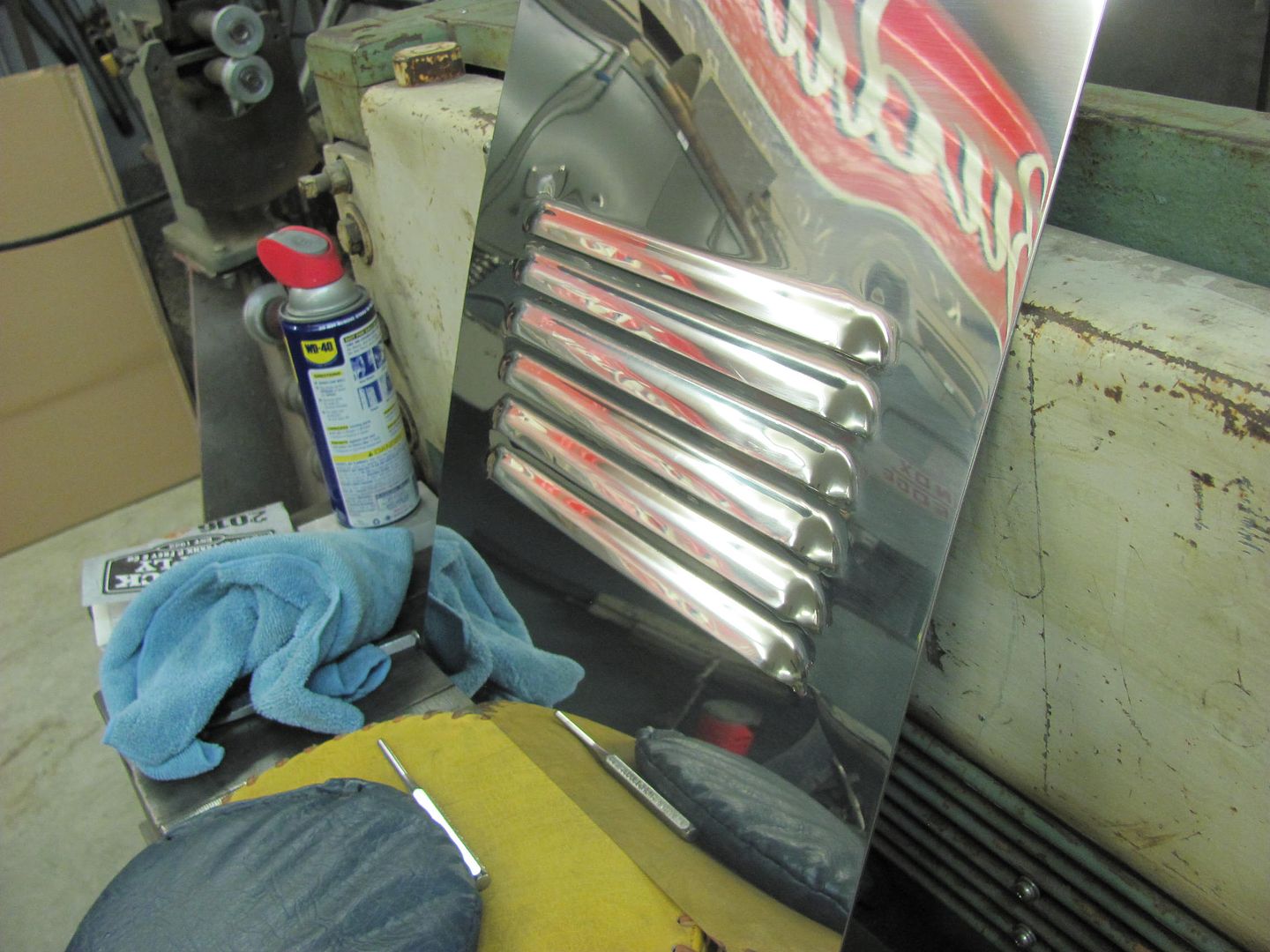
Punched the louvers this evening in 18 gauge polished stainless...


Motion pictures this evening....Punching...


Finished....


Picture%204410.jpg


Picture%204411.jpg
 

joeswamp

Well-known member
Joined
Jul 25, 2007
Messages
2,418
Location
Massachusetts
That looks really really good, you've got a high end louver factory going there.

What sort of machine was originally used to make louvers back in the day? Nowadays everyone is getting such amazing results on the electric reciprocating machines (e.g. Pullmax and your Lennox) but weren't these machines originally developed for much more limited purposes? I think I read somewhere that they were developed only with shearing in mind.

Just curious how louvers were traditionally done.
 
OP
M

MP&C

Well-known member
Joined
Oct 21, 2009
Messages
4,396
Location
Leonardtown, MD
I think the factory louvers like you'd see on a Model A were done in a press, likely all at once. With the advent of hot rodding, a C-press type machine was used with single punch dies. The nibblers (reciprocating machines) were originally shearing and other simple forming processes, but were adapted to more complex shapes as time passed. Most of these type machines also were available with a duplicating table and a small punch, these were the predecessor to todays laser/water jet/plasma tables
 

EdT

Well-known member
Joined
Sep 21, 2010
Messages
1,104
Location
North Georgia
WOW!!! very impressive. Looks like you have that process down. I really like the control the guide rail provides. Looks like the stainless was tough stuff, but it turned out great.
 
OP
M

MP&C

Well-known member
Joined
Oct 21, 2009
Messages
4,396
Location
Leonardtown, MD
Looks like the stainless was tough stuff.....


It was more challenging for the initial plunge with the die, it didn't want to break through as easily as it does for cold rolled. But even with the polished finish, the SS seemed to not show marking like the cold rolled does..
 

gearheads78

Well-known member
Joined
Oct 23, 2010
Messages
187
Location
DFW TX
Thanks for more updates. Thanks so much for sharing your knowledge.

I had one suggestion and one question.

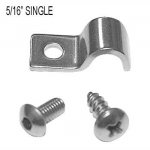
Basic hardware store clamps are a pet peave of mine on such a nice build. I was wondering if yo have ever seen these. Cheap stainless and look s much better.
http://www.kugelkomponents.com/zencart/index.php?main_page=index&cPath=18

I have never seen anyone block epoxy like you are. Is this a special high build epoxy made to block as opposed to a urethane or polyester?

Keep up the great work.
 

Attachments

  • 3-8-hold-down-with-base.jpg
    3-8-hold-down-with-base.jpg
    13.3 KB · Views: 35
  • 5-16-single.jpg
    5-16-single.jpg
    12.5 KB · Views: 33
To avoid these ads, REGISTER NOW!
OP
M

MP&C

Well-known member
Joined
Oct 21, 2009
Messages
4,396
Location
Leonardtown, MD
I hear you on the clamps, and if it were going to be a strictly show car, we would likely have used them. But this car will be a driver first and foremost, so the rubber protected (and cheaper) clamps were preferred by the owner.

Last major project was the Fairlane (see link in signature) and it was done using epoxy (H/K) and high build (slick sand). That does show a couple spots in the paint the my discerning eye (call it **** retentive if you like) sees some defect. The epoxy should give a more stable base without issue of shrinking, etc, so I thought I'd cut out the SS on this job and see if it did any better. This is SPI epoxy, I have used both it and House of Kolor and they both have good build characteristics, and sandable.
 

iajonesy

Well-known member
Joined
Feb 8, 2009
Messages
2,467
Location
Iowa
Robert, do you use SPI top coats too? I know you use and like their epoxy primer but I don't recall you saying anything about their colors.

Mike
 
OP
M

MP&C

Well-known member
Joined
Oct 21, 2009
Messages
4,396
Location
Leonardtown, MD
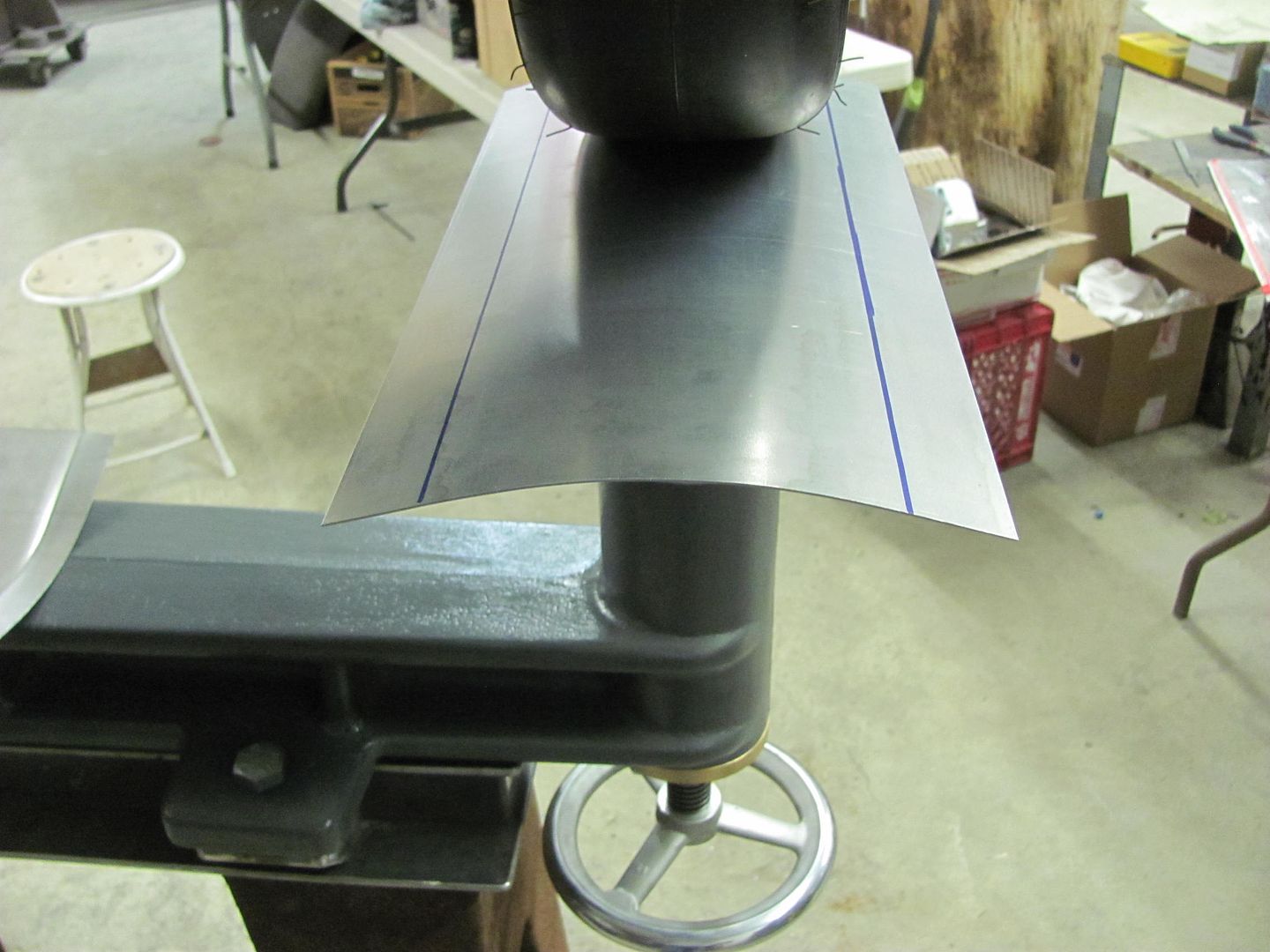
Well today was our Saturday so we put the newly installed GoKart slick to use on the cast wheeling machine, along with the 4" diameter lower anvil. Started with slight pressure and gradually increased. Tire was about 1/2 deflated.


Picture%204412.jpg


Picture%204413.jpg


Picture%204414.jpg


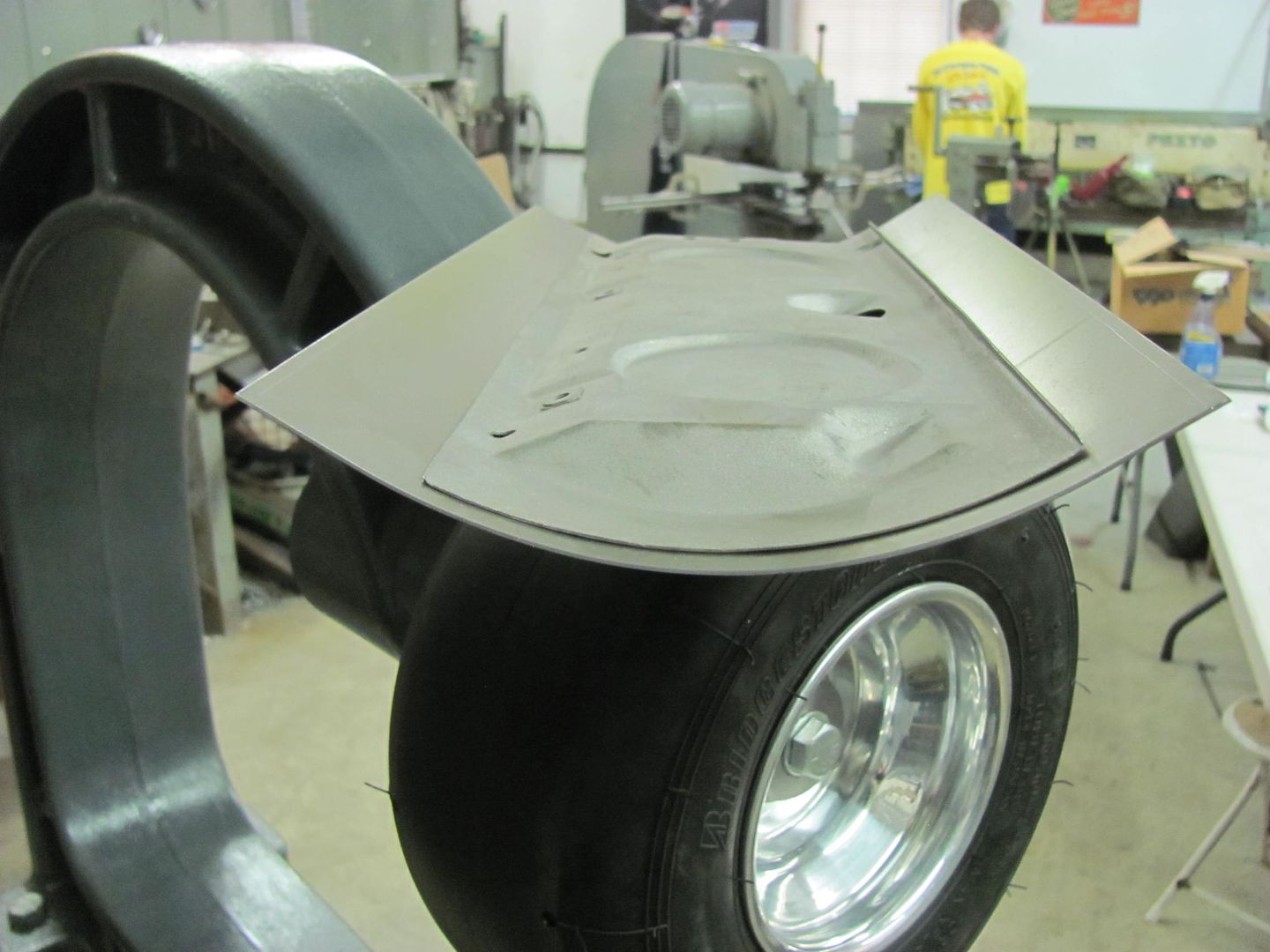
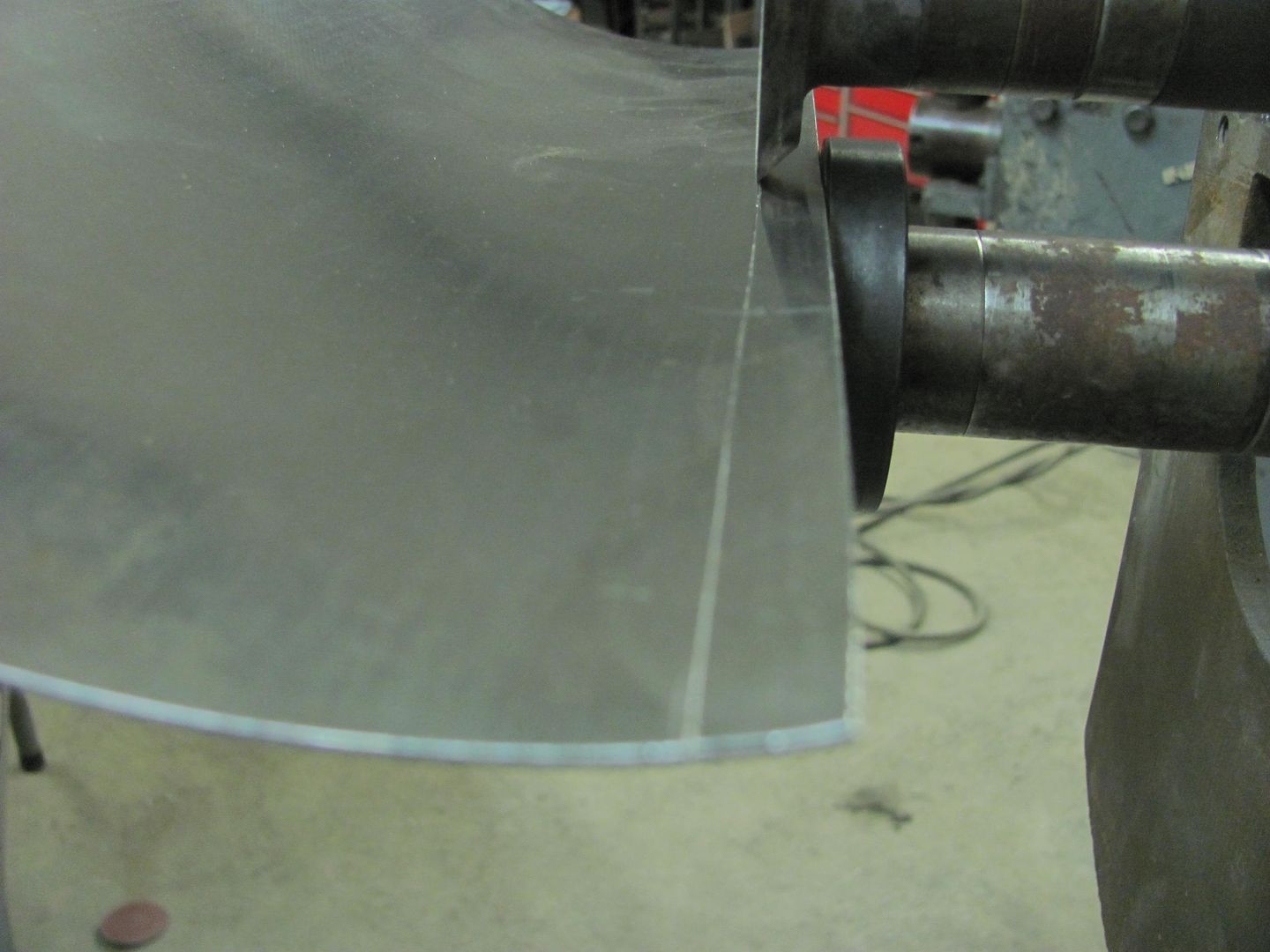
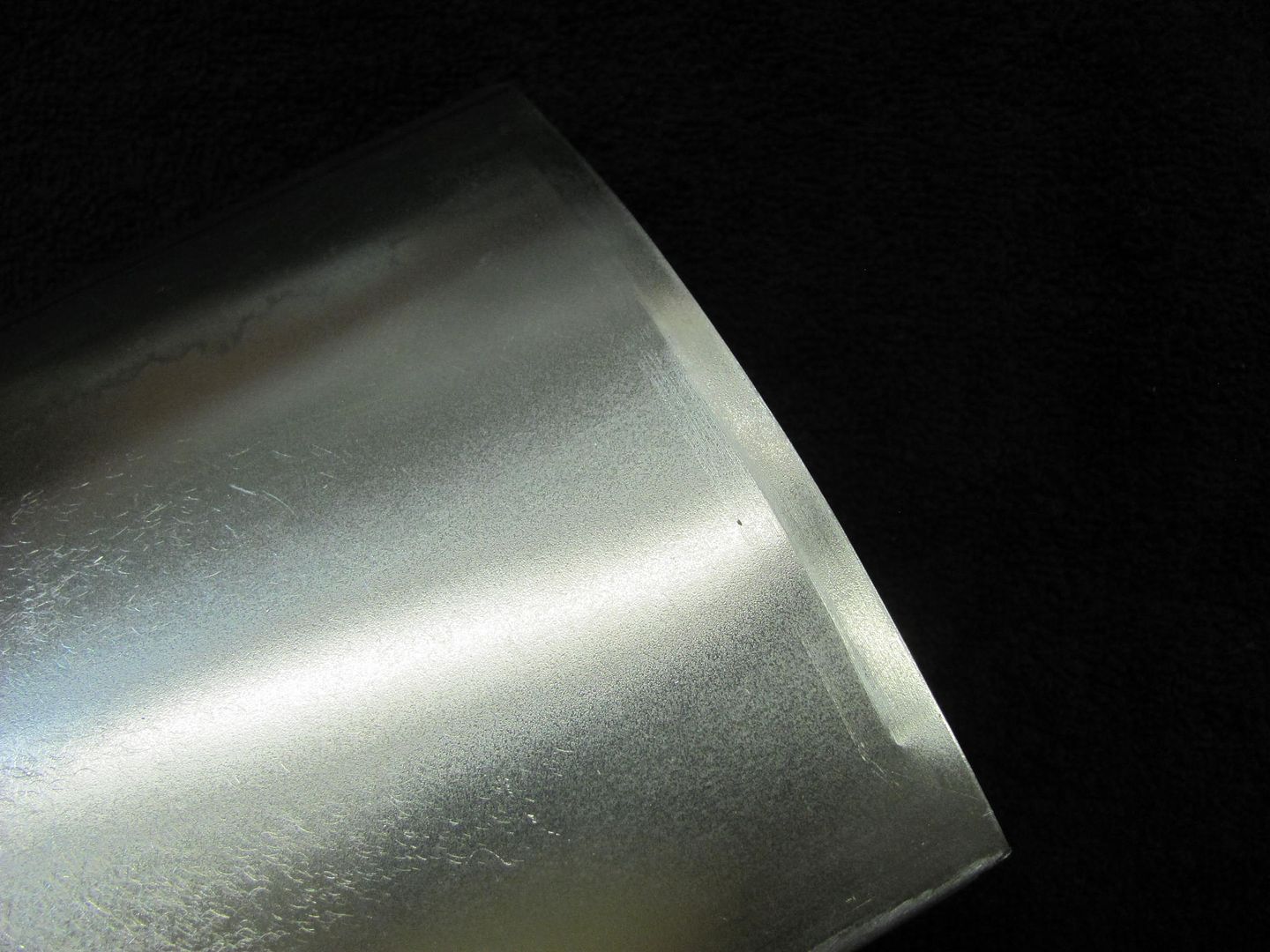
The sides (as shown) had been left a bit long to keep from flattening out fingertips, so now we trimmed one side and marked for the bends. The tipping wheel in the bead roller was used to thin the bend area for a bit of friendly persuasion..


Picture%204417.jpg


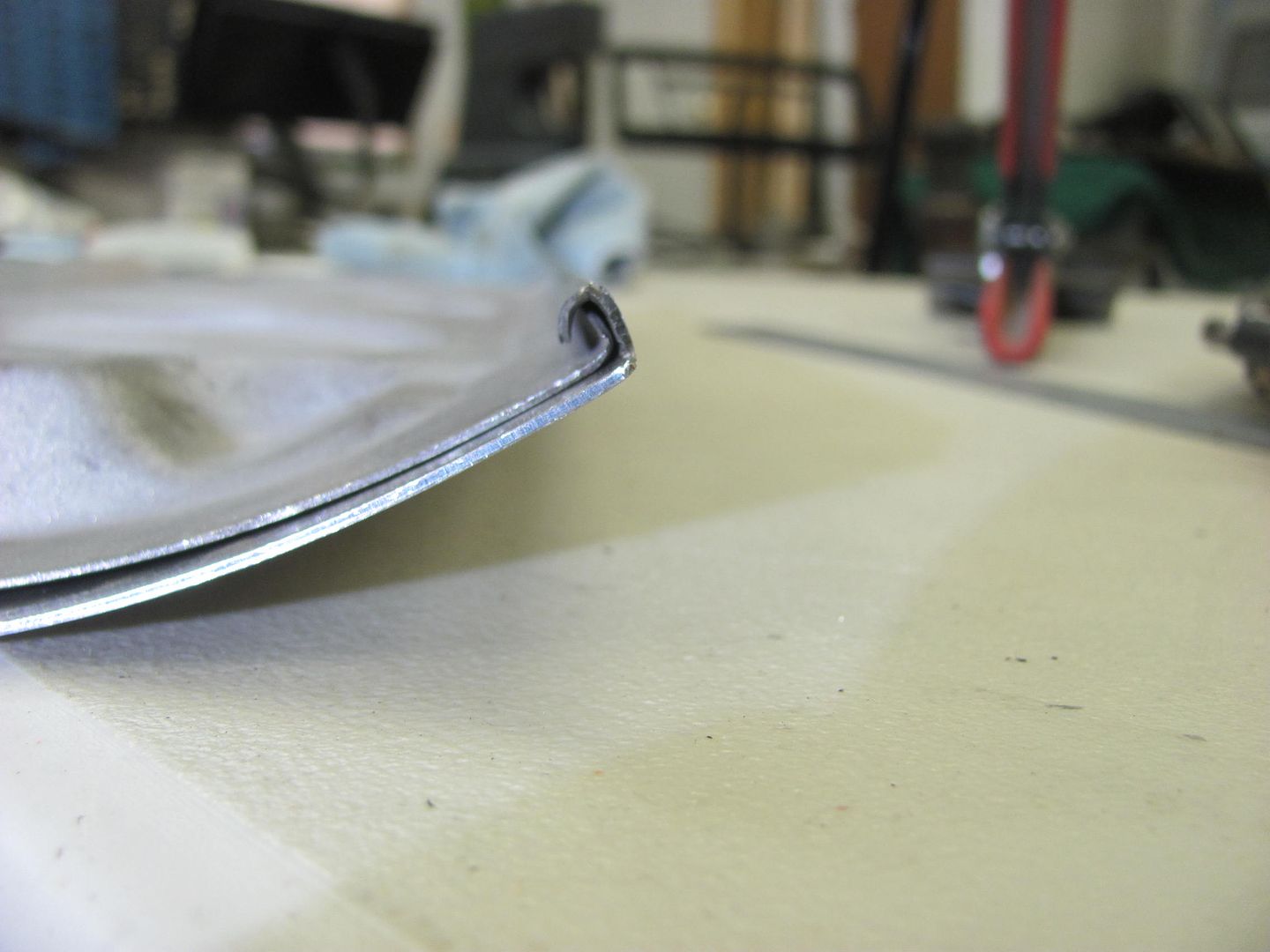
These were fun. About 3/16" from bend to bend....or less. Had to use all the tricks, hem is still loose, we'll epoxy all the pieces apart and then assemble, making all the folds tight.


Picture%204420.jpg


Picture%204421.jpg


Picture%204422.jpg


Still have the lock hole to go as well, we are going to leave this one smooth as opposed to the factory's vertical bead to simulate the gap at the ashtray..
 

rmack898

Well-known member
Joined
Jan 23, 2007
Messages
3,140
Location
Honu Grove NE Florida
Slight thread hi-jack here.

My son Trevor is doing his first frame off restoration. It's a 1987 Suzuki Samurai. Now Trevor and I are machinist fabricators and body work is a new thing to us. I have been reading Robert's thread for a while and I'm still not finished reading and up to date with this thread.

Trevor's body had a good size dent in the quarter panel that he did a pretty good job of getting out, but the metal was pretty well stretched and it was "oil canning". I sent a PM to Robert explaining where Trevor was at and we sent a video of the oil canned quarter panel. Robert looked at it and wrote about a 2 paragraph explanation of how to fix it. I printed out Robert's response and gave it to Trevor. When I came home from work the next day, Trevor had the quarter panel shrunk properly and the oil canning was gone, all thanks to the time Robert spent to help Trevor out.

I just want to give a public thanks to Robert for sharing his skills. Both Trevor and I learned a valuable metal working skill that we will never forget thanks to Robert going above and beyond. We will surely pass this new gained knowledge on to others. Thanks Robert.

Hi-jack over, now back to the thread.
 

Attachments

  • 003.jpg
    003.jpg
    143.7 KB · Views: 165
  • 001.jpg
    001.jpg
    152.4 KB · Views: 179

stsmytherie

Well-known member
Joined
Dec 16, 2005
Messages
171
Location
VT
If you guys don't mind sharing the advice to Trevor here, I'm sure it would be a great resource for us simple students, and much appreciated.
 
OP
M

MP&C

Well-known member
Joined
Oct 21, 2009
Messages
4,396
Location
Leonardtown, MD
If you guys don't mind sharing the advice to Trevor here, I'm sure it would be a great resource for us simple students, and much appreciated.


Here's the dialogue, and the link for Trevor's youtube video...


mac said:
Robert, I've been reading your projects thread for a while now and I'm still no caught up, but I have learned much up to this point and I thank you for taking the time to document your work and teach us as you go.

I'm a machinist/fabricator and not a body man.
My son Trevor is building a Suzuki Samurai and he has cut every bit of rust out of it and welded in patch panels and is doing a fine job. He had a dent in the quarter panel that he got out with a torch and some hammer work but now it is oil canning on him. The area is about 8" in diameter and oil cans almost 1/4".
Do you have any suggestions on how to shrink it? He has tried a shrinking hammer with little results and I have no idea what to tell him to do. I was hoping you might be able to point him in the right direction.

I have some pics of the area but cant seem to attach them to a PM.

Thanks in advance,
Mac


MP&C said:
Mac, I consider there are two types of oil cans, tight oil cans and loose oil cans. The difference:


A tight oil can is usually caused by body damage, such as a glancing blow, that displaces forces of the panel's crown elsewhere. This is normally noted by an oil can that will "pop" in one direction but forcefully pops back due to the relocated forces. This type can also be caused by over-aggressive results of sand blasting. A stretch caused this oil can, shrinking fixes it.

A loose oil can is usually an after effect of a welding operation where shrinking has lost some of the panel's crown, or fatigue over the many years has caused a larger panel/hood to settle. These loose oil cans are noted by the panel easily flopping back and forth, and would typically be corrected with stretching.


I would pause here and point out that some defects will also be the cause of others. For example, if you have a tight oil can in the center of a qtr that was caused by sand blasting or a dent (stretching). The displacement of the crown may very well have pulled at the adjacent metal elsewhere, possibly resulting in a loose oil can in an area outside of the main damage. In my way of thinking the loose oil can should be left alone and focus on the stretched area in the center. Once that is corrected, the loose oil can at the top may go away.

As far as throwing out some hindsight, if an oil can was there prior to welding a patch in, you may be better served to remove the body damage (sand blast stretch) prior to welding in the patch. A long straight edge is your friend, I normally lay a steel rule across the area and then lay it over so it is about 45 degrees from being flat. This gives it some support but also gives it enough "flex" to conform to the panel. Notate highs and lows. Then change directions and read again. See if the highs and lows remain in the same spots.

Sorry to be writing a book here, but another thought to consider. If you have yet to do any planishing along a weld, there should be a shrink along it's length throughout the HAZ. The "unaffected" metal just to the outside of the HAZ, in response to the adjacent shrinking, will sometimes form a sinusoidal wave. I only mention this as it may cause a misread of all the "excess" metal as a stretch, when in fact it was caused by the shrinking of the weld.

So IMO, first identify the cause, whether a tight or loose oil can, and work on the solution. After reading all that, I hope you can see why its hard for anyone to diagnose your issues by just reading text or even looking at pictures. If you can do a video it would really help..


mac said:
Robert,
Thanks so much for the time to reply.
The area in question was not a patch panel but a dent that he pushed out. He has full access to the back side of it.
Here is a link to a you tube that I told him to do for you, I hope that it shows you what he is dealing with.

Thanks again,
Mac


To clarify at this point, if you look at the video link above, you can see there is tension enough to "hold" the oil can in either direction it is pushed, but not so much that it needs to be forced. This leads me to believe it is indeed stretched (from the dent) but not too much, as shown by the amount of "tightness" in the pop. This response lays out the repair:


MP&C said:
The oil can looks like a tight one, don't think he has all the shrinking done. A loose one would easily flop back after pushing it out. That one tends to stay where you put it, but it doesn't look to need much. To find out the area in need of attention, the following process will normally find the area that needs shrinking.... Cycle the oil can in and out a couple times in order to find the outer perimeter of the oil can. If it helps to mark it with some painters tape, a sharpie, so be it, use whatever works. Now using your thumb from one hand apply slight pressure on a point, any point on this perimeter. Use the other hand to cycle the oil can again, using the same pressure as before. Keep moving your pressure point around the perimeter and cycle the oil can for each spot until you get to a point on the perimeter where the pressure will keep the oil can from cycling, it locks it from moving. This should identify your "sweet spot" that needs shrinking, and there may be more than one sweet spot. If it sounds like this is more of a two person job, it may help.... ;)
 

22george

Well-known member
Joined
Jan 26, 2011
Messages
1,634
Location
SW Ohio
The information you give out to us amateurs is greatly appreciated Robert. I check for your thread every night.
Thank you
:D:D
 
OP
M

MP&C

Well-known member
Joined
Oct 21, 2009
Messages
4,396
Location
Leonardtown, MD
Thanks guys!


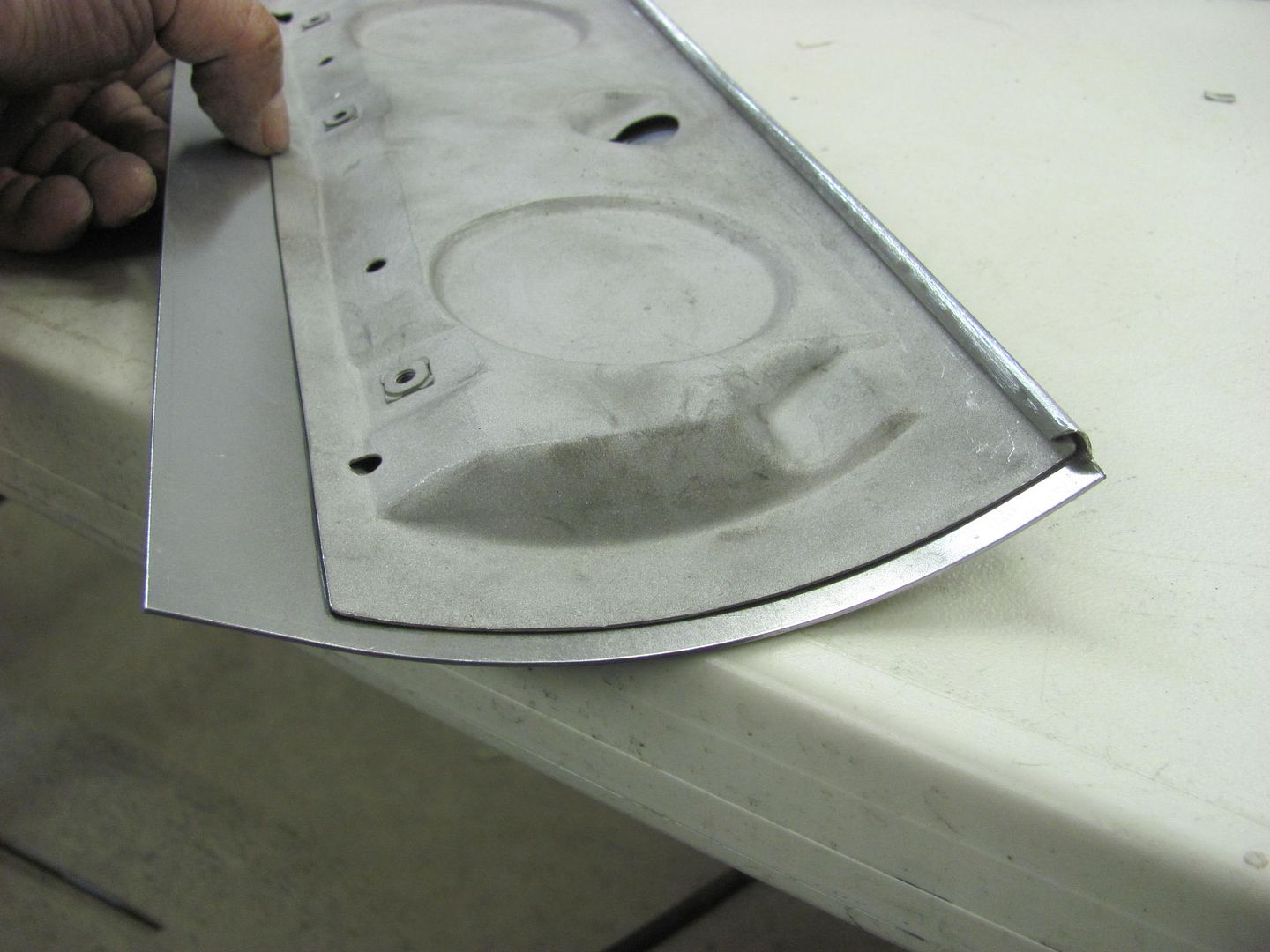
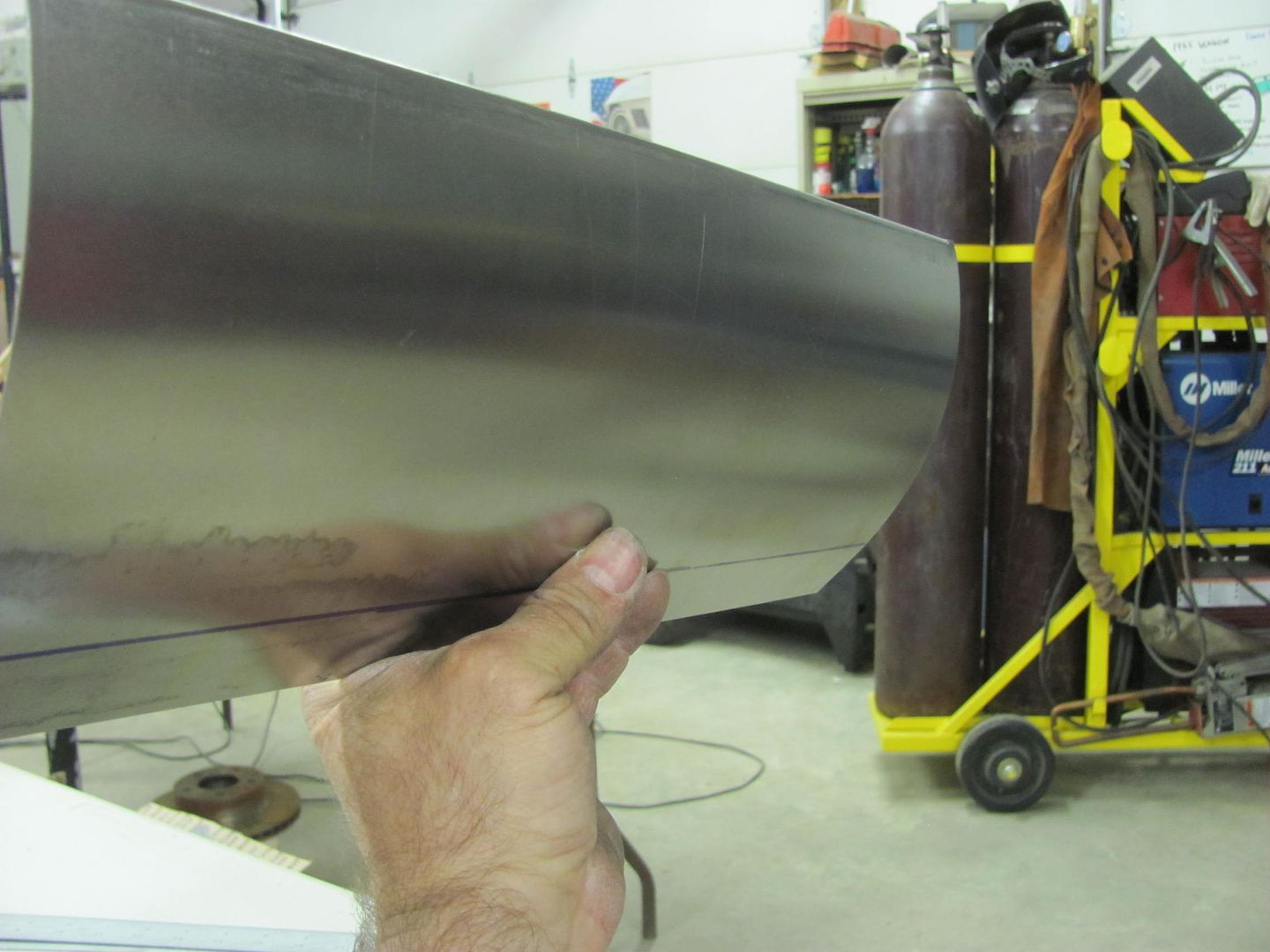
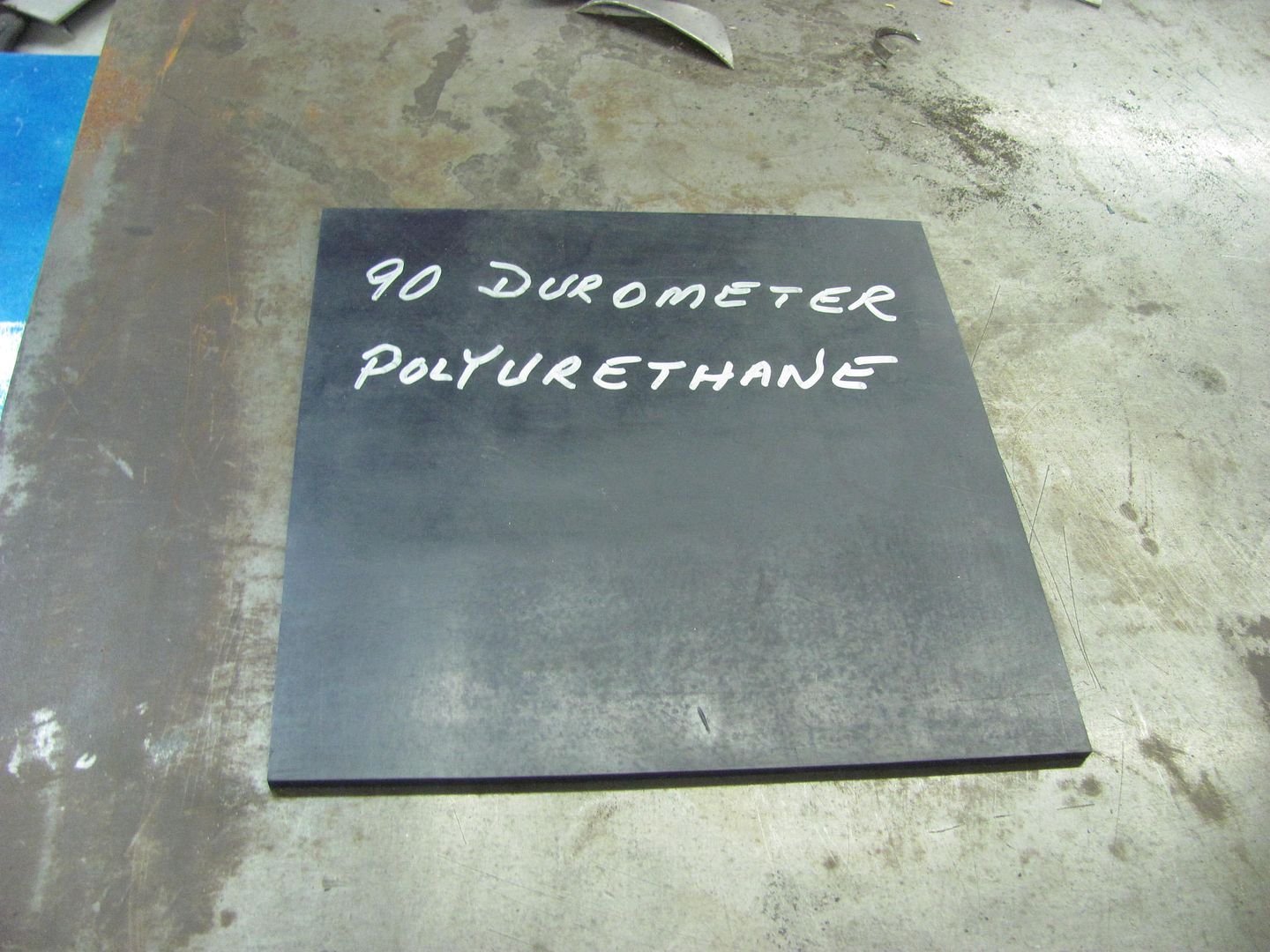
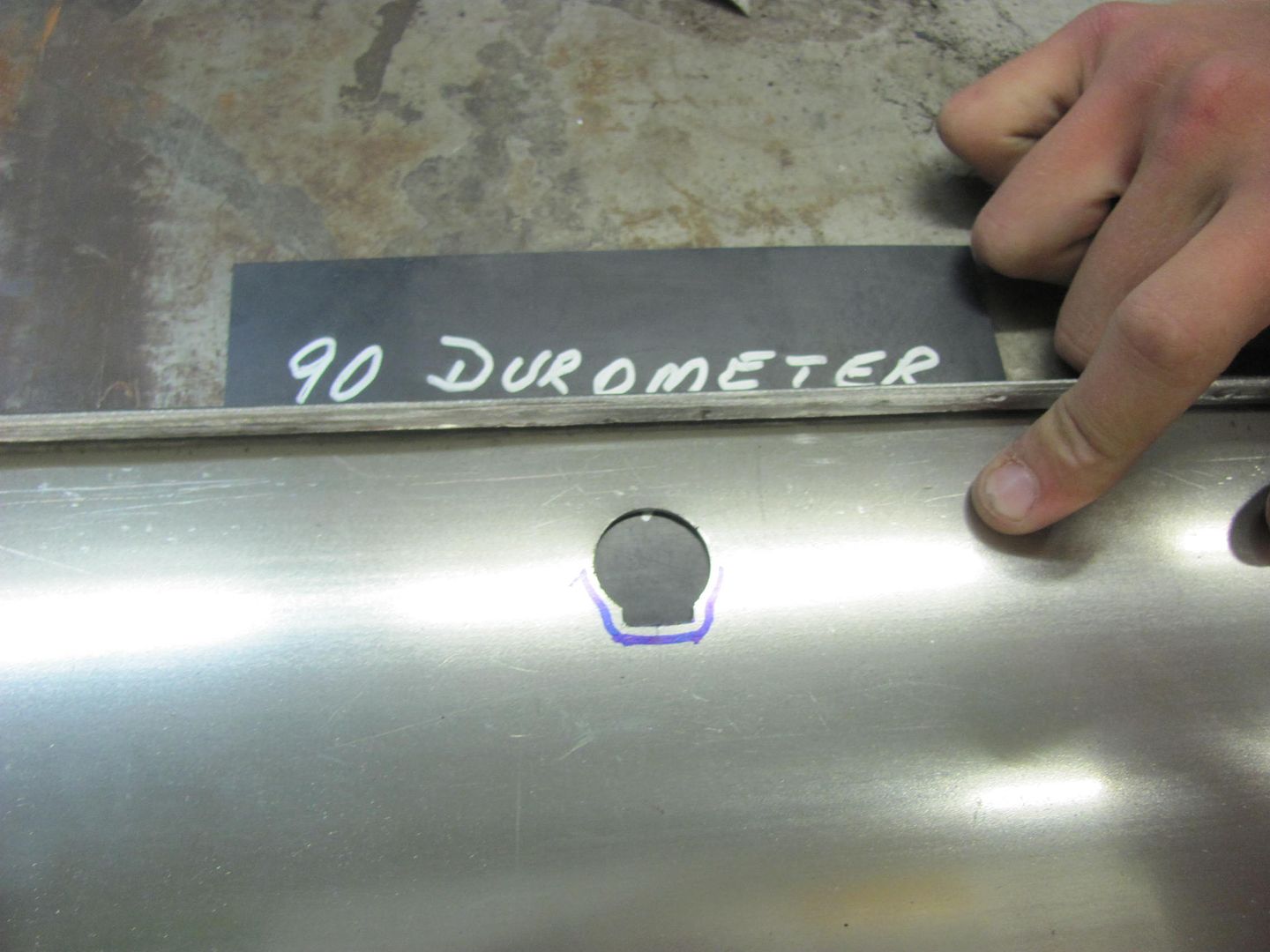
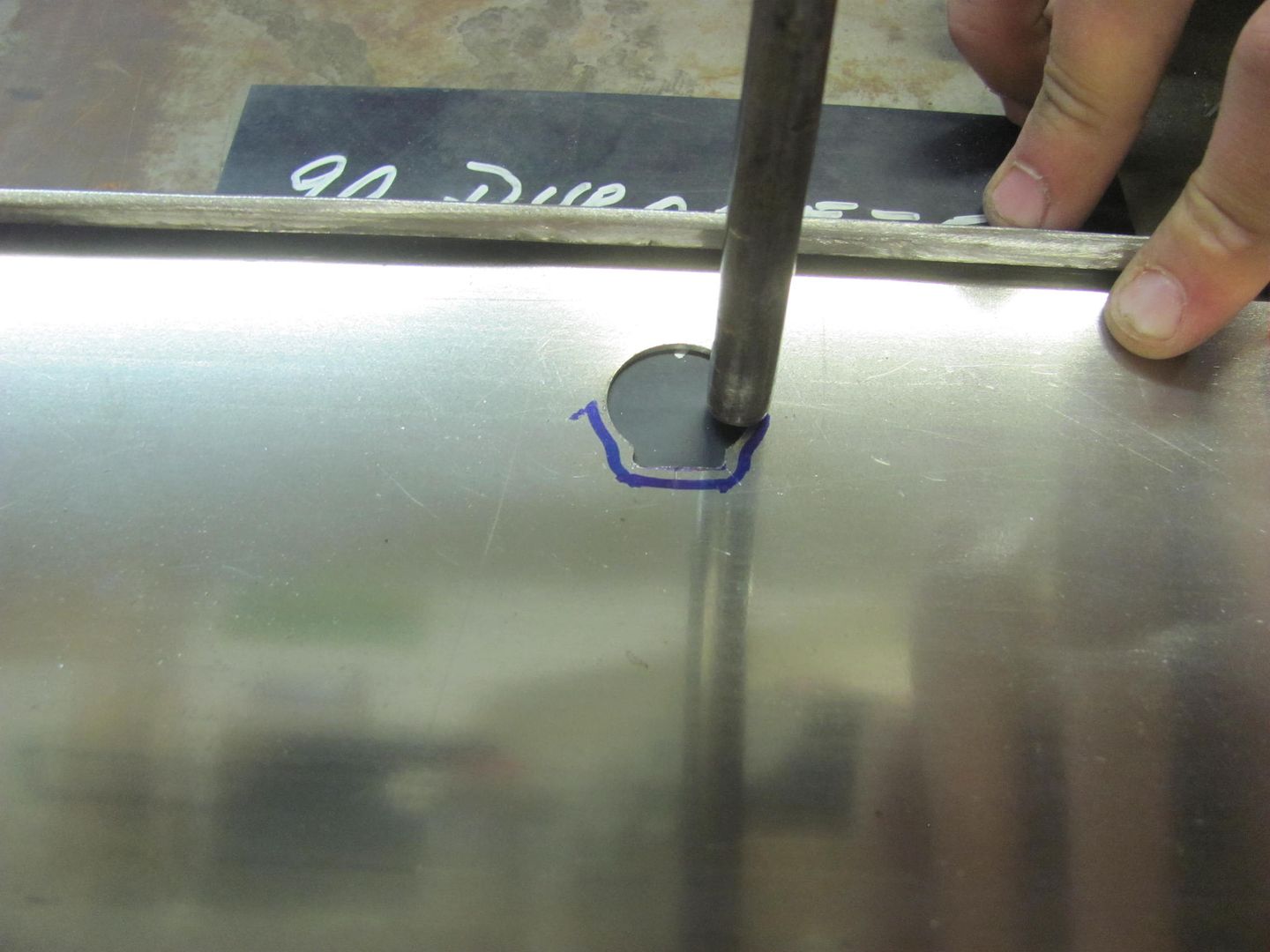
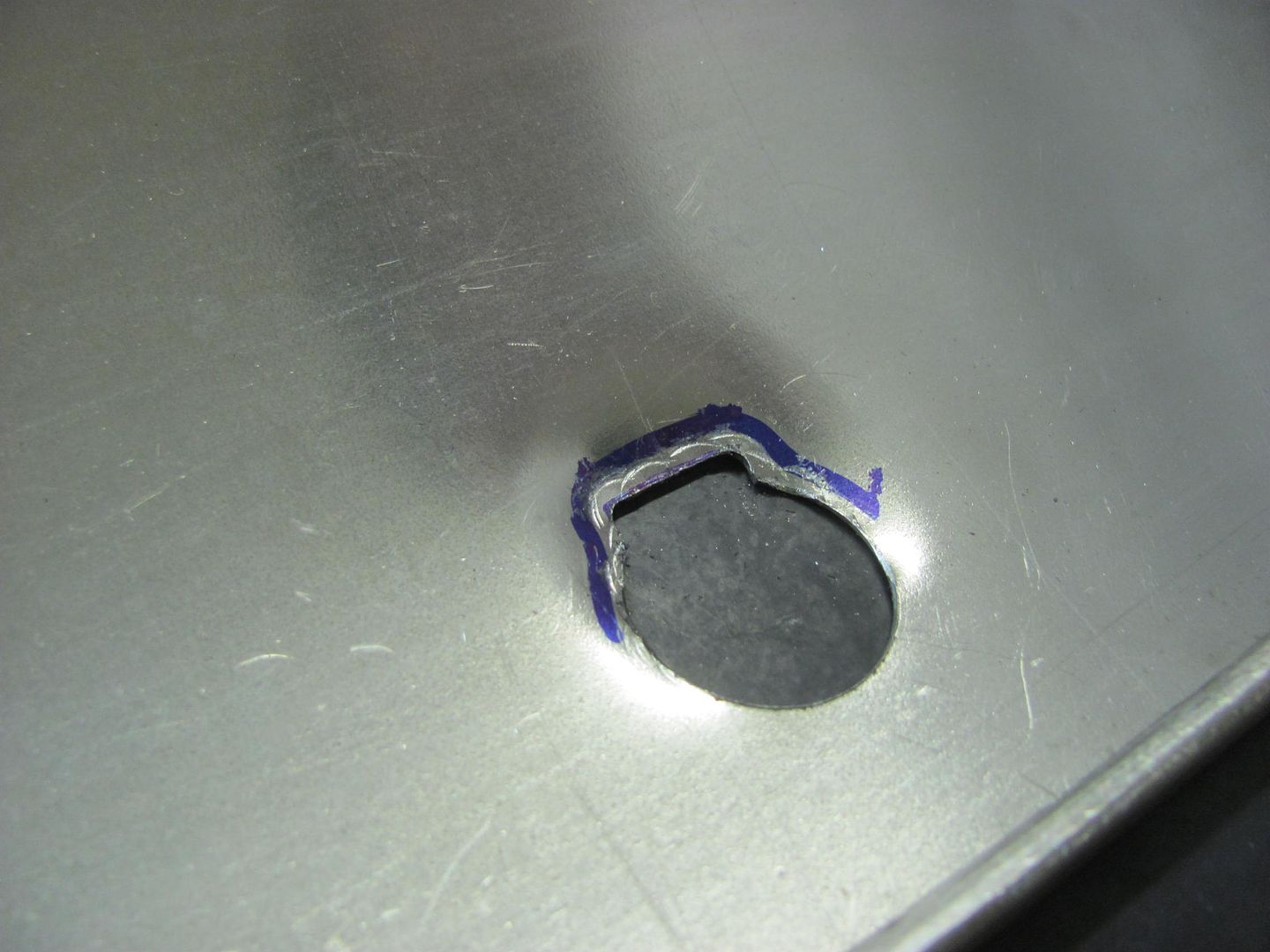
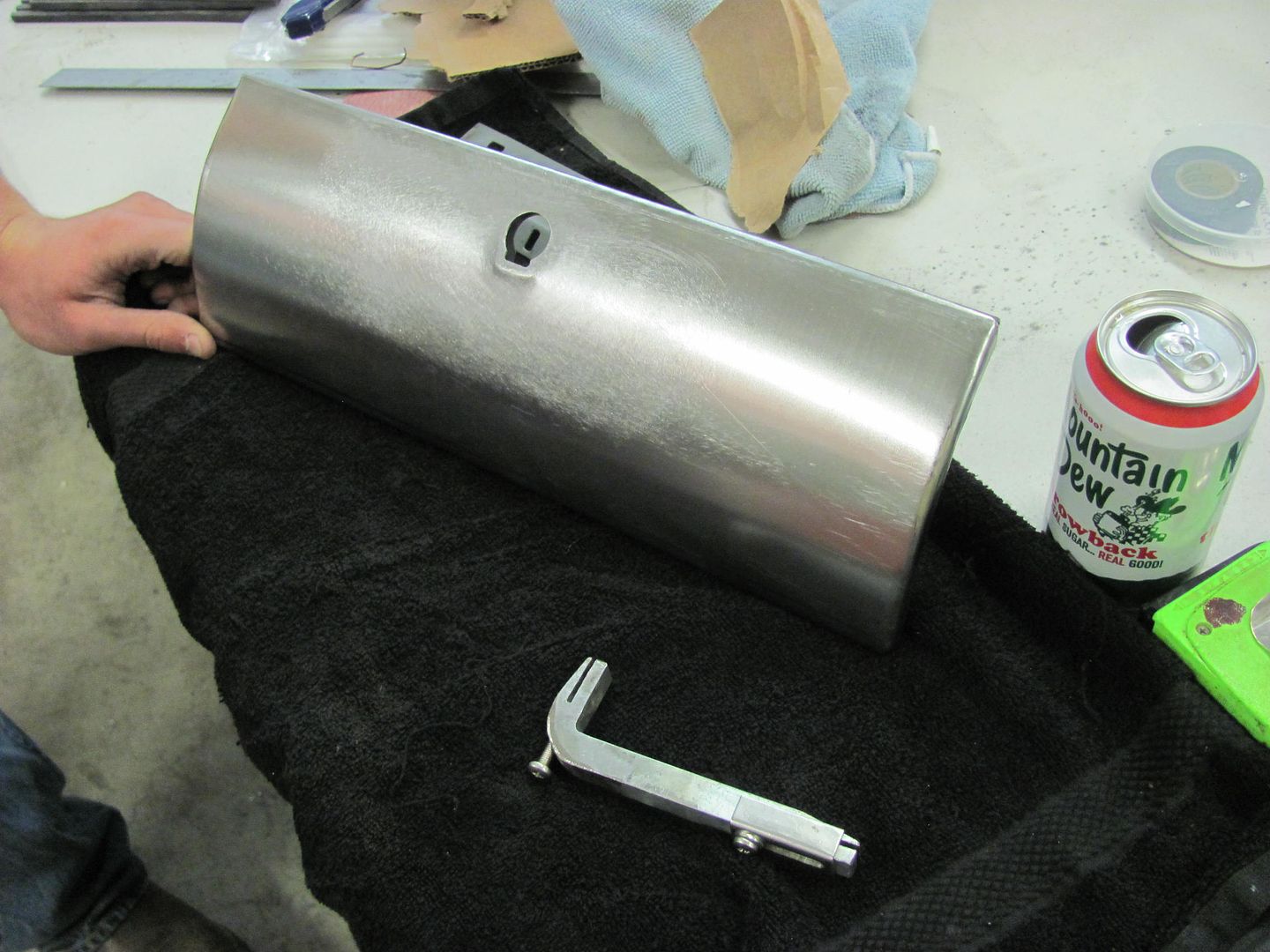
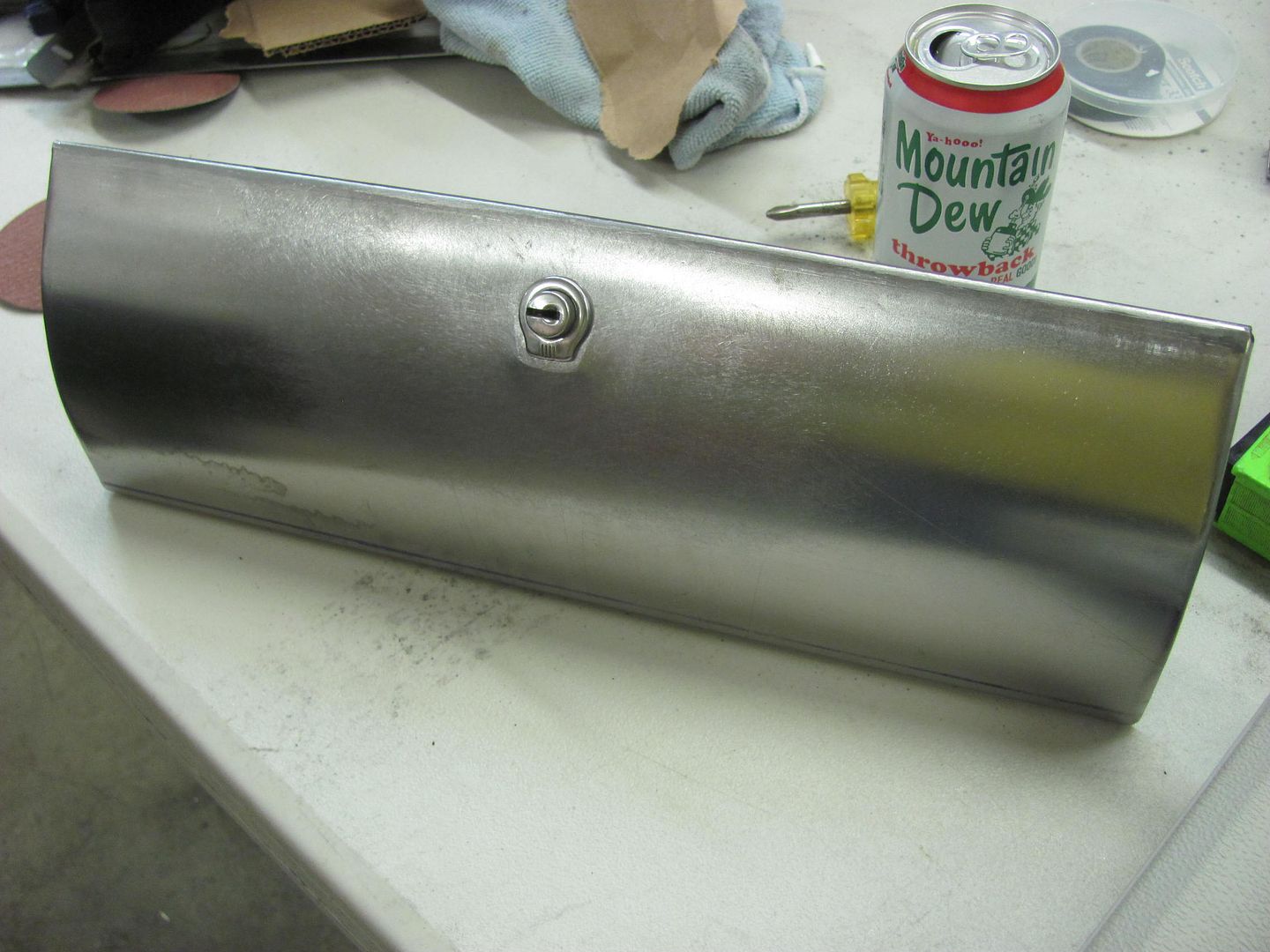
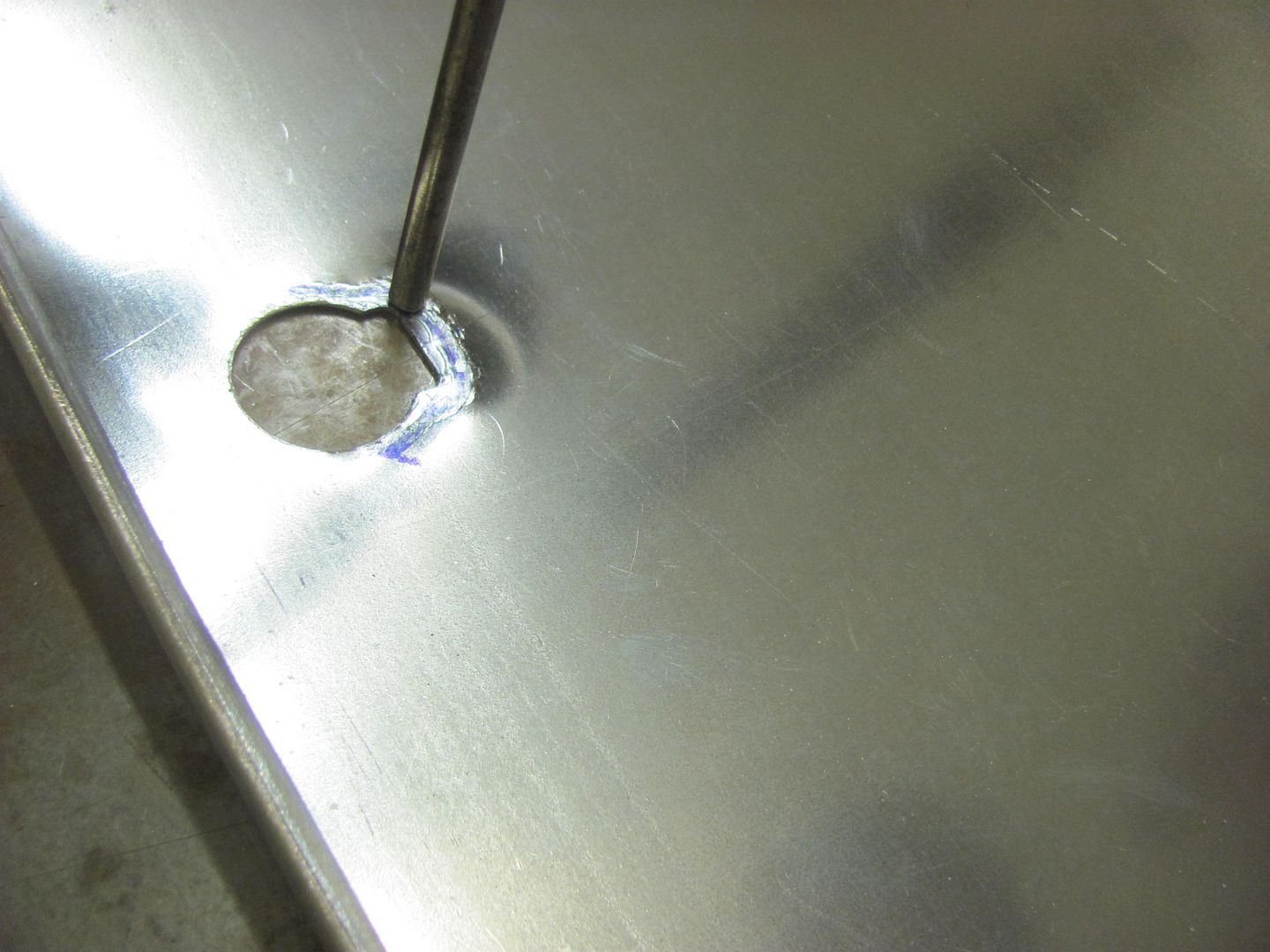
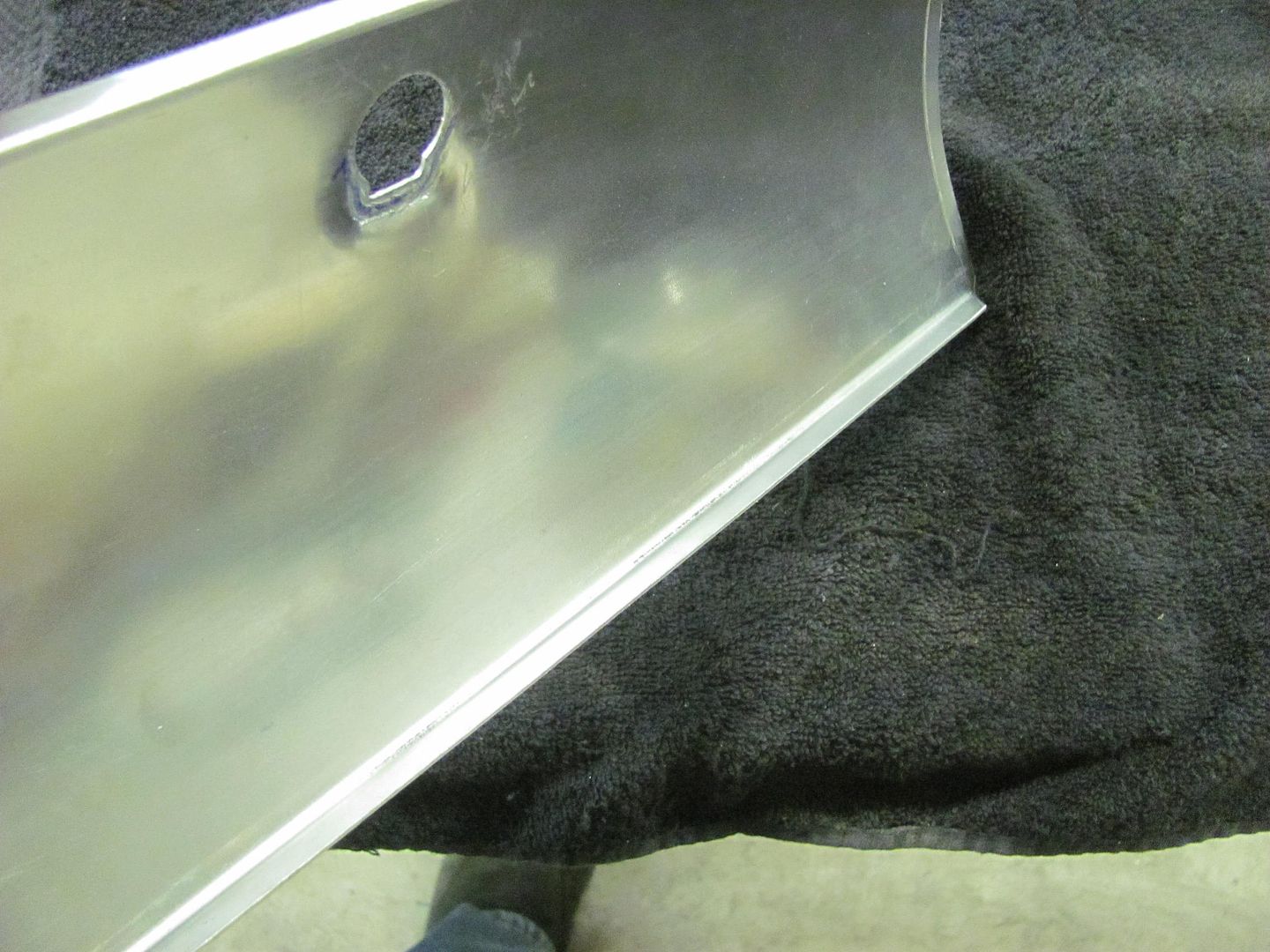
Well with a nice radius on the face of the glove box door skin, we now need a flat area for the lock cylinder. Since I had a piece of Polyurethane here from the care package Rich B had sent me, it seemed the right tool for the job.


Picture%204424.jpg


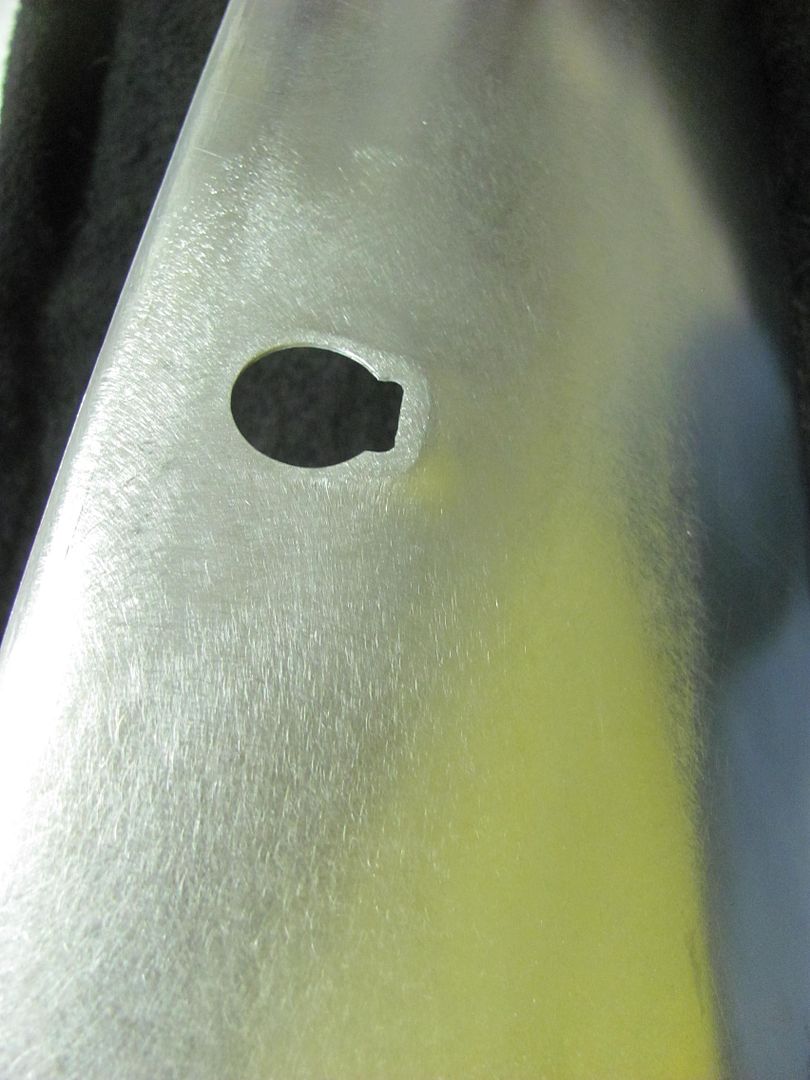
The lock cylinder hole was added using a step drill for the hole and a die grinder for the notch.


Picture%204425.jpg


A punch is used to add the needed stretch to provide the flat area..


Picture%204426.jpg


Starting to take shape..


Picture%204427.jpg


Some fine tuning of the detail...


Picture%204429.jpg


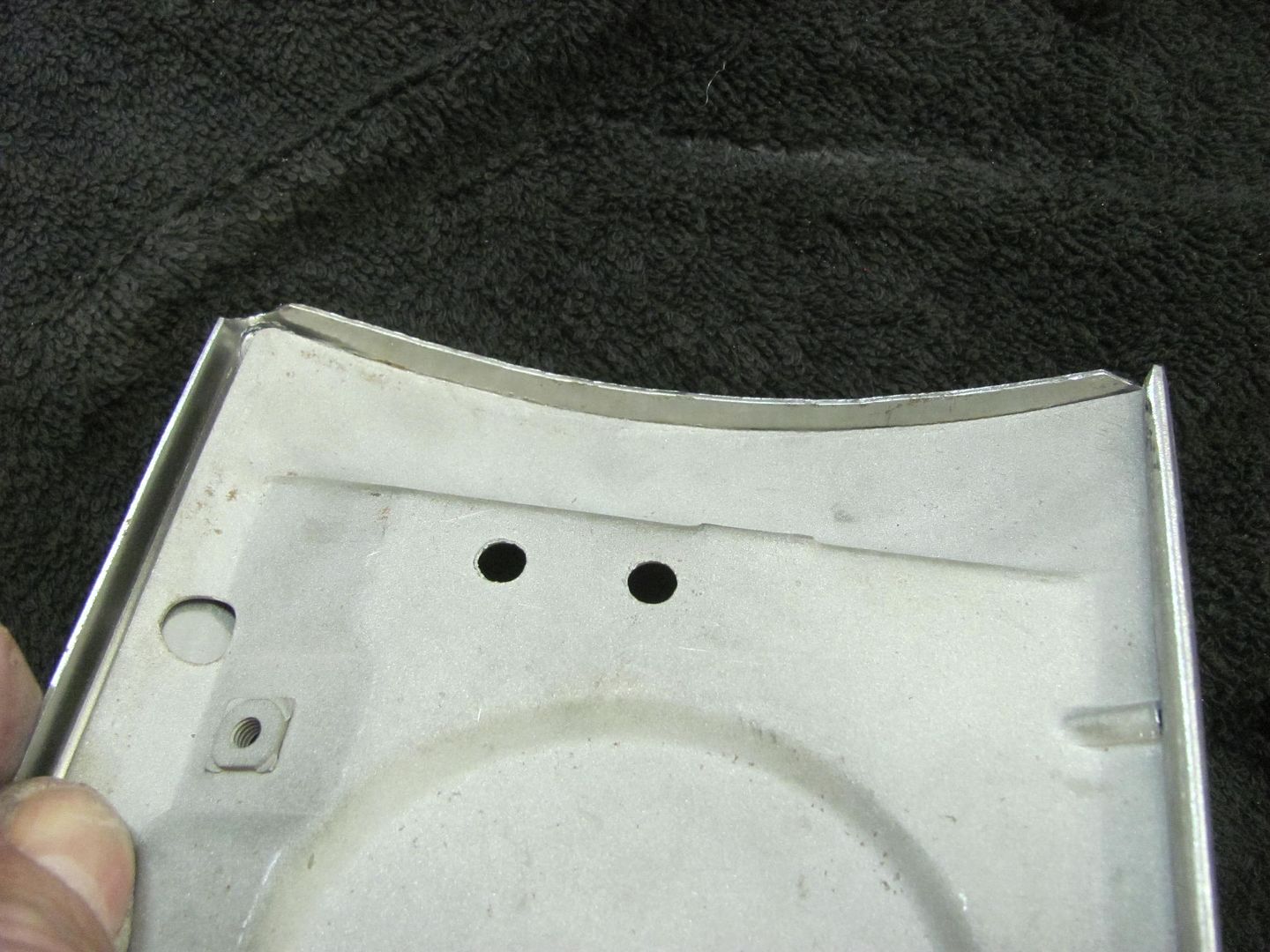
The bottom flange was measured, trimmed, and folded in the Diacro press brake


Picture%204430.jpg


The side flanges were tipped slightly in the Bead Roller.. This also gives us a nice mark to show the fold line..


Picture%204431.jpg


Touched up with the DA


Picture%204433.jpg


With the three flanges folded to a 90, now we'll media blast and epoxy before assembling the two halves.


Picture%204440.jpg


This shows the tipping tool used on the side flanges.


Picture%204442.jpg


With lock cylinder. Looks almost factory...


Picture%204446.jpg
 

TimeWarpF100

Well-known member
Joined
Aug 21, 2010
Messages
6,784
Location
not here
Thanks guys!


Well with a nice radius on the face of the glove box door skin, we now need a flat area for the lock cylinder. Since I had a piece of Polyurethane here from the care package Rich B had sent me, it seemed the right tool for the job.


With lock cylinder. Looks almost factory...


Picture%204446.jpg

Almost perfect? It IS Perfect!

If that is not PERFECTION, I would surely like to see perfection ..
 
OP
M

MP&C

Well-known member
Joined
Oct 21, 2009
Messages
4,396
Location
Leonardtown, MD
Thanks for the kind words fellas. This is another of one of our "subtle mods" that should look factory and keep people guessing as to what all has been done..
 
To avoid these ads, REGISTER NOW!
Top Bottom