To avoid these ads, REGISTER NOW!

My 2 year experience with a polyaspartic floor

-JP

Well-known member
Joined
Apr 22, 2008
Messages
118
Location
Racing Capitol of the World
My research to find the best floor coating led me to this forum 3 years ago. I was trying to find all the issues others discovered prior to making my decision on the various types of epoxy available. I joined the forum to ask questions and also to offer some information of my expertise in return to others on the forum.

It is with this viewpoint that I offer this post as a source of information on my experience with my floor coating installation so that others can hopefully benefit. Seldom do we find a post on flooring that provides information on long term results as many share their install photos but never return after years later to offer an update.

I found the discussions on polyaspartic coatings very interesting when comparing it to an epoxy. The touted benefits of being resistant to a multitude of harsh chemicals including break fluid, higher abrasion resistance, a higher gloss finish, and no detrimental effects from UV were all key issues in comparison to the epoxy product. I found myself giving the polyaspartic coating serious consideration but still had some concerns and questions so I contacted Citadel/Rock Solid to see if they could satisfy my requirements.

I wanted to do a solid color floor, no color chips as I did not want to hunt forever when I drop a “Jesus Clip” on the floor and I also wanted the floor to really shine. Citadel/Rock Solid did offer some solid color floors but I had a certain color in mind and their color choices were limited. They said they could do any custom color I wanted. All I had to do was give them the Sherwin Williams color code and they would match it. I also wanted to do a non-slip coating as I was planning to have water, snow and ice on the floor at times. I told them I had some Sherwin Williams shark bite left over from a previous project and they said it would work with their product to give me the slip resistance I was looking for. I also told them I was planning to install a large decal on the floor and they indicated this would be no problem with their product. After many phone calls for questions and discussions with Citadel/Rock Solid I convinced myself to use their product for my flooring.

My project was new construction. The floor area to be covered is 30 by 35 feet. The slab was minimum 6” thick with fiber reinforcement. Power trowled to a smooth finish. The floor was covered with plastic after the poor and was over a year old before the plastic was removed to prep for the new coating. I waited until late fall (1st week of November, 2008) to insure the temperature and humidity was low.

I purchased the product along with the all the recommended accessories including the mixing paddles, booties, and spiked shoes from Citadel/Rock solid. They arrived in multiple boxes in good condition. I had my decal made and in hand ready to go.

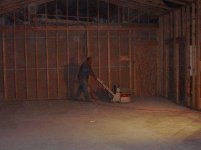
I prepared the floor by choosing to use a diamond grinder instead of chemical etching just to make sure I had the best condition possible for proper adhesion. I worked that grinder for an entire day and late into the night. What a mess all that dust makes! After grinding the floor to cover every square inch and working down any high spots, I started to clean and clean and clean until I had the floor ready to go.

I had a friend volunteer to help as I knew one of the issues with the polyaspartic product is a very short working time. Everything was laid out and organized with a plan in place to manage the install knowing this was an issue I was forced to deal with.

I was ready to start the base primer coat. I began by opening the cans and pouring the contents into a larger mixing bucket and adding the colorant they provided. I noticed a strange color of dark gray to almost black product at the bottom of the cans when using a wooden stir stick to remove all the product from some of the cans. I immediately called Citadel/Rock Solid to see if this was a problem and they said it was a small bit of corrosion inside the can and would not have any effect on the product in any way so I continued. I used the mixing paddle with an electric drill to mix thoroughly. I began cutting in around the edge of the room and then started to roll out the rest of the room. This is where the first real problem showed up. After rolling out good size area of the floor with the primer coat, I noticed what looked like very small rocks or beads in the coating laying on top of the floor. When I realized these hard chucks were in the primer, I quickly grabbed some automotive paint filters I luckily had on hand and started to run the remaining primer through them from one container to another. What a mess! I had to hurry as to try and keep a wet edge on the primer coat. After finishing the primer coat, I once again called Citadel/Rock Solid to see what they had to say about the chunks. They indicated some of the product must have solidified in the can and when I used the mixing paddle it chopped it up into small pieces. They were apologetic about the problem and said I should be able to walk out on the floor wearing the booties and pick up all the chunks. So after a good hour of trying to find all the chunks I was ready to put down the second color coat.

I now took the time to filter each can I opened before mixing and found more solidified product. This was aggravating to do but also the high cost of the product I was throwing away made it worse. Fortunately I ordered enough product to make sure I would not run short so I still had enough to finish the color coat.

I waited several hours after the last color coat to apply my large 10 by 5 foot decal. It took the help of a few more hands but went down without mishap and looked good. Now I was ready to apply the clear top coat.

I mixed the product and added the shark bite as directed on the label. I was moving quick to cut in around the walls as I knew the top coat was the most limiting in working time. I started rolling out the clear coat in a cross pattern and noticed the product was really getting thick or stiff as I approached the end of the first batch. My helper was mixing the next batch as I was finishing the first but I could tell my roller marks were showing. I put down the clear coat in three batches of about 350 square feet each and overlapped my roller pattern to try and blend everything together. I continued and finished the floor even though I could see my roller marks only hoping they would disappear once the floor cured. They did not.

Outside of the roller marks, the floor looked good and had a high gloss. I called Citadel/Rock Solid and told them I was not very happy with the roller marks and how the clear coat had really set up faster than expected. When we reviewed my mixing and application method, they said “Oh, you added the shark bite into the clear coat? You should have just broadcast it over the top after rolling out the clear coat.“ This was frustrating to hear after going over this with them prior to the install. They even told me when I asked about adding the shark bite that they recommend using about half what the label indicated to use. I did not want the shark bite to lay on top of the clear coat and take away from the high gloss, attract more dirt, and allow a solvent to break down the beads. I wanted the shark bite in the clear coat so I would have the chemical protection and easy cleaning up. I knew from experience that having the shark bite lay on top of any coating is impossible to get really clean.

Citadel/Rock Solid said I could put down another clear coat on top without the shark bite and it would eliminate the roller marks but I would have to sand the existing surface to create a good bond. The shark bite was aggressive enough that I thought it would still provide some slip resistance. Citadel/Rock Solid offered to sell me the second clear coat product at a discount even though that was still pretty expensive. I was not happy with the roller marks so I decided to put on the second layer. After renting a large sander and scuffing the entire floor I had to clean it with an acetone. I then mixed up another three batches of clear and started the process again to lay down three separate areas the same as before only without any shark bite. This time I did not have any issues with the roller marks and the floor looked good.

Out of room...continued on next post
 
To avoid these ads, REGISTER NOW!
OP
J

-JP

Well-known member
Joined
Apr 22, 2008
Messages
118
Location
Racing Capitol of the World
Continuation from previous post...

Now I jump ahead in time to offer the results of living with this floor product which have been good and bad.

The good side:
The floor is very resistive to chemicals of all sorts. I have spilled everything you can usually find in a working garage and have had no problems with just wiping them up or in the case of some solvents, they evaporate without causing any damage to the finish of the clear coat.
The floor is easy to clean. Usually just hose it off with water and sometimes use a little Dawn detergent for the stubborn grease spots. I use a large squeegee and the floor naturally wants to repel the water so it is easy to push the water over to the floor drain.
The floor has retained it’s gloss and still very shiny when I finish cleaning it.
The UV resistance to fading has proven itself as a 1 foot section of the floor extends past the overhead garage door and is exposed to the sunlight. There is no discoloration when looking at the floor where the inside meets the outside area.

The bad side:
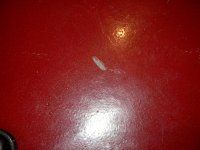
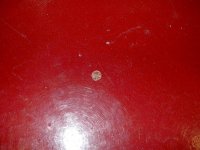
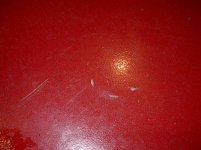
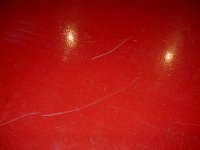
The floor is fragile. It will scratch very very easily. You cannot drag anything across it or it will show a mark. I am not talking about only heavy but even something light weight will scratch the floor. I have found that using a polishing compound will buff out the light scratches but the deeper the scratch the harder to fix.
The floor coating will chip if hit with anything solid. The size of the chip is dependent on the area of impact and not so much on the amount of force. I have had a small chip from dropping a ½” bolt out of my hand at 4 feet above the floor. If you drop a larger size object and impact a larger surface area you will have a larger chip even though it may not be a heavy object.
The floor will leave an impression in the top coat if you try to apply a large amount of weight in a small area such as a jack stand or my scissors lift. I have to put down a thin sheet of hard rubber under the jack stand or my scissors lift to keep from leaving a mark on the floor.
Price, all total I had over $3000 in coating material for a 1050 square foot area. Decal and rental equipment not included.

To finish this long post I would summarize with the following thoughts:

The polyaspartic floor coating is not a product I would recommend for anyone using it in a working garage even if your only doing hobby/weekend work like me maintaining and restoring old cars. It could be a possible candidate if you used a chipped or flake type color that would hide some of the defects but definitely not for a solid color.

This could be a good option for a person if you need the fast install time over a long weekend, only plan to store vehicles and not do any real work, want the color flake style, and can stomach the high cost.

The folks at Citadel/Rock Solid were nice guys, responsive, and tried to help but I was more concerned with the product and the end result which no matter how nice they are still left me with a floor finish that I am disappointed with the long term performance. There is nothing they could do to change the outcome as the product they have is the product they sell and it is really the product performance I have issues with. The only fault I can direct towards Citadel/Rock Solid were issues with the product quality during the install that created more time, work, and money. I see in some recent post where they are making efforts to make improvements to their packaging by using plastic bags instead of cans but it appears there is still some additional effort needed to make this work. Perhaps they will get these issues worked out in the future but for now I just hope my experience will allow everyone considering their product a little insight when making the choice of product and vendors.

JP
 

kywildcat

Well-known member
Joined
Nov 2, 2010
Messages
726
Location
Western KY
Could we some pics of the overall floor and some of the chips from 1/2 bolts falling on the floor, and jack stand impression left.
 

graffix000

Well-known member
Joined
Nov 23, 2007
Messages
872
Location
Philly
Thanks for sharing your opinion on this flooring option. Could you possible provide any pictures so we can see the final product and potentially the scrapes and chips.
 

mball

Active member
Joined
Jul 17, 2007
Messages
42
Location
Milwaukee, Wisconsin
You are right, there aren't too many reports on long term use on different flooring products so it is very much appreciated that you documented your experience with much detail!

Many floors look great intitially, but what matters most is how they look and perform over time. Thanks again for sharing! It helps us all.
 

PaulR

Well-known member
Joined
May 25, 2010
Messages
728
Location
Hadley MA
wow, amazingly detailed account of what you did 2 years ago. :beer:

I don't remember what I had for dinner 2 nights ago, must be getting old.

cue the citadel/rockhard guy in 5......4......3......
 

J_T_P

Member
Joined
Nov 4, 2010
Messages
17
Not all polyaspartics are equal in quality, and that could be said about epoxies. Rust from the primer can, no thank you.

Your write up is one reason why this technology will most likely never go to mainstream DIY due to application difficulties.

If anyone knows where to find a polyaspartic system being sold into DIY applications, I'd be very interested in that information.
 

PaulR

Well-known member
Joined
May 25, 2010
Messages
728
Location
Hadley MA
Not all polyaspartics are equal in quality, and that could be said about epoxies. Rust from the primer can, no thank you.

Your write up is one reason why this technology will most likely never go to mainstream DIY due to application difficulties.

If anyone knows where to find a polyaspartic system being sold into DIY applications, I'd be very interested in that information.


RockSolid is that DIY app, this is what the OP used.

http://www.rocksolidfloors.com/
 

thegarageguy

Well-known member
Joined
Oct 24, 2007
Messages
1,489
Location
NJ
Roller marks is just from inexperience. There is no way a manufacturer could help you prevent that.

As for it not holding up to impact, well I'm guessing you applied it via 3/8 nap roller, so your spread rate must be 250 to 300 sqft per gallon per coat. How many coats did you install is the question? So in 2 coats at that spread rate is about 1/64 inch thick and 3 coats is 1/32. BTW, these thickness guesstimates do not take into account the solvent count that once evaporated would leave less film. Both are paper thin and not meant to hold up to big impacts. Usually aggregates such as sand, quartz and or aluminum oxide help with build up in order to prevent impact failure.

As for the scratching, well any coating will scratch. Some more than others but its not out of the ordinary. Even steel will scratch. But I think, and this is just a guess that since it's DIY, that its solvent rich, therefore not as strong as a high solid and has a higher chance of abrading.
 

garage_man

Active member
Joined
Dec 20, 2010
Messages
27
Location
MN
can we see pics?? do you have pics of the damage? can we see what kind of damage it did? and also of the completed floor
 

LegacyIndustrial

ALLIANCE MEMBER
Joined
Jun 7, 2010
Messages
7,994
Location
deerfield, IL
Not all polyaspartics are equal in quality, and that could be said about epoxies. Rust from the primer can, no thank you.

Your write up is one reason why this technology will most likely never go to mainstream DIY due to application difficulties.

If anyone knows where to find a polyaspartic system being sold into DIY applications, I'd be very interested in that information.

This is very true.
We have a polyaspartic coating. I don't recommend it on this site because most of the fellas here are going to do (1) floor. If they fail to get the results they want it will be hary-cary on the manufacturer.

Polyaspartic floors require good planning and some experience for the results to meet expectations.

If you have the down-time use the epoxy coating systems, they are more forgiving for a novice.
 

kywildcat

Well-known member
Joined
Nov 2, 2010
Messages
726
Location
Western KY
This is very true.
We have a polyaspartic coating. I don't recommend it on this site because most of the fellas here are going to do (1) floor. If they fail to get the results they want it will be hary-cary on the manufacturer.

Polyaspartic floors require good planning and some experience for the results to meet expectations.

If you have the down-time use the epoxy coating systems, they are more forgiving for a novice.

Which do you think is strongest Legacy?? Don't you worry about the DIY'er who uses your epoxy and has bad result's is going to call your company out on it, just as much as the user that applies the poly floors. Niether undertaking is going to be easy for the novice.
 

LegacyIndustrial

ALLIANCE MEMBER
Joined
Jun 7, 2010
Messages
7,994
Location
deerfield, IL
Which do you think is strongest Legacy?? Don't you worry about the DIY'er who uses your epoxy and has bad result's is going to call your company out on it, just as much as the user that applies the poly floors. Niether undertaking is going to be easy for the novice.

Like my friend Fernando mentioned, PolyAspartics are typically thin and most people use them without aggregate.

For high impact resistance I would go with a
# 1: broacast quartz system (epoxy binder filled with aggregate sands )
# 2: High Solids or High Build coating system

For good chemical, abrasion and UV resistance:
Urethane top-coat over an epoxy base coat

For a speedy dry and good chemical, abrasion and UV resistance:
Polyaspartic top-coat or system


TO BE FAIR: I am drawing from my own experience with our own customers.
 
Last edited:

JD in DFW

Well-known member
Joined
Oct 6, 2007
Messages
387
Location
Dallas/Fort Worth
Like my friend Fernando mentioned, PolyAspartics are typically thin and most people use them without aggregate.

For high impact resistance I would go with a
# 1: broacast quartz system (epoxy binder filled with aggregate sands )
# 2: High Solids or High Build coating system

For good chemical, abrasion and UV resistance:
Urethane top-coat over an epoxy base coat

For a speedy dry and good chemical, abrasion and UV resistance:
Polyaspartic top-coat or system

Talk to a provider that has all the options. PolyAspartics are in demand right now and frankly they are more profitable because of it. Unfortunately, some suppliers are recommending it, even where it doesn't make sense.

I could not agree more with Legacy and Fernando here. Polyaspartics for the DIY is just asking for trouble. I still can not believe that Cidital/Rock Solid is offering a Polyuria kit for the DIY through some of the big box stores. I would not even think about turning a DIY guy loose with a Polyuria/Polyaspartic. I have been using this coating tech for a number of years now and have a fairly good process for applying it. But even with two guys that know what they are doing and do 2-3 garages a week we still have to kick some **** and move when using these coatings. Winter months are much more forgiving, but when it comes Spring and summer the pot life on these products is very short and if you do not have a process down and have applied these products before you will be in for what the OP went through in the end. Have seen it more times than not and I must say it is sad when I hear about a good DIY/wrencher that tries it himself only to come out with a sub-par floor and hundreds of dollars not to mention his time pretty much down the drain in some cases. I think it took me 4-6 garages years ago before I really had a handle on the characteristics and the workings of these coatings and even today I have to really hump it to get it applied correctly and in the allotted amount of time that the coatings allow depending on the temp.
On a positive side though, (for me anyway) a number of the big box stores in my area that carry these items have called me or had their customers call me to help resolve or assist with a DIY issue that they had with some of these coatings...sometimes before they actually tackle the job...but in most cases it is after.
Don't get me wrong I am all for the DIY guy and doing things ones self around the house. But there are some projects around my house I wont even try as I am in no way an expert. Can I do basic plumbing? Yes...will I? No. Same goes for electrical and for me even painting the house. I could do it, but since I don't do it on a regular basis and what would take me a weekend or more to do a Pro painter or plumber could have it knocked out in a matter of hours. And with much less money and time wasted.
 

kywildcat

Well-known member
Joined
Nov 2, 2010
Messages
726
Location
Western KY
What would say about a DIY'er doing epoxy for the first time? I think there is a mixing process with epoxy, where as Polyuria is a single componet. Does this make much of a difference JP?? You made some good points.
 

mackdx

Active member
Joined
Aug 26, 2009
Messages
29
Location
Arundel, ME
I am one of the "Rock Solid 10" that were selected for their DIY single component polyurea kit test. The contents of the first box came damaged by UPS. Rock Solid promptly sent out a replacement box, but in the meantime I was able to salvage a few cups of the base coat product from one of the bags. At home, I rolled it out onto a steel bench top and let it dry over night. I will have to say that the product is easy to roll, covers well, and the single component polyurea product does not seem to have the pot life problems of binary component compounds described above. On my way to work the next morning, I hit it (hard) a few times with a ball peen hammer and the coating held up remarkably well. There were a few divots, but no flaking or chipping. The force I hit it with was certainly greater than a dropped 1/2" bolt. With a little luck, I'll start the actual floor installation this weekend.
 

PaulR

Well-known member
Joined
May 25, 2010
Messages
728
Location
Hadley MA
I can't wait to hear full reports from the "Rockhard 10" !!!!!

This experiment may just revolutionize the DIY Garage Flooring market!!!!

:bowdown::bowdown::bowdown:
 
OP
J

-JP

Well-known member
Joined
Apr 22, 2008
Messages
118
Location
Racing Capitol of the World
I will begin by responding to those who are thankful for sharing my opinions by saying your welcome and I will try to answer any questions they may have.
I have no desire to get into throwing post back and forth with those who want to quantify my experience without knowing what my level of experience is and guess at what thickness I applied the floor coating.

I am only trying to offer some results of this application, the experience with the manufacturer, and the 2 years of mild use in a working garage.

I have some pictures but they are too large to upload so I will try to edit them and upload shortly.
JP
 
To avoid these ads, REGISTER NOW!

kywildcat

Well-known member
Joined
Nov 2, 2010
Messages
726
Location
Western KY
I dont think anybody is second guessing your experience JP. I think we are just interested in why things that you mentioned....happened.
 
OP
J

-JP

Well-known member
Joined
Apr 22, 2008
Messages
118
Location
Racing Capitol of the World
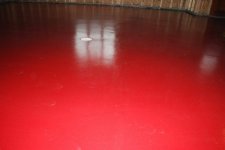
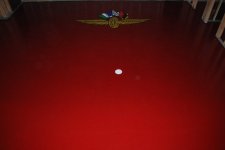
Here are a few pictures of the floor.

There is a picture of my buddy taking his turn on the grinder late into the night and a few pictures showing the roller marks in the first clear coat.

I did not have time to stop and take pictures while doing applying the coating as time was a critical factor.

JP
 

Attachments

  • 01.jpg
    01.jpg
    134 KB · Views: 829
  • 02.jpg
    02.jpg
    89.4 KB · Views: 855
  • 03.jpg
    03.jpg
    75.9 KB · Views: 845
  • 04.jpg
    04.jpg
    45.8 KB · Views: 792
  • 05.jpg
    05.jpg
    63.2 KB · Views: 837
OP
J

-JP

Well-known member
Joined
Apr 22, 2008
Messages
118
Location
Racing Capitol of the World
Here are a couple pictures showing the floor after applying a second clear coat without any additional shark bite and without any roller marks.

JP
 

Attachments

  • 07.jpg
    07.jpg
    29.9 KB · Views: 673
  • 06.jpg
    06.jpg
    64.7 KB · Views: 761
OP
J

-JP

Well-known member
Joined
Apr 22, 2008
Messages
118
Location
Racing Capitol of the World
And finally, here are a few pictures showing a sample of the chipped and scratched floor.

JP
 

Attachments

  • 14.jpg
    14.jpg
    135.2 KB · Views: 490
  • 13.jpg
    13.jpg
    131.9 KB · Views: 594
  • 12.jpg
    12.jpg
    139.2 KB · Views: 678
  • 11.jpg
    11.jpg
    128.6 KB · Views: 561
  • 10.jpg
    10.jpg
    130.2 KB · Views: 615
  • 09.jpg
    09.jpg
    101 KB · Views: 668
  • 08.jpg
    08.jpg
    126 KB · Views: 731

kywildcat

Well-known member
Joined
Nov 2, 2010
Messages
726
Location
Western KY
Well sometimes you can't tell a lot from pictures. I think your floor look's good. It may be hard to see the roller marks in pictures. Also I think the red floor is like a black car......they look good when they are clean, but the dark color's show everything. I doubt you could tell some of those marks on a light grey floor. Just my opinoin.
 

LegacyIndustrial

ALLIANCE MEMBER
Joined
Jun 7, 2010
Messages
7,994
Location
deerfield, IL
Dark colors are very hard to keep nice.
Most of our customers choose, medium gray, light gray, tan, beige, off-white.

I would imagine it's the same for other manufacturers.
 

highballxs

Active member
Joined
Jan 10, 2011
Messages
32
I think your garage floor still looks awesome. Also, it looks well done, and well used.

The epoxy guys will correct me if I'm wrong, but the majority of your floor looks great, I would imagine you could paint/patch those areas no problem. Or throw on another coat, which it may need anyways.

I was not considering using epoxy due to may garage always being worked in, but, after seeing how minor those scratches are after abuse, maybe I'll put the option back on the table..
 
OP
J

-JP

Well-known member
Joined
Apr 22, 2008
Messages
118
Location
Racing Capitol of the World
Thanks to those offering compliments on the floor. As in car evaluations: The floor is a 20 footer.

KYWILDCAT,

Yes, the roller marks are difficult to see in some of the pictures but are more visible in others. They were just bad enough to bother me to the point I decided to lay down another clear coat. The red color is a medium shade. Not bright red but a little on the dark side. It does show the dirt but one of the good things about the floor is relatively easy clean up. I have a hose reel with hot water available and after running the squeegee over the floor it shines up pretty good. A tan or gray color would hide the chips as they would look similiar in color to the bare concrete but I had a color theme going on for the garage and also wanted a color that would go well with my logo on the floor.

HIGHBALLXS,

I'm not sure but I think your under the impression this floor coating is epoxy. It is not. It is a polyaspartic type coating. I was originally planning to use epoxy but decided to use the polyaspartic due to the "claim" it was more durable. Hence the reason for my post.

JP
 

kywildcat

Well-known member
Joined
Nov 2, 2010
Messages
726
Location
Western KY
Thanks to those offering compliments on the floor. As in car evaluations: The floor is a 20 footer.

KYWILDCAT,

Yes, the roller marks are difficult to see in some of the pictures but are more visible in others. They were just bad enough to bother me to the point I decided to lay down another clear coat. The red color is a medium shade. Not bright red but a little on the dark side. It does show the dirt but one of the good things about the floor is relatively easy clean up. I have a hose reel with hot water available and after running the squeegee over the floor it shines up pretty good. A tan or gray color would hide the chips as they would look similiar in color to the bare concrete but I had a color theme going on for the garage and also wanted a color that would go well with my logo on the floor.

HIGHBALLXS,

I'm not sure but I think your under the impression this floor coating is epoxy. It is not. It is a polyaspartic type coating. I was originally planning to use epoxy but decided to use the polyaspartic due to the "claim" it was more durable. Hence the reason for my post.

JP

It's a great floor.......be proud!! I am so wanting to get my floor done, but I'm fighting cold temps right now.
I will have black, blue, and white flakes on light grey, and they will show good.
 
OP
J

-JP

Well-known member
Joined
Apr 22, 2008
Messages
118
Location
Racing Capitol of the World
KYWILDCAT,

That color combo sounds like it will look great.

I am pretty proud of my garage project. It turned out well. Just a little unhappy with the performance of the floor coating for a working garage area.

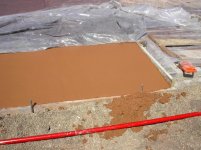
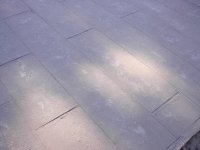
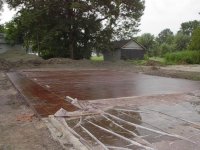
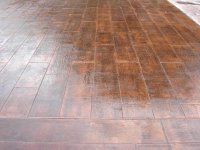
I used a colored concrete with a dry release and stamped an old wood plank style floor for my 1500 square feet car storage area. It was almost as much work as the polyaspartic but turned out pretty nice.

JP
 

Attachments

  • IM001286.jpg
    IM001286.jpg
    146.8 KB · Views: 797
Last edited:

alternety

Member
Joined
Jan 25, 2010
Messages
6
-jp - I do have a question if you would. Looking at some of your pictures, it appears that it is possible that the chipping is the result of surface failure of the concrete. When pieces came off and when scratches were made, were you able to see if any cement was pulled off with the chips or scratch residue?

By grinding the surface you have removed any surface adhered materials, but, especially depending on grinding coarseness, you may have actually reduced the bonding potential of the coating my making the surface too smooth. Just my thinking. No science behind it.

Any thoughts?
 
OP
J

-JP

Well-known member
Joined
Apr 22, 2008
Messages
118
Location
Racing Capitol of the World
-jp - I do have a question if you would. Looking at some of your pictures, it appears that it is possible that the chipping is the result of surface failure of the concrete. When pieces came off and when scratches were made, were you able to see if any cement was pulled off with the chips or scratch residue?

By grinding the surface you have removed any surface adhered materials, but, especially depending on grinding coarseness, you may have actually reduced the bonding potential of the coating my making the surface too smooth. Just my thinking. No science behind it.

Any thoughts?

I don't think there was a problem with the concrete. I know my original post was long but in it I indicated the concrete had a troweled smooth finish when poured.
Using the diamond grinder took the finish from smooth to a semi-rough finish for the coating application.

Not sure what you mean when you say I might have removed "surface adhered materials"???

All of the chips that have come up have a texture that is the same as the surface of the concrete. None of the chips have any concrete material attached and none of the concrete came up where the chip occurred.

All of the spots where the coating chipped are still well adhered to the floor all the way around the area of the chip. No loose edges.

I hope I have answered your questions but let me know if not and I will do my best.

JP
 

alternety

Member
Joined
Jan 25, 2010
Messages
6
Yep,

that is what I was curious about. It may be that it is too hard of a finish if it breaks the bond instead of flexing and leaving a bit of a dent. I would have been more impressed if the concrete actually failed.

I have almost decided to use PAP on my house floors. I have read many many posts, but few using the PAP material. I have a small quantity coming for some tests; mostly about if I think I can apply it. It has the durability and non-yellowing I need in a number of places in the installation. Very wet/standing water, direct sunlight, all needing a clear coating. The wet areas are of particular concern for footing and the other characteristics.

I have also spent a whole lot of time looking at materials to reduce the finished surface slipperiness. I still have not picked one of those. I have one type coming to test. I was looking for one called Shark Bite with no success. None of the places posters said they bought it has heard of the product. It seems to be a phantom product.
 
OP
J

-JP

Well-known member
Joined
Apr 22, 2008
Messages
118
Location
Racing Capitol of the World
Yep,

that is what I was curious about. It may be that it is too hard of a finish if it breaks the bond instead of flexing and leaving a bit of a dent. I would have been more impressed if the concrete actually failed.

I have almost decided to use PAP on my house floors. I have read many many posts, but few using the PAP material. I have a small quantity coming for some tests; mostly about if I think I can apply it. It has the durability and non-yellowing I need in a number of places in the installation. Very wet/standing water, direct sunlight, all needing a clear coating. The wet areas are of particular concern for footing and the other characteristics.

I have also spent a whole lot of time looking at materials to reduce the finished surface slipperiness. I still have not picked one of those. I have one type coming to test. I was looking for one called Shark Bite with no success. None of the places posters said they bought it has heard of the product. It seems to be a phantom product.


The polyaspartic is too hard and not forgiving when hit with a glancing blow or rubbed with much weight concentrated in a small area.

The shark bite I used was labeled by Sherwin Williams. I purchased a large container of it many years ago and have use it on multiple projects with good success. It appears by the link below that they changed the name slightly when they converted over to the H&C product line and now call it "Shark Grip".

JP

http://www.hcconcrete.com/products/solid-color-stains/Shark_Grip_Slip_Resistant_Additive/
 

Attachments

  • SharkGrip.jpg
    SharkGrip.jpg
    4.5 KB · Views: 1,886

alternety

Member
Joined
Jan 25, 2010
Messages
6
Thanks for the follow up. I had concluded that somewhere the name was probably confused by a user. I bought some a couple of days ago and looking at the material concluded that it was the stuff referenced under Shark Bite.

Having used polyaspartic and lived with it, what would be your view on using it for all the floors in a home? Have you tried spot repairs when you get a chip?
 
OP
J

-JP

Well-known member
Joined
Apr 22, 2008
Messages
118
Location
Racing Capitol of the World
Having used polyaspartic and lived with it, what would be your view on using it for all the floors in a home? Have you tried spot repairs when you get a chip?

I would not recommend it for a floor coating. After a short time you would regret ever spending the time, dollars, and effort.

The product was originally developed for coating the inside of tanks to store nasty solvents and chemicals. For that purpose it would be an excellent application but when someone decided to market it as a fast cure floor coating it just has not proven itself in my opinion.

JP
 
OP
J

-JP

Well-known member
Joined
Apr 22, 2008
Messages
118
Location
Racing Capitol of the World
That wood plank effect it neat!

Thanks DR, it was a lot of work but turned out great.

Here are a couple more pictures showing some of the process.
The first picture is what the color of the mix was from the plant. Several trucks with great consistency on the color.
The next picture shows what the slab looked like right after removing the stamps before hosing off any of the dry release.
The next picture shows the entire wood stamped section with the first coat of sealer applied.
And the last picture is after a second coat of sealer that evened out the shine.

JP
 

Attachments

  • IM001279.jpg
    IM001279.jpg
    146.3 KB · Views: 451
  • IM001271.jpg
    IM001271.jpg
    147.1 KB · Views: 458
  • IM001285.jpg
    IM001285.jpg
    148.7 KB · Views: 475
  • IM001286.jpg
    IM001286.jpg
    146.8 KB · Views: 434

LegacyIndustrial

ALLIANCE MEMBER
Joined
Jun 7, 2010
Messages
7,994
Location
deerfield, IL
Whats the difference between polyaspartic and polyurea??

Basic differences:
Polyurea is not as resistant to yellowing as PolyAspartic.
PolyUrea can be applied a little thicker than PolyAspartic, per coat.

We don't have lab evidence but we are starting to believe that the polyurea is more brittle. This would mean small strikes to the surface would cause damage easier. Jury is still out on this.
 
To avoid these ads, REGISTER NOW!
Top Bottom