
You are using an out of date browser. It may not display this or other websites correctly.
You should upgrade or use an alternative browser.
You should upgrade or use an alternative browser.
My 28x36 Shop
- Thread starter jonzer12
- Start date
Been a while, the garage still needs lots more shelving, some more painting and general organizing. Had a nice winter of parking in a heated garage but my god what a mess that makes. I must have took 2 tons of sand off the floor.
next project for the garage will probably be a much better fab table than my crappy little corner one and a cart for my mig, stick and torches. Then a cart or maybe just casters for my tube bender. I also have a 120 gallon horizontal compressor at my fathers place waiting to go in but I really don't know where to put it. I am thinking up on the mezzanine but am concerned it might be too loud up there, what say the garage journal?


I did give up on working the garage for a bit and finally pulled the Jeep in to get started on it. Full PSC hydro assist going in, plus my new doubler/Dana 300 4 speed transfer case setup. Soon as that is in I have a full manual shifter
for my electronic transmission and then its driveshafts and wheel it for the season. I have a set of 1 ton axles against the wall to build this winter so I can move up to some much larger tires.


next project for the garage will probably be a much better fab table than my crappy little corner one and a cart for my mig, stick and torches. Then a cart or maybe just casters for my tube bender. I also have a 120 gallon horizontal compressor at my fathers place waiting to go in but I really don't know where to put it. I am thinking up on the mezzanine but am concerned it might be too loud up there, what say the garage journal?


I did give up on working the garage for a bit and finally pulled the Jeep in to get started on it. Full PSC hydro assist going in, plus my new doubler/Dana 300 4 speed transfer case setup. Soon as that is in I have a full manual shifter
for my electronic transmission and then its driveshafts and wheel it for the season. I have a set of 1 ton axles against the wall to build this winter so I can move up to some much larger tires.


justin1795
Well-known member
is your floor drain metal? where did you get it?
Farmall H
Member
CarKarDad the shelf is the reason I had to pony up for the liftmaster 3800's. They are jack shaft garage door openers and only rise 3" above the center of the shaft.
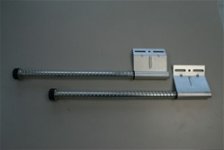
Which brings me to my current problem. I have only installed one so far but I have a problem with the tension monitor. When the door is raised and you push the button to close it the door cable goes slack for a split second as the door goes from stationary to starting to lower. This trips the tension monitor and the door won't close. For now I just put a screw underneath the tension monitor to keep it from closing completely when the cable is slack. What is the proper way to get around this? Any danger in my solution? I really don't see the point of the tension monitor if the cable breaks there is nothing the liftmaster can do to keep the door up.
Shop looks great.

I stumbled on this post and it kept nagging me, so you have made me stop lurking and make my first post on this forum.
The tension monitor is there to make sure there is always some tension on the cables so they don't jump out of their grooves on the drums where they wind around, not for a cable failure such as breakage or the end coming undone at the bottom roller. If one cable jumps the grooves on a drum the door will become crooked in the tracks and will very likely jamb as one side drops further than the other. In some cases when the cables jump at the end of the opening cycle, the door can continue its momentum and with the cables out of the drum groves can continue to roll horizontally out the top of the track.
The problem is that with your low headroom over the door and tight radius of the door tracks there is no weight really left on the cables with the door fully open. The lack of weight coupled with having electric, jackshaft openers, which start the closing cycle rather quickly leaves the cables slack as you say for a split second. Add a little bit of dust and grit to the insides of the horizontal section of track, or have a roller start to drag a little with age and the problem gets worse. While the doors may operate fine as you have them 99 times out of 100, there will be a time when they won't, and it will most likely occur when you have to be somewhere with no time to spare.
Sorry for the long wind, but the solution is simple and inexpensive. Get a set of pusher springs for each door, install and adjust them ASAP. They mount at the end of the horizontal tracks and the door tensions the springs during the last few inches of opening, the stored force of the springs gets the door started downward the instant the jackshaft starts moving. Once the springs are at the end of their travel gravity has enough pull to do the rest. Google "garage door pusher springs" for all the info you need.
Early one blustery morning this past winter the thermometer showed -32° C ( 24° below F ) I ran the tractor out of the heated shop to feed the cows. As my doors face north there was a fair bit of fresh snow piled against the outside of the door which fell in on the concrete floor when I opened the door. I usually leave the door open for under a minute to let some of the diesel smoke out of the shop and shovel any snow away from under the door seal or the seal will sometimes freeze to the floor. While shoveling the phone rang and I set the shovel aside to answer it, after the very brief call I hit the close button for the door and hopped on the tractor just in time to see the shovel leaning in the door jamb and the door come to a stop on top of the handle. It was enough for the cable to jump off the drum and make the 16 x 20 door immoveable. By the time I got the cable back on the drum, about an hour, the plumbing to the shop sink and toilet was frozen as was the brand new $3000.00 pressure washer. Luckily nothing split and everything was ok when it thawed. There are better times to have a door problem, but there is no "good" time to have a door stuck between open and closed.
I need tension monitors on my doors.Attachments
Kevin54
MEMBER EMERITUS
Farmall.........welcome to Garage Journal, and hope to see much more of you around!!!

My new 1950 Brunner compressor. Stupid Heavy for 80 gallon and the motor alone weights more than my 26 gallon huskey. It is also extremely quiet in comparison. Found a place in Canada that still has parts so I am going to give it a good once over and hopefully it will run for many more years to come. Best part it was FREE.
Last edited:
mattyschopshop
Active member
lucky
Got the old compressor cleaned up and wired last night. Wow is thing quiet! My beer fridge makes about the same noise. I am going to flush out the tank and will take some video. I am amazed that 65 year old technology seems better in every way than all the modern compressors I have owned.
Turbo F100
New member
- Joined
- Jan 18, 2015
- Messages
- 1
Hi, I'm glad I found this video on "The Garage Journal" while trying to research a compressor pump I got, and it looks allot like your Brunner pump!! I've been wanting to build a good compressor out of it....I'm in Canada, so where did you find parts for it? also what HP is the motor? My pump has ribs for three belts...is yours the same? I want to open up my pump because unfortunately its been outside in the weather, though it was covered some moisture got threw the bag.... Please get back to me!! Thanks!! Oh and really nice shop by the way!!
Hi, I'm glad I found this video on "The Garage Journal" while trying to research a compressor pump I got, and it looks allot like your Brunner pump!! I've been wanting to build a good compressor out of it....I'm in Canada, so where did you find parts for it? also what HP is the motor? My pump has ribs for three belts...is yours the same? I want to open up my pump because unfortunately its been outside in the weather, though it was covered some moisture got threw the bag.... Please get back to me!! Thanks!! Oh and really nice shop by the way!!
Sorry I have not been on the site for a while. Mine is 3 or 4 rib belt. I don't recall where I bought the parts. I had a bookmark on the computer but it is gone. Just buy a sheet of universal gasket material and you can match up any bearings at your local shop. The pump is very simple. My motor is 3 horse but its very old. It is huge compared a modern 3hp motor. At least 3 times the diameter of a 3 horse on a modern compressor. I was afraid it was a waste of time to work on this pig but if yours works I say go for it. It performs the same or better as my buds brand new 60 gallon 2 stage with half the noise. Try to match yours up here and google from there.

Last edited: