To avoid these ads, REGISTER NOW!

My crazy, year long furnace problem (and solution!)

couch67

Well-known member
Joined
Mar 18, 2016
Messages
1,401
Location
Ontario Canada
I believe I posted in a few other furnace issue threads as a 'me too', but I recently solved my original furnace problem. I thought this would be useful to some, or at least a bit entertaining.

It all started about a year ago, when I started a new job in the New Year, and was working from home for the first time. I set up a workspace in the basement, in the corner of the rec room. It just so happens the furnace room is about 15 feet away. After a few months of getting used to the new job and settling in, I started to notice something strange with the furnace. It was short cycling often. Thermostat calls for heat, inducer motor spins up, burners ignite, then after a few seconds to a minute, the flames extinguish and the whole cycle starts over again. This would come and go, and seemed to have the most trouble in the morning after the house had been warmed up after being set back at night. The furnace is a Nordyne propane, 95% and installed 9 years ago. The heating season was close to over, so I noted to buy a flame sensor and kind of forgot about it.

Last October, I was quickly reminded of the problem when the furnace started coming on (and short-cycling). I had bought a new flame sensor, so I installed it. Same problem. No codes. I called for a furnace service (same guys who installed it). Over the next two months, and close to 10 service calls, they had thrown many different parts at it, and because of a partially clogged heat exchanger, they installed a new furnace, on warranty!

I thought that would be the end of my issues, but I was wrong. New furnace is still short cycling! Not as bad as the original, but still cycles a few times to heat to the set point. They decide the venting is the culprit, although its within spec. They come to install 3" venting but instead cut it off where it goes through the foundation, under the deck. They said they would come back in the spring to install the 3". Again, cutting the vent at the foundation did not fix the problem.

At this point, I was thinking of getting another company to have a look. Could something be wrong with the new furnace? I changed the thermostat with a simple Honeywell, no fix. All that's left is the power? I checked all connections from the panel to the furnace, all tight.

As a last ditch effort, I decided to change out the furnace shut off switch last weekend - this is just a simple light switch on the ceiling near the furnace. Its old, I have never changed it in the 28 years we have lived here. Swapped it out, and ran it. No short cycling - could it be? I tell myself not to get excited, and watch it over a couple of days.

My ears are pretty tuned now to hear the short cycling, especially when working or lying in bed. I have not heard one short cycle since last Sunday - 5 days ago!

My Ecobee thermostat data also suggests the thermostat is not calling for heat as often (or long). The orange bars indicate how long the furnace ran each day. The orange vertical line is when I replaced the switch. I drew in the red and blue horizontal lines to indicate the average runtime (red) and average outside temperature (blue) of the last 4 days only. This helps with comparing the data before and after the switch change.

You can see the furnace has been running less each day, as indicated by the shorter bars to the right of the orange line.


1680299613532.png

Interestingly enough, the switch ohmed out fine, but after opening up the switch, the contacts had a bit of burn, and one of the screw legs definitely had some oxidation / corrosion.

I suspect the furnace has been short cycling for years and I never noticed it. My guess is the line voltage would dip enough to cause the 24vac to 'brown out', causing the pressure switches to drop out intermittently. It might have also caused the plugged heat exchanger, which definitely would have made the problem worse over time. All this for a 2 dollar switch!


IMG_0892.jpg
IMG_0893.jpg
 
To avoid these ads, REGISTER NOW!

fitter30

Well-known member
Joined
Jun 23, 2019
Messages
2,968
Location
Peace Valley,mo
Contacts don't look bad at all. Left screw terminal looks a little burnt did the insulation look deformed on wire. Think the burner control was dropping out not a pressure switch if that was happening fault code would be set. Since the controls don't pull more that a 1 to 2 amps the big draw would be the fan motor.
 
Last edited:
OP
C

couch67

Well-known member
Joined
Mar 18, 2016
Messages
1,401
Location
Ontario Canada
Contacts don't look bad at all. Left screw terminal looks a little burnt did the insulation look deformed on wire. Think the burner control was dropping out not a pressure switch if that was happening fault code would be set. Since the controls don't pull more that a 1 to 2 amps the big draw would be the fan motor.
Fitter, no the insulation looked fine at the connections. No indication of overheating that I could see. I cut back the wires to get a fresh connection for the new switch, and it stripped fine, not like hardened, burned insulation would.

Yeah, I was expecting to find more of a smoking gun when inspecting the switch. But, given its on day 6 with absolutely no issues, I am convinced it was the switch.
 

D45

Well-known member
Joined
Mar 21, 2014
Messages
4,834
Location
NW INDIANA
I also had a bad switch on my furnace

Was probably 20+ (?) years old and one day in the basement, something smelled like burnt eggs

The switch was actually fried and the furnace was losing power intermittently
 

Attachments

  • 20190630_105234_zpsbmg3yids.jpg
    20190630_105234_zpsbmg3yids.jpg
    43.8 KB · Views: 64

D45

Well-known member
Joined
Mar 21, 2014
Messages
4,834
Location
NW INDIANA
Side note, one time the stove also was shutting off when trying to power on to full cooking temp

Techs came out, under warranty and replaced the main control board and the control display

It was still still shutting off........I replaced the old wall outlet and solved the problem
 

danski0224

Well-known member
Joined
Jan 29, 2005
Messages
13,379
Location
Near Naperville, IL
I have done 2 or 3 jobs where the old switch fell apart as I took apart the cover and junction box, usually on replacement #2.

I always install a new one, commercial duty. It's less than 5 bucks.

I know, that's like 10x the cost of the standard cheapie homeowner grade switch from the bulk bin.

Never thought of checking them for a cause of intermittent issues.
 

Hilltopmasonry

Well-known member
Joined
Oct 12, 2015
Messages
2,167
Does it have sufficient air flow? I cut a intake return close to the furnace in the basement because my furnace was starving for air

I was told that hvac systems do not like air flow restrictions
 

danski0224

Well-known member
Joined
Jan 29, 2005
Messages
13,379
Location
Near Naperville, IL
Intake and exhaust vent issues.

More than likely, it's sucking exhaust air back in and snuffing the flame. Burners go out, repeat.

Landscaping too close, inside corner, vertical obstruction.

Can also be a condensate drain issue.

Pull the intake off or open the burner door and see if there's a change.
 

PoorUB

Well-known member
Joined
Mar 29, 2021
Messages
11,625
Location
Fargo, ND
Do you have a manometer? Get as tee fitting and some hose and check the pressures at the pressure switches. I suspect screwed up venting. You can take some clear tubing and make a slack tube manometer.
 

Crazyjake8493

Well-known member
Joined
Sep 26, 2014
Messages
3,953
Location
Upstate NY
Update: new furnace is back to short cycling. Been happening the last few months.

Time to start saving and buy a Lennox or whatever else is good these days.
Any brand is only as good as it's installation.

Your issue could be many different things. Has anyone checked the draft with a manometer? Did the techs put a combustion analyzer on it? Could be recirculating flue gases. You said they "cut off the vent at the foundation" ... what exactly do you mean by that? Some brands require an "exhaust accelerator" on the end of a 3" run which is a short reduction down to 2" PVC to increase velocity to get the exhaust gases farther from the the intake.

I had a similar issues years ago where the flame would go out during a heating cycle and repeat the process a few times until the thermostat was satisfied. Turned out to be a pressure switch - failing contacts I suspect. It would break the safety circuit so briefly that it wouldn't register on a multimeter. My draft was good so I hooked the pressure switch to my draft simulator and at around the inducer's rated draft the light would flicker even though the pressure switch tested "good."

Yours could be a bunch of different things (draft, pressure switch, vent/intake, condensate, recirculation) but without knowing any readings it's hard to point in a certain direction.
 
Last edited:

Crazyjake8493

Well-known member
Joined
Sep 26, 2014
Messages
3,953
Location
Upstate NY
Does it have sufficient air flow? I cut a intake return close to the furnace in the basement because my furnace was starving for air

I was told that hvac systems do not like air flow restrictions
Air flow restrictions are not ideal but neither is a return duct in the basement.
 

Brisco007

Member
Joined
Dec 9, 2023
Messages
6
I believe I posted in a few other furnace issue threads as a 'me too', but I recently solved my original furnace problem. I thought this would be useful to some, or at least a bit entertaining.

It all started about a year ago, when I started a new job in the New Year, and was working from home for the first time. I set up a workspace in the basement, in the corner of the rec room. It just so happens the furnace room is about 15 feet away. After a few months of getting used to the new job and settling in, I started to notice something strange with the furnace. It was short cycling often. Thermostat calls for heat, inducer motor spins up, burners ignite, then after a few seconds to a minute, the flames extinguish and the whole cycle starts over again. This would come and go, and seemed to have the most trouble in the morning after the house had been warmed up after being set back at night. The furnace is a Nordyne propane, 95% and installed 9 years ago. The heating season was close to over, so I noted to buy a flame sensor and kind of forgot about it.

Last October, I was quickly reminded of the problem when the furnace started coming on (and short-cycling). I had bought a new flame sensor, so I installed it. Same problem. No codes. I called for a furnace service (same guys who installed it). Over the next two months, and close to 10 service calls, they had thrown many different parts at it, and because of a partially clogged heat exchanger, they installed a new furnace, on warranty!

I thought that would be the end of my issues, but I was wrong. New furnace is still short cycling! Not as bad as the original, but still cycles a few times to heat to the set point. They decide the venting is the culprit, although its within spec. They come to install 3" venting but instead cut it off where it goes through the foundation, under the deck. They said they would come back in the spring to install the 3". Again, cutting the vent at the foundation did not fix the problem.

At this point, I was thinking of getting another company to have a look. Could something be wrong with the new furnace? I changed the thermostat with a simple Honeywell, no fix. All that's left is the power? I checked all connections from the panel to the furnace, all tight.

As a last ditch effort, I decided to change out the furnace shut off switch last weekend - this is just a simple light switch on the ceiling near the furnace. Its old, I have never changed it in the 28 years we have lived here. Swapped it out, and ran it. No short cycling - could it be? I tell myself not to get excited, and watch it over a couple of days.

My ears are pretty tuned now to hear the short cycling, especially when working or lying in bed. I have not heard one short cycle since last Sunday - 5 days ago!

My Ecobee thermostat data also suggests the thermostat is not calling for heat as often (or long). The orange bars indicate how long the furnace ran each day. The orange vertical line is when I replaced the switch. I drew in the red and blue horizontal lines to indicate the average runtime (red) and average outside temperature (blue) of the last 4 days only. This helps with comparing the data before and after the switch change.

You can see the furnace has been running less each day, as indicated by the shorter bars to the right of the orange line.


1680299613532.png

Interestingly enough, the switch ohmed out fine, but after opening up the switch, the contacts had a bit of burn, and one of the screw legs definitely had some oxidation / corrosion.

I suspect the furnace has been short cycling for years and I never noticed it. My guess is the line voltage would dip enough to cause the 24vac to 'brown out', causing the pressure switches to drop out intermittently. It might have also caused the plugged heat exchanger, which definitely would have made the problem worse over time. All this for a 2 dollar switch!
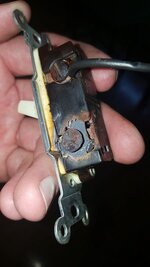


IMG_0892.jpg
IMG_0893.jpg
I’m an electrician as well as a G1 Gas fitter. I’ve had this issue before. What I found is that the heat from the current going through the switch as well as the added heat from the carbon on the contacts caused the pads to float away slightly dropping out the power for a split second. All I use now for furnaces and higher amp loaded circuits is a spec grade switch. Just eliminates call backs.
 

yuke

New member
Joined
Dec 9, 2023
Messages
1
I believe I posted in a few other furnace issue threads as a 'me too', but I recently solved my original furnace problem. I thought this would be useful to some, or at least a bit entertaining.

It all started about a year ago, when I started a new job in the New Year, and was working from home for the first time. I set up a workspace in the basement, in the corner of the rec room. It just so happens the furnace room is about 15 feet away. After a few months of getting used to the new job and settling in, I started to notice something strange with the furnace. It was short cycling often. Thermostat calls for heat, inducer motor spins up, burners ignite, then after a few seconds to a minute, the flames extinguish and the whole cycle starts over again. This would come and go, and seemed to have the most trouble in the morning after the house had been warmed up after being set back at night. The furnace is a Nordyne propane, 95% and installed 9 years ago. The heating season was close to over, so I noted to buy a flame sensor and kind of forgot about it.

Last October, I was quickly reminded of the problem when the furnace started coming on (and short-cycling). I had bought a new flame sensor, so I installed it. Same problem. No codes. I called for a furnace service (same guys who installed it). Over the next two months, and close to 10 service calls, they had thrown many different parts at it, and because of a partially clogged heat exchanger, they installed a new furnace, on warranty!

I thought that would be the end of my issues, but I was wrong. New furnace is still short cycling! Not as bad as the original, but still cycles a few times to heat to the set point. They decide the venting is the culprit, although its within spec. They come to install 3" venting but instead cut it off where it goes through the foundation, under the deck. They said they would come back in the spring to install the 3". Again, cutting the vent at the foundation did not fix the problem.

At this point, I was thinking of getting another company to have a look. Could something be wrong with the new furnace? I changed the thermostat with a simple Honeywell, no fix. All that's left is the power? I checked all connections from the panel to the furnace, all tight.

As a last ditch effort, I decided to change out the furnace shut off switch last weekend - this is just a simple light switch on the ceiling near the furnace. Its old, I have never changed it in the 28 years we have lived here. Swapped it out, and ran it. No short cycling - could it be? I tell myself not to get excited, and watch it over a couple of days.

My ears are pretty tuned now to hear the short cycling, especially when working or lying in bed. I have not heard one short cycle since last Sunday - 5 days ago!

My Ecobee thermostat data also suggests the thermostat is not calling for heat as often (or long). The orange bars indicate how long the furnace ran each day. The orange vertical line is when I replaced the switch. I drew in the red and blue horizontal lines to indicate the average runtime (red) and average outside temperature (blue) of the last 4 days only. This helps with comparing the data before and after the switch change.

You can see the furnace has been running less each day, as indicated by the shorter bars to the right of the orange line.


1680299613532.png

Interestingly enough, the switch ohmed out fine, but after opening up the switch, the contacts had a bit of burn, and one of the screw legs definitely had some oxidation / corrosion.

I suspect the furnace has been short cycling for years and I never noticed it. My guess is the line voltage would dip enough to cause the 24vac to 'brown out', causing the pressure switches to drop out intermittently. It might have also caused the plugged heat exchanger, which definitely would have made the problem worse over time. All this for a 2 dollar switch!


IMG_0892.jpg
IMG_0893.jpg
Wow that's amazing thanx for sharing.
 
To avoid these ads, REGISTER NOW!
OP
C

couch67

Well-known member
Joined
Mar 18, 2016
Messages
1,401
Location
Ontario Canada
Any brand is only as good as it's installation.

Your issue could be many different things. Has anyone checked the draft with a manometer? Did the techs put a combustion analyzer on it? Could be recirculating flue gases. You said they "cut off the vent at the foundation" ... what exactly do you mean by that? Some brands require an "exhaust accelerator" on the end of a 3" run which is a short reduction down to 2" PVC to increase velocity to get the exhaust gases farther from the the intake.

I had a similar issues years ago where the flame would go out during a heating cycle and repeat the process a few times until the thermostat was satisfied. Turned out to be a pressure switch - failing contacts I suspect. It would break the safety circuit so briefly that it wouldn't register on a multimeter. My draft was good so I hooked the pressure switch to my draft simulator and at around the inducer's rated draft the light would flicker even though the pressure switch tested "good."

Yours could be a bunch of different things (draft, pressure switch, vent/intake, condensate, recirculation) but without knowing any readings it's hard to point in a certain direction.
Thanks for the reply. Yes the techs ran every test they had, including draft and combustion tests. I've been away for a few days but plan to try running it with the furnace door off (so it pulls air from the basement instead of outside) to see if this improves it or not. I know that did not fix the issue with the original furnace, but that could have also been due to the partially plugged heat exchanger.

re: "cut off the vent at the foundation". The last thing the techs did was cut the venting off where it exits the house at the foundation - so it terminates under the deck, and sticks about 12" out from the basement wall outside. The exhaust is a straight 2" pipe, and the intake has a 90 degree elbow on it..
 
OP
C

couch67

Well-known member
Joined
Mar 18, 2016
Messages
1,401
Location
Ontario Canada
This is the problem.

It's also not allowed per the installation instructions.

It will also ruin the deck.
Yeah this was not an acceptable solution when the techs did it late last winter as a last ditch effort. They said they would come back and install 3" and terminate it past the deck, like it originally was. My fault for not keeping up on it and getting them back out to finish it.
 
OP
C

couch67

Well-known member
Joined
Mar 18, 2016
Messages
1,401
Location
Ontario Canada
For the folks who mentioned venting - I removed the furnace door yesterday so the fresh air intake can come from the furnace room, just to see how it would run. Well it runs fine, no short cycling whatsoever when the door is off. There is a fresh air intake in the furnace room that vents outside. Note this test would fail with the old furnace, but the new furnace runs as expected with the door off.

Time to get the techs back out and replace venting with 3". Kay mentioned early on about the exhaust - intake spacing, I will get them to double check that spec before they install the new stuff.
 

PoorUB

Well-known member
Joined
Mar 29, 2021
Messages
11,625
Location
Fargo, ND
For the folks who mentioned venting - I removed the furnace door yesterday so the fresh air intake can come from the furnace room, just to see how it would run. Well it runs fine, no short cycling whatsoever when the door is off. There is a fresh air intake in the furnace room that vents outside. Note this test would fail with the old furnace, but the new furnace runs as expected with the door off.

Time to get the techs back out and replace venting with 3". Kay mentioned early on about the exhaust - intake spacing, I will get them to double check that spec before they install the new stuff.
Do you have the owners/install manual?

If you can read and understand English, and glue together PVC pipe you can vent a furnace and probably do a better job that some of the professional hack jobs I have seen.

It sounds like there are too many elbows, or short radius elbows instead of long radius elbows, and/or the wrong size pipe! Any pipe outside or in a area that will freeze needs to be insulated. Excluding a one or two elbows and a few inches of pipe for the outdoor termination.

Re-pipe with the correct size, get the correct long radius elbows, keep the elbows to a minimum and slope the venting back to the furnace. Solid PVC only, no cellular core.

What size furnace is it in BTUs? Pretty much any model roughly 70,000 BTU and larger needs 3" PVC, sure there are some exclusions.
 

danski0224

Well-known member
Joined
Jan 29, 2005
Messages
13,379
Location
Near Naperville, IL
They said they would come back and install 3" and terminate it past the deck, like it originally was. My fault for not keeping up on it and getting them back out to finish it.
The vent pipe is not supposed to be exposed outside (or in an unconditioned attic) for any appreciable length. If it is, it is supposed to be insulated with Armaflex (expensive foam insulation).

It also needs to be pitched for drainage.

Extended outside/unconditioned space lengths and/or improperly pitched runs will freeze and result in no heat.

Details are in the instructions.

Many furnaces can have a considerable length of PVC vent pipe. Equivalent vent length tables are in the instructions.

Your venting should be moved to a different location. This may require additional interior access or repairs.
 

duneslider

Well-known member
Joined
Jan 20, 2013
Messages
2,250
Location
Riverton, Utah
Unless you have a really short run to outside I think the 2" pipe is too small. You need to read the manual and see what it says but I am betting the pipe is way undersized for the length of the run. A 3" pipe is more than DOUBLE the area of a 2" pipe.

Like has been said, read the manual, it has a chart showing the pipe size needed for different lengths. I don't know all the rules on these but I have seen houses where the intake portion was left stubbed inside the house in the utility room (requires the room have fresh air from outside) and only the exhaust goes outside. Anyway, read the manual and see what it says.
 

Crazyjake8493

Well-known member
Joined
Sep 26, 2014
Messages
3,953
Location
Upstate NY
For the folks who mentioned venting - I removed the furnace door yesterday so the fresh air intake can come from the furnace room, just to see how it would run. Well it runs fine, no short cycling whatsoever when the door is off. There is a fresh air intake in the furnace room that vents outside. Note this test would fail with the old furnace, but the new furnace runs as expected with the door off.

Time to get the techs back out and replace venting with 3". Kay mentioned early on about the exhaust - intake spacing, I will get them to double check that spec before they install the new stuff.
Then your intake is clogged/blocked. That draws air in from outdoors for the combustion process. If that is restricted, the furnace will have a difficult time maintaining proper draft. By removing the door, you're taking that air from around the furnace for the combustion process, rather than from outdoors.

If you have a separate "fresh air intake" to the furnace room, I would eliminate that. If your basement is under negative pressure it will pull in cold, unconditioned air from outdoors, and if that intake is close to your furnace exhaust it could draw in flue gas - not good!

I'm baffled (no pun intended) that the "techs" took a draft reading and a combustion analysis and still couldn't figure out this problem. If you haven't already, find a new HVAC company to do business with going forward. You need someone who can diagnose and fix issues, not takes guesses and change parts. I wouldn't even have the first company come back to change the exhaust vent.
 

danski0224

Well-known member
Joined
Jan 29, 2005
Messages
13,379
Location
Near Naperville, IL
Then your intake is clogged/blocked.
Not necessarily.

It can be a result of the intake sucking in exhaust flue gas and choking the furnace.

Inside corners, overhead obstructions and landscaping can all cause this. I have seen it.

Combustion analysis will just show a rapid spike in CO, but does not diagnose the problem.

Measuring draft will not find this particular problem, either.

Measuring draft may point you towards vent issues (diameter, length, type and/or number of elbows), but so will your eyes.
 

Crazyjake8493

Well-known member
Joined
Sep 26, 2014
Messages
3,953
Location
Upstate NY
Not necessarily.

It can be a result of the intake sucking in exhaust flue gas and choking the furnace.

Inside corners, overhead obstructions and landscaping can all cause this. I have seen it.

Combustion analysis will just show a rapid spike in CO, but does not diagnose the problem.

Measuring draft will not find this particular problem, either.

Measuring draft may point you towards vent issues (diameter, length, type and/or number of elbows), but so will your eyes.
It could be that. If the tech saw a CO spike in the intake air, it would've been a dead giveaway that it was recirculating flue gas. A CA is no different than a multimeter or any other piece of test equipment - it will give a readout, but if the person holding it can't interpret the information then it's just an expensive doorstop.

Either way, OP needs to scrap the old HVAC company and get someone out there that will fix the problem and not jerk them around forever. Impossible to fully diagnose it on here without seeing it in person.
 

danski0224

Well-known member
Joined
Jan 29, 2005
Messages
13,379
Location
Near Naperville, IL
It could be that. If the tech saw a CO spike in the intake air,
I can't be the only one that would have never have thought about doing that. Putting a CO probe into the INTAKE pipe. I mean really, who in the actual **** would do something like that on a regular basis?

It never crossed my mind when I ran across the recirculation problem.
 

Crazyjake8493

Well-known member
Joined
Sep 26, 2014
Messages
3,953
Location
Upstate NY
I can't be the only one that would have never have thought about doing that. Putting a CO probe into the INTAKE pipe. I mean really, who in the actual **** would do something like that on a regular basis?

It never crossed my mind when I ran across the recirculation problem.
I can't tell if you're being sarcastic or not.

I'm sure almost no one does it on a regular basis. Ideally it would be done as part of the combustion analysis when commissioning a new install.

In a troubleshooting scenario like this, it should absolutely have been done already, though OP has been pretty vague about what has actually been done to the unit. Obviously it would have to be tested in the intake pipe at the furnace with the door on, and it seems like their tech(s) wouldn't be smart enough to figure that one out.
 
Last edited:
OP
C

couch67

Well-known member
Joined
Mar 18, 2016
Messages
1,401
Location
Ontario Canada
Some really good feedback, thanks for the replies. About whether the intake has been tested for CO draw (good idea), I don't know if that was part of their combustion tests but as you say I doubt it.

I am off tomorrow, so I plan to scope the vent lines to check for obstructions. I did find the manual and read the installation specs for venting. Its on the upper end but within the 2" limit (30 foot limit, mine is about 18' with the elbow and one union included). When the pipe had run the full length under the deck it was 16' more, that puts it over the 30 foot limit.

My guess at the moment is (assuming the intake pipe scopes out ok) is the furnace would stall out with the piping being too long, and when they cut it short under the deck, the intake is pulling in the exhaust and stalling out.
 
Last edited:
To avoid these ads, REGISTER NOW!
Top Bottom