To avoid these ads, REGISTER NOW!

My New Concrete...HELP!!!!

Kristang

Well-known member
Joined
Sep 2, 2018
Messages
92
Location
Minneapolis
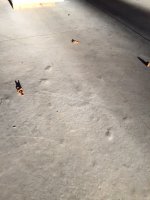
I had my slab poured over 2 months ago and it has NOT been sealed. The past few days these blisters have been popping up all over the floor. I've done some internet investigating, I've talked to my contractor and a couple of others. From what they are telling me, it is water that was trapped in the concrete and it's now surfacing. I wanted to talk to the experts here and get your input and suggestions. Is there any concern with structural integrity? I am putting 2 post lift on this pad. I know the contractor will have to address it but I'd like to know what my options are? Cut out and replace the area the lift will be mounted, grind the floor and coat it, or cut the whole thing out and replace it?
 

Attachments

  • IMG_3721.JPG
    IMG_3721.JPG
    112.6 KB · Views: 391
  • IMG_3718.JPG
    IMG_3718.JPG
    105.8 KB · Views: 346
  • IMG_3717.JPG
    IMG_3717.JPG
    119 KB · Views: 357
To avoid these ads, REGISTER NOW!

readhead

Well-known member
Joined
Dec 8, 2012
Messages
6,175
Location
Durango, Co.
Looks like it may have been overworked and the spalling is about to begin. Let us know what the contractor says.
 

ConCretin

Well-known member
Joined
Jan 20, 2011
Messages
3,378
Location
Central Maine
It's not water currently rising to the surface - it's water that rose to the surface while the concrete was initially setting. It's called blistering and is caused by sealing up the surface with steel trowels before bleed water subsided. It's not a structural issue but the blisters will continue to break leaving an ugly surface that is very difficult to successfully repair.

This is the 100% the finishers responsibility and was 100% preventable.
 
OP
K

Kristang

Well-known member
Joined
Sep 2, 2018
Messages
92
Location
Minneapolis
It's not water currently rising to the surface - it's water that rose to the surface while the concrete was initially setting. It's called blistering and is caused by sealing up the surface with steel trowels before bleed water subsided. It's not a structural issue but the blisters will continue to break leaving an ugly surface that is very difficult to successfully repair.

This is the 100% the finishers responsibility and was 100% preventable.


What would you do if you were me in this situation? Will grinding and epoxy remedy the situation or will it continue to do this or do I go as far as cutting it out and replacing it? Has the concrete lost any of it's strength due to this?
 

madcitym

Member
Joined
Apr 1, 2018
Messages
7
What would you do if you were me in this situation? Will grinding and epoxy remedy the situation or will it continue to do this or do I go as far as cutting it out and replacing it? Has the concrete lost any of it's strength due to this?

I would make the contractor pay for an acceptable coating. It is not a structural issue at all but as others have said, it is poor workmanship and borderline incompetence as dealing with bleed water is concrete finishing 101. The surface will continue to get worse and flake away. As others said, the blistering is bleed water that rose above the surface, for every blister that is sticking up there is more that are not and the surface will eventual delaminate.

I would not trust this contractor to tear out the slab and pour a new one. Bring in a reputable coating contractor and have your concrete guy foot the bill.
 

ConCretin

Well-known member
Joined
Jan 20, 2011
Messages
3,378
Location
Central Maine
What would you do if you were me in this situation? Will grinding and epoxy remedy the situation or will it continue to do this or do I go as far as cutting it out and replacing it? Has the concrete lost any of it's strength due to this?

While blistering can be associated with high slumps (i.e. lower strengths), I'd be primarily concerned with the surface at this point. The only solution is to remove the de-laminated surface concrete and repair the damage.

Grinding and patching would restore the surface but probably wouldn't look great. Obviously an epoxy or similar product would improve the appearance. As long as you find and remove all the blisters, and do the repairs properly, the solution should be as permanent as the coating.

I think you have a legitimate claim against your contractor. As I mentioned, blisters are entirely preventable and avoided with proper finishing. I'd start by demanding removal and replacement and settle for repairs as described if you are willing. Hopefully your finisher is a stand up guy. Good luck!
 
Last edited:
OP
K

Kristang

Well-known member
Joined
Sep 2, 2018
Messages
92
Location
Minneapolis
While blistering can be associated with high slumps (i.e. lower strengths), I'd be primarily concerned with the surface at this point. The only solution is to remove the de-laminated surface concrete and repair the damage.

Grinding and patching would restore the surface but probably wouldn't look great. Obviously an epoxy or similar product would improve the appearance. As long as you find and remove all the blisters, and do the repairs properly, the solution should be as permanent as the coating.

I think you have a legitimate claim against your contractor. As I mentioned, blisters are entirely preventable and avoided with proper finishing. I'd start by demanding removal and replacement and settle for repairs as described if you are willing. Hopefully your finisher is a stand up guy. Good luck!

Thank you!!
 
OP
K

Kristang

Well-known member
Joined
Sep 2, 2018
Messages
92
Location
Minneapolis
While blistering can be associated with high slumps (i.e. lower strengths), I'd be primarily concerned with the surface at this point. The only solution is to remove the de-laminated surface concrete and repair the damage.

Grinding and patching would restore the surface but probably wouldn't look great. Obviously an epoxy or similar product would improve the appearance. As long as you find and remove all the blisters, and do the repairs properly, the solution should be as permanent as the coating.

I think you have a legitimate claim against your contractor. As I mentioned, blisters are entirely preventable and avoided with proper finishing. I'd start by demanding removal and replacement and settle for repairs as described if you are willing. Hopefully your finisher is a stand up guy. Good luck!

One more question. I am installing a 9000 lb. 2 post lift in this garage. If I were to agree with surface repairs, ending in either epoxy or a modular floor covering, should I request the area of the concrete the lift will be attached to be replaced or do you feel the integrity of concrete has not been compromised enough to warrant that?
 

Glory

Well-known member
Joined
May 23, 2013
Messages
163
The integrity or structural soundness is not a concern with blistering. I would not accept a refinish on that slab. I would have them replace the slab, not because it will fail but because you didn’t get what you paid for.

Grinding would be the only way to cut that surface enough and that still may not be enough...

There are industry standards, look into them and it will give you the basis for a claim in court.

Oh.. I also wanted to add that I am very sorry this happened to you. I know that feeling
 

Retroman

Well-known member
Joined
Jan 21, 2018
Messages
1,364
Location
Mojave Desert
Was your contractor licensed? If so you may need to contact the contractors board if he will not repair and warranty the work to your satisfaction. That's a shame and I feel for you.
 

Miss the Pontiacs

Well-known member
Joined
Nov 7, 2016
Messages
16,416
Location
Saskatchewan Canada
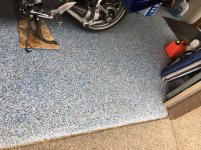
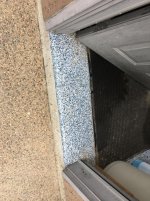
My buddy had a crappy pour. The concrete supplier was willing to remove and replace. But due to the slab having a thickened edge and in floor heat tubing my buddy was unwilling to go this route.
What contractor did for him was grind it down and place a Polyaspartic floor for no cost. It is now close to 10 years old and looks great. I was over the other day and took a couple of pics as I am looking at the same flooring for my garage.
So yes there is life after a problem pour.
 

Attachments

  • 48B648A7-F972-4860-800F-2CC7A3E1968F.jpg
    48B648A7-F972-4860-800F-2CC7A3E1968F.jpg
    159.5 KB · Views: 322
  • BAB2030D-EF13-4107-8F54-711EAFE658CD.jpg
    BAB2030D-EF13-4107-8F54-711EAFE658CD.jpg
    149.1 KB · Views: 257

ConCretin

Well-known member
Joined
Jan 20, 2011
Messages
3,378
Location
Central Maine
One more question. I am installing a 9000 lb. 2 post lift in this garage. If I were to agree with surface repairs, ending in either epoxy or a modular floor covering, should I request the area of the concrete the lift will be attached to be replaced or do you feel the integrity of concrete has not been compromised enough to warrant that?

The presence of blisters alone doesn't call the structural integrity of the floor into question. Surface defects can be caused by excessive slumps i.e. too much water, which will reduce compressive strength. There's just no way be 100% sure without additional information but I don't see any reason for concern based on what we do know.

With a lift, I'd be primarily concerned that the thickness and compressive strength of the slab meet the lift manufacturers requirements. Thickness is easy to verify by drilling and if you question the latter, you could have a testing lab take and break some cores.
 
OP
K

Kristang

Well-known member
Joined
Sep 2, 2018
Messages
92
Location
Minneapolis
Thank you for your wisdom and suggestions. Not something I wanted to have to deal with, especially with winter coming soon and I'm trying to get this building buttoned up so I can use it. I guess I'm going to learn some new things!
 
To avoid these ads, REGISTER NOW!

ConCretin

Well-known member
Joined
Jan 20, 2011
Messages
3,378
Location
Central Maine
Drag a chain along the surface, listen for the hollow sound of the blister

Legacy, you probably have more experience than I do in this area but I've found that the chain drag method works well for traditional de-laminated areas that tend to be larger. Blisters tend to be smaller 1" to 3" and are thus harder to find with a chain. Fortunately blisters can usually be seen with the naked eye especially with a low angle light.
 
OP
K

Kristang

Well-known member
Joined
Sep 2, 2018
Messages
92
Location
Minneapolis
Legacy, you probably have more experience than I do in this area but I've found that the chain drag method works well for traditional de-laminated areas that tend to be larger. Blisters tend to be smaller 1" to 3" and are thus harder to find with a chain. Fortunately blisters can usually be seen with the naked eye especially with a low angle light.

I can definitely see them and pop them with a hammer! Contractor is coming on Monday to inspect the issue. Im tempted to pop them all, LOL
 

LegacyIndustrial

ALLIANCE MEMBER
Joined
Jun 7, 2010
Messages
7,994
Location
deerfield, IL
Legacy, you probably have more experience than I do in this area but I've found that the chain drag method works well for traditional de-laminated areas that tend to be larger. Blisters tend to be smaller 1" to 3" and are thus harder to find with a chain. Fortunately blisters can usually be seen with the naked eye especially with a low angle light.


We had a gjmember try it with success years ago. He had quite a time filling all those small roundish holes. I agree it’s better with delams but worth a shot.


Sent from my iPhone using Garage Journal
 
OP
K

Kristang

Well-known member
Joined
Sep 2, 2018
Messages
92
Location
Minneapolis
Contractor came out today. First thing he said is he can offer me a $500.00 refund for the trouble. This is after he told me he has never experienced this before and knows nothing about it. I told him this is not what I paid for and if it's a product issue, he didn't get what he paid for either. I told him I don't care who's fault it is but this needs to be made right for me. He's going to talk to his concrete vendor and get back to me early in the week. We went around the garage and lightly tapped on the blisters with a hammer and they break open with little effort. This is not going to be fun.
 

SGKent

Banned
Joined
Feb 12, 2010
Messages
1,959
Location
Citrus Heights CA
not to be negative but document ever conversation well in case you have to go to court, including putting down legitimately what was in all your prior conversations with him. Look at the contract carefully. What may happen is suddenly your calls go unanswered.
 

ConCretin

Well-known member
Joined
Jan 20, 2011
Messages
3,378
Location
Central Maine
Contractor came out today. First thing he said is he can offer me a $500.00 refund for the trouble. This is after he told me he has never experienced this before and knows nothing about it. I told him this is not what I paid for and if it's a product issue, he didn't get what he paid for either. I told him I don't care who's fault it is but this needs to be made right for me. He's going to talk to his concrete vendor and get back to me early in the week. We went around the garage and lightly tapped on the blisters with a hammer and they break open with little effort. This is not going to be fun.

It'll be interesting to hear what his concrete supplier has to say but I doubt it will be helpful. This is not a material problem - it is an installation problem. The only material related issue I can think of is if the concrete was air entrained. Air entrained concrete should generally not be used for interior, steel troweled floor slabs because it can lead to de-lamination and blisters.

Might be a good idea to call the supplier yourself and ask what the mix was. While you've got them, it might also want to ask if they have been paid. If a conflict develops, you'll want to know their payment status. Not sure if you still owe the contractor any money but you'll need to make sure they were paid or you could add insult to injury with a lien on your property.

Blisters can be a little complicated. There are a myriad of variables related to mix design, weather, sub grade and finishing procedures that cause them and occasionally even good finishers get them. At the end of the day however, the finisher is responsible. If I got a call that a slab we placed had blistered, I'd send the saw cutting crew down the next day.

Sorry to be so negative but I want you to have all the information possible. Feel free to Pm me if you'd like to talk any of this though.
 

The Wolff

Member
Joined
Oct 19, 2008
Messages
18
Location
Shelbyville, Tennessee
I just got done going through a bad topcoat finish. Mine was dusting and showing areas of small crumbling. The concrete contractor totally blew me off and blamed the concrete company when it was really his fault. To make a long story short, I hired another guy who ground it down and flooded it with densifier to harden the top surface. He then epoxied the floor. His epoxy work was bad but it is at least better than I started with albeit VERY expensive.

If I had your floor (or mine again)....i would break all your "blisters", vacuum and pressure wash, coat it heavily with a densifier for hardness and then cover it with Racedeck, Swisstrax or a similar snap together tile. I would put together the estimate and get what you can from your contractor.

Sorry to hear of your issues---I know how you feel. :(
 
OP
K

Kristang

Well-known member
Joined
Sep 2, 2018
Messages
92
Location
Minneapolis
Thanks again gents! I have documented everything and I paid them upon completion of the job. I was told when the truck arrived it had traveled from a long distance and they needed to get it down quick and troweled. The contractor told me yesterday they had to add water to it when it arrived. It's going to be interesting to see how they handle this because he was sure the concrete company would point the finger at installation. They are a third generation family company, a friend of a friend and I have referred a bunch of new work to them through my employer. Not that is matters but I'll find out what kind of people they are! If I can determine the integrity of the concrete has not been compromised I would be good with what The Wolff suggested. Although I did tell him if they don't cut it out and replace it I at least want the area my 2 post will be attached to replaced. I'm not offering the grind and epoxy at this point, I'm waiting for them to respond.
 

Armorpoxy

Well-known member
Joined
Aug 18, 2013
Messages
3,732
Location
NJ
Sorry you are having these issues. Since the experts seem to think this is more of a cosmetic issue rather than a structural issue, a simple solution would be to just cover over the floor with our solid www.supratile.com interlocking tiles. We sell these frequently when encountering spalled/bad concrete.

Get your contractor to pay for them and the floor will last for 50 years or more, plus you will have a gorgeous floor in one day.

Certainly the tiles will be less money than ripping up the floor and replacing it, and then having to coat it.
 

Attachments

  • Page%201-2[1] - Copy.jpg
    Page%201-2[1] - Copy.jpg
    86.8 KB · Views: 90
  • photo 3 - Copy.JPG
    photo 3 - Copy.JPG
    45.2 KB · Views: 86
  • SHOP 3.jpg
    SHOP 3.jpg
    88.7 KB · Views: 87

Stellaontap

Well-known member
Joined
Apr 7, 2016
Messages
147
Location
Dorchester, Ontario
Also....if the contractor added water to the mix at the time of placement which changes the whole mix design would also change the compressive strength. And if water was added and the slab was over finished then there could be segregation of the mix. The supplier of the concrete may document the amount of additional water added by the contractor to cover his end. If you think the concrete may have structural issues have them drill a core for testing.
 

BigGarage

Well-known member
Joined
Jun 5, 2019
Messages
2,344
Location
Just south of Detroit, MI.
Thanks again gents! I have documented everything and I paid them upon completion of the job. I was told when the truck arrived it had traveled from a long distance and they needed to get it down quick and troweled. The contractor told me yesterday they had to add water to it when it arrived. It's going to be interesting to see how they handle this because he was sure the concrete company would point the finger at installation.

If the contractor added water then they changed the mix the company sent out. This could definitely change the strength of your floor. As someone mentioned, this floor should be completely replaced because it's not what you paid for.

Dennis
 
To avoid these ads, REGISTER NOW!
Top Bottom