To avoid these ads, REGISTER NOW!

Need a 240v Garage Outlet

Kaoskido

Well-known member
Joined
Aug 18, 2013
Messages
156
I bought a Cadet The Hot One 5000-Watt heater but I need a 240v outlet.
multi-cadet-fan-heaters-rcp502s-64-1000.jpg


multi-cadet-fan-heaters-rcp502s-40-1000.jpg


I've tired getting two electricians to come and do the work but they just never show up.

I am thinking that my subpanel may have room for a 30amp breaker as the main panel is full.


My main panel is full - no option there
20191023-122652.jpg


There is a subpanel
20191023-122640.jpg


20191023-122656.jpg


20191025-105239.jpg


20191025-105213.jpg


I am thinking on the subpanel if I were to move the one 15a breaker to the bottom right slot that would open two slots for a 30amp breaker to be added to run the 240v line to the garage.

Or the alternative for the time being is to pull the line to the current A/C as my central air unit is dead anyways and need to be replaced.

I need the heater now more than the broken A/C.


Wondering if anyone can confirm my thought here and for running this 30amp service I am wondering what kind of wire I am needing- I think the run would be no more than 25 feet.

I am located in the state of Minnesota
 
Last edited:
To avoid these ads, REGISTER NOW!

BB Sig

Well-known member
Joined
May 16, 2018
Messages
139
Location
Florida
I usually step up the gauge one higher than necessary for larger loads. It lets me change the plug if I need to later...

8/3 with a ground should cover you for future usage.
 

u2slow

Well-known member
Joined
Nov 20, 2011
Messages
3,600
Location
BC
30A breakers are often available with 2 different terminal sizes, so get the one appropriate for the wire size you are using.
 

dave*99

Well-known member
Joined
May 5, 2009
Messages
4,269
Location
Coastal NJ
I usually step up the gauge one higher than necessary for larger loads. It lets me change the plug if I need to later...

8/3 with a ground should cover you for future usage.

You could do that. But the heater the OP posted will draw about 21A. And a neutral connection is not needed. And 21A on a 30A circuit run about 25ft is not a larger load.

So 10/2 with ground is all he needs for this heater.

More importantly - what loads are on that subpanel? Is the subpanel sufficiently fed to cover the load with the heater added?
 

wyliesdiesels

Well-known member
Joined
Aug 14, 2012
Messages
20,032
Location
Modesto, CA
I usually step up the gauge one higher than necessary for larger loads. It lets me change the plug if I need to later...

8/3 with a ground should cover you for future usage.

8/3 would be way overkill for this and a neutral is not necessary.
 
OP
K

Kaoskido

Well-known member
Joined
Aug 18, 2013
Messages
156
You could do that. But the heater the OP posted will draw about 21A. And a neutral connection is not needed. And 21A on a 30A circuit run about 25ft is not a larger load.

So 10/2 with ground is all he needs for this heater.

More importantly - what loads are on that subpanel? Is the subpanel sufficiently fed to cover the load with the heater added?

Good point that I never considered and I do not know the answer.

The sub feeds a 120v outlet in the garage, a 6ft baseboard heater and then I think a series of lights and outlets in half of my basement. Load wise/amp wise I wouldn't know.

Seems I'll be returning the heater because I am doubtful I'll have an electrician show up. After a few phone calls that pretty much tells me that my business is unimportant to them.
 

Two Sheds

Well-known member
Joined
Jan 16, 2014
Messages
101
I would be tempted to use 10-3 instead of 10-2 just in case you want to use the receptacle for a 4 wire appliance in the future. You would cap off the neutral.

More important, what rating is the breaker feeding the subpanel? And what are the other loads connected to the subpanel? Will you be at risk of tripping the breaker feeding the subpanel when the heater turns on?
 

u2slow

Well-known member
Joined
Nov 20, 2011
Messages
3,600
Location
BC
The one on the left is the older style.
They both accept a #10 or a #8.

I have another 'old style' with the small terminal. I further rooted thru my breaker bin and found another brand of 30A that tops out on #10.

My point is to ensure the breaker chosen fits the wire when going oversize.
 

wyliesdiesels

Well-known member
Joined
Aug 14, 2012
Messages
20,032
Location
Modesto, CA
I usually step up the gauge one higher than necessary for larger loads. It lets me change the plug if I need to later...

8/3 with a ground should cover you for future usage.

Theres another problem that your idea of oversizing creates that i forgot to mention earlier.

When using multi-conductor cable and the wire gauge is increased over what is required, you create a code violation because the EGC is now too small since the EGC is smaller than the ungrounded conductors. 8/3 NM-b has a #10 grnd
 
Last edited:

Terry D

Well-known member
Joined
Mar 25, 2015
Messages
2,202
Location
St. Louis, MO.
Theres another problem your idea of oversizing creates that i forgot to mention earlier.

When using multi-conductor cable and the wire gauge is increased over what is required, you create a code violation because the EGC is now too small since the EGC is smaller than the ungrounded conductors. 8/3 NM-b has a #10 grnd

I'm not understanding what you mean there. #10 copper is good for 30 amps and # 8 is good for 50 amps, both only require a #10 equipment ground. You can always run bigger wire than required, as already mentioned, the problem is fitting it under certain lugs.
 
Last edited:

TRWham

Well-known member
Joined
Aug 11, 2017
Messages
1,961
Location
East Cobb County, Georgia
I'm not understanding what you mean there. #10 copper is good for 30 amps and # 8 is good for # 8 copper is good for 50 amps, both only require a #10 equipment ground. You can always run bigger wire than required, as already mentioned, the problem is fitting it under certain lugs.

No, if the ungrounded conductors are increased in size above that required for the load, then the EGC must be increased proportionally. Under no circumstances is the EGC ever required to be larger than the ungrounded conductors.
 

Terry D

Well-known member
Joined
Mar 25, 2015
Messages
2,202
Location
St. Louis, MO.
No, if the ungrounded conductors are increased in size above that required for the load, then the EGC must be increased proportionally. Under no circumstances is the EGC ever required to be larger than the ungrounded conductors.

So if I use a #8 on a 30 amp circuit, then what size equipment ground do I need. To my knowledge, the EGC is sized by the overcurrent protection device
 
Last edited:

Terry D

Well-known member
Joined
Mar 25, 2015
Messages
2,202
Location
St. Louis, MO.
8 AWG, but NM 8/2 will have only a 10 AWG bare ground. It's all there in 250.122.

I have that exact table open in front of me right now. All the way up to a 60 amp overcurrent protection device requires a minimum of a # 10 copper EGC. You are right also, you can always go bigger, just not required. Maybe I'm not seeing something here, he needs a 30 amp 240 volt circuit for that heater, a # 10 copper EGC is just fine. The only note to this table that would require the EGC to be sized larger than the table, refers to 250.4(A)(5) or (B)(4). I believe none of that pertains to this. Where do you see that a #8 copper EGC is required for 30 amps.
 
Last edited:
To avoid these ads, REGISTER NOW!

Terry D

Well-known member
Joined
Mar 25, 2015
Messages
2,202
Location
St. Louis, MO.
The entire code applies. You need to read 250.122(B).

Did you actually do a circular mil calculation on this. I don't see bumping up the wire size from a #10 to a #8 requires a #8 EGC. If that is the case, I have seen a lot of violations out there, so are you saying that if a person runs a #6 romex for a 50 amp range circuit, that is wrong to. I can see this applying in higher amperage circuits where much larger conductors are used, but not this, not going from a # 10 to a # 8. But hey, I've been wrong before
 
Last edited:

TRWham

Well-known member
Joined
Aug 11, 2017
Messages
1,961
Location
East Cobb County, Georgia
This is all based on the fact that the circuit was oversized. A 30 A circuit would require 10 AWG ungrounded conductors and a 10 AWG EGC, but this one was increased to 8 AWG, so 250-122(B) requires the EGC also be increased. You don't even need to do the math to see that the only place to go is to 8 AWG for the EGC.
 

Terry D

Well-known member
Joined
Mar 25, 2015
Messages
2,202
Location
St. Louis, MO.
This is all based on the fact that the circuit was oversized. A 30 A circuit would require 10 AWG ungrounded conductors and a 10 AWG EGC, but this one was increased to 8 AWG, so 250-122(B) requires the EGC also be increased. You don't even need to do the math to see that the only place to go is to 8 AWG for the EGC.

The circuit was not oversized, just the two hot conductors, one size larger. Still on a 30 breaker which feeds a 30 receptacle. So if your saying that I would need a #8 EGC with those # 8 current carrying conductors, then ok. For one, they don't make a manufactured cable , that Im aware of, with a oversized EGC. I know it is not the case here, but what if larger ungrounded conductors where ran for a voltage drop problem. would that have to be ran in conduit, so the proper size EGC could be installed
 

TRWham

Well-known member
Joined
Aug 11, 2017
Messages
1,961
Location
East Cobb County, Georgia
The circuit was not oversized, just the two hot conductors, one size larger. Still on a 30 breaker which feeds a 30 receptacle. So if your saying that I would need a #8 EGC with those # 8 current carrying conductors, then ok. For one, they don't make a manufactured cable , that Im aware of, with a oversized EGC. I know it is not the case here, but what if larger ungrounded conductors where ran for a voltage drop problem. would that have to be ran in conduit, so the proper size EGC could be installed

That was precisely WD's point.

ETA: you are correct that the circuit is not oversized, but the ungrounded conductors are. Sorry for my imprecise language. And, yes, I am just saying that the increased conductor size is driving the increased EGC size. Separate conductors in conduit would be the solution, and appropriate metallic conduit could even be used as the EGC.
 
Last edited:

Terry D

Well-known member
Joined
Mar 25, 2015
Messages
2,202
Location
St. Louis, MO.
That was precisely WD's point.

ETA: you are correct that the circuit is not oversized, but the ungrounded conductors are. Sorry for my imprecise language. And, yes, I am just saying that the increased conductor size is driving the increased EGC size. Separate conductors in conduit would be the solution, and EMT could even be used as the EGC.

You are correct, its a #8. I usually don't run larger size wire if not required. But now I know. Something I will have to pay attention to from now on. Thanks for the correction.
 
OP
K

Kaoskido

Well-known member
Joined
Aug 18, 2013
Messages
156
I now have a new service panel and need to put a 240v outlet into my garage.

The main panel is in my basement and the run of the line would be about 20-25ish feet from my panel in the basement and then into the garage coming up through the bottom of the wall into the drywall.

I am looking to run a Cadet Hot One heater which is rated at 5000 Watts on High and 3333 on low - Amps at 240v 20.8 / 13.9 amps.

I am wondering what size breaker I'd need and what type of wire to run this?

It requires a NEMA #6-30R receptacle

I am in MN so I am not sure what the code is here.

Prior electrician was hired to do this but never came back to do it.
 
OP
K

Kaoskido

Well-known member
Joined
Aug 18, 2013
Messages
156
the wire size and breaker needed for this was previously posted in this thread

I recall a bunch of banter about wire..... I think you said

8/3 would be way overkill for this and a neutral is not necessary.

Someone said - So 10/2 with ground is all he needs for this heater.


so just standard 10/2 romex with the 30amp breaker ?
 
OP
K

Kaoskido

Well-known member
Joined
Aug 18, 2013
Messages
156

u2slow

Well-known member
Joined
Nov 20, 2011
Messages
3,600
Location
BC
Does the box need to be grounded?

This type of breaker? https://www.acehardware.com/departm...akers-fuses-and-panels/circuit-breakers/34022

Or this style? https://www.acehardware.com/departm...akers-fuses-and-panels/circuit-breakers/32638

I'm thinking the latter but I am not sure what the difference between the two are.

Grounded, yes.

Those two breakers are for different panels. The first is Square D 'Homeline'. The second is Square D 'QO' series. You'll need to know which style panel you have. QO has been around much longer than Homeline. Hope that helps.
 

dave*99

Well-known member
Joined
May 5, 2009
Messages
4,269
Location
Coastal NJ
Open the door to your new service panel. It will list the compatible breaker types. Buy the correct breaker for your panel.
 

wyliesdiesels

Well-known member
Joined
Aug 14, 2012
Messages
20,032
Location
Modesto, CA
Does the box need to be grounded?

I was planning to have a metal box inside the drywall nailed to a stud. Running the wire up from the basement into the wall into the box securing it with a romex clamp.

This type of breaker? https://www.acehardware.com/departm...akers-fuses-and-panels/circuit-breakers/34022

Or this style? https://www.acehardware.com/departm...akers-fuses-and-panels/circuit-breakers/32638

I'm thinking the latter but I am not sure what the difference between the two are.

Neither of those will work in the subpanel because its a GE. Read the panel label and find which model breaker is listed. Or look at the GE breakers already installed

While youre at it, that red handled Westinghouse BR should be replaced as those are not listed for use in GE panels.
 

dave*99

Well-known member
Joined
May 5, 2009
Messages
4,269
Location
Coastal NJ
Neither of those will work in the subpanel because its a GE. Read the panel label and find which model breaker is listed. Or look at the GE breakers already installed

While youre at it, that red handled Westinghouse BR should be replaced as those are not listed for use in GE panels.

Look at post 27. The OP has a new panel.
 
OP
K

Kaoskido

Well-known member
Joined
Aug 18, 2013
Messages
156
Look at post 27. The OP has a new panel.

Sorry I should have posted it - here is the new panel

20191106-095312.jpg

20191106-095317.jpg


So I have the correct 240v outlet for the heater, metal receptacle box, 10/2 with ground Romex, romex clamp connectors, correct 30amp breaker.

I know I am over-reaching here but if I run the line from the panel into the inside garage wall and run the romex inside behind the drywall my understanding that is code but I cannot secure the line other than with the romex staples as it leaves the basement into the inside garage wall and then the receptacle box itself with a romex clamp.

The 10/2 with ground wire has three wires (black, white, copper ground).... so I understand those three go into the NEMA #6-30R but do I have to also ground the outlet receptacle box, i.e. pig tail the ground to box and outlet?
Also can an outlet but at any height?

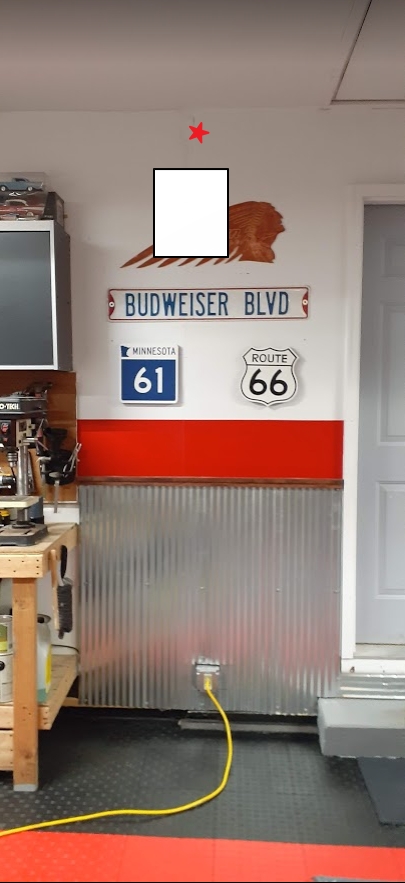
The Cadet heater will be about 16" down from the ceiling

Here is the garage wall... the white box is where the heater would hang and the RED STAR is where I am thinking of placing the outlet. Not sure if that would be acceptable or not.

Image-1.jpg
 
OP
K

Kaoskido

Well-known member
Joined
Aug 18, 2013
Messages
156
I negotiated with my electrician to come back and they have finished up all of the work for the heater. The Cadet heater takes about 1.5-2hours to bring the garage up to about 59 degrees. The last few days it has been about 1 degree here in SW Minnesota.
 
To avoid these ads, REGISTER NOW!
Top Bottom