To avoid these ads, REGISTER NOW!

Need Advice on Garage Epoxy Coating - Joints, Materials and Stem Wall Prep

senti

New member
Joined
Jul 18, 2025
Messages
3
Hi, I'm planning to get our garage floor epoxy coated and I’ve done some research but I still have some unanswered questions, which brings me to my first post in this forum. I would appreciate it if you guys can give me some advice for my situation.

some context: our house is about 1.5 years old with a 400 sq ft garage and a 100 sq ft patio. I don't plan on DIY-ing this so I've talked to 4 local companies so far (Central NC) about a three-layer system (epoxy base, flakes, polyaspartic top coat). but I haven't been satisfied with their proposals. our issues are with the stem walls, expansion and control joints. we care about aesthetics and long-term durability. no workshop use. still going to get this professionally done, but I don't want to pay a lot of money for work I won't be fully satisfied with. I need to know what to ask and expect.

  1. BASE COAT:
    all companies use the Simiron 1150FC for the base – 100% solids epoxy with 12 lbs of moisture-vapor tolerance. it's fast cure, and they'll get the entire thing done in a single day. many online suggest 2 day work for the slower cure process but no talk about 1150FC specifically. Is the 1150FC a good material or should I push for a different MVB with a longer cure?

  2. CONTROL JOINTS:
    all our control joints already show fine cracks, would that mean the slab has mostly settled? If that’s true, can I fill those joints with a flexible filler so the final epoxy floor looks seamless? If it’s risky, I’ll leave them exposed but if it’s safe, what material holds up under would hold up long term? polyurea filler? none of the companies talked about filling it up.

  3. EXPANSION JOINTS:
    The black fiber insert in the perimeter joints is partly exposed where old patch material chipped off. I want a continuous epoxy coat from floor to stem wall without visible fiber – is this possible to achieve while making sure the material underneath remains flexible and the epoxy at the joint doesn't chip off in the future?

    one company said they will use "urethane cement" to cover up the expansion joints and the imperfections in the stem walls and then coat on top of it.

  4. STEM WALL:
    the images show some stem-wall sections chipped off or with a pretty rough surface overall. to get a good bond and a smooth finish, how do I prep them?

Sorry for the long post and for any dumb questions. We care about how our garage looks and we want to take care of it, and I feel like these details make a huge difference in aesthetics and long-term durability. If you've made it this far, thank you for taking the time to read, and thanks in advance for any tips or personal experience you can share.
 
Last edited:
To avoid these ads, REGISTER NOW!

LegacyIndustrial

ALLIANCE MEMBER
Joined
Jun 7, 2010
Messages
7,995
Location
deerfield, IL
A lot of people just sign the quote and hope for the best, so you're ahead of the curve already.

I'll break this down based on your concerns.

BASE COAT
Simiron 1150FC is a 100% solids epoxy with decent vapor tolerance. It's not a bad product, especially if you're not dealing with active moisture intrusion.

CONTROL JOINTS
Hairline cracking in control joints isn't unusual and usually means the slab has done most of its settling. You're right that filling control joints can create a cleaner look, but only if the right material is used.

If filled, they should use a semi-flexible polyurea or hybrid joint filler that:

Bonds tightly to the concrete
Handles some minor movement
Won't shrink or crack under the coating

Some companies use rigid fillers that look good for a while but telegraph through or crack over time. If they don't mention joint prep at all, that's a red flag. A good polyurea joint filler (like the ones made for heavy industrial floors) would be the right move here.
We have a crack & joint filler called XtremeSet-100 Crack&Joint Filler

EXPANSION JOINTS / FIBERBOARD
If the fiber expansion joints are exposed or degraded, covering them with epoxy is risky. That joint is meant to move, and epoxy (even polyaspartic) is too rigid to span it without cracking.

What can work is:
Remove any loose fiber.
Backfill with a flexible filler or compressible backer rod and polyurea.
Use a urethane cement or flexible skim coat to level and coat flush.
Then coat over it with your system - knowing there's a chance of hairline movement showing over time, but it'll still look cleaner and perform better.

The company that mentioned urethane cement is actually on the right track. It's more expensive, but it's flexible and strong, perfect for transitions and stem walls too.

STEM WALLS
For the chipped or rough stem wall areas:
They'll need to mechanically prep it - grind, clean, or skim it smooth. Fill any big defects with epoxy patch or urethane mortar, not just regular caulk. Then apply the base coat vertically using a brush or roller (often done before flake broadcast on floor).
Done right, it'll look seamless with the floor and hold up long term.
 
To avoid these ads, REGISTER NOW!
OP
S

senti

New member
Joined
Jul 18, 2025
Messages
3
@LegacyIndustrial

Thank you SO much for taking my post seriously, and giving me a very detailed response. This helps me a lot, I appreciate it. I've had people tell me that my questions were bs, and that they'd charge me more for asking them if they were contractors.. even though I felt like these were really basic. If you don’t mind me asking a few follow-up questions, your insights would be really helpful. I attached all my pictures in the below link

1. Thanks for your opinion about the Simiron product. I've had another company come over today, and they want to use polyurea for the base coat. I questioned them about polyurea not being moisture tolerant at all and they said that newer concrete slabs already have a vapor barrier in them, and that residential garages in newly built communities will never have moisture issues. They won't cover moisture issues in their lifetime warranty but they kept saying that it's just not possible that it would happen. What do you think about this? Would it just be a "safer" option if I go with an epoxy (with decent tolerance)? would I actually be taking a gamble with polyurea when it comes to moisture issues in the future?

2. thanks for the information about joint fillers! neither of the companies that use the 1150fc or the polyurea said anything specific about using a joint filler. they said they will coat the joints same as the rest of the floor. a base, flakes, and a top coat basically. they don't offer the option of filling it up completely so I guess I won't be getting the seamless look

3. for the expansion joints, we don't have any loose fiber. It's just the cement/concrete patch on top of it that chipped off in some areas. both the epoxy and polyurea companies said they'll use urethane cement or a similar patch material to cover up any exposed fiber and then coat epoxy on top of it. based on what you said, that looks like the right way to go about it so that's good to know! thank you

4. they said they'll be using the same urethane cement (or similar material) to patch up the damaged sections of the stem walls or any damaged parts on the slabs. one of them mentioned using a masonry stone to smooth out the rough surface of the stem walls.

Again, thank you very much for your time!
 
Last edited:

LegacyIndustrial

ALLIANCE MEMBER
Joined
Jun 7, 2010
Messages
7,995
Location
deerfield, IL
You're very welcome! Your questions are valid and honestly the kind more homeowners should be asking.

1. That contractor is half right. Many newer slabs do have vapor barriers, but they're not foolproof, especially if the slab wasn't properly cured, or the barrier was compromised during the build. You could use moisture barrier primer before using a polyurea coat. I don't want to keep pitching our products but if you need one, we do sell one here: AquaDike® MVB Primer

2. If the contractors won't offer proper joint filling, you're right that you won’t get that seamless look. And coating over joints without filling or detailing them usually leads to visible cracking or telegraphing later. It's not a dealbreaker, but it's worth pushing on if you care about appearance.

3. Sounds like they're approaching this correctly by cleaning, patching with urethane cement, then coating. That's probably the best balance between clean aesthetics and reasonable long-term performance.

4. Using urethane cement and smoothing with a masonry stone is totally fine, as long as they prep the surface properly (clean, grind, etc.) and feather it well before coating. It should look great once done.

Hope that helps clarify things. You're doing the right thing by asking questions now, it’ll save you regret later.
 

Dig Doug

Well-known member
Joined
Apr 16, 2018
Messages
1,128
Some of your stem wall you can add a wall base ( base board ) like a 1x4( or what ever size to hide things ) to kinda cap off the bottom of the drywall. You’ll have to look at ALL the walls to see if it would work.

you can also mix up a sac n patch concrete mixture, a smooth paste like mixture to smooth out the ruffness
sac & patch video


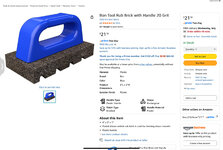
you could try this hand held stone to to smooth out the ruffness, it’s a lot of elbow work back & fourth

IMG_2236.jpeg
 
To avoid these ads, REGISTER NOW!
Top Bottom