Great idea about replacing the drain with a ball valve.
-On my 4 year old water heater I tried draining the tank with 2 sessions of 4 hours each and still had water just below the upper heating element. The minimal orifice of the OEM drain bib was too clogged to allow the accumulated **** to pass. When comparing ball valves there are some with a noticeably larger orifice than others, you want the largest orifice possible. Would also suggest using brass components, which are more expensive by about $30, but worth the money for durability/sealing IMO. Plastic that is subjected to heat cycling (water heater) may also become embrittled over time and to have any part of the drain components shatter (bumped, flexed, etc.) unexpectedly would mean a flood. That's a pet theory I have no proof for but having worked with plastic a good bit of my life I just don't trust it in a critical component. JMO.
I am on a well and do keep up with the salt religiously.
-Not knowing your water I can only tell you mine. I'm in the foothills on Tn. and the water on my well has a rather high mineral and iron content. When I bought this home 7 years ago the water heater required draining to remove the mineral sediment (whitish deposits) that accumulated all the way up to the heating elements. Draining not possible (bib to near the floor) so I had to fashion an attachment to the wet/dry vacuum to remove water/sediment. I found minute rocks and assorted **** from the well among the sediment. My point? you may want to examine what's in the tank of the old heater that's in the supply stream. Also, if you have a high iron content (2 types of iron) in your water this can promote rust in your tank that might have promoted your old tank rusting/leaking. I installed a water filtration system from available components that includes 3 washable screens before filtration and the amount of black iron that accumulates in the bowls in a year is considerable. The bowls are clear acrylic so it's a visual check. I also had to replace the pressure tank and what came out of it (on the driveway) likely contributed to the early failure of it too. You're on a well too and if minerals/iron are causing problems with your other plumbing fixtures you may want to consider filtration. Yeah it can be expensive (couple of thousand?) and is a large PITA to plumb in but I don't experience a stopped up kitchen drain every 6 months, faucets that won't shut off, or a shortage of hot water for showers like I did after moving in here. That sacrificial anode in the water heater NEEDS to changed despite how difficult it may be to change, it amazed me how quickly it gets eaten. Changing it also allows you to sanitize the heater with a simple dose of hydrogen peroxide. If you have a sulfur (rotten egg) smell to your hot water it may be because of bacteria living/growing in the tank. I apologize for this long winded post but when city boy (me) moved to the country I had to learn all this the hard way and wanted to at least advise you to avoid further potential problems with your water and plumbing. Contact me if I can be of more help with this.
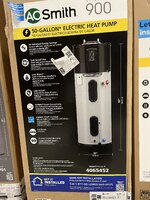
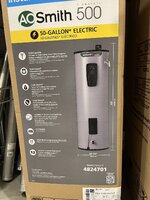
"If I go conventional, and realize that the drop from 80 to 50 gallon (and still faster recovery than heat pump) is noticeable to my family, I am only out $150. That won’t sting as bad for a decision standpoint."
-That's a compelling reason to go conventional. With multiple family members wanting showers the waiting for recovery time may force planning that will inconvenience everybody. I'm all in favor of energy efficiency but question the return time on energy savings, you'll have to do the math with real numbers. What brochures state is always optimistic. Plus, when your children move away in a couple of years and it's just you and wife how much energy savings will there be? Those HP heaters are quite expensive, especially if it rusts like the last one or an electronic board goes bad. More complex, much greater cost, unknown longevity. You have a lot to consider and wish you luck with your project.


 )
)