
portalkeeper
New member
- Joined
- Dec 9, 2025
- Messages
- 4
I installed a mini split in my garage and want to insulate the garage a bit more than what it is currently to help keep it warm in Winter as well as cold in summer. I live in Denver, climate zone 6b.
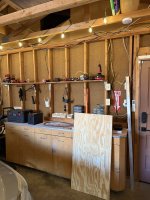
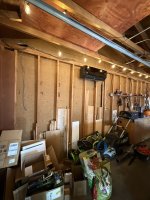
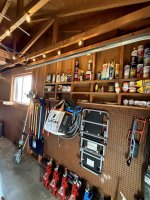
The garage has exposed framing meaning there is no no ceiling, just the exposed trusses and ceiling joists. There is one vent on the vaulted roof about 1 ft by 1ft. Less than half of the garage has insulation of mixed brands (but all of it is faced insulation). All the insulation is covered by this 1/8” or 1/16” plywood paneling material (not drywall) to keep the fibers sealed away, except for about 5” below the top plates of the walls. They left the insulation faces open I believe to allow for air and moisture to escape from the wall cavity.
The exterior walls of the garage are brick walls. I’m not sure if it is the traditional double brick type but the wall is definitely two brick depths thick (so I guess this means a double brick wall). The brick is not exposed at all in the interior of the garage. Instead there is some kind of 1/2” brown insulation paneling (at least I think it’s insulation) layed up against the brick with a small gap between it and the brick wall. You can see the small gap and all the excess dried mortar on the back of the brick wall when looking down at the top plates of each wall (when you are inside the garage).
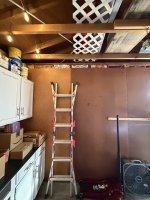
The garage has drywall above the top plates on one of the 4 walls and the same brown insulation material as a backer for siding on the opposite wall (the gable end). The drywall separates the exposed attic of the garage from the attic of a pretty large breeze way that sits right next to the garage (there is no insulation on the drywall on either side).
The garage isn’t exactly detached as the shared roof of both the garage and breezeway **** up against the roof of the home. All three attics are connected via access holes. The garage has a hole in that drywall that leads to the breezeway attic and the breezeway has another hole that you can step through to get into the main attic of the home which obviously has the drywall ceiling under your feet. I’m also building a removable cover for that hole from the garage attic to the breezeway attic.
The breezeway also has a ceiling made of plywood. The only place without a ceiling is the garage which is like to keep that way.
The wall I am mainly concerned about insulation is exactly the wall with the drywall and access hole above the top plates. This wall has exposed electrical and 2x4 stud framing. The studs in the garage sit up against that brown 1/2” insulation board material (which I really hope isn’t asbestos), and as I said behind that insulation board material is the the double brick wall. There is only that one ventilation opening on the roof, there aren’t any ventilation openings on the soffits on either side of the garage, they just have a regular wood fascia and plywood to create the over hang. No vent on the gable end. There is no ridge vent. I went on the roof and checked.
There are a few unknowns to me about insulating brick homes that I would like someone knowledgeable to comment on. One is whether to use faced insulation like they have already used in the other walls of the garage or to use non faced. The other is the r value I should look for. I’ve read brick can crack with temperature swings and would like to avoid that. Another thing is whether to use vapor barrier like plastic film or a smart barrier. Creating a ceiling is out of the question as I would like to keep the truss framing exposed (I have a large air filter for the entire garage sitting in this exposed attic) but I’m open to insulating the roof plywood if insulating the walls turns out to not be enough. So I’d like some instruction on what materials to use if I decide to do that too. Thanks for any help you guys can give me!
The garage has exposed framing meaning there is no no ceiling, just the exposed trusses and ceiling joists. There is one vent on the vaulted roof about 1 ft by 1ft. Less than half of the garage has insulation of mixed brands (but all of it is faced insulation). All the insulation is covered by this 1/8” or 1/16” plywood paneling material (not drywall) to keep the fibers sealed away, except for about 5” below the top plates of the walls. They left the insulation faces open I believe to allow for air and moisture to escape from the wall cavity.
The exterior walls of the garage are brick walls. I’m not sure if it is the traditional double brick type but the wall is definitely two brick depths thick (so I guess this means a double brick wall). The brick is not exposed at all in the interior of the garage. Instead there is some kind of 1/2” brown insulation paneling (at least I think it’s insulation) layed up against the brick with a small gap between it and the brick wall. You can see the small gap and all the excess dried mortar on the back of the brick wall when looking down at the top plates of each wall (when you are inside the garage).
The garage has drywall above the top plates on one of the 4 walls and the same brown insulation material as a backer for siding on the opposite wall (the gable end). The drywall separates the exposed attic of the garage from the attic of a pretty large breeze way that sits right next to the garage (there is no insulation on the drywall on either side).
The garage isn’t exactly detached as the shared roof of both the garage and breezeway **** up against the roof of the home. All three attics are connected via access holes. The garage has a hole in that drywall that leads to the breezeway attic and the breezeway has another hole that you can step through to get into the main attic of the home which obviously has the drywall ceiling under your feet. I’m also building a removable cover for that hole from the garage attic to the breezeway attic.
The breezeway also has a ceiling made of plywood. The only place without a ceiling is the garage which is like to keep that way.
The wall I am mainly concerned about insulation is exactly the wall with the drywall and access hole above the top plates. This wall has exposed electrical and 2x4 stud framing. The studs in the garage sit up against that brown 1/2” insulation board material (which I really hope isn’t asbestos), and as I said behind that insulation board material is the the double brick wall. There is only that one ventilation opening on the roof, there aren’t any ventilation openings on the soffits on either side of the garage, they just have a regular wood fascia and plywood to create the over hang. No vent on the gable end. There is no ridge vent. I went on the roof and checked.
There are a few unknowns to me about insulating brick homes that I would like someone knowledgeable to comment on. One is whether to use faced insulation like they have already used in the other walls of the garage or to use non faced. The other is the r value I should look for. I’ve read brick can crack with temperature swings and would like to avoid that. Another thing is whether to use vapor barrier like plastic film or a smart barrier. Creating a ceiling is out of the question as I would like to keep the truss framing exposed (I have a large air filter for the entire garage sitting in this exposed attic) but I’m open to insulating the roof plywood if insulating the walls turns out to not be enough. So I’d like some instruction on what materials to use if I decide to do that too. Thanks for any help you guys can give me!
Attachments


Last edited: