To avoid these ads, REGISTER NOW!

New build concrete coating options?

Matt193

Member
Joined
Sep 20, 2025
Messages
5
Location
Wi
I had a 28x32 garage built this past fall. I've been slowly working on it this winter getting the insulation installed. I would like to do something with the floor before I start using it and getting stains on the concrete, but I'm pretty overwhelmed with options.

The floor was power troweled so it's very smooth. I originally was thinking of just sealing it or going with something like Ghostshield, but now I'm second guessing myself and thinking of going with something like an epoxy.

I'll be using this as a shop so the floor will be exposed to oil, grease, cleaners, ect. I will be moving snowmobiles in and out, which I plan on being careful with, but the chances of scratching the floor are high.

I really prefer the natural concrete look or a single color so it's easier to find dropped hardware. I also need something that isn't super slippery when wet.

I've contacted a handful of coating companies and have been given ballpark estimates starting at $5-$8 sqft for grinding and epoxy, which is more than I feel comfortable spending, but the $5 options may be doable. All of them have been very negative about just sealing it with something, but a few said they would do it if I really wanted it.

I have no problem going DIY, but I don't want to cause issues down the road or deal with something that fails soon after installation. I'm really unsure about doing surface grinding myself if whatever product I would go with needs it.

I'm also thinking about just forgoing any kind of sealant and using it as-is.

What type of product do you think would work best in my situation?
 
To avoid these ads, REGISTER NOW!

joebass3

Active member
Joined
May 26, 2024
Messages
36
I went with epoxy coating and a top coat called Ballistix. Supposedly very resistant to oil and chemicals. It came in at about $7sqft so it definitely is an investment. I 100% agree to go with a single color. I did flakes on mine and although it looks awesome, I find it tough to find small items that are dropped. They spread a nonslip coating on the surface so it's not slippery.

Personally I would not go the DIY route for epoxy coating. It probably would look good for awhile but it may not hold up over time. Since it was power troweled I'd be tempted to leave it as is if money is tight. Being very smooth will definitely help in keeping it clean.
 
Last edited:

Shea

Well-known member
Joined
Sep 19, 2012
Messages
2,867
Location
California
I had a 28x32 garage built this past fall. I've been slowly working on it this winter getting the insulation installed. I would like to do something with the floor before I start using it and getting stains on the concrete, but I'm pretty overwhelmed with options.

The floor was power troweled so it's very smooth. I originally was thinking of just sealing it or going with something like Ghostshield, but now I'm second guessing myself and thinking of going with something like an epoxy.

I'll be using this as a shop so the floor will be exposed to oil, grease, cleaners, ect. I will be moving snowmobiles in and out, which I plan on being careful with, but the chances of scratching the floor are high.

I really prefer the natural concrete look or a single color so it's easier to find dropped hardware. I also need something that isn't super slippery when wet.

I've contacted a handful of coating companies and have been given ballpark estimates starting at $5-$8 sqft for grinding and epoxy, which is more than I feel comfortable spending, but the $5 options may be doable. All of them have been very negative about just sealing it with something, but a few said they would do it if I really wanted it.

I have no problem going DIY, but I don't want to cause issues down the road or deal with something that fails soon after installation. I'm really unsure about doing surface grinding myself if whatever product I would go with needs it.

I'm also thinking about just forgoing any kind of sealant and using it as-is.

What type of product do you think would work best in my situation?
If you like the look of bare concrete, you may want to consider TS210 by Concrete Sealers USA. It's a thin mil acrylic-modified polyurethane coating and sealer with a matte finish. It's highly resistant to oils, has good wet slip resistance, and good scratch resistance.

The best part is that it's easy to apply DIY, and most concrete surfaces don't need to be prepped with etching or grinding. For a power-troweled surface, a primer coat of equal parts water and TS210 is applied first, followed by two more coats of TS210.

The matte finish does a good job of hiding scratches. However, it's one of the few coatings that are easily repairable if needed. Just rough up the area with 100-120 grit sandpaper, then apply TS210. It can be purchased in quart sizes, making it a good patch kit if the time comes.

Many on the GJ have applied TS210 to their garage floors and workshops with good results. I suggest you read our article below to learn more.


Dig Doug

Well-known member
Joined
Apr 16, 2018
Messages
1,124
If you like the look of bare concrete, you may want to consider TS210 by Concrete Sealers USA. It's a thin mil acrylic-modified polyurethane coating and sealer with a matte finish. It's highly resistant to oils, has good wet slip resistance, and good scratch resistance.

The best part is that it's easy to apply DIY, and most concrete surfaces don't need to be prepped with etching or grinding. For a power-troweled surface, a primer coat of equal parts water and TS210 is applied first, followed by two more coats of TS210.

The matte finish does a good job of hiding scratches. However, it's one of the few coatings that are easily repairable if needed. Just rough up the area with 100-120 grit sandpaper, then apply TS210. It can be purchased in quart sizes, making it a good patch kit if the time comes.

Many on the GJ have applied TS210 to their garage floors and workshops with good results. I suggest you read our article below to learn more.

The TS 210 sounds perfect for my application! I have 2 slabs that I want to coat one is new & one is old
How does it hold up in say extreme heat ? Like 115-120 degrees summer weather in the desert

Thank you for posting !


Question -
Looking to remove some oil stains in a garage

Is there a magic product or technique that makes things disappear?

then top coat w/ TS 210
 
OP
M

Matt193

Member
Joined
Sep 20, 2025
Messages
5
Location
Wi
If you like the look of bare concrete, you may want to consider TS210 by Concrete Sealers USA. It's a thin mil acrylic-modified polyurethane coating and sealer with a matte finish. It's highly resistant to oils, has good wet slip resistance, and good scratch resistance.

The best part is that it's easy to apply DIY, and most concrete surfaces don't need to be prepped with etching or grinding. For a power-troweled surface, a primer coat of equal parts water and TS210 is applied first, followed by two more coats of TS210.

The matte finish does a good job of hiding scratches. However, it's one of the few coatings that are easily repairable if needed. Just rough up the area with 100-120 grit sandpaper, then apply TS210. It can be purchased in quart sizes, making it a good patch kit if the time comes.

Many on the GJ have applied TS210 to their garage floors and workshops with good results. I suggest you read our article below to learn more.

Thanks for this suggestion. It looked like a really promising product and could be the ticket until I read this:

"Furthermore, because TS210 is a breathable, thin-mil coating, it should not be exposed to standing water for extended periods, nor extreme winter weather conditions that track in snow, salts, and deicing fluids that sit for long periods. Doing so may lead to delamination issues."

Extreme winter weather is pretty standard here and my plan is to bring my snowmobile in after rides to let it melt off. I will also be bringing in other snowy and salty things in to let them melt off as well. What are your thoughts on this?
 
To avoid these ads, REGISTER NOW!

Shea

Well-known member
Joined
Sep 19, 2012
Messages
2,867
Location
California
Thanks for this suggestion. It looked like a really promising product and could be the ticket until I read this:

"Furthermore, because TS210 is a breathable, thin-mil coating, it should not be exposed to standing water for extended periods, nor extreme winter weather conditions that track in snow, salts, and deicing fluids that sit for long periods. Doing so may lead to delamination issues."

Extreme winter weather is pretty standard here and my plan is to bring my snowmobile in after rides to let it melt off. I will also be bringing in other snowy and salty things in to let them melt off as well. What are your thoughts on this?
Concrete Sealers USA is very conservative about the performance claims of their products. Part of the reason is that they want to ensure the customer chooses a product that meets their performance expectations. They've even talked customers out of buying a particular product if they feel it won't meet their needs. It's one of the reasons we recommend them. They aren't going to tell a prospective customer what they want to hear to make a sale.

That said, there is a possibility you might have issues if water and salty brine sit for days without being cleaned up. Particularly if you encounter harsh winter conditions. A thin mil, breathable coating can be susceptible to that. Concrete Sealers USA has found instances where water has gotten under the coating, turning it whitish with some delamination, in areas subjected to heavy water exposure. Those areas were covered by floor mats or other items that prevented the water beneath them from evaporating, allowing it to penetrate the coating. As a result, they do not recommend it for heavy to severe conditions such as yours. There have been a thread or two here on the GJ where TS210 was subjected to salty brine and oil that sat for weeks and cleaned up just fine, but there are few such examples.

Thicker, non-breathable coatings perform very well for weather conditions like yours. However, they will be more susceptible to noticeable scratching and damage from the snowmobiles due to the glossier finish. They are also slippery when wet, so an anti-slip media needs to be mixed into the final coat to improve slip resistance.

The best example of a high-performing, budget-friendly DIY coating (compared to non-DIY) that meets these requirements is a single-part polyurea. It is a non-breathable, highly chemical, and oil-resistant coating. Water can't penetrate the surface unless it is scratched down to the bare concrete. Because it is single-part, there is no mixing of A and B components, and unlike other 2-part coatings, you have an almost unlimited pot life (no rushing) to apply it. However, such coatings do require etching the concrete surface first. I attached an article below that discusses single-part polyurea. It also includes images of a clear coat of single-part polyurea on bare concrete.


If you want to avoid etching the surface or don't want to deal with the potential cosmetic blemishes from the snowmobiles, then you might want to reconsider an oil-repelling penetrating sealer such as GhostShield or PS100 by Concrete Sealers USA. They are the easiest to apply and have no worries of damage. Just know that they are still susceptible to staining if oils are not cleaned up in a reasonable amount of time.
 

BKiller

Member
Joined
May 4, 2006
Messages
21
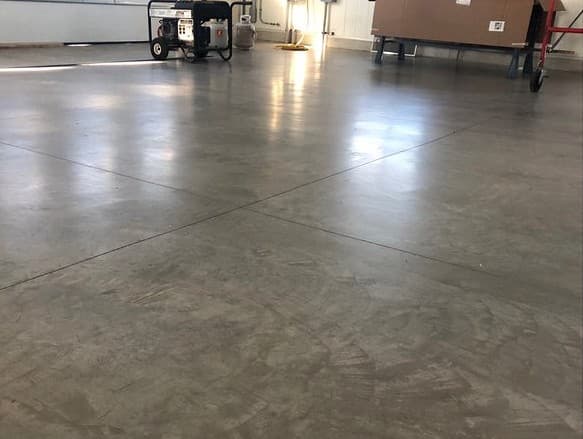
I chose a cheaper option using a Densifier. Initial application looks good. I was just after stain resistance, nothing pretty.
Quick vid:
 
OP
M

Matt193

Member
Joined
Sep 20, 2025
Messages
5
Location
Wi
I chose a cheaper option using a Densifier. Initial application looks good. I was just after stain resistance, nothing pretty.
Quick vid:
Interesting. How long ago did you put that down? Have you done much work on it since you initially applied it?

I'm still mulling over the options that Shea suggested. It's going to be a few months before it's warm enough to apply anything to the floor in my garage, so I have a little time before I need to make a decision. I think I would be happy with either the TS210 or the PS100, but I kind of like the idea of the TS210 a little more as long as it'll hold up.
 

BKiller

Member
Joined
May 4, 2006
Messages
21
Only been applied for about a week. No real use yet but because it is a chemical reaction to the concrete I don't think it's something that will "scratch off" like a coating will.
 

Shea

Well-known member
Joined
Sep 19, 2012
Messages
2,867
Location
California
Interesting. How long ago did you put that down? Have you done much work on it since you initially applied it?

I'm still mulling over the options that Shea suggested. It's going to be a few months before it's warm enough to apply anything to the floor in my garage, so I have a little time before I need to make a decision. I think I would be happy with either the TS210 or the PS100, but I kind of like the idea of the TS210 a little more as long as it'll hold up.
Just remember that densifiers technically are not sealers. They react with the minerals in concrete to produce excess Calcium Silicate Hydrate, which tends to fill pores and capillaries at the uppermost surface. This is what makes the concrete denser and harder. Though denser surfaces help reduce liquid penetration, densifiers do not have a repelling action to reduce stains or liquid penetration.

For example, polished concrete is treated with densifiers during the grinding and polishing process. The denser surface produces a better shine. However, the concrete is typically treated with a stain-guard sealer upon completion to help repel liquids and reduce staining.
 
To avoid these ads, REGISTER NOW!
Top Bottom