To avoid these ads, REGISTER NOW!

New build. What am I forgetting?

bonehead04

Active member
Joined
Aug 4, 2019
Messages
30
Location
Houston, TX
Hey y'all. Sometime lurker, first post. After more than 20 years of moving from seemingly countless and less than optimal apartments and houses, some purchased, some leased, I'm finally building a home with a decent sized attached 3 car garage. Usable dimensions will be 23' deep, 41' wide, 13' high. While I'd love to make it larger, I'm already encroaching on my wife's backyard/pool. :lol_hitti

Keep in mind, this is not a 'working' garage. No motor swaps or rebuilds here. Maybe the occasional maintenance job, but this garage is primarily for hanging out/storage of vehicles which include our daily drivers (my wife's (ugh) minivan and my Raptor) as well as my weekend cars. 4 in total with hopes to add at least one more once I climb out of debt building this house:(

Living in south Texas, there are certain things I don't need. I have no need for heat. Provisions for drainage would be nice, but with the ever-present risk of flooding during hurricane season, I figured it best not to have any potential conduits for sewage backup into the garage. Not even sure this is an actual risk, but I don't want to take that chance.

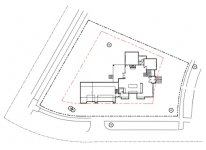
Here's a preliminary list I compiled based on numerous threads I've read across multiple forums. What am I missing and what is completely unnecessary? Certain items have to or are just easier to include during construction, others can be added later. Attached is a tentative plan for the footprint of the 1st floor and garage (garage doors will be 3 separate, not a 2+1 depicted on the plan). Thanks for your input!

1) Stainless steel utility sink or plumbing installed for future install of sink along back wall
2) 220v/30amp and 120v outlets above each garage bay
3) Single 240v outlet on the back or one of the side walls (for possible future EV use)
4) Multiple 120v outlets in the garage above and below counter height
5) Concrete walls approximately 2-3 feet up from floor (for any possible flooding concerns), 1/2" plywood walls above this (preferably not drywall)
6) 'Abundant' ceiling LED lighting array between/around cars, not directly above each bay as these would be obscured by cars on a lift
7) Concrete slab must be minimum 4" thick, 3000 psi, Rebar
8) Spray foam insulation/Mini-split
9) Attached storage area with some shelving or slatwall storage for kids bikes, wife and kids' miscellaneous junk. Dimensions TBD.
10) High lift wall mount garage door openers (e.g. LIftmaster 8500W) in each bay with 120v outlets installed next to units
11) 3 separate 8x10' garage doors (prefer fully opaque insulated glass/aluminum door, provided that it can adequately insulate the garage from heat)
12) Single garage door along back wall (this one can be 8x9) to open to backyard
13) Wired for PoE security camera/TV/Cat6

May incorporate into the total cost of the build on the following features, but may defer to a future date depending on build cost of the home:

1) Car lifts (one, possibly two). Bendpak or Greg Smith 4 post, or American Custom Lifts M-1 single post.
2) Porcelain tile flooring in the garage, not including the storage area (PEI 5, COF 0.06 or higher).
3) Storage/tool cabinets along back wall. (e.g. Sonic, Baldhead, Moduline)
 

Attachments
  • Image 7-27-19 at 11.15 PM.jpg
    Image 7-27-19 at 11.15 PM.jpg
    42.8 KB · Views: 103
Last edited:
To avoid these ads, REGISTER NOW!

larry_g

Well-known member
Joined
Apr 28, 2007
Messages
16,877
Location
oregon
One repeating thread on this forum is "how do I build a mezzanine?" If you have any thoughts of storing stuff plan a mez into your build even if you don't build it out now.

lg
no neat sig line
 

bad_idea

Well-known member
Joined
Jun 11, 2011
Messages
4,332
Location
Pasquotank, NC
Attic storage trusses. A second floor built into the trusses, all the storage space you could ever need.

As far as drain line and sewage back up in a storm - couldn't you install a valve on the drain line? Storms coming, secure the valve.

Step the door sizes up. I have (2) 9x9 doors and have already smacked the frame backing the trailer in. My F250 is snug pulling in and out of the 9' door. I'm happy with my 9x9 doors, but wouldn't be able to make a 8' wide door work. Line the door on the back of the building up with one on the front, makes it easy to pull things through the shop into the backyard.

Step the slab up to 6" if you plan on lifts at any point. Concrete guys notoriously skimp on concrete with low and high spots here and there. 6" vs 4" is a minimal cost increase.

A few more feet in depth will make the simplest maintenance much easier. My F250 is an extended cab with 8' bed, it swallows up a good chunk of my 30' deep bay.
 
OP
B

bonehead04

Active member
Joined
Aug 4, 2019
Messages
30
Location
Houston, TX
One repeating thread on this forum is "how do I build a mezzanine?" If you have any thoughts of storing stuff plan a mez into your build even if you don't build it out now.

lg
no neat sig line

Larry, definitely thought about it. The problem is depth. With only 23' to work with, placing a mezzanine with any useful depth will potentially interfere with operation of a lift.

Attic storage trusses. A second floor built into the trusses, all the storage space you could ever need.

As far as drain line and sewage back up in a storm - couldn't you install a valve on the drain line? Storms coming, secure the valve.

Step the door sizes up. I have (2) 9x9 doors and have already smacked the frame backing the trailer in. My F250 is snug pulling in and out of the 9' door. I'm happy with my 9x9 doors, but wouldn't be able to make a 8' wide door work. Line the door on the back of the building up with one on the front, makes it easy to pull things through the shop into the backyard.

Step the slab up to 6" if you plan on lifts at any point. Concrete guys notoriously skimp on concrete with low and high spots here and there. 6" vs 4" is a minimal cost increase.

A few more feet in depth will make the simplest maintenance much easier. My F250 is an extended cab with 8' bed, it swallows up a good chunk of my 30' deep bay.

Thanks for the input. The attic will be on top of the main house. A bedroom will be on top of the majority of the garage, so storage above is a no go.

Thought about some valve mechanism for a drain. Would have to ask the builder about this.

My only concern with thickness of the slab is if I go the single post lift route. If I get 4 posts, I probably won't even bolt it down. I'll ask what the price differential is on adding an inch or two, though.

I initially spec'd 21', but figured that would be just cutting it too close with the nose of the cars/trucks and the back wall. Soooo, in passing, I told my wife I needed to add another 2' hoping that she would just say 'whatever'. Well, I got the obligatory eyerolling, but not a no:bounce: Adding anything more will just cause more headache than it's worth.

Be careful that you figure lift placement first so the rebar can be kept out of there.

Have to figure out which lift I'm getting first. Do they typically map out the rebar like they do with post-tension slabs for later reference?
 

MoonRise

Well-known member
Joined
Nov 5, 2010
Messages
4,028
Location
NJ
Bigger garage doors, especially width. 8 foot wide garage doors aren't really all that wide, especially for something like your Raptor. With the mirrors 'out', the Raptor is already 97" wide.

https://media.ford.com/content/dam/...ct/2019/f-150/2019-ford-raptor-tech-specs.pdf

No, rebar location in a slab isn't typically 'mapped'.

Pick out your lift NOW and find out the SPECIFIC mounting requirements and mounting pad dimensions and bolt hole locations.

Thicker concrete (as mentioned). And stronger concrete (example: Challenger CL10 two-post lift requires a minimum concrete strength of 3500 psi and 4" minimum thickness).

https://aceshopequipment.com/two-post-car-lifts/challenger-lifts-cl10-10k-2-post-lifts/

With the wall outlets, have multiple independent circuits put in. Minimum IMHO is TWO circuits for the 120V wall outlets.

Lighting circuits are INDEPENDENT of the wall outlets (so if you trip a wall outlet circuit you aren't left in the dark).

Have the lighting circuit(s) put in with switches so that you can turn on one or two lights or some more lights or all of the lights. And in different 'zones' as well.

Plan the lighting layout to include how the light 'spills' and reflects so that you don't have shadows or 'dead' spots in the lighting coverage.

EV charging? Look into some of the possible EV charger requirements. Some (Tesla higher-end charger) call for something like a 50-100 amp 240 circuit.

A single 240V 30 amp circuit might be OK the circuit for the air compressor for a 'small' home shop.

Possible welder? Put in a 240V 50 amp NEMA 6-50 outlet for that and you can run most home-level welders (around the 200 amp output level). Want/need a possible welder with more power than that and you might have to have a higher amperage circuit.

example: a recent Lincoln Power MIG 256 or 260 requires a 240V 60 amp breaker.

Attached garage, you say?

Most building codes will require the wall between the house and garage to be a 'fire' rated wall. Which will usually mean a minimum 5/8" Type X drywall, and some locales may call out a double layer required.

https://www.thisoldhouse.com/ask-toh/why-not-use-fire-rated-drywall

Speaking of the wall between the house and garage, strongly consider making that wall a 'quiet' wall as well. A little extra time and money now can make it so much nicer of not having garage/machinery noises carry into the house.
 

rayra

Well-known member
Joined
Dec 1, 2014
Messages
4,724
Location
Escaped from Los Angeles
Add at least 4' to all your vehicle bay dimensions. Or at least the one you will primarily be working in.

Wall-mounted illumination at the nose of the maintenance bay seems like a very useful thing.

3' stem wall in Houston isn't a bad idea, given the propensity to flood there, but when it floods it won't be enough. But better than nothing and if you keep an 8' stud wall on top of that you'll have nice ceiling height.
 

Roody

New member
Joined
Aug 9, 2019
Messages
1
Location
Chesterfield Virginia
23' Deep will fit a full most sized truck. I am just completing finishing work on a 26 deep by 28 wide two story detached. I rerouted my lawn irrigation and the wiring from the attached garage to the detached garage... probably going to do the electric dog fence as well. Think of anything that you may want to have hard-wired now and don't scrimp on the outlets, cables or anything else that will eventually end up covered... after the sheetrock or wall covering is up its too late. I had sheetrock for the walls and built 40" knee walls covering the concrete foundation block that was exposed on the inside of the garage. I hate the look of wires hanging down all over the place. In FACT I have to retro fit an an outlet already! Ensure you plan your electrical, cable television and PoE wire (network) so that they can be hidden if you mount a TV... and ensure you consider blocking in between you 2x4 or 2x6 for things like hanging heavy ladders. Prime- then paint your garage.... Try to get AT LEAST the primer on before the electrician mounts any receptacles. I noticed you stated plywood for the interior walls? I am installing laminate flooring over the sheetrock on the walls... and it looks damn good... is waterproof and durable. Minor issues with this build after the builder walked away. Be sure that your garage is not set below grade to keep water from running back against the foundation or into the garage (my builder did this to me and I had to demo, replace and regrade 20x20 plus the apron of the driveway to accommodate water runoff.
 
OP
B

bonehead04

Active member
Joined
Aug 4, 2019
Messages
30
Location
Houston, TX
Bigger garage doors, especially width. 8 foot wide garage doors aren't really all that wide, especially for something like your Raptor. With the mirrors 'out', the Raptor is already 97" wide.


No, rebar location in a slab isn't typically 'mapped'.

Pick out your lift NOW and find out the SPECIFIC mounting requirements and mounting pad dimensions and bolt hole locations.

Thicker concrete (as mentioned). And stronger concrete (example: Challenger CL10 two-post lift requires a minimum concrete strength of 3500 psi and 4" minimum thickness).


With the wall outlets, have multiple independent circuits put in. Minimum IMHO is TWO circuits for the 120V wall outlets.

Lighting circuits are INDEPENDENT of the wall outlets (so if you trip a wall outlet circuit you aren't left in the dark).

Have the lighting circuit(s) put in with switches so that you can turn on one or two lights or some more lights or all of the lights. And in different 'zones' as well.

Plan the lighting layout to include how the light 'spills' and reflects so that you don't have shadows or 'dead' spots in the lighting coverage.

EV charging? Look into some of the possible EV charger requirements. Some (Tesla higher-end charger) call for something like a 50-100 amp 240 circuit.

A single 240V 30 amp circuit might be OK the circuit for the air compressor for a 'small' home shop.

Possible welder? Put in a 240V 50 amp NEMA 6-50 outlet for that and you can run most home-level welders (around the 200 amp output level). Want/need a possible welder with more power than that and you might have to have a higher amperage circuit.

example: a recent Lincoln Power MIG 256 or 260 requires a 240V 60 amp breaker.

Attached garage, you say?

Most building codes will require the wall between the house and garage to be a 'fire' rated wall. Which will usually mean a minimum 5/8" Type X drywall, and some locales may call out a double layer required.


Speaking of the wall between the house and garage, strongly consider making that wall a 'quiet' wall as well. A little extra time and money now can make it so much nicer of not having garage/machinery noises carry into the house.

Several great points here. Didn't really think to measure the width of the truck. It'll fit with the mirrors folded with a little room to spare on the sides. Not sure I want to cut it that close. That being said, I probably won't have the truck forever and the added expense of getting non-standard sized doors for one car may be over the budget.

As I originally stated, this isn't a 'working' space. 4", 3000 psi slab should be enough for my needs (assuming they don't skimp on the 4"). Two post lift is not ideal for storage. If I go with a single post, I'll definitely have to figure that out before they lay down the slab. If I go the 4 post route, it is unlikely I'll bolt it down. Won't be welding, either.

The lighting array does concern me a bit. Want it brighter than the sun in there. I did specify to array the fixtures between/around cars. Certainly don't want to cast shadows or have dead space. Will need to look more into adequate lumens and color temperature (probably around 5000K).

If code requires a firewall, it'll get done. As far as noise, the garage is adjacent to a mudroom/pantry and then the kitchen. The space above the garage, however, will likely be one of my kids' bedroom. Sorry, one of them will get woken from their peaceful slumber as I try to sneak out in the early morning weekend hours:FIREdevil

23' is not deep enough

Please don't tell me that. It's all I can get!

Add at least 4' to all your vehicle bay dimensions. Or at least the one you will primarily be working in.

Wall-mounted illumination at the nose of the maintenance bay seems like a very useful thing.

3' stem wall in Houston isn't a bad idea, given the propensity to flood there, but when it floods it won't be enough. But better than nothing and if you keep an 8' stud wall on top of that you'll have nice ceiling height.

Won't be living in the flood plain in the new home, so barring another catastrophe, we should be good with just 3'. My current 25 year old home took in a little water in the garage during Harvey. With drywall and wood baseboards all around, we had to pull out the bottom 3 feet. If water levels were to get any higher than that, then flooding of my garage is the least of my concerns.

23' Deep will fit a full most sized truck. I am just completing finishing work on a 26 deep by 28 wide two story detached. I rerouted my lawn irrigation and the wiring from the attached garage to the detached garage... probably going to do the electric dog fence as well. Think of anything that you may want to have hard-wired now and don't scrimp on the outlets, cables or anything else that will eventually end up covered... after the sheetrock or wall covering is up its too late. I had sheetrock for the walls and built 40" knee walls covering the concrete foundation block that was exposed on the inside of the garage. I hate the look of wires hanging down all over the place. In FACT I have to retro fit an an outlet already! Ensure you plan your electrical, cable television and PoE wire (network) so that they can be hidden if you mount a TV... and ensure you consider blocking in between you 2x4 or 2x6 for things like hanging heavy ladders. Prime- then paint your garage.... Try to get AT LEAST the primer on before the electrician mounts any receptacles. I noticed you stated plywood for the interior walls? I am installing laminate flooring over the sheetrock on the walls... and it looks damn good... is waterproof and durable. Minor issues with this build after the builder walked away. Be sure that your garage is not set below grade to keep water from running back against the foundation or into the garage (my builder did this to me and I had to demo, replace and regrade 20x20 plus the apron of the driveway to accommodate water runoff.

I don't have a 'plan' per se regarding the electricals. Cat6/coax for PoE camera and possible TV in the corner. As far as outlets, everyone says you can never have enough. What's considered an adequate number? 120v every 6 feet? Don't want to be without, but also don't want unsightly outlets strewn about and not even used.

I suggested plywood (vs drywall) for ease of hanging stuff on the wall.

Houston builders are/should be aware of flooding concerns, so building a garage below grade would be a big no no. I'll give them a friendly reminder, though. Having it slope a bit toward the driveway may not be a bad idea, either.
 
To avoid these ads, REGISTER NOW!

K'ledgeBldr

Well-known member
Joined
Aug 22, 2011
Messages
1,925
Location
Johns Creek, GA
The one thing that stuck out-
Your electrical needs will require a separate service- or should. I certainly would want that- at least 200amp, but probably 300.

There's never enough space- plan well when restricted. And there's never enough overhead door(s) and/or they're not tall enough or wide enough.
 

JamesW84

Well-known member
Joined
Jul 13, 2015
Messages
827
Location
Springfield, MO
If 23' deep is all you can get, fine, but the current vehicles you have may not be what you have in 10 years. I think my crew cab short bed 11 F250 is around 21-22 long, so it would probably fit in 23, but it would be hard to walk around. A long bed wouldn't fit, obviously. However, I understand that there has to be a cutoff somewhere. Could you give up some width and get a little more depth? 26x36?

200 amp is overkill for just the garage. Many houses are only 200 amp. My house is 200 amp and I ran a 90 amp subpanel to the shop. One thing to remember is the amperage isn't a cumulative of adding up all of the equipment because it's not all on at the same time (or doesn't need to be). SBerry always chimes in and says he knows a guy who runs a shop on 50 amps.

My concrete guy told me he pours 4" for shops that has dozers and heavy equipment in it. I stuck to my guns and got 5" of gravel and 5" of concrete with 15 mil vapor barrier, but 6" would be unnecessary for you in my opinion.

You may want to think about sloping your floor to the doors if you don't put in a drain. They make valves that only water to go one way that they install on well water lines before they go into the house. You could use that on your drain I would think to make it exit only if you think that could be a problem.
 
OP
B

bonehead04

Active member
Joined
Aug 4, 2019
Messages
30
Location
Houston, TX
If 23' deep is all you can get, fine, but the current vehicles you have may not be what you have in 10 years. I think my crew cab short bed 11 F250 is around 21-22 long, so it would probably fit in 23, but it would be hard to walk around. A long bed wouldn't fit, obviously. However, I understand that there has to be a cutoff somewhere. Could you give up some width and get a little more depth? 26x36?

200 amp is overkill for just the garage. Many houses are only 200 amp. My house is 200 amp and I ran a 90 amp subpanel to the shop. One thing to remember is the amperage isn't a cumulative of adding up all of the equipment because it's not all on at the same time (or doesn't need to be). SBerry always chimes in and says he knows a guy who runs a shop on 50 amps.

My concrete guy told me he pours 4" for shops that has dozers and heavy equipment in it. I stuck to my guns and got 5" of gravel and 5" of concrete with 15 mil vapor barrier, but 6" would be unnecessary for you in my opinion.

You may want to think about sloping your floor to the doors if you don't put in a drain. They make valves that only water to go one way that they install on well water lines before they go into the house. You could use that on your drain I would think to make it exit only if you think that could be a problem.

I have some width to spare. Unfortunately, depth encroaches on the backyard. Truthfully, the ability to add another foot or two primarily depends on the total build price. Just met with the architect on Wednesday with our final layout. Once the changes have been made, he'll send us a build estimate. Because I have a job and not a trust fund, I sadly have a budget. If it goes over, we may have to cut things out. If it miraculously comes under (not likely), I may be able to eek out that needed depth.

I'll probably just leave it up to the builders to determine energy needs. The biggest power drain will be the mini-split. Other than that, it's mostly just lights and the door openers. Not exactly high energy demands.

Thanks for the input regarding the slab. I agree with you, but others here have had me second guessing (forums are just enablers to spend more $$$:bounce:)

Will definitely request a gently slope to the garage if the budget or flooding concerns don't allow a drain.
 

mrobins297aaa

Well-known member
Joined
Sep 20, 2010
Messages
3,283
Location
south east michigan
Your going to hate those 8' wide doors, no matter what vehicle you have.
Why not 1 16x7 or 8 and one 10' x 7'.
I have 1 16x8 and 1 8x8 and that 8' wide door is almost useless even driving my lawn tractor thru it you have to be paying attention
 
OP
B

bonehead04

Active member
Joined
Aug 4, 2019
Messages
30
Location
Houston, TX
Bathroom,

While I plan on spending a lot of time out there, I'm not sure I'll ever feel comfortable sitting on the crapper in the garage

Your going to hate those 8' wide doors, no matter what vehicle you have.
Why not 1 16x7 or 8 and one 10' x 7'.
I have 1 16x8 and 1 8x8 and that 8' wide door is almost useless even driving my lawn tractor thru it you have to be paying attention

Based on what others have said, I think you may be right about bigger doors. However, aesthetically, I like the symmetry of 3 separate doors. A '2+1' just doesn't sit right with me. Ugh. Wonder how much more non-standard size doors will end up costing me......
 

4x4Petr

Member
Joined
Mar 30, 2019
Messages
18
Location
Innisfil ON
Door size and garage length is something that you really need to be sure of. If either are too small for your purpose it will aggravate you everytime you use it. I'm starting construction of a 30' deep x 32' wide x 12.5' tall detached garage today! I started out with 24'x24' and reviewed my needs over and over. I think with the final size it should be plenty big for my needs ( famous last words). The original width limited the door size as I like the look of two doors matched symmetrically on the front. 32' gives me room for two 10'x 10' doors (R17 2" thick , 3" track $4500 installed)with 4' between and beside each door. I don't believe that non standard doors are an issue unless your asking for something weird like 19x15. My attached garage has 2 8' x7' doors (1.5" thick R13 $3000 installed 5 years ago)and it makes bringing in my 2500HD a bit of a challenge even with the mirrors folded in. I found that reviewing my plans of use, actual needs and wants over and over and over and over (really!) lead me to what I believe is the best for my needs and wants. I shouldn't have any regrets since I reviewed each aspect of my build almost endlessly before finalizing the plan. You seem to know what you want and it sounds good to me too but I'm not in your shoes. Be realistic to what you need and want and you will find the perfect balance for you. Good luck and have fun!!:beer:
 

JamesW84

Well-known member
Joined
Jul 13, 2015
Messages
827
Location
Springfield, MO
Because I have a job and not a trust fund, I sadly have a budget. If it goes over, we may have to cut things out. If it miraculously comes under (not likely), I may be able to eek out that needed depth.

Thanks for the input regarding the slab. I agree with you, but others here have had me second guessing (forums are just enablers to spend more $$$:bounce:)

I would recommend you put priority on the things that cannot be easily changed later as you're stuck with it once it's complete. The size, concrete, and electrical are those items.

Most garages are 4" thick concrete with no rebar. For normal use, with a tight budget, there is no reason to put in 6" concrete. You really only need the concrete to match lift specs. Think about it, where else in the garage would you get those point loads? No where, so you don't need more than the lift manufacturer recommends. I did 5" just to be safe, but I also have a 12,000 lb backhoe and who knows what else I'll bring in my shop in the future (32x64 w/ 18ft walls and 12x14 doors). Maybe do 5" and as they slope it, you wouldn't get close to 4".

A 100 amp subpanel should be plenty. In fact, I really don't see why you couldn't just run from the house panel if you put it close by and make it big enough.

Maybe wait on the sink and minisplit? Could you maybe do some of the work yourself to save money? Hang drywall, paint, install outlets, lights, etc?
 

1MtnGoat

Well-known member
Joined
Aug 18, 2013
Messages
92
Location
Cleveland, TN
A bit more depth, use 4,000 psi concrete for the floor. It will give you a better smoother finish and 4" will be adequate for your 4 post lift. Also put 6x6 #10 WWM in the concrete.
 
OP
B

bonehead04

Active member
Joined
Aug 4, 2019
Messages
30
Location
Houston, TX
Door size and garage length is something that you really need to be sure of. If either are too small for your purpose it will aggravate you everytime you use it. I'm starting construction of a 30' deep x 32' wide x 12.5' tall detached garage today! I started out with 24'x24' and reviewed my needs over and over. I think with the final size it should be plenty big for my needs ( famous last words). The original width limited the door size as I like the look of two doors matched symmetrically on the front. 32' gives me room for two 10'x 10' doors (R17 2" thick , 3" track $4500 installed)with 4' between and beside each door. I don't believe that non standard doors are an issue unless your asking for something weird like 19x15. My attached garage has 2 8' x7' doors (1.5" thick R13 $3000 installed 5 years ago)and it makes bringing in my 2500HD a bit of a challenge even with the mirrors folded in. I found that reviewing my plans of use, actual needs and wants over and over and over and over (really!) lead me to what I believe is the best for my needs and wants. I shouldn't have any regrets since I reviewed each aspect of my build almost endlessly before finalizing the plan. You seem to know what you want and it sounds good to me too but I'm not in your shoes. Be realistic to what you need and want and you will find the perfect balance for you. Good luck and have fun!!:beer:

23' of depth is definitely something I can live with for my needs. My longest vehicle is my truck and 23' is more than enough to accommodate it. Granted, that bay won't be usable for anything else.
Door size, however, does appear to be an issue which I'll have to investigate further.

I would recommend you put priority on the things that cannot be easily changed later as you're stuck with it once it's complete. The size, concrete, and electrical are those items.

Most garages are 4" thick concrete with no rebar. For normal use, with a tight budget, there is no reason to put in 6" concrete. You really only need the concrete to match lift specs. Think about it, where else in the garage would you get those point loads? No where, so you don't need more than the lift manufacturer recommends. I did 5" just to be safe, but I also have a 12,000 lb backhoe and who knows what else I'll bring in my shop in the future (32x64 w/ 18ft walls and 12x14 doors). Maybe do 5" and as they slope it, you wouldn't get close to 4".

A 100 amp subpanel should be plenty. In fact, I really don't see why you couldn't just run from the house panel if you put it close by and make it big enough.

Maybe wait on the sink and minisplit? Could you maybe do some of the work yourself to save money? Hang drywall, paint, install outlets, lights, etc?

100% on prioritizing. Most of what I listed in the first part of my original post are things that would either be more difficult/expensive to add later or just not practical to add (i.e. garage openers). Adding the sink now won't add any significant cost now. I figure the minisplit will at minimum require the plumbing/wiring to be done ahead of time, but at that point, I may as well **** up the few thousand for the unit itself.
As far as doing some of the work myself, not realistically. One, I simply don't have the time, and two, we're paying builders who don't want the liability of some weekend warrior doing his own carpentry, painting and electrical work.

A bit more depth, use 4,000 psi concrete for the floor. It will give you a better smoother finish and 4" will be adequate for your 4 post lift. Also put 6x6 #10 WWM in the concrete.

Not too concerned with finish as the floor will eventually get covered with either porcelain tile (likely) or will get polished (less likely).
Standard for these builders is Rebar, which should be sufficient for my use.
 
To avoid these ads, REGISTER NOW!
Top Bottom