To avoid these ads, REGISTER NOW!

New concrete, exposed aggregate - spalling, dusting, other? How to stop/protect

67King

Well-known member
Joined
Nov 14, 2014
Messages
583
Location
Friendsville, TN (Knoxville area)
Sigh. Portion of the driveway in front of the garage (note I have a separate workshop, this is just for the dailies and bikes) is exposed aggregate. New construction, from the time we moved in on December 19th, I've been bringing in small rough pebbles, probably average about 2mm. I had been assuming it was from the border where they radiused the edges with a float around the brushed section. So I took a flat hoe and got all that squished up stuff knocked down. Still have the issue.

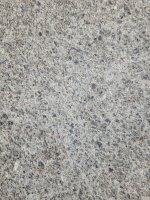
Anyway, I happen to notice a week ago or so that the exposed aggregate has some lighter colored splotchy areas. Turns out, the surface is breaking up, and all those pebbles are coming from that area. The builder advised me that the concrete company uses a sealer on the exposed aggregate stuff, but I'm not 100% convinced that is right. Very hard to know becasue the exposed aggregate will break the surface tension so you can't look for water beading up. I've notified the builder, who has not come out to look at it, yet.

It is really easy to either sweep up a section and have the pebbles collect, or use a hose and have them collect. That is, in the affected areas. The areas that are not affected don't break up any.

But I am wondering if this is a normal thing for exposed aggregate, and if it is, what is the best way to protect it. Do I need to pressure wash it to "help" it finish breaking up, then apply a densifier? Sealer? Something else? Just treat it like it is now? Oil leaks shouldn't be a problem here, only reason I'd be looking at a sealer is to reduce maintenance. Attached are a few examples of what it looks like, both from a distance where you can see the concrete color differences, as well as an up close of what the stuff that has broken up looks like.

@Shea I'd love your input on this, you steered me right on a prior concrete driveway question.
 

Attachments

  • 20260210_080718.jpg
    20260210_080718.jpg
    1.6 MB · Views: 50
  • 20260210_080725.jpg
    20260210_080725.jpg
    1.3 MB · Views: 50
  • 20260210_130212.jpg
    20260210_130212.jpg
    1.5 MB · Views: 50
To avoid these ads, REGISTER NOW!

ConCretin

Well-known member
Joined
Jan 20, 2011
Messages
3,379
Location
Central Maine
The quick answer is that the aggregate should not be coming up, which suggests the cement paste at the surface is weak. Unfortunately, there is no easy solution. There is really nothing you can apply to repair the problem. Hopefully the problem is localized enough that you can live with it.

Edit; just re-read your post. If it's a new slab, you may have recourse with the contractor. A weak surface layer is almost always the result of excessive water. This can occur when the concrete slump i.e. mix water is excessive and/or bleed water was not handled properly. It can also occur when water is applied to the surface to help finishing. I wouldn't anticipate it's the latter because exposed aggregate finish doesn't require a lot of finishing since you intentionally remove the surface layer of cement paste.

This leads me to my last thought, which is that the chemical agent that is applied to retard the surface set (and allow the aggregate to be exposed) was applied improperly or left in place too long. In any case, it's a workmanship issue. Good luck! I hope you find an acceptable resolution.
 
Last edited:
To avoid these ads, REGISTER NOW!

Shea

Well-known member
Joined
Sep 19, 2012
Messages
2,867
Location
California
Sigh. Portion of the driveway in front of the garage (note I have a separate workshop, this is just for the dailies and bikes) is exposed aggregate. New construction, from the time we moved in on December 19th, I've been bringing in small rough pebbles, probably average about 2mm. I had been assuming it was from the border where they radiused the edges with a float around the brushed section. So I took a flat hoe and got all that squished up stuff knocked down. Still have the issue.

Anyway, I happen to notice a week ago or so that the exposed aggregate has some lighter colored splotchy areas. Turns out, the surface is breaking up, and all those pebbles are coming from that area. The builder advised me that the concrete company uses a sealer on the exposed aggregate stuff, but I'm not 100% convinced that is right. Very hard to know becasue the exposed aggregate will break the surface tension so you can't look for water beading up. I've notified the builder, who has not come out to look at it, yet.

It is really easy to either sweep up a section and have the pebbles collect, or use a hose and have them collect. That is, in the affected areas. The areas that are not affected don't break up any.

But I am wondering if this is a normal thing for exposed aggregate, and if it is, what is the best way to protect it. Do I need to pressure wash it to "help" it finish breaking up, then apply a densifier? Sealer? Something else? Just treat it like it is now? Oil leaks shouldn't be a problem here, only reason I'd be looking at a sealer is to reduce maintenance. Attached are a few examples of what it looks like, both from a distance where you can see the concrete color differences, as well as an up close of what the stuff that has broken up looks like.

@Shea I'd love your input on this, you steered me right on a prior concrete driveway question.
Sorry for the late reply. I've been absent for a bit. @ConCretin is spot on, as usual, about the surface layer. I'm curious what your builder has to say. The splotchy, darker areas are most likely the result of iron-rich materials oxidizing within the aggregate. It's not unusual for aggregate-exposed concrete that has not been properly sealed.

The problem is that you can't fix a weak surface layer with densifiers and sealers. PS110 is a good option for exposed aggregate surfaces and will perform well for the rest of the surface that isn't experiencing your current issue.
 
OP
6

67King

Well-known member
Joined
Nov 14, 2014
Messages
583
Location
Friendsville, TN (Knoxville area)
Sorry for the late reply. I've been absent for a bit. @ConCretin is spot on, as usual, about the surface layer. I'm curious what your builder has to say. The splotchy, darker areas are most likely the result of iron-rich materials oxidizing within the aggregate. It's not unusual for aggregate-exposed concrete that has not been properly sealed.

Thanks so much. The darker spots are actually the parts that have held up well. The lighter parts are where everything comes up, either with a hose or a broom. But the darker spots seem to be robust.
 
To avoid these ads, REGISTER NOW!
Top Bottom