To avoid these ads, REGISTER NOW!

New Electrical Lines in Garage

jkeylon

Member
Joined
Jan 24, 2014
Messages
15
Location
San Diego, CA
Hi guys,
This is only my 2nd posting.
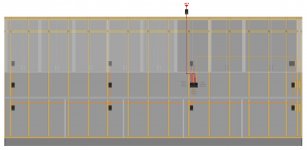
On the topic of new in-wall wiring in my garage...check out my design here!
The wall is open and I've ripped out the old junk that was half melted and making poor connections since the 70's. See photo and please poke holes in the design and let me know of any potential mistakes.
The existing line is a 110 for that wall, only going to be powering smaller power tools, chargers and lights, no 220 draws for most part.
The first stop is the switch that turns on/off the GFCI and the rest of the line, with the rest regular outlets, with a switch for one end outlet just for under-cabinet lights.

Questions:
-Are there any garage wiring codes I am violating here or should be aware of?
-Before I close up the wall do I need to have an inspector come out and sign off?
-When I resell would an inspector have a problem with this work or write me for no permit? Not sure how this works?

Issues:
-I do have one remaining 220 open at the electrical panel since switching to a gas dryer. With this I'd love to have a switch to manage the line between this garage wall and a feed to a future electric vehicle charger. Otherwise if I can't have a master switch (is this even possible?) I rather reserve that 220 for the future EV.
-So if I just use the existing 110 line to charge this entire wall, obviously I can not run something on each outlet at once. Knowing this, it's still OK with code right? I've got a GFCI outlet there at the start which should be over and above necessary.

Thanks,
-Joe
 

Attachments

  • WiringPlans04.jpg
    WiringPlans04.jpg
    122.2 KB · Views: 94
To avoid these ads, REGISTER NOW!

bczygan

Well-known member
Joined
Nov 4, 2009
Messages
22,002
Location
DETROIT! Arsenal of Scrappers
Plus, I would install planning for the future, and not just your future.

Looks like you want a bank of cabinets and a long countertop.

What about the rest of the garage?

How about a subpanel?

Attached?
 
OP
J

jkeylon

Member
Joined
Jan 24, 2014
Messages
15
Location
San Diego, CA
A lot depends on the rules where you live.

Why 3 rows?

Best to follow code for your area, even if no inspection.

And welcome to GJ!


3 Rows because I prefer to have options. Bottom is for low or hidden machines and cords (ie bench grinder cord/compressor on floor). Middle is for high usage/easy access. Upper is for inside cabinets, lights and chargers.

I'm in San Diego, and I have no idea how to check for code requirements. Any starting points?
 
OP
J

jkeylon

Member
Joined
Jan 24, 2014
Messages
15
Location
San Diego, CA
Plus, I would install planning for the future, and not just your future.

Looks like you want a bank of cabinets and a long countertop.

What about the rest of the garage?

How about a subpanel?

Attached?


Opposite wall has the main panel so no need in another panel. This seems to cover everything one could think of now, while still being fairly expandable and even upgradeable from the main line at top for future. Yes work bench and cabinetry span the length of wall.
 

bczygan

Well-known member
Joined
Nov 4, 2009
Messages
22,002
Location
DETROIT! Arsenal of Scrappers
Is this the only wall you are opening?

What kind of work will you do in there?

What kind of equipment will you or future owners have?

Way to check requirements is anonymously.

You've already done work without permits, so that bird has flown.

What's your lighting like?

Are you doing GFCI circuits?

20A circuits?

Any equipment that will require it's own dedicated circuit?
 
To avoid these ads, REGISTER NOW!
OP
J

jkeylon

Member
Joined
Jan 24, 2014
Messages
15
Location
San Diego, CA
Is this the only wall you are opening?

What kind of work will you do in there?

What kind of equipment will you or future owners have?

Way to check requirements is anonymously.

You've already done work without permits, so that bird has flown.

What's your lighting like?

Are you doing GFCI circuits?

20A circuits?

Any equipment that will require it's own dedicated circuit?


Nothing that requires dedicated circuit, would prefer everything here to stay 15 amp. GFCI right after the first switch that controls the whole wall as shown. All outlets after that are not GFCI. Lighting is on separate line, just two fixtures of T8's hanging.
This wall has never been closed in, just pegboard loosely covering the 2x4's that I ripped out.
Type of work is woodworking, airbrushing and small electronics...misc projects.
Smaller tools in future - possibly small drill press, scroll saw, 3D printer. Don't care so much about future owner.

No work has been done actually yet so...no birds!
 

75gmck25

Well-known member
Joined
Jul 21, 2014
Messages
1,318
Location
Alexandria, VA
There are different versions of the National Electrical Code and California is apparently on the 2011 version. However, for your application the code probably does not change much from one version to another.

From what I recall, these rules would apply:
- The receptacles in the garage, and/or receptacles near a water source must be GFCI protected.
- There is no specified limit on the number of receptacles on one circuit, but you have to consider the projected load and breaker rating. Just because you install lots of receptacles does not means you can overload the circuit.
- Wiring that is subject to damage has to be protected by being enclosed in the wall or run on the surface in conduit.

Other considerations
- I would use 12/2 wire and a 20 amp breaker for receptacles because its not much more cost than 14/2 wire and a 15 amp breaker, and your labor is the same.
- I would also consider making an overall wiring plan for the garage, including lights, 220 receptacles, garage door openers, etc. You may not install it all right away, but you should have a plan.
- You need to ask your city permit department whether you can do a self-install and have it permitted and inspected. However, you might find it easier to work with an electrician if you can find one who will let you save money by doing some of the labor yourself. The local licensed electrician will be used to working with the city inspector and will know the relevant rules. Since you are new to this type of work, that could save you quite a bit of time overall.

Bruce
 
OP
J

jkeylon

Member
Joined
Jan 24, 2014
Messages
15
Location
San Diego, CA
There are different versions of the National Electrical Code and California is apparently on the 2011 version. However, for your application the code probably does not change much from one version to another.

From what I recall, these rules would apply:
- The receptacles in the garage, and/or receptacles near a water source must be GFCI protected.
- There is no specified limit on the number of receptacles on one circuit, but you have to consider the projected load and breaker rating. Just because you install lots of receptacles does not means you can overload the circuit.
- Wiring that is subject to damage has to be protected by being enclosed in the wall or run on the surface in conduit.

Other considerations
- I would use 12/2 wire and a 20 amp breaker for receptacles because its not much more cost than 14/2 wire and a 15 amp breaker, and your labor is the same.
- I would also consider making an overall wiring plan for the garage, including lights, 220 receptacles, garage door openers, etc. You may not install it all right away, but you should have a plan.
- You need to ask your city permit department whether you can do a self-install and have it permitted and inspected. However, you might find it easier to work with an electrician if you can find one who will let you save money by doing some of the labor yourself. The local licensed electrician will be used to working with the city inspector and will know the relevant rules. Since you are new to this type of work, that could save you quite a bit of time overall.

Bruce


Now that is some helpful info. Thank you.
-
 
To avoid these ads, REGISTER NOW!
Top Bottom