117vApology accepted
Is that calculated at 110 or 120v?I jest I jest

You are using an out of date browser. It may not display this or other websites correctly.
You should upgrade or use an alternative browser.
You should upgrade or use an alternative browser.
New house wanting 400A service for future shop - load breakdown help
- Thread starter mikewire
- Start date
Metal-Marc
Well-known member
Future proof the wiring, use 125V instead.117v
mike93lx
ALLIANCE MEMBER
The wiring is already rated for 600V. CheckmateFuture proof the wiring, use 125V instead.
rwreuter
Well-known member
I was thinking he wanted something I requested from my utility company, a larger transformer.....25kw. They balked about it, but put it in for me anyways.....thinking about it now, I believe a 15kw would have been just fine.Here they install 15K transformers, these can feed several homes - no cost difference.. I think on the consumer side, you'll be hit for the 400A panels and associated wire, that's what's going to impact you.
Typically, people, even electricians, think they need more power than they do. It is breaker space that is needed. The likely hood of the amount equipment powered at the same time to trip a 200amp service is insane. Unless you are running a
a commercial business (or growing dope) you don't need anything more than 200amps.
I was thinking he wanted something I requested from my utility company, a larger transformer.....25kw. They balked about it, but put it in for me anyways.....thinking about it now, I believe a 15kw would have been just fine.
Typically, people, even electricians, think they need more power than they do. It is breaker space that is needed. The likely hood of the amount equipment powered at the same time to trip a 200amp service is insane. Unless you are running a
a commercial business (or growing dope) you don't need anything more than 200amps.
I guess you're right, but also wrong at the same time. I do need breaker space, but I have it and am not concerned - the primary reason for the ask is because I'm setting up and planning for adding a second building, so I'll have 200A available for the house and 200A availability for the shop when we build it a few years from now. One meter and 400A service allows higher availability and capacity of additional buildings, and this design includes the simplicity of having one meter head, and one bill. And we can take the power off of the house instead of the transformer for a shorter wire run which saves cost. A couple of comments mentioned 320A, which may be an option for some cost savings and that would also meet the future requirements, so I'll look into that as an option as well with the POCO.
Being that this is a brand new buildout I get the opportunity to build this out the way I want right now instead of having to do additional buildout and costs later. For those that say it's gonna be expensive, it may be right now...but labor, hardware and services are not getting any cheaper (inflation, etc.) so consider it a long term investment in the property and future power infrastructure of the house. I mean, remember when 100A service was standard? Now it's 200A.
With that said, I updated my build thread with some info that the electricians had roughed in wiring for 30A circuits, which is not going to meet the requirements for the 240V's 50/60 at the back of the house and in the garage, so I asked they upgrade the wiring and that was completed. Looking at getting the POCO out there on Tuesday for the start of the buildout quote so I should know how much this will cost in the next week or two.
Lots of comments back and forth, I appreciate it the support and positive comments, thanks all.
It takes a lot to overload a 200A. A couple years ago the bar in town was tripping her 200A main breaker. She has a big electric grill, two fryers, and a electric range that all have 50A plugs, probably 5 or 6 heavy 120v things in the kitchen, a walk in freezer and a walk in cooler, I think 5 chest freezers, a couple other coolers, a 5 ton air conditioner, electric water heater. Plus all the little miscellaneous. 3 panels worth of breakers
It hit 210A for a few minutes when she came in to warm up everything in the kitchen. But after things were hot it was 150-170ish. I just replaced the main breaker and said it's overloaded a little but with a good breaker it should handle it. Old one was probably 15 years old and it's the crappy GE plug in main.
It hit 210A for a few minutes when she came in to warm up everything in the kitchen. But after things were hot it was 150-170ish. I just replaced the main breaker and said it's overloaded a little but with a good breaker it should handle it. Old one was probably 15 years old and it's the crappy GE plug in main.
Attachments

rwreuter
Well-known member
I guess you're right, but also wrong at the same time. I do need breaker space, but I have it and am not concerned - the primary reason for the ask is because I'm setting up and planning for adding a second building, so I'll have 200A available for the house and 200A availability for the shop when we build it a few years from now. One meter and 400A service allows higher availability and capacity of additional buildings, and this design includes the simplicity of having one meter head, and one bill. And we can take the power off of the house instead of the transformer for a shorter wire run which saves cost. A couple of comments mentioned 320A, which may be an option for some cost savings and that would also meet the future requirements, so I'll look into that as an option as well with the POCO.
Being that this is a brand new buildout I get the opportunity to build this out the way I want right now instead of having to do additional buildout and costs later. For those that say it's gonna be expensive, it may be right now...but labor, hardware and services are not getting any cheaper (inflation, etc.) so consider it a long term investment in the property and future power infrastructure of the house. I mean, remember when 100A service was standard? Now it's 200A.
With that said, I updated my build thread with some info that the electricians had roughed in wiring for 30A circuits, which is not going to meet the requirements for the 240V's 50/60 at the back of the house and in the garage, so I asked they upgrade the wiring and that was completed. Looking at getting the POCO out there on Tuesday for the start of the buildout quote so I should know how much this will cost in the next week or two.
Lots of comments back and forth, I appreciate it the support and positive comments, thanks all.
Just sub panels.
some of this sounds like it could be bordering on a load management problem. if you're paying demand charges "flip it all on" can cost a small fortune.It takes a lot to overload a 200A. A couple years ago the bar in town was tripping her 200A main breaker. She has a big electric grill, two fryers, and a electric range that all have 50A plugs, probably 5 or 6 heavy 120v things in the kitchen, a walk in freezer and a walk in cooler, I think 5 chest freezers, a couple other coolers, a 5 ton air conditioner, electric water heater. Plus all the little miscellaneous. 3 panels worth of breakers
It hit 210A for a few minutes when she came in to warm up everything in the kitchen. But after things were hot it was 150-170ish. I just replaced the main breaker and said it's overloaded a little but with a good breaker it should handle it. Old one was probably 15 years old and it's the crappy GE plug in main.
electric water heater is a pretty good target for demand management. turning it off for 5 minutes generally bothers no one.
Yes load management could help quite a bit. I don't think the single phase meters even monitor demand.some of this sounds like it could be bordering on a load management problem. if you're paying demand charges "flip it all on" can cost a small fortune.
electric water heater is a pretty good target for demand management. turning it off for 5 minutes generally bothers no one.
Metal-Marc
Well-known member
Is that calculated at 110 or 120v?
117v
Future proof the wiring, use 125V instead.
The wiring is already rated for 600V. Checkmate
Checkmate. Worst, you don't even get your own joke...

mike93lx
ALLIANCE MEMBER
Ok bud.Checkmate. Worst, you don't even get your own joke...
You are correct. I had no idea we were joking around. Yes, thats it
Last edited:
Ah i see while I was away the measuring stick was brought out.
Ok, so the quote is back from the POCO - 168ft total - from the road, to the transformer, to the house. All underground trenched in rock, transformer, wiring, all the bits and bobs including design for 400A service...since there was a comment earlier, anyone care to take a crack at the total?
Ok, so the quote is back from the POCO - 168ft total - from the road, to the transformer, to the house. All underground trenched in rock, transformer, wiring, all the bits and bobs including design for 400A service...since there was a comment earlier, anyone care to take a crack at the total?
Jeff C
Well-known member
$12k
mike93lx
ALLIANCE MEMBER
20k
sparky 1971
Well-known member
Uh-oh. Is that URD feeding the panel? Is the panel inside the structure? If yes to both, is it dual rated URD? I can't believe that I am the only sap to see this possible catastrophe waiting to happen. I would never do such a thing (post a picture of one of my violations on the interweb.)It takes a lot to overload a 200A. A couple years ago the bar in town was tripping her 200A main breaker. She has a big electric grill, two fryers, and a electric range that all have 50A plugs, probably 5 or 6 heavy 120v things in the kitchen, a walk in freezer and a walk in cooler, I think 5 chest freezers, a couple other coolers, a 5 ton air conditioner, electric water heater. Plus all the little miscellaneous. 3 panels worth of breakers
It hit 210A for a few minutes when she came in to warm up everything in the kitchen. But after things were hot it was 150-170ish. I just replaced the main breaker and said it's overloaded a little but with a good breaker it should handle it. Old one was probably 15 years old and it's the crappy GE plug in main.

mike93lx
ALLIANCE MEMBER
Mr. 100a #2 feederUh-oh. Is that URD feeding the panel? Is the panel inside the structure? If yes to both, is it dual rated URD? I can't believe that I am the only sap to see this possible catastrophe waiting to happen. I would never do such a thing (post a picture of one of my violations on the interweb.)
sparky 1971
Well-known member
Is there a picture to prove your accusations? Maybe I was telling a story.Mr. 100a #2 feeder
mike93lx
ALLIANCE MEMBER
My attorney will be in touchIs there a picture to prove your accusations? Maybe I was telling a story.
sparky 1971
Well-known member
Would that be the Law Office of Haagen and Dazs?My attorney will be in touch
mike93lx
ALLIANCE MEMBER
Law Offices of Dewey, Cheatem, and HoweWould that be the Law Office of Haagen and Dazs?

Hey, I didn't even do that install. Btw it's 4/0 also, and there's the 100A feeder with #4 cu visible in the bottom corner.Uh-oh. Is that URD feeding the panel? Is the panel inside the structure? If yes to both, is it dual rated URD? I can't believe that I am the only sap to see this possible catastrophe waiting to happen. I would never do such a thing (post a picture of one of my violations on the interweb.)
Maybe it will all go up in flames this weekend. Kitchens open all day both days this weekend. Plenty of people in town for labor day
Last edited:
mike93lx
ALLIANCE MEMBER
You touched it, you own it!Hey, I didn't even do that install. Btw it's 4/0 also, and there's the 100A feeder with #4 cu visible in the bottom corner
rwreuter
Well-known member
Ah i see while I was away the measuring stick was brought out.
Ok, so the quote is back from the POCO - 168ft total - from the road, to the transformer, to the house. All underground trenched in rock, transformer, wiring, all the bits and bobs including design for 400A service...since there was a comment earlier, anyone care to take a crack at the total?
Too much!
dcg9381
Well-known member
320A service, 2 x 200A panels, a transformer pad, trenching 200 feet and providing 200A to the house came back at about $25k for me 3 years ago. I can see $30k in your case. I went with the DIY option, did the trench/conduit for $1000 (no wire), pad for another $1000, 2 x 200A service for about $3500.Ok, so the quote is back from the POCO - 168ft total - from the road, to the transformer, to the house. All underground trenched in rock, transformer, wiring, all the bits and bobs including design for 400A service...since there was a comment earlier, anyone care to take a crack at the total?
83VillageRepair
Well-known member
320A is the size on the utility side (NESC Requirements)
400A is the size after the meter (NEC Requirements)
320A = 80% of 400A
There is no such thing as a 400A meter base because the code on the utility side only requires 320A (80%)
Just like the utility can use much smaller wire than is allowed on the NEC side of the meter (different code requirements)
400A is the size after the meter (NEC Requirements)
320A = 80% of 400A
There is no such thing as a 400A meter base because the code on the utility side only requires 320A (80%)
Just like the utility can use much smaller wire than is allowed on the NEC side of the meter (different code requirements)
Last edited:
Caffeinator
Member
I'm thinking of the same thing. I have 2 homes on the property and just built my 900-square-foot shop. My main home has 400 amp and then it breaks out 200 to my in-laws 1,000 sf home. I'm planning on pulling 100A from the in-laws, they only use AC and a heat pump, the rest is the TV. I've purchased a 125 Amp 12-Space 24-Circuit from Home Depot. I'm a 1 person shop. I'll have tons of toys (welder, lift, woodworking tools, and of course a beer fridge, microwave, and like 5 big screen TVs, but can't use more than 2 at a time, hence only the 100 Amps. The house is only 25-30 feet from the shop. I plan on running 2-2-2-4 through their attic from the panel to the closest point near the shop, then installing a 2" conduit under the gravel driveway. My friend has a nice trench digger so I'll be down 24" for good measure. I have 2 good friends who both have electrical contractor licenses so it will be a DIY project. All tools will be 20A, the lighting, TVs,
In that application 2 AWG aluminum alloy is only allowed 90A, it's normal rating.I'm thinking of the same thing. I have 2 homes on the propert, it's y and just built my 900-square-foot shop. My main home has 400 amp and then it breaks out 200 to my in-laws 1,000 sf home. I'm planning on pulling 100A from the in-laws, they only use AC and a heat pump, the rest is the TV. I've purchased a 125 Amp 12-Space 24-Circuit from Home Depot. I'm a 1 person shop. I'll have tons of toys (welder, lift, woodworking tools, and of course a beer fridge, microwave, and like 5 big screen TVs, but can't use more than 2 at a time, hence only the 100 Amps. The house is only 25-30 feet from the shop. I plan on running 2-2-2-4 through their attic from the panel to the closest point near the shop, then installing a 2" conduit under the gravel driveway. My friend has a nice trench digger so I'll be down 24" for good measure. I have 2 good friends who both have electrical contractor licenses so it will be a DIY project. All tools will be 20A, the lighting, TVs,
RPH
Well-known member
Off topic but interesting observation. I always thought 100 KW and down was the small power supplies we built. The larger ones started 150 kW all the way to 3mW power. This was induction power supplies but power is power! Only change would be frequency for me,
84KW is an immense amount of power. I think your estimations are very high.
Large Appliances:
Dryer: 5kW (Large dryer, Max heat)
Range: 15kW (Premium dual-oven electric range with literally every burner and both ovens on)
Hot Tub: 6kW (Pump and heaters running at once)
Welder: 7.5kW (Miller Multimatic 220 @ Full Power)
That's 33.5kW, vs your estimated 40.8. And what are the odds you would be having all 4 of those machines going, at full power, simultaneously? It's a scenario that will basically never happen.
Small Appliances:
14.4 kW is a monumental amount of power for "small appliances". That's 8 high-powered hair dryers running at once, or 12 microwaves, or 18 coffee makers, or 40 refrigerators. I honestly don't think it's really possible for a residential home to hit 14.4kW in "small appliance" power consumption unless there were 6 kitchens and 30 people living there.
A more "realistic" "peak" small appliance load would be more like 5kW, IMO. Hair dryer, toaster, microwave, coffee maker, fridge/freezer, blender - somehow running all at once.
"House":
"3000sq/ft house x 4.8W = 14400W", where is this even coming from, and what does that even mean? Is that things like lights and random stuff people might have plugged in? 14.4kW is a ludicrous number for the random widgets and doodads someone might plug in. 14.4 kW is enough power for 72 PlayStation 5s, or about 140 70" televisions or 1,400 "75W Equivalent" LED light bulbs.
In a modern house with LEDs, I think you would be hard-pressed to exceed 500w total lighting load - even with an attached shop. Add a few TVs, computers, game console, maybe someone using a vacuum cleaner - and I think your peak "House" load would really be around 2kW
HVAC:
14400W for HVAC sounds very high since you said you have propane for heat. At most, I would expect a modern 5 ton AC system (typical 3,000 square foot home system) to consume about 5kW.
--------------------------
So I'm calculating about 45.5kW or about 190A. If you get a gas range/oven, you're down to 127A. Add a gas dryer on top of that and now you're at 106A.
Caffeinator
Member
I don't think I will be able to run the 2-2-2-4 through the attic now. Vaulted ceilings and other issues. Now I'm thinking of running underground from the shop then up to the 8 foot roofline under the soffit. There is a 1x4 trim that runs all the way around. I've been trying to find out what type of cable, SER or MHF and in what type of conduit. I was also thinking of making a raceway (box) out of 1x1s and a parallel 1x4 then paint to match. Any ideas would be greatly apprciated. Compared to this part, wiring the inside of the shop will be a breeze.I'm thinking of the same thing. I have 2 homes on the property and just built my 900-square-foot shop. My main home has 400 amp and then it breaks out 200 to my in-laws 1,000 sf home. I'm planning on pulling 100A from the in-laws, they only use AC and a heat pump, the rest is the TV. I've purchased a 125 Amp 12-Space 24-Circuit from Home Depot. I'm a 1 person shop. I'll have tons of toys (welder, lift, woodworking tools, and of course a beer fridge, microwave, and like 5 big screen TVs, but can't use more than 2 at a time, hence only the 100 Amps. The house is only 25-30 feet from the shop. I plan on running 2-2-2-4 through their attic from the panel to the closest point near the shop, then installing a 2" conduit under the gravel driveway. My friend has a nice trench digger so I'll be down 24" for good measure. I have 2 good friends who both have electrical contractor licenses so it will be a DIY project. All tools will be 20A, the lighting, TVs,
mike93lx
ALLIANCE MEMBER
Just run conduit end to end and use xhhw. No need for mhf if you aren't doing direct burial and SER can't be underground.I don't think I will be able to run the 2-2-2-4 through the attic now. Vaulted ceilings and other issues. Now I'm thinking of running underground from the shop then up to the 8 foot roofline under the soffit. There is a 1x4 trim that runs all the way around. I've been trying to find out what type of cable, SER or MHF and in what type of conduit. I was also thinking of making a raceway (box) out of 1x1s and a parallel 1x4 then paint to match. Any ideas would be greatly apprciated. Compared to this part, wiring the inside of the shop will be a breeze.
I'd use pvc and paint to match or enclose as you noted.
Update on this thread...POCO is installing service the week after Thanksgiving (finally!).
Question for those with experience here...who is responsible for the service entrance? POCO or builder?
POCO is telling me they need a service entrance, which as I understand is the meter base and disconnect panel on the outside of the home.
I let my builder know and he said they are ready. However this is what we have right now...do I need to lean on my builder, or go back to the POCO? Wanting to avoid any additional delay on the buildout, so any help is appreciated.

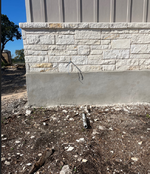
Question for those with experience here...who is responsible for the service entrance? POCO or builder?
POCO is telling me they need a service entrance, which as I understand is the meter base and disconnect panel on the outside of the home.
I let my builder know and he said they are ready. However this is what we have right now...do I need to lean on my builder, or go back to the POCO? Wanting to avoid any additional delay on the buildout, so any help is appreciated.
Builder, owner, electrician etc
Not the power co
This is what I thought, just needed some confirmation.
Thank you!
wyliesdiesels
Well-known member
Yeah PoCo responsibility stops at overhead drop connections or meter line side connections
What was the final bill for your complete service. Many guessed at it but I didn't see what the cost was. Did I miss it somewhere?Ah i see while I was away the measuring stick was brought out.
Ok, so the quote is back from the POCO - 168ft total - from the road, to the transformer, to the house. All underground trenched in rock, transformer, wiring, all the bits and bobs including design for 400A service...since there was a comment earlier, anyone care to take a crack at the total?
rwreuter
Well-known member
What was the final bill for your complete service. Many guessed at it but I didn't see what the cost was. Did I miss it somewhere?
Seems like he challenged us to guess but now that it's done he won't tell us......LOL
What was the final bill for your complete service. Many guessed at it but I didn't see what the cost was. Did I miss it somewhere?
Job hasn't been completed yet, but the cost from the POCO to trench and install (transformer and all) etc. ended up being just over $6200. Keep in mind that's just the POCO cost for build out and install, not the cost to build the house etc.
I didn't think that was too bad considering some of the guesstimates given. Keep in mind this area is all rock, or mostly, so being that is a regular thing here, I don't expect other people is other areas to have similar costs.
Seems like he challenged us to guess but now that it's done he won't tell us......LOL
I mean, I don't check this thread that often...but there you go, there's the total above. It wasn't a challenge, just wanted to know what others thought it would cost. And honestly it's nobody's business but mine, so you're comment is a bit disrespectful...I don't mind sharing my experience if it helps someone in the future, but I would ask to respect my privacy.
Work was supposed to happen last week from the POCO but, I had to get the builder to get the electrician back out to complete the service entrance...then my job was postponed because of the time it took to get that completed.
I'm stopping by later today to see how things are going, but we should have power to the meter today or tomorrow.
Probably update my main thread here shortly as well, thanks all.
rwreuter
Well-known member
LOL usually indicates a joke...