To avoid these ads, REGISTER NOW!

New maple workbench top - what would you do to protect it?

Lombie

Well-known member
Joined
Dec 30, 2013
Messages
80
Location
Arizona
Hi guys,

I got a new Gladiator workbench for Christmas with a solid maple top. I know it's a workbench for a reason and I accept that it's going to show "character" over time, but does anyone have recommendations for initial steps that I can or should take while the bench is virgin to protect the top so that it looks good for the long haul?

Thanks in advance,

-Lombie
 
To avoid these ads, REGISTER NOW!

machineshop

Active member
Joined
Jan 29, 2012
Messages
26
Location
Germany
Hi Lombie,
had the same problem with a new beech bucher block on my workbench. Got it from ebay very cheap and was so happy because the workbench top now simply looked awesome, almost like furniture. If you do not protect the wooden surface of your workbench dirt, oil etc will enter the wood and you will get discolorations which look pretty ugly.

I applied boiled linseed oil and let it dry one day. This seals the pores of the wood. Next day one more application which builds up a very thin film on the surface which gets pretty tough and hard. The surface film can barely be seen but now i can put parts with old motor oil etc on the workbench and I simply wipe the bench clean with a towel after work.
Boiled linseed oil protects wooden surfaces from water, oil, dirt, etc to enter the wood which makes ugly discolorations. Even if you use your new workbench top every day for dirty, oily jobs it will look still very nice after years.
Boiled linseed oil is cheap and it wont chip off like clear laquer. One layer hardens in about one day and you can apply little of it and you get a sealed surface which can be kept clean easily. You can apply as many coats as you want, from a satin finish till to a high gloss finish.
You can apply it afterwards on areas with a lot of use and you do not see that you "repaired" the finish of this area. Try this with laquer, absolutely impossible.
There could be better solutions but for me it worked very well.
 

Stuart in MN

Well-known member
Joined
Sep 8, 2005
Messages
23,129
Location
Minneapolis
Get a piece of 1/4" thick tempered hardboard and lay it on top of the bench. It's cheap and durable, and when it does get beat up you can simply toss it out and get a new piece. If you feel like it you can slap a coat of polyurethane varnish on the hardboard to help it last longer.
 

lonestarky

Well-known member
Joined
Mar 28, 2011
Messages
367
Location
Lindenhurst IL
Boiled linseed oil is a great way to protect it. Jut be very aware of the fire risks with the rags used to apply it. Lay them flat on the concrete to air out. Nothing dangerous as long as you know how to handle it.
 

Swan

Well-known member
Joined
Apr 5, 2011
Messages
264
Location
Winona, MN
I recently made a new workbench out maple from a repurposed basketball floor, covered it with three coats of Minwax polyurethane and looked great. The first thing I did once it was finished was to slam the bottom of a beer bottle in to the wood to give it its first scar. I have not looked back and have been rebuilding motorcycle motors on top of it. Oil and solvents wipe right off. It is a workbench, it is going to get scarred, dirty and eventually develop a "patina".


stingry

Well-known member
Joined
Oct 14, 2006
Messages
732
Location
Western Nebraska
Get a piece of 1/4" thick tempered hardboard and lay it on top of the bench. It's cheap and durable, and when it does get beat up you can simply toss it out and get a new piece. If you feel like it you can slap a coat of polyurethane varnish on the hardboard to help it last longer.

This^^ I use 1/8"

Cheers
Steve
 

Jim_No_Garage

Well-known member
Joined
Jan 15, 2011
Messages
3,316
Location
Millington NJ
I think BLO is the answer here. I just burn my BLO soaked rags in the firepit once I'm done with them.

Covering a solid maple workbench top with tempered hardboard is like spraying undercoating onto a Corvette to protect the paint job. It might work but it takes the beauty down a notch or 2. :dunno:

Cheers

Jim
 

Aberdale

Well-known member
Joined
Mar 13, 2009
Messages
1,380
Location
Ohio
Protect it from what? It's a workbench . . .

It's like asking how do I keep from scuffing the chrome on my Snap-On wrench? If you want it to stay pretty, just don't use it.

'dale
 

my68spit

Well-known member
Joined
Jun 4, 2013
Messages
137
Location
Illinois
Yes, it's a workbench, but some people take pride in their belongings and like to keep them functional AND looking nice for many years. do you never wash your car or put wax on it to protect it from the elements? you want that investment to last you as long as possible, right? So you take care of it. Same can be said about a nice workbench. If you spend a little time taking care of it now, it will last you a long time. Who knows, maybe it can be passed down a generation or two if it's taken care of well.

I know I will be getting some BLO for my butcher top now!
 

Fueler

Well-known member
Joined
Jun 22, 2006
Messages
1,620
Location
Urbana, IL
All my benchtops are butcher block style. They get used and abused.
About every 3 or 4 years I take them outside and belt sand them so I get new benches. Then follow up with that MinWax spray mentioned earlier. The minwax works well and holds up well to just about everything I have thrown at it.
 

Kingcreek

Well-known member
Joined
Nov 18, 2013
Messages
143
Location
Illinois
BLO is good or even better is something called Fidde's hard wax oil. Great stuff but expensive.
I have flooring milled from antique oak barn beams and used Fidde's on it. It is flax oil and beeswax and orange tree oil among other things. Makes a beautiful finish on rifle stocks too. The nice thing about an oil finish is the ability to touch up and blend in any scars.
 
To avoid these ads, REGISTER NOW!
OP
L

Lombie

Well-known member
Joined
Dec 30, 2013
Messages
80
Location
Arizona
Great ideas, guys. Thanks. I'm going to start with the BLO and see how that works for me.

Other than bringing out some of the richness in the wood, should I expect much of a color change in the long term or is it pretty color-stable?


Sent from above
 

Kingcreek

Well-known member
Joined
Nov 18, 2013
Messages
143
Location
Illinois
Great ideas, guys. Thanks. I'm going to start with the BLO and see how that works for me.

Other than bringing out some of the richness in the wood, should I expect much of a color change in the long term or is it pretty color-stable?


Sent from above

A little darkening but the characteristics of the grain will be enhanced. If you use BLO let it dry real good and buff with burlap between coats.
 

my68spit

Well-known member
Joined
Jun 4, 2013
Messages
137
Location
Illinois
before i go and buy the BLO, will that also help swell the wood a little bit? I am noticing a few spots that are starting to separate/crack from being dried out. Is there a different product to use to get that to swell back up? Or am i better off just using the BLO or something else to just seal it?
 

weldtoride

Well-known member
Joined
Jan 27, 2013
Messages
57
Location
Somewhere between Milwaukee and Chicago
A bit of advice from an old woodworker: if you decide to use an oil or finish, be sure to thoroughly coat the underside as well. Otherwise it could soak up humidity on the bottom only and swell unevenly, causing your top to cup.

I have 1 1/2" thick maple kitchen counter tops that I laminated 15 years ago, because it's a food prep area, for finish I use periodic applications of mineral oil, which is food safe. It soaks in, fills the pores and slows down water penetration. Scratches I simply sand out, then re-oil.

Same caveats apply to any oil soaked rags, however linseed oil, boiled or raw, is probably the most dangerous, by far.
 

pauls_workshop

Well-known member
Joined
Mar 7, 2013
Messages
2,788
Location
Indiana, USA - Underappreciated Place to Live!
Was linseed that type of famous bush that started burning once in a story? Just went ****. It was not mentioned, but somebody probably was there earlier that day and left some rags on the branches all bunched up from oiling their workbench top with the stuff!

Be sure to read the other stories there too, as I found it is a good book! :)

Not mentioned above, but I love Tung Oil for anything and everything, but it will be darker so not good for nice maple. Another thought, anyone ever use a "French Finish"? This my old woodshop teacher once explained for some wood lathe finish projects as 2/3 linseed oil and 1/3rd shellac. Tougher and glossier than linseed alone, almost like a polyurethane but won't ever crack or flake off like poly can and will. Put it on and rub it in hot with a polisher. I used it on a maple lamp I made once on the lathe. Still nice 30 + years later and never retouched since. I no longer like poly on wood projects for that reason, unless you don't care about how it looks later on or just plan to recoat it, for utility type purposes only for me. - Paul
 
Last edited:

my68spit

Well-known member
Joined
Jun 4, 2013
Messages
137
Location
Illinois
Was linseed that type of famous bush that started burning once in a story? Just went ****. It was not mentioned, but somebody probably was there earlier that day and left some rags on the branches all bunched up from oiling their workbench top with the stuff!

Be sure to read the other stories there too, as I found it is a good book! :)

Not mentioned above, but I love Tung Oil for anything and everything, but it will be darker so not good for nice maple. Another thought, anyone ever use a "French Finish"? This my old woodshop teacher once explained for some wood lathe finish projects as 2/3 linseed oil and 1/3rd shellac. Tougher and glossier than linseed alone, almost like a polyurethane but won't ever crack or flake off like poly can and will. Put it on and rub it in hot with a polisher. I used it on a maple lamp I made once on the lathe. Still nice 30 + years later and never retouched since. I no longer like poly on wood projects for that reason, unless you don't care about how it looks later on or just plan to recoat it, for utility type purposes only for me. - Paul


I've heard of this book. I seem to remember something about a carpenter in there too. But i don't think he ever gave out his secrets for a nice butcher block finish. ;)
 

MN4x4

Well-known member
Joined
Sep 5, 2010
Messages
1,443
Location
Minnesnowta
I know it sounds crazy, but I actually used clear epoxy on mine. I wanted a near-bulletproof surface to work on and like mentioned above, I figured that if it ever got damaged I could sand it down and have a new top again!
 

pauls_workshop

Well-known member
Joined
Mar 7, 2013
Messages
2,788
Location
Indiana, USA - Underappreciated Place to Live!
I've heard of this book. I seem to remember something about a carpenter in there too. But i don't think he ever gave out his secrets for a nice butcher block finish. ;)

Yeah, his son was a pretty good carpenter too, but like so many kids these days, he abandoned the trade completely after awhile and went off and did his own things and became a wayward spirit in the end! - Paul
 

my68spit

Well-known member
Joined
Jun 4, 2013
Messages
137
Location
Illinois
Back on subject, what about using mineral oil or BLO initially to "treat" the wood and then polyurethane over the top of that? I am noticing more cracks in my top that i think are results of being dried out. Thinking the mineral or BLO would absorb into the wood and swell it up a bit. Then once that is set, hit it with a few coats of poly to give it a solid seal over the top? Make sense?
 

jonathan75

Well-known member
Joined
Mar 27, 2013
Messages
1,451
Location
NC
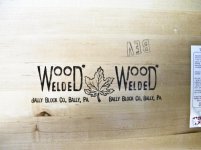
Take a look at the instructions on the bottom of mine. This DuraKryl 102 they talk about sounds pretty good.

DURAKRYL 102®

Our standard finish on countertops, islands, commercial foodservice tops, workbench tops and locker bench seats is DURAKRYL 102, a proprietary urethane-based satin finish. It is food-safe, resistant to stains and most solvents, and cleans up with warm soapy water. Stubborn spills or stains can be removed with nail polish remover.

DURAKRYL 102 resists marring, is moisture resistant, and meets the test requirements of the Kitchen Cabinet Manufacturing Association (KCMA).

"The formulation, when cured, leaves an inert film. The constituents of the cured film have been tested by an independent university laboratory and found to be non-toxic.The film is approximately 95% cured during the manufacturing process and 100% cured within two weeks of manufacture. Only inert film is present on installed tops as manufactured.

DURAKRYL 102 has been tested against many common household and industrial products. The results are listed as passed or no effect (P) and failed or moderate to severe effect (F). A moderate effect would be a softening or discoloration of the finish.

• View DURAKRYL 102 Durability Test Results (PDF)
• View Cleaning & Care tips for DURAKRYL 102 finished surfaces (PDF)"

http://butcherblock.com/wp-content/uploads/2012/09/MaintenanceTips_Durakryl102_Screen.pdf

http://butcherblock.com//wp-content/uploads/2012/09/Durakryl-102-Testing.pdf
 

Attachments

  • IMG_2781-1.jpg
    IMG_2781-1.jpg
    82.5 KB · Views: 19
  • IMG_2782-1.jpg
    IMG_2782-1.jpg
    86.2 KB · Views: 17
Last edited:

jonathan75

Well-known member
Joined
Mar 27, 2013
Messages
1,451
Location
NC
This seems interesting. Check this Circa 1850 I found. Looks promising.

http://www.swingpaints.com/1817_1819us.htm

Circa 1850 Fast Dry Polyurethane is a clear, tough coating that protects and beautifies wood. It can be recoated in as little as 3 hours and cures to an exceptionally hard finish - similar to those used in bowling alleys. Its micro-formulation permits clog-free spray application. Recommended for use on all interior wood surfaces; including floors, cabinets, doors, furniture, and paneling. Available in GLOSS (1818), SEMI-GLOSS (1817) and SATIN (1819).
 

pauls_workshop

Well-known member
Joined
Mar 7, 2013
Messages
2,788
Location
Indiana, USA - Underappreciated Place to Live!
Back on subject, what about using mineral oil or BLO initially to "treat" the wood and then polyurethane over the top of that? I am noticing more cracks in my top that i think are results of being dried out. Thinking the mineral or BLO would absorb into the wood and swell it up a bit. Then once that is set, hit it with a few coats of poly to give it a solid seal over the top? Make sense?

You could do that but I don't think it would extend the poly benefits or limitations in any way. Poly is hard and tough and people have used it where this is needed for a long time now. The thing is it will crack or flake after many years and need to be redone or touched up. For a workbench top, that might be fine. For fine furniture, I don't use it anymore ever. This was my point up above. The Linseed Oil idea is a lower maintainance idea than traditional fine furniture finishes and will be robust, just a few notches below polyurethane for toughness and durability, but very easy to restore with just another coat every 5 years or so. A good choice for a workbench top. Epoxy will trump any of these for toughness and wear but is "permanent" and can't ever be removed. It can be coated over again easily if ever desired though. It is also expensive as an option. Some more thoughts on the topic. - Paul
 
To avoid these ads, REGISTER NOW!
Top Bottom