To avoid these ads, REGISTER NOW!

New tires lifting aged epoxy floor

Giovanni_L

Member
Joined
Apr 24, 2012
Messages
6
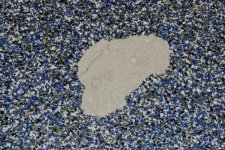
Just bought/installed 4 new Michelin tires for my Toyota Highlander SUV. On the first day the car was in and out of the garage multiple times. On the second day the car was parked wet for about 24 hours, after having been driven for only a few miles. The next day, when leaving the garage, the tires cleanly ripped up chunks of the epoxy floor (including a very thin layer of concrete). The epoxy floor has been in place for more than 3 years and never had issues, after having been professionally applied. Can anyone think of a reason for this situation?
 
To avoid these ads, REGISTER NOW!

Mercy

Well-known member
Joined
Apr 23, 2012
Messages
100
Location
SE MI-NW MI
Your epoxy probably isn't perfect and some water got under. Do you often leave the car wet in the garage?
 

thegarageguy

Well-known member
Joined
Oct 24, 2007
Messages
1,489
Location
NJ
Pics would help greatly.... I've seen this happen on concrete that has been acid washed and not grinded or grinded correctly. Acid does not remove the cream of the concrete which is the softest and weakest part. Therefore, if epoxy bonds to it, it could still pull off. If your floor was acid washed and not grinded or shot blasted, then the Company isn't too professional and is at fault.
 
OP
G

Giovanni_L

Member
Joined
Apr 24, 2012
Messages
6
Pics would help greatly.... I've seen this happen on concrete that has been acid washed and not grinded or grinded correctly. Acid does not remove the cream of the concrete which is the softest and weakest part. Therefore, if epoxy bonds to it, it could still pull off. If your floor was acid washed and not grinded or shot blasted, then the Company isn't too professional and is at fault.
Not sure about the acid washing, but I clearly remember that the concrete was grinded before applying the epoxy layers (I cannot forget the concrete dust all over the garage). This floor has been fine under the same SUV for 3 years. It must have to do with the new tires, but cannot think of a reason why they would pull up the floor. I am attaching a few pictures, to give a better idea of the floor damage.
 

Attachments

  • DSC_4814.jpg
    DSC_4814.jpg
    135 KB · Views: 136
  • DSC_4815.jpg
    DSC_4815.jpg
    133.2 KB · Views: 109
  • DSC_4816.jpg
    DSC_4816.jpg
    141 KB · Views: 90
  • DSC_4818.jpg
    DSC_4818.jpg
    90.3 KB · Views: 104
OP
G

Giovanni_L

Member
Joined
Apr 24, 2012
Messages
6
Your epoxy probably isn't perfect and some water got under. Do you often leave the car wet in the garage?

Only when driving the car in rain.... In any case, the concrete under the ripped patches was perfectly dry.
 

Edger

Well-known member
Joined
May 18, 2011
Messages
623
Location
Melbourne Australia
As others have said, your concrete floor failed. For some reason the concrete is soft on top and if it was ground like you said, then it looks like the concrete might have been soft on top before grinding and that the grinding did not remove all of it. All contractors are in a hurry and grinding more off uses up more diamonds, more time, and creates more waste.
Your new tires just provided lots of suction.

You can do a test by using a wire brush and giving the concrete a light rub, a medium rub and a heavy rub. I would expect some small dust maybe from the heavy rub, but not dust otherwise, so if you get lots of it easily then the floor is too soft.

I hate to say it, but this does not look like anyone's great error, I would have coated after a grind thinking it was strong enough, especially for a garage.
 

LegacyIndustrial

ALLIANCE MEMBER
Joined
Jun 7, 2010
Messages
7,994
Location
deerfield, IL
The pictures show us the damage. What we'd like to see is the under-side of the epoxy chips that came up. That usually tells a story. Although, I think we know it already.

In the mean time, I would get some clear poly-aspartic and flakes, make a little patch and fix those areas before they grow.
 
OP
G

Giovanni_L

Member
Joined
Apr 24, 2012
Messages
6
The pictures show us the damage. What we'd like to see is the under-side of the epoxy chips that came up. That usually tells a story. Although, I think we know it already.

In the mean time, I would get some clear poly-aspartic and flakes, make a little patch and fix those areas before they grow.
As I stated in my first posting, there is a thin layer of concrete attached to the under-side of the floor patches that came up with the tires. This confirm the failure of the concrete.
But it is not clear to me how the new tires could create suction.
I will try to get the original contractor do some emergency repair. Thanks.
 

Garage Flooring

ALLIANCE MEMBER
Joined
May 21, 2011
Messages
5,288
Location
Grand Junction, CO
So we have lots of reasons why this may have happened and with the exception of a few cheap kits on the market, coatings don't generally fail, the system does. The system being the concrete, everything it was ever cleaned with, cleaners and acid, contaminants, primer, epoxy, etc.

If the product was from many of the guys on this forum (I do not sell epoxy) they likely would help you resolve it as a customer service because most of them do whats right for the customer.

In your case if you go back and patch this, which is a bad resolution to begin with, you have no guarantees it won't happen again. I would talk to the epoxy guys that have replied to your thread and see if they have an installer in your area OR you could roll out a BLT garage floor mat over the affected area and leave the rest of the floor alone.
 

thegarageguy

Well-known member
Joined
Oct 24, 2007
Messages
1,489
Location
NJ
(I cannot forget the concrete dust all over the garage).

You might have your answer there as well....maybe all the dust wasn't properly removed in some areas, causing poor penetration and or adhesion. If it is just fine dust on the back of your failed epoxy, then it's the dust you just talked about. If it is a chunk of concrete, then your concrete failed.
 

J_T_P

Member
Joined
Nov 4, 2010
Messages
17
New tires, especially higher performance, are loaded with plasticizers. When the tires become hot from driving the plasticizers begin to leech out. This can cause a coating to lift off concrete if there is poor adhesion and/or the coating is not resistance to the plasticizers. Low quality epoxies will fail in this manner.
 

dcs Inc

Well-known member
Joined
Dec 13, 2010
Messages
803
Location
Indianapolis, Indiana
Improper cleaning of the concrete after grinding. A "soft" hot tire will create an adhesion issue to pull off the poorly adhered epoxy. What you are seeing on the back of the epoxy is concrete dust. gene
 
To avoid these ads, REGISTER NOW!
OP
G

Giovanni_L

Member
Joined
Apr 24, 2012
Messages
6
New tires, especially higher performance, are loaded with plasticizers. When the tires become hot from driving the plasticizers begin to leech out. This can cause a coating to lift off concrete if there is poor adhesion and/or the coating is not resistance to the plasticizers. Low quality epoxies will fail in this manner.

While you are probably pointing to the correct cause, I doubt the tires were really hot, since they had only been driven for 10 miles or less and it was raining (the water should have somewhat cooled off the tires). Someone else mentioned that (some?) Michelin tires are known to have compounds in their rubber that (when still new) can become very sticky once wet. Regardless, there is no doubt in my mind that the failure was in the concrete layer just below the epoxy, not the epoxy layer itself. Thanks for all the input.
 

1967marti

Well-known member
Joined
Sep 22, 2011
Messages
151
So, for other who have ground their floor and before putting down epoxy, what would be the best way to clean the floor of dust?
Im thinking wetting the floor, scrubbing with a stiff brush and then shop-vac up the water (and repeat 2-3 times until water comes up clear) will be correct? Then allow the floor to dry for a week in dry weather before putting anything down?
 

dcs Inc

Well-known member
Joined
Dec 13, 2010
Messages
803
Location
Indianapolis, Indiana
If you don't have access to a commercial dry vac then a hose on fan spray with squeegees would work. You don't want to power wash the concrete. This drives moisture deep into the concrete expanding the dry time. Once you get it clean, go over it with a diluted muriatic acid (8-1) with water. Then use ammonia (8-1) dilution to deactivate the acid. Wash it a few more times and let it dry. The acid bath will pull out all of the fines in the capillaries of the surface. You can't over rinse. I would then put a dehumidifier in the room to pull the moisture out of the air so the concrete will dry faster.

Be careful and not just rinse the residue onto your pretty concrete driveway. It will stain it. A good wet vac may be needed. Be meticulous and you will never have any problems with delamination of your (quality) epoxy. gene
 

JimVonBaden

Well-known member
Joined
Dec 2, 2011
Messages
15,716
Location
Northern Virginia
Seems like a hell of a lot of work, with patchy (pun) results.

I know many love the various epoxy type coatings, but it seems they are not that reliable if you do not follow a 25 step program to perfection. Not many DIYers could do it that well. IMHO, a DIY would be more something like staining or tiles (VCT or Porcelain), with more predictable results, and lower cost by a significant amount.

NOT bashing on epoxy type floors, but they do seem to be a bit delicate.

Jim :cool:

PS Sorry for the HIjack.
 
Last edited:

dcs Inc

Well-known member
Joined
Dec 13, 2010
Messages
803
Location
Indianapolis, Indiana
There are basic do's and don'ts. What gets DIY'rs in trouble is the salesman pushing their products that claim it's as easy as painting a side of a barn. In a perfect world it's quick and easy but that's not the case 99% of the time. Having someone on speed dial that has actually installed the product for tech support is your best bet. I'm sure the product sales guys on here have the experience. A pimpled back snot nosed kid behind a box store cash register is your worse enemy.
 

Edger

Well-known member
Joined
May 18, 2011
Messages
623
Location
Melbourne Australia
So, for other who have ground their floor and before putting down epoxy, what would be the best way to clean the floor of dust?
Im thinking wetting the floor, scrubbing with a stiff brush and then shop-vac up the water (and repeat 2-3 times until water comes up clear) will be correct? Then allow the floor to dry for a week in dry weather before putting anything down?

That is correct except that you need to lightly agitate with a fine bristle broom to get the dust up from the little pores. A stiff bristle will never get there. Try to broom 20 to 30 sq.ft with water at a time and vacuum up. Twice will be plenty.

A good vacuum of the floor after grinding is required, but this is usually not achieved because of poor equipment and human error so when you wash and vacuum with agitation you eliminate that error.
 

Kevin C

Well-known member
Joined
Aug 4, 2011
Messages
1,653
Location
Portland OR
My guess would be that the floor has had a problem for a while and your new tires did the equivalent of a peel test. A tape test of a nearby area could confirm that.

I would also consider doing a moisture test where the coating failed. Also the cure history of the concrete may be a factor. If you have a thin top layer of concrete that was not properly hydrated during curing, adhesion will be compromised.
 
Last edited:

iP2

Member
Joined
Apr 12, 2012
Messages
7
Location
CA
Seems like a hell of a lot of work, with patchy (pun) results.

I know many love the various epoxy type coatings, but it seems they are not that reliable if you do not follow a 25 step program to perfection. Not many DIYers could do it that well. IMHO, a DIY would be more something like staining or tiles (VCT or Porcelain), with more predictable results, and lower cost by a significant amount.

NOT bashing on epoxy type floors, but they do seem to be a bit delicate.

Jim :cool:

PS Sorry for the HIjack.


The more I hang out in this forum during my research, the more it seems you need to be a rocket scientist to install epoxy! That and an accurate Mayan Calendar. :)

2 more months before I 'need' to do this...
 

Garage Flooring

ALLIANCE MEMBER
Joined
May 21, 2011
Messages
5,288
Location
Grand Junction, CO
Every type of floor has its failures. The problem with garage floor epoxy is that everybody sells it and many advertise a low prep version that's self leveling, fills cracks and cures cancer. OK, maybe that's going a little to far... You get the point.

If your going to get an epoxy, go with a quality product from a company that can actually support it and pay attention to who is active here. If your looking for an alternative, those are out there too.

I have found the following to be true generally, of course their are exceptions.

  • If it comes in a box designed to look pretty your going to have an issue
  • If it says it is easy to install and does not require prep it will fail
  • If it says you do not need to etch or grind it will fail
  • If you get it from a big box store you are not going to get the support you need and the installation will fail
  • No one ever puts a cheap epoxy on twice
 

JimVonBaden

Well-known member
Joined
Dec 2, 2011
Messages
15,716
Location
Northern Virginia
Every type of floor has its failures. The problem with garage floor epoxy is that everybody sells it and many advertise a low prep version that's self leveling, fills cracks and cures cancer. OK, maybe that's going a little to far... You get the point.

If your going to get an epoxy, go with a quality product from a company that can actually support it and pay attention to who is active here. If your looking for an alternative, those are out there too.

I have found the following to be true generally, of course their are exceptions.

  • If it comes in a box designed to look pretty your going to have an issue
  • If it says it is easy to install and does not require prep it will fail
  • If it says you do not need to etch or grind it will fail
  • If you get it from a big box store you are not going to get the support you need and the installation will fail
  • No one ever puts a cheap epoxy on twice

Yup, sounds like a DIY isn't a good idea!:lol_hitti

Jim :cool:
 

Kevin C

Well-known member
Joined
Aug 4, 2011
Messages
1,653
Location
Portland OR
Yup, sounds like a DIY isn't a good idea!

That said.... I'm still doing my floor myself. Hopefully I wont learn any lessons the hard way. I have been doing a lot of background reading before I start to get a better understanding of what it takes to do it right. I dont see any reason why this cant be a DIY project.
 

Kevin C

Well-known member
Joined
Aug 4, 2011
Messages
1,653
Location
Portland OR
http://www.staticworx.com/articles/moisture-barrier-insist-testing.php

love my Racedeck.

Moisture vapor in concrete has always presented a problem for glue-down flooring systems and the delamination of flooring due to moisture has cost architects, contractors, flooring contractors, and building owners untold millions.

The chances of bond-failure can be greatly minimized by conducting a proper moisture test prior to flooring installation. The majority of the flooring industry recognizes a calcium chloride test for measuring concrete moisture vapor emissions prior to installation. Including this test in all flooring specifications will reduce your exposure to liability.

The following pages outline the problem, the test procedure, and cite the limitations on moisture emissions by a number of major flooring manufacturers, industry experts, and organizations responsible for specifications.

"Moisture has been causing floor covering installers problems since the beginning of time...Many new floor coverings stop or slow the transmission of moisture moving upward through the slab... Water vapor conditions...can exist for years without causing problems in places where the slab has never been covered with a floor that allowed moisture to pass through. If you install a new floor that traps moisture, there's trouble ahead!"

Facts Everyone Should Know About
Flooring Installations Over Concrete
1.All concrete regardless of age or grade-level emits some degree of moisture and must be tested prior to installation.
2.The majority of flooring material manufacturers, organizations, and experts recognize the Rubber Manufacturer's Association Test (calcium chloride) as their primary criterion for determining moisture vapor emission limitations since it is the only quantitative measurement of moisture.
3.Mat and bond tests do not model vapor emissions and are only subjective, at best, in their interpretation.
4.The calcium chloride test is inexpensive (about $12.00) and used by the vast majority of flooring contractors.
5.Flooring manufacturers do not warrant against substrate moisture, and most recognize a limit of 3.0 pounds as the maximum allowable amount of moisture vapor emission. Pounds refers to the actual weight of the water passing through a 1,000 square foot surface area, every 24 hours. Over 3.0 pounds and floors will eventually fail.
6.Calcium chloride crystal tests produce their results by changes in weight. The dish must be weighed within 1 hour after upon termination of the test to be valid. Mailing off the dish to be weighed invalidates the results.
7.Flooring contractors who do not test for moisture prior to flooring installations run the risk of total liability for a moisture failure.

http://www.floortest.com/current-guide.html

Good read. The same failure mechanisms can cause problems with tile. Nice to hear your floor is in good shape. Too bad you felt the need to take a jab at someone that had a problem.
 
Last edited:
To avoid these ads, REGISTER NOW!
Top Bottom