To avoid these ads, REGISTER NOW!

Non continuous foundation pour, something to worry about?

Onewolf

Well-known member
Joined
Mar 15, 2012
Messages
371
Location
East Central Florida
The foundation of our new detached garage was scheduled to be poured last Friday afternoon at 3PM and it was NOT a smooth operation. First the concrete truck was 45 minutes late, then they had several problems getting the pump/hose working reliably, and finally they only had enough concrete for about 60% of the foundation. :eyecrazy:

Since it was late Friday afternoon there was no way to get additional concrete so the foundation pour is going to be finished 4 days after the initial pour. The concrete crew says that it's not a big deal for the foundation to be a continuous pour (but they get paid to say that, right?). I had a conversation with the GC about this situation and he said it wasn't a big deal (again, what else is he going to say) and they would use 'bonding agent' when they restart the foundation pour tomorrow.

As I tell my wife, you might like sausage, but you don't want to see the sausage factory.

Is our detached garage doomed to failure because of a crappy foundation?

Please make me feel better.

Thanks.

My build thread: http://www.garagejournal.com/forum/showthread.php?t=250473
 
Last edited:
To avoid these ads, REGISTER NOW!

Paultergeist

Active member
Joined
May 30, 2013
Messages
42
Location
Lemon Grove, CA
I am not about to make you feel better about the situation.......

I am not an expert at concrete matters by any means, but I would lay odds that the most likely point of failure will be the interface between the two different pours.

What I do feel like I have coinsiderable experience with, however, is dealing with contractors. In my personal experience, the job only has to be good enough and last long enough for everyone to get paid -- there is so often the "oh, that's fine; don't worry about it, we do this all the time" rationalization when the job does not go as specified. The only person really taking the risk -- and the eventual *hit* -- is the person who owns the structure. I have lived through this reality more times than I care to recall.

My advice: Put the brakes on the job immediately. Do not make any further payments for the concrete work until you have assessed the situation. The very fact that you are on this forum asking this entirely valid question is evidence enough -- in my opinion -- that you need more information before you can proceed forward. You need to fully understand the implications of the two-stage partial pour. Yes, it *might* be good enough, but only you can determine if you will be able to sleep at night, and the assessment as to whether or not this is going to be acceptable for you should be guided by independent professional guidance and industry-standard information -- NOT by the self-serving reassurances of the guys who have a vested interest in knocking this out and getting paid.

You might try getting some competing bids from other concrete companies -- see how they would suggest finishing the job (partial pour or re-do?) assuming you do not contiue with the current company. You might also consult with the original contractor's insurance company -- or your own -- see if a slab failure is covered later on down the road. If your insurance carrier doesn't like the idea...red flag. Perhaps the local building inspector might be able to offer an opinion? I would also take pictures, documenting the partial pour.

But above all else, do not let the concrete guys rush you into allowing this until you have had a chance to do your research. (They will probbaly be anxious to finish this pour and conceal their mistake). My 2 cents.
 

offroadsteve

Well-known member
Joined
Apr 28, 2011
Messages
173
Location
Hampton, VA
Paultergeist has some good advice, don't let them pour the rest of the concrete until you have a good plan in place for the joint.

If they just pour more concrete next to the rough, unfinished edge of the concrete that made it on the ground Friday, it WILL crack and you won't be happy with it.

There are proper ways to make a construction joint, but you need a clean joint, dowels or rebar spanning the joint, and a means of controlling the (now) inevitable crack.
 

8man

Well-known member
Joined
Oct 16, 2013
Messages
630
Location
Bryan, Texas
DO NOT FEEL BETTER until you have a better plan in place for pouring out the slab. In fact I'd start with having the contractor hire a structural engineer to make sure the slab is finished in a manner that will not cause you long term trouble. All the stuff said above applies. As a retired contractor, I agree with not paying any more, needing a real plan to finish the pour so there won't be a problem. I could go on, but you get the drift.
 
OP
O

Onewolf

Well-known member
Joined
Mar 15, 2012
Messages
371
Location
East Central Florida
Please note that it's the foundation/footer we are talking about, not the slab. The foundation/footer will be poured, then a CBS stem wall will be built, then the interior will be filled/compacted, and then the slab will be formed/poured.

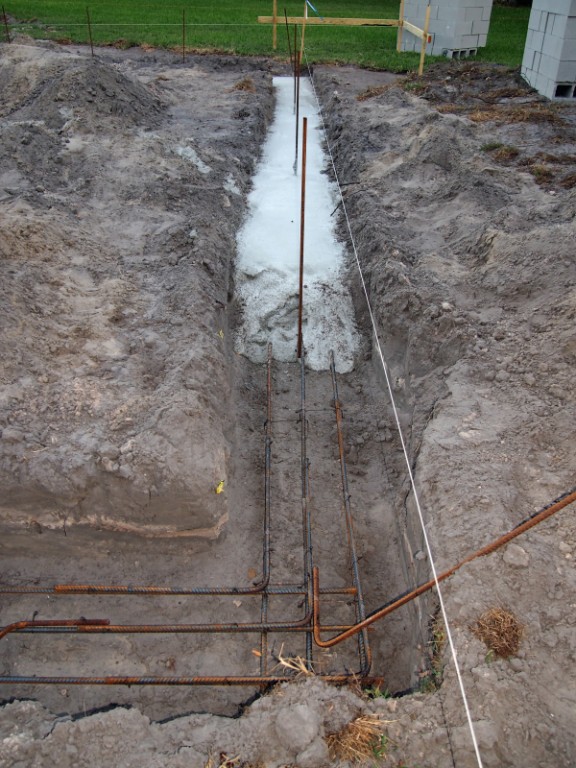
They did not end the pour at a "finished" bulkhead. The concrete just sort of peters out on either end. I will post photos when I get home later this afternoon.

Thanks for all the replies so far.
 

rsanter

Well-known member
Joined
Dec 22, 2007
Messages
18,494
Location
visalia ca
There are two things I have in mind.

First. If it was me I would have an engineering sign off that says that what they did is ok. They can pay an engineer to sign it off and if it fail you can go back to the engineer.
I would also want something on paper and signed by the contractor acknoledging the fact and this to be covered under an extended warranty. If the contractor really feel that this is normal and fine, then he should have no trouble with adsorbing any potential liability. If he doesn't want to cove that....well that tell you how confident he is.

Second. I would assume that I paid for a contugus pour. If I get less than that I am expecting then I want to pay less than he was expecting.

Bob
 

offroadsteve

Well-known member
Joined
Apr 28, 2011
Messages
173
Location
Hampton, VA
Ahh... Good link ssentt. I'm going to say that its probably OK, especially if the re-bar is continuous across the joint. Being just the footer, you aren't worried about water intrusion through the joint, or aestetics because it will all be buried.
 
OP
O

Onewolf

Well-known member
Joined
Mar 15, 2012
Messages
371
Location
East Central Florida
Ahh... Good link ssentt. I'm going to say that its probably OK, especially if the re-bar is continuous across the joint. Being just the footer, you aren't worried about water intrusion through the joint, or aestetics because it will all be buried.

That's basically what I'm thinking/hoping. The rebar is continuous, minor water intrusion should not be a problem because there will be dirt filled on both sides, and the ground underneath the footer is undisturbed compacted soil.

Hoping for the best. But documenting in great detail....
 

SteveCh

Well-known member
Joined
Dec 21, 2012
Messages
1,051
I poured my own floor. It was just necessary, cost-wise. I mixed the concrete in a mixer, batch at a time. I broke up the job into six pours, so I could physically handle it and do the best possible job finishing off each pour. I figured it might turn out to be a disaster after a while, but it has been ten years or more and the floor is great. No cracks, no settling. I hauled in concrete mix and bags of Portland in my pickup, used a shovel, wheelbarrow, buckets of water [no source nearby]. It was a bear. But the point is, in my case, it turned out very nice and, so far, no problems at all. Anyone thinking of doing the same, by the way, might try to find at least one person to help. I don't want to do it again solo.

Meaning, if I can do it with a wheelbarrow, these pro's might well be able to do just fine.
 
Last edited:

BlackTalon

Well-known member
Joined
Aug 22, 2014
Messages
183
Location
Alexandria, VA
It should not be an issue structurally if the rebar is continuous.

Concrete will always crack due to shrinkage during initial curing, exposure to bending loads, movement constraints, stress concentrations, etc. It is a brittle material. The rebar is intended to carry the loads on the tension-side of the beam, footing, etc. and the concrete takes the load of the compressive forces. Reinforced concrete beam design is based on the concrete cracking on the tension side so the rebar bets loaded.
 
OP
O

Onewolf

Well-known member
Joined
Mar 15, 2012
Messages
371
Location
East Central Florida
Here's one end of the "premature ending"....

PA271162.JPG
 

69gp

Well-known member
Joined
Jan 1, 2013
Messages
255
Location
MA
I would not worry about it. its below grade, in an area that would not affect you if water did enter. Plus all the weight is in compression. Its not like you have a full basement where you now have all the weight on one side pushing in on the joint. If anything you have a nice train room and it might be fun to see a little bit of settling going on with the tracks. would add a more realistic look to the scene. Just kidding.

Look at all the heavy construction going on. They cannot do large pours all the time so its done in lifts or stages.

After seeing the pic you posted I would defiantly not worry about that. have them double up on the re-rod where there is a splice.
 
Last edited:

jhelrey

Well-known member
Joined
Sep 15, 2010
Messages
7,244
Location
MN
I wonder if you couldn't cut it flush, drill for rebar, anchor in rebar, and continue on.

Mind you, I don't know jack about concrete other than basics.
 
To avoid these ads, REGISTER NOW!

Joe Reed

Well-known member
Joined
Aug 31, 2005
Messages
915
Location
Cordova TN
I wonder if you couldn't cut it flush, drill for rebar, anchor in rebar, and continue on.

Mind you, I don't know jack about concrete other than basics.

Why? It's already got rebar embedded into the original pour that extends WAY further into the original pour than you could drill....
 

Bib Overalls

Well-known member
Joined
Dec 4, 2006
Messages
3,318
Location
Jonesboro, Arkansas
You can't lay all of this on the contractor. The Ready Mix company messed up big time.

When I built my shop I gave the supervisor at the Ready Mix plant strip maps to the job site. Also scheduled an early morning placement. The drivers were all familiar with the location because I used the same plant when I built my house. All but one and he was the guy bringing out the final short load. He got lost and admitted that when he left the plant he did not know where he was going. While the supervisor was rounding him up the plant's engineer showed up at my place and did some tests. As in sticking his index finger in the mud and mumbling. Based on his expertise we finished up with the "lost batch." That was twelve years ago and no failure yet. We got lucky. Your mileage may vary.
 

Leaflessshadetree

Well-known member
Joined
Aug 1, 2013
Messages
7,146
Location
Don't ask.
I'd be concerned at how they were off by 40% on the volume of concrete. Dug wider than planned is a good thing. Varying width may lead to uneven settling. Just took a guess at the required amount and being off by that much I'd be questioning their experience and the rest of the estimates for the job.
 

willymakeit

Well-known member
Joined
Apr 27, 2009
Messages
1,242
Location
Springfield Mo.
The contractor should have put a bulkhead in or chopped it vertical. If the contractor ordered the contractor it is up to him to deal with late arriving concrete. The field means and methods are his to own.
In the commercial world you cut and chisel this vertical after the fact,stopping a pour is done with a bukhead. Add extra rebar spanning this in your wall if your worried about it.
 

hoho98925

ALLIANCE MEMBER
Joined
Nov 22, 2011
Messages
778
Location
East of Seattle
Onewolf, don't worry at all about your footing!! I am a concrete expert, insist that they chip the footing straight down at a point that it is full depth of the footing and have them pour the rest right up against it, no need for bonding agent. And don't lose any sleep over this. Yes they boned the yardage, but it's a footing and will hold up fine. Now when it comes to a wall or slab, do your homework and double check the yardage they order, do the math. Now have a beer, and a deep breath, and best of luck on your project.:beer:
 

tomshep

Well-known member
Joined
Sep 24, 2011
Messages
441
I've been screwed too many times and I don't trust anyone doing a job, even the experts. If it makes the hair on my back stand up, it is important to me and I am writing the check. As one poster stated, they want to finish the job and get paid. That means slowing down or doing it again costs THEM MONEY, not you.

As ignorant as this sounds, I wouldn't accept it. I understand others that are much smarter than me say it is OK. Well, I would NOT want a 2-piece footer. I paid for a 1-piece footer and that is what I would want.

Tom
 

pstnbly

Well-known member
Joined
Jul 20, 2010
Messages
766
Location
So. Vermont
From the pic, no big deal. If it was the wall that's different. If it was the wall on one of my jobs, it would be coming out. Make sure to impress on the contractor that any issues going forward will be on his dime and you will not sign off on any more mistakes. A short pour on this footing shows someone is not paying attention. That footing couldn't be more simple. And since they were short there is no way I would pay for the pump truck to show up again, contractor needs to eat that. Again no big deal on the repour as long as the inspector approves.
 

Paultergeist

Active member
Joined
May 30, 2013
Messages
42
Location
Lemon Grove, CA
I've been screwed too many times and I don't trust anyone doing a job, even the experts. If it makes the hair on my back stand up, it is important to me and I am writing the check. As one poster stated, they want to finish the job and get paid. That means slowing down or doing it again costs THEM MONEY, not you.

As ignorant as this sounds, I wouldn't accept it. I understand others that are much smarter than me say it is OK. Well, I would NOT want a 2-piece footer. I paid for a 1-piece footer and that is what I would want.

These are my sentiments exactly. I am pretty sure that -- if you were talking to these concrete guys in a casual setting outside of any sort of work obligation -- they would each-and-every-one say that it is better to place the entire footing as a continuous pour. While there are differing opinions among forum posters as to whether this partial pour is acceptable, no one seems to be disputing that a continuous pour would have been optimal. Did the OP pay *optimal* money for this job?

As for myself, I have lived through too many experiences of having my doubts about the integrity of the job be answered with emphatic reassurances from the professionals, only to discover sometime later that my initial instincts were correct and that "good enough" really was not good enough. I would not be able to sleep at night were this my project; I would have to insist that this portion of the job be repeated.

Lastly, I have learned to never schedule a concrete delivery for the afternoon, especially a Friday afternoon.
 

Pack Rat

MEMBER EMERITUS
Joined
Oct 7, 2014
Messages
1,017
I'm with tomshep. When I pay for a job I expect it to be perfect.
Especially when the workers tell me they are professionals.
 

lenscap

Member
Joined
Apr 25, 2014
Messages
8
couple of things on seeing this... Who in the world (with the price of concrete) wouldn't use forming boards to make sure the width and depth is continuous? How on earth can you set block on a footing that has no semblance of square or constant height around the base? Were you able to do the pour without a rebar inspection? Inspector should have asked about form boards...The wall is going to be a mess...
 
Last edited:
OP
O

Onewolf

Well-known member
Joined
Mar 15, 2012
Messages
371
Location
East Central Florida
couple of things on seeing this... Who in the world (with the price of concrete) wouldn't use forming boards to make sure the width and depth is continuous? How on earth can you set block on a footing that has no semblance of square or constant height around the base? Were you able to do the pour without a rebar inspection? Inspector should have asked about form boards...The wall is going to be a mess...

The Rebar was inspected and passed. :dunno:

I have assumed the GC and his foundation guys know what they are doing. We hired a GC because we don't know the construction standards/rules/process for central Florida. We have inspected several of the GCs finished buildings and they look great, but I didn't see the construction process.

The top of the footer is level except where there are intentional steps formed with bulkhead boards.
 
OP
O

Onewolf

Well-known member
Joined
Mar 15, 2012
Messages
371
Location
East Central Florida
I think I would start by re-reading the contract and statement of work.

Jim

There is no mention of a continuous or non continuous foundation/footer pour in the contract. The contract says that they will construct the building using a foundation, stem wall, and slab (instead of the 'normal' monolithic slab as is used by 90% of the homes around here).
 

BlackTalon

Well-known member
Joined
Aug 22, 2014
Messages
183
Location
Alexandria, VA
It is not uncommon to use the sides of the excavation as the forms. I'm not saying that is preferable, but it is acceptable practice. The biggest issues with doing that is you cannot waterproof to the bottom of the footing (which is not an issue in this instance since there is no below-grade space), and the soil could draw excess moisture out of the concrete mix if it is not dampened.

Also not surprised nothing in the SOW/ contract says "one continuous pour".

There is some serious misinformation about in some of the above posts. Chipping/ squaring is about the most that needs to be done, and even that would not be mandatory. The ability of the footing to perform as needed for the types of loads it will see is not compromised.
 

gunguy

Well-known member
Joined
Aug 2, 2007
Messages
730
Location
Currituck Co. NC
There is no mention of a continuous or non continuous foundation/footer pour in the contract. The contract says that they will construct the building using a foundation, stem wall, and slab (instead of the 'normal' monolithic slab as is used by 90% of the homes around here).

Just suggesting that it when an issue comes up it's a good idea to review the documents to make sure something was not over looked, by you or the contractor/sub-contractor, and your receiving what your paying for. You have a GC and he should be answering all your questions and addressing your concerns. Echoing what others have said, to make sure your questions are answered to your satisfaction before proceeding.

Hope it all works out for you.

Jim
 

lenscap

Member
Joined
Apr 25, 2014
Messages
8
My personal opinion would be to take a series of photos of the footing (keep them someplace safe) and send them to the county building inspector. Say you are concerned about the quality of the work so far and ask if HE will sign off on the pour...See what he says...IF inspector doesn't like it, maybe red tag it and make the people come up to code... but you also might imply a legal action if there isn't satisfaction on inspectors part.
 
OP
O

Onewolf

Well-known member
Joined
Mar 15, 2012
Messages
371
Location
East Central Florida
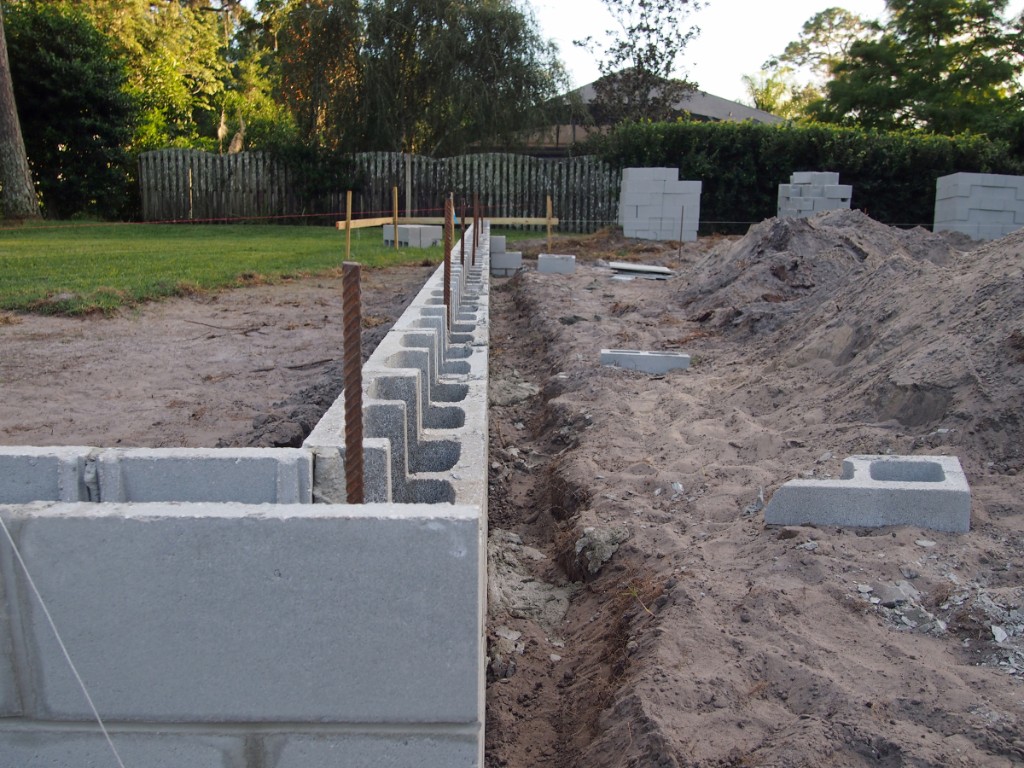
They built the stem wall along the front of the garage today. Tomorrow they finish pouring the foundation/footer and then they finish the stem wall on Thursday.

PA281177.JPG


PA281176.JPG


Very Straight!
PA281178.JPG
 

69gp

Well-known member
Joined
Jan 1, 2013
Messages
255
Location
MA
They built the stem wall along the front of the garage today. Tomorrow they finish pouring the foundation/footer and then they finish the stem wall on Thursday.

PA281177.JPG


PA281176.JPG


Very Straight!
PA281178.JPG


Definitely not worth worrying about the footing not being monolithic. Take a look at all the joints you now have in the wall. There is a lot more than the 2 you have in the footing. I would be curious to know if they are going to use grout or just fill the block in with mortar. If it were me I would go for the grout as that can be made extremely hard. Plus looking at the pics I see they have a bond beam in place that will tie everything in as one also.

Just curious if they have a bond beam on the lower section?
 

NUTTSGT

Super Moderator
Staff member
Joined
Sep 14, 2009
Messages
50,884
Location
Northern Central Ohio
They built the stem wall along the front of the garage today. Tomorrow they finish pouring the foundation/footer and then they finish the stem wall on Thursday.


PA281176.JPG

I'm curious about the rest of the bottom course. Those corner blocks appear not to have any mortar under them.

:dunno:
 
To avoid these ads, REGISTER NOW!
Top Bottom