HotRodHudson
Well-known member
- Joined
- Nov 18, 2013
- Messages
- 373
Teflon tape IS a packing sealant (and it works as well on valve stems as it does on NPT threads). Yes, it does lubricate too. Using torque as the hard limit for plumbing tapered fittings is just plain dumb however, but if you work like a gorilla, sure, you'll crack some things.If you want to crack the water pump housing, then Teflon tape for sure! It is Not a sealant, it simply lubricates so you can squeeze those tapered threads in tighter than you thought you could. Right stuff, silicone, or any pipe sealant will work fine. To be clear Teflon tape works fine, but the chances of you over tightening it exceed 100%.
It's the removal process that usually leads to tape contamination of the system.Teflon tape IS a packing sealant (and it works as well on valve stems as it does on NPT threads). Yes, it does lubricate too. Using torque as the hard limit for plumbing tapered fittings is just plain dumb however, but if you work like a gorilla, sure, you'll crack some things.
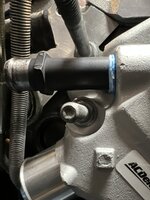
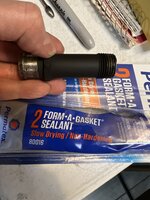
To my eye, that is a steel fitting with rolled threads. Rolled pipe threads (I mostly encounter those on copper fittings, but the issues are similar) tend to have poorly shaped threadforms that seal poorly without heavy application of a thick sealant. If it were me, I'd fill the threads flush with my thickest pipe dope. Then warm it with a heat gun until it starts to bubble, let it cool to an even thicker state, and wrap with 3-4 turns of pink teflon tape starting at the second thread. Finish by using your best judgement as to tightening. What I'd suggest to guide this is to hand fit the fitting dry, count the number of turns it goes in, and then when doped up, turn it to there plus 2 more turns and see how it feels.
As for teflon tape getting into a system, it will never do that so long as you follow two simple rules.
1) Don't tape the leading thread, and
2) Use a dental pick to remove the coils left behind when you take a fitting out.
Don’t rely on procedure alone. The different chemistry and additives found in systems can attack the tape, and you end up with whole new problems. Hydraulic oils will turn it into a bubble gum-like substance that migrates throughout the system until it finds a passage to plug.As for teflon tape getting into a system, it will never do that so long as you follow two simple rules.
1) Don't tape the leading thread, and
2) Use a dental pick to remove the coils left behind when you take a fitting out.

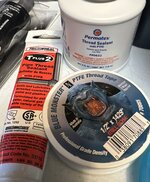
I'm calling BS here. The few chemicals I am aware of that will attack teflon without also dissolving metal lines will eat through any other elastomers (rubber or polymers) long before they damage the teflon. In fact, teflon is called for in may hydraulic seals for just this reason.Don’t rely on procedure alone. The different chemistry and additives found in systems can attack the tape, and you end up with whole new problems. Hydraulic oils will turn it into a bubble gum-like substance that migrates throughout the system until it finds a passage to plug.
Knowing how many different alcohols and solvents have been put into things in the name of “the environment”, it’s become a gamble to use the stuff on anything but a domestic water line.
What I can tell you for certain is that I have a scrap bin full of high dollar hydraulic valves, pumps, automotive parts, etc, that were brought in to see if they could be welded up after being cracked while installing pipe threads using Teflon tape. It just makes it way to easy to tighten, and the fittings never feel tight.Teflon tape IS a packing sealant (and it works as well on valve stems as it does on NPT threads). Yes, it does lubricate too. Using torque as the hard limit for plumbing tapered fittings is just plain dumb however, but if you work like a gorilla, sure, you'll crack some things.
To my eye, that is a steel fitting with rolled threads. Rolled pipe threads (I mostly encounter those on copper fittings, but the issues are similar) tend to have poorly shaped threadforms that seal poorly without heavy application of a thick sealant. If it were me, I'd fill the threads flush with my thickest pipe dope. Then warm it with a heat gun until it starts to bubble, let it cool to an even thicker state, and wrap with 3-4 turns of pink teflon tape starting at the second thread. Finish by using your best judgement as to tightening. What I'd suggest to guide this is to hand fit the fitting dry, count the number of turns it goes in, and then when doped up, turn it to there plus 2 more turns and see how it feels.
As for teflon tape getting into a system, it will never do that so long as you follow two simple rules.
1) Don't tape the leading thread, and
2) Use a dental pick to remove the coils left behind when you take a fitting out.
No. It needs sealant.Realistically a steel pipe screwed into a aluminum automotive pump housing should seal without any thing on it if tightened correctly....
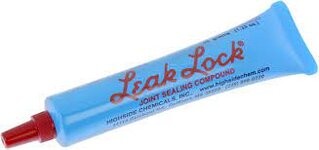
No, it doesn't...leaklock... eventually cracks, and leaks...
As stated before, Teflon is not a sealant. It is a lubricant.
You'd be surprised how adamant some are about incorrect information.^^ I think everyone knows that.
Teflon TAPE is a 'deformable filler'.. the Teflon aids in getting the threads tight, many times sealed.
Like yourself. Here's the word from the manufacturer:You'd be surprised how adamant some are about incorrect information.
In my nearly 40 years of building moulds, all with elaborate cooling [or heating] systems that are almost always removed for "Engineering Changes" there isn't any visible "sealant tape" left in the threads pipe sealant [Loctite and Permatex are prevalent here] but there is tape through out the system and like here "everybody has a theory and insists theirs is the right one" I read the manufacturers instructions and follow and compression tools frequently use heated oil [not all steam and electric heating is also used] for thermoset plastics and it reacts with the tape and requires redoing with "Pipe Dope"! Personally I LOATH TAPE. Harry
I base my opinion on engineering, not marketing. believe as you see fit.
We've been down this path here before. NPTF has the same taper as NPT, with the difference being in the deformable threadform. However, NPTF is not the only dry seal thread system, so perhaps you're right? I dunno, because that has NOTHING to do with NPT thread sealant or this conversation/thread in general....This covers pipe plugs (threads starts on page 24) and pressure plugs for those that don't believe that there are 2 different tapers to fittings...
Sure, YOUR engineering is better than 3M's. Un huh.I base my opinion on engineering, not marketing. believe as you see fit.
...and NPT threads by engineering definitions are not designed to mechanically seal. There are NPT threads you can bottom all the way out until there is no more thread left, and they still won't seal. If the root and crests of the threads never interfere, there will always be a leak path.I base my opinion on engineering, not marketing. believe as you see fit.
Yes, I'd say NASA's engineering is better than a company that sells products for a living.Sure, YOUR engineering is better than 3M's. Un huh.