To avoid these ads, REGISTER NOW!

Off Grid Garages, Generators, Etc.

Pluribus

Well-known member
Joined
Dec 16, 2012
Messages
2,143
Location
Skagit County, WA
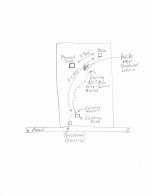
**edit** See post #17 for property sketch; this will make more sense when you see that.**

What are people doing for power when it's not economical or feasible to run it to your shop?

My situation is a little goofy in that I do have power on my property, but the transformer is out at the road, and the meter is only 100' in from there at one shop building. From there, I have a 100 amp circuit to a direct buried 3/0 aluminum wire (...at least I think it's 3/0 like this: http://www.amazon.com/dp/B008F82UIE/?tag=atomicindus08-20 ) that runs 1,000' to my house. It's a long, irrelevant story on how/why property was set up this way. The existing shop is too close to the road, and wouldn't be a secure location, so I'm planning on building one farther into the property, closer to the house.

With all that, my proposed shop location is about 300' from the house and likely 200' off the line going to the house. Power at the house is sketchy as it is, and I already see lights dim every time the refrigerator, microwave, or well pump kicks on. I'd love to have power at the new shop, but bringing it in 1,000' from the road on a separate service would cost so much, I wouldn't be able to build a shop, and I'd get stuck with an additional monthly service charge. My guess is that it would cost me about $20,000 to run a new service. Power company would set a transformer and supply the wire for about $11,000. I'd have to provide the trench (and conduit if I go under the driveway) as well as clean sand for partial backfilling over the 1,000' distance. I'd also have to supply the wire from the transformer to the shop.

If there's a way to get power from the house or to tap into the buried wire to run some limited power to the shop, then great. I'm under the impression that what I already have at the house is marginal, at best, and adding a shop would be too much. I already wonder about the voltage drop from the existing shop to the house damaging motors. If there's a way to do it, that would be great.

Since I don't think there is, I'm wondering about generators. Without running full calculations based on everything I think I might want in the shop, I will say that I'd like to be able to run a welder at 230V, 25A, and I'd be willing to shut most everything else down when I did. Most of the time, I'd just need power for lighting and running one tool at a time. Would a portable, gas powered generator like this be good? http://powerequipment.honda.com/generators/models/eb6500 Would a pad-mounted, propane powered one be a better choice?

What have other people done? I'd love to hear about your setups or if anyone can provide any enlightening :lol_hitti advice. TIA
 
Last edited:
To avoid these ads, REGISTER NOW!

Streetbu

Well-known member
Joined
Jan 7, 2014
Messages
3,082
Location
Central NY
Wow. Heck of a predicament. You will be sick of listening to a generator after about 30 minutes. Fine for a temporary setup, but I wouldn't want to live with it... Pulling power from the house sounds sketchy and almost like a waste of time and materials. Why would you need another transformer installed? Can't run power from the current meter to the new shop?
 

kd3pc

Well-known member
Joined
Aug 10, 2013
Messages
3,630
Location
Northern Neck
I used a pair of 200 watt PV panels for about a year in my 20x20 - they ran my lights stereo and a few rechargers. For saws and power tools, I scheduled my pre fab work and ran those on a Honda 2000i. It is really quiet, very economical and easy to move around, as needed.
 
OP
P

Pluribus

Well-known member
Joined
Dec 16, 2012
Messages
2,143
Location
Skagit County, WA
Wow. Heck of a predicament. You will be sick of listening to a generator after about 30 minutes. Fine for a temporary setup, but I wouldn't want to live with it... Pulling power from the house sounds sketchy and almost like a waste of time and materials. Why would you need another transformer installed? Can't run power from the current meter to the new shop?

Yup, planning anything here is really challenging. I've got topography, wet areas, and distance challenges all over the place.

Current meter is about 1000' away from where the shop will be, and the transformer is another 100-150'. Nowadays, the power company wants to set the transformer a lot closer to the building where power is needed. Doubt they'd let me run off the existing meter, and I'm guessing that's part or all of the reason I get dimming lights at the house when something kicks on.

I used a pair of 200 watt PV panels for about a year in my 20x20 - they ran my lights stereo and a few rechargers. For saws and power tools, I scheduled my pre fab work and ran those on a Honda 2000i. It is really quiet, very economical and easy to move around, as needed.

Good idea, my planned shop location has decent (but not great) southern exposure for solar. The combination of that and a generator on an as-needed basis might work.

Long term, I may end up bringing power in for a different house, at which point I'd also bring it to the shop. It's not in the cards in the near future.
 

pmilin

Well-known member
Joined
Oct 5, 2012
Messages
193
Location
Colorado
Have you checked with the power company about it. Sometimes they offer new construction credits. I got that when I built my shop. I had them run power and gas. The power ended up being free because the credit exceeded the cost. The monthly service charge for the shop is only $6.95/month.
 

ishiboo

Well-known member
Joined
Oct 27, 2010
Messages
9,481
Location
Oshkosh, WI
I would look at every solution other than a generator.

Personally, I would find out for sure if you have voltage drop issues at the house due to the supply.

I would install your own step-up transformer at the road, bringing you up to 600v. Then split it off to the shop at the mark closest to the new shop. Step-down transformers at both locations. You can probably pick up the transformers for the price of a generator or a bit more, let alone the cost to operate, the pain in the ***, etc... plus you'll solve the voltage drop issues at the house.
 

theoldwizard1

Well-known member
Joined
Feb 22, 2011
Messages
43,106
Location
SE MI
If you are going to want to run a welder or a large compressor you are going to need a generator. PERIOD ! 6500 peak would be the minimum I would recommend. For fuel, I would recommend propane, mainly because you can get it delivered and you can have a large storage tank. Almost all portable generator can easily converted to run on propane with aftermarket kits.

Occasionally, you can find a refurbished 7-10kw permanently installed, propane fired generator on eBay cheap. This could be a good buy, but it might be a bit tricky to hook up as an "on demand" generator instead of a "stand by" generator.


Firing up your big generator every time you want to flip the lights on or run a hand electric tool will get old fast. The simplest thing to do is buy a used computer Uninterruptable Power Supply (UPS) and some large deep discharge batteries (6V golf cart batteries). Now before you start freaking out anout cost, you can pick these units up used, pretty cheap (under $300 for a 3000VA rated unit). Frequently the seller will say that they won't power up, which is true, because the battery bank is too far gone ! Throw the batteries away and hook up your new batteries. Most likely it will start right up.

The best ones to look for are APC (brand) SmartUPS (model). You really want to get an "extended run" model because it has more cooling and you can overheat the other models (they are not designed to run more than 15-30 at full load). The larger models run off of 48V DC, while the mid-size ones run off of 24V DC. These also have battery chargers built in when plugged into regular power (from your generator).

Properly wired, a UPS will provide power for lights, furnace and small appliances and the batteries can be recharged via your generator, solar or wind. This is not a typical DIY project. Even an average electrician may not understand how to properly hook all this up !
 
Last edited:

theoldwizard1

Well-known member
Joined
Feb 22, 2011
Messages
43,106
Location
SE MI
... I'm guessing that's part or all of the reason I get dimming lights at the house when something kicks on.
POCO needs a bigger transformer to feed your home and the others on that segment.

"The squeaky wheel gets the grease !", but you will have to do a lot of squeaking ! Request a voltage monitor be temporarily installed. Sort of a paper oscilloscope (well, in the old days it was).

If the voltage drops below 100V, you can tell the POCO (in writing) that you are concerned about low voltage damaging your appliances.

If you can find an old analog Simpson 260 meter, the movement should be fast enough to catch power dips when some heavy load (like a well pump) starts up. Put a video camera on that meter and you have a cheap alternative.
 
OP
P

Pluribus

Well-known member
Joined
Dec 16, 2012
Messages
2,143
Location
Skagit County, WA
pmilin: I deal with Puget Sound Energy here, a for-profit company. They don't give anything away. They have visited the property, and that's where I came up with the $11,000 estimate for bringing in a transformer and line. I discussed hooking up the new shop as well as the existing house, plus potentially a new house.

ishiboo: I did a little poking around online and briefly talked to an electrician. The electrician mentioned that with the distance from the transformer, my issues are common. Didn't find much on the step up/step down, other than this link: http://terrylove.com/forums/index.php?threads/stepping-up-down-voltage-from-incoming-feed.15017/ Lots of differing opinions there.

theoldwizard1: Wow! Lots of info and options. Sometime in February, I'm going to have an electrician come out and evaluate what I have and talk to me about some options. Regardless of what the transformer at the road is, with my almost 1/4 mile distance from it, aren't I pushing the distance limit already?

I actually have an APC Smart UPS, but it's the little SU420NET. Don't think I'll be powering much with that! Interesting food for thought though on the bigger ones and the golf cart batteries.

Thanks for the out of the box thinking and ideas!
 
Last edited:
To avoid these ads, REGISTER NOW!

theoldwizard1

Well-known member
Joined
Feb 22, 2011
Messages
43,106
Location
SE MI
theoldwizard1: Wow! Lots of info and options. Sometime in February, I'm going to have an electrician come out and evaluate what I have and talk to me about some options.
Hopefully this guy is up on "alternative" energy.

Regardless of what the transformer at the road is, with my almost 1/4 mile distance from it, aren't I pushing the distance limit already?
Distance is not your problem to worry about ! You just need to "prove" to the POCO that you are getting potentially "damaging" low voltage.

In most (all?) states, there is state government entity that permits a utility to operate (in MI it is called the Public Service Commission). Document your complaint to the POCO. If you get blown off likely, forward your communications to the Public Service Commission. It IS a government agency, so the wheel turn slow, but if you have a valid complaint, you will win ! (Local power company had to pay a grocer close to $100,000 dollars after telling the Public Service Commission that they had fixed their reliability problem and that future power outages would not last longer than 4-8 hours.)

I actually have an APC Smart UPS, but it's the little SU420NET. Don't think I'll be powering much with that! Interesting food for thought though on the bigger ones and the golf cart batteries.
The SmartUPS Series are "true sine wave". Much better for motors and electronics.

Look for a SUA1500XL. It uses 24V so you only need 4 golf cart batteries. The XL means extended run; more/better fans, which is important if you are going to run it near capacity for extended (>20 minutes) periods. Watch this video series on how to upgrade the capacity of a SUA1500.

These units are not the best for true, "off grid" applications. They are only about 80-85% efficient. Top of the line, off grid inverters are 90-95% efficient. These do automatically charge the batteries when AC power is applied and you can frequently find them on used, on CL cheap ! The larger units (2200 -3000 VA) use 48V batteries.

Thanks for the out of the box thinking and ideas!
Your Welcome !
 
Last edited:

reader2580

Well-known member
Joined
Dec 31, 2014
Messages
14,516
Location
Minneapolis, MN
For long term use you're probably going to want a diesel or natural gas generator designed for prime power use. (Natural gas only if you already have gas service.) You can usually find decent used generators.

I figured it out once and the operating cost of a small 8000 watt diesel generator is 40 to 50 cents a kilowatt. This does not include the cost of the generator or any repairs.

By the time you buy the right generator and pay for fuel you might be as well off getting power run in.
 

rsanter

Well-known member
Joined
Dec 22, 2007
Messages
18,492
Location
visalia ca
If you go the route of a generator, I would buy a welder generator so,you have both.
Never know in the future when you may need to weld off site

Other than that I would try to hunt up some used fork lift or IT back up batteries and install some solar panels to charge them.
Use DC LED strip lights so you don't need a converter just run lights right off the batteries.
That stuff is available to the boat and RV market

Bob
 

ishiboo

Well-known member
Joined
Oct 27, 2010
Messages
9,481
Location
Oshkosh, WI
Distance is not your problem to worry about ! You just need to "prove" to the POCO that you are getting potentially "damaging" low voltage.

In most (all?) states, there is state government entity that permits a utility to operate (in MI it is called the Public Service Commission). Document your complaint to the POCO. If you get blown off likely, forward your communications to the Public Service Commission. It IS a government agency, so the wheel turn slow, but if you have a valid complaint, you will win ! (Local power company had to pay a grocer close to $100,000 dollars after telling the Public Service Commission that they had fixed their reliability problem and that future power outages would not last longer than 4-8 hours.)

The POCO is not responsible for voltage drop on your equipment. In this case, the POCO/homeowners decided to put the transformer at the road and the meter 100' in, and pay to have it brought from there. I'm sure because the shop was built first.

They'll gladly fix the problem, for the large fee he has already discovered.
 

ishiboo

Well-known member
Joined
Oct 27, 2010
Messages
9,481
Location
Oshkosh, WI
ishiboo: I did a little poking around online and briefly talked to an electrician. The electrician mentioned that with the distance from the transformer, my issues are common. Didn't find much on the step up/step down, other than this link: http://terrylove.com/forums/index.php?threads/stepping-up-down-voltage-from-incoming-feed.15017/ Lots of differing opinions there.

It's pretty simple. Voltage drop is a function of distance and current. Watts (VA actually) is volts * amps.

The run to your house is 1000', using 3/0 aluminum for 100A service. That is WAY undersized.

Assuming your peak loads are about 60A, to stay under 5% voltage drop you would have to run #750 at that distance at 240v.

240v*60A = 14,400 watts.

14,400/600v = 24 amps. 24 amps at 600v requires only #2 aluminum to cover that distance.

That gives you a pretty good idea of how you can cover the distance using the same wire at a higher voltage. This is why utilities can also transmit power to hundreds of homes on cable not much bigger than what you have buried. Your 14,400 watt 60A load is only .48 amps at 30,000 volts. Plus, they have the luxury of doing it in open air (MUCH better heat dissipation and the cable is much cheaper)

Without knowing exact loads/etc., it is tough to do the final calcs. But going off the assumption that your insulation is good for 600v, you can see how going up to 600v for the 1000' run will give you a substantial advantage.
 

theoldwizard1

Well-known member
Joined
Feb 22, 2011
Messages
43,106
Location
SE MI
The POCO is not responsible for voltage drop on your equipment.
Technically you are correct. They are responsible for the voltage at your side of the meter base. In most homes there is no "measurable" drop from the meter base to the appliance if everything is "up to code" and installed correctly.

In this case, the POCO/homeowners decided to put the transformer at the road and the meter 100' in, and pay to have it brought from there. I'm sure because the shop was built first.

... the transformer is out at the road, and the meter is only 100' in from there at one shop building. From there, I have a 100 amp circuit to a direct buried 3/0 aluminum wire that runs 1,000' :shocking: to my house.
Yeah, I missed that "detail". :eyecrazy:
 

theoldwizard1

Well-known member
Joined
Feb 22, 2011
Messages
43,106
Location
SE MI
I'd love to have power at the new shop, but bringing it in 1,000' from the road on a separate service would cost so much, I wouldn't be able to build a shop, and I'd get stuck with an additional monthly service charge. My guess is that it would cost me about $20,000 to run a new service. Power company would set a transformer and supply the wire for about $11,000. I'd have to provide the trench (and conduit if I go under the driveway) as well as clean sand for partial backfilling over the 1,000' distance. I'd also have to supply the wire from the transformer to the shop.

Call the power company and ask them to come out and talk. See what it would cost you have them run the "high voltage" from the road to a transformer near your new building. Ask for a price on 200A, 320A and 400A service at the new building.

The new building would have the meter, on a double lugged meter base pan or maybe a set of 2 or 3 fused disconnects. You could then run the house and the old shop from the new building so you still only have 1 service.

If they are going to install the transformer (which they will own) by your new building, they will own the wire leading to it and will handle installing it, unless you negotiate something with them.

The biggest downside to this is, your will have limited power (100A) at the old shop, assuming it has to come through the house.
 
OP
P

Pluribus

Well-known member
Joined
Dec 16, 2012
Messages
2,143
Location
Skagit County, WA
Thanks everyone for continuing to contribute great ideas and educational discussion! Most have figured it out, but I'm attaching a sketch to show a rough configuration of what I'm working with and where I'd like the new shop.

For long term use you're probably going to want a diesel or natural gas generator designed for prime power use. (Natural gas only if you already have gas service.) You can usually find decent used generators.

I figured it out once and the operating cost of a small 8000 watt diesel generator is 40 to 50 cents a kilowatt. This does not include the cost of the generator or any repairs.

By the time you buy the right generator and pay for fuel you might be as well off getting power run in.

Thanks, it's great to see some real world #'s for that option. Since I'm rural, it would be propane for fuel.

If you go the route of a generator, I would buy a welder generator so,you have both.
Never know in the future when you may need to weld off site

Other than that I would try to hunt up some used fork lift or IT back up batteries and install some solar panels to charge them.
Use DC LED strip lights so you don't need a converter just run lights right off the batteries.
That stuff is available to the boat and RV market

Bob

Great idea on the DC stuff for lighting. I'm also planning on lots of natural light in the design to minimize lighting requirements. Hope that will bring me a little passive heat gain as well, but that's a whole 'nother topic.

The POCO is not responsible for voltage drop on your equipment. In this case, the POCO/homeowners decided to put the transformer at the road and the meter 100' in, and pay to have it brought from there. I'm sure because the shop was built first.

They'll gladly fix the problem, for the large fee he has already discovered.

Bingo! After the meter, it's 100% property owner's responsibility.

Call the power company and ask them to come out and talk. See what it would cost you have them run the "high voltage" from the road to a transformer near your new building. Ask for a price on 200A, 320A and 400A service at the new building.

The new building would have the meter, on a double lugged meter base pan or maybe a set of 2 or 3 fused disconnects. You could then run the house and the old shop from the new building so you still only have 1 service.

If they are going to install the transformer (which they will own) by your new building, they will own the wire leading to it and will handle installing it, unless you negotiate something with them.

The biggest downside to this is, your will have limited power (100A) at the old shop, assuming it has to come through the house.

Once again, another way to look at the whole program. I hadn't thought of the option of getting rid of the existing transformer and replacing it, then feeding back to the existing shop. Actually, that wouldn't be a problem, as that shop will be mostly storage with occasional and light power usage.

The estimate I got was based on a visit from the PSE engineer with a 320A service and the new transformer set where noted on the attached sketch. If I recall correctly, they could also set the meter there, and I could run power to the shop from there and connect to the existing wiring to feed the house.

In my initial post, I noted what they do and what I'd be responsible for. Basically, I have to have everything ready for them to lay and/or pull wire if in conduit. They own the wire and transformer on my property, but I still pay for it. I also pay for & supply conduit/pull rope and clean sand for backfill. Being a for-profit utility, it's not like the public utilities most other folks have. It kills me when I hear people talk about getting power brought in across their property to their meter for $500 or so!

Again, thank you so much for keeping this topic going; I'm reading, re-reading & learning!
 

Attachments

  • Power Layout Existing.jpg
    Power Layout Existing.jpg
    118.4 KB · Views: 30
To avoid these ads, REGISTER NOW!
Top Bottom