To avoid these ads, REGISTER NOW!

Off grid (with grid backup) solar system for a garage?

pembol

Well-known member
Joined
Feb 13, 2014
Messages
276
I am just finishing building a new house, all electric, net zero (hopefully) with a 10kW solar system. We just broke ground on a detached garage, 1000 sq ft, and I have longer term plans to insulate the garage and add a heat pump for intermittent heating/cooling while using the garage. I would like to offset the energy use from the heat pump, lighting, tools etc with a standalone solar system for the garage. The garage does have grid power (same meter as the house) but I am limited by my power company to 10kW of grid tie solar, so any solar in the garage can only offset usage and not feed back into the grid.

Solar panels for a 'non-critical' application like this are really cheap, either used name brand or off-brand panels are less than $0.50/W, so I am thinking about a 4kW array, which would be plenty of power for summer cooling, and most of the winter heat load (about 12kWh per day to heat the garage on an average winter day).

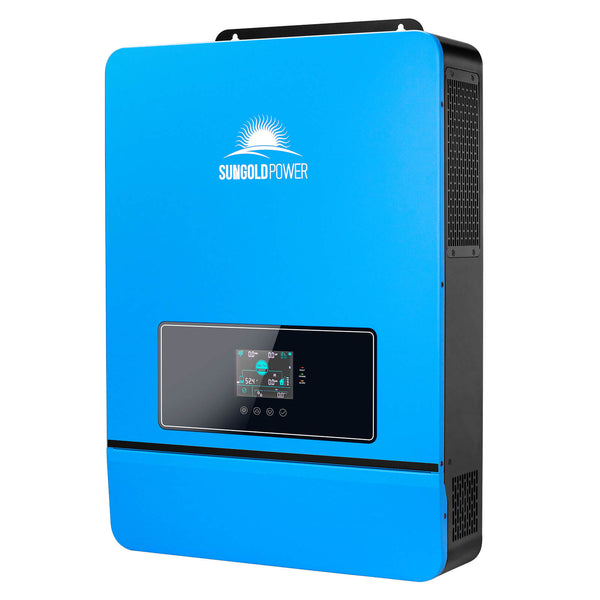
Has anyone tried any of the off-brand solar hybrid inverters such as these:
or

At first I can just use the grid as the backup for when the solar drops, or consider adding a small (~5kWh) battery for when the sun goes behind a cloud:
https://www.growattenergy.com/produ...system-2-5l-a1-low-voltage-one-phase-battery/
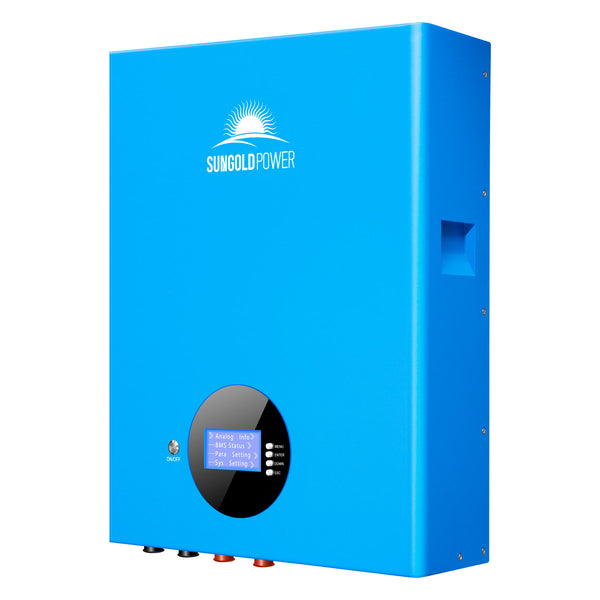
Anyone tried something like this? Seems like for around $5K I can set up a grid backed up, off grid system that would cover most of the garage energy usage. To be clear, this would be a hobby, not an investment.
 
To avoid these ads, REGISTER NOW!

jlv03

Well-known member
Joined
Jan 19, 2020
Messages
349
Location
SE IA
I’m thinking roughly the same idea for my house. Not for solar and energy offset, but more for having a big backup battery.

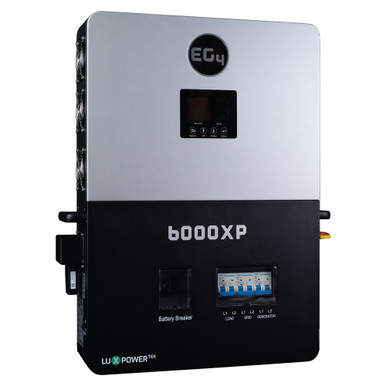
The EG4 6000XP has caught my eye.


dcg9381

Well-known member
Joined
Jun 20, 2018
Messages
11,927
Location
Austin, TX
Anyone tried something like this? Seems like for around $5K I can set up a grid backed up, off grid system that would cover most of the garage energy usage. To be clear, this would be a hobby, not an investment.
I have some experience in this area.

You're picking the off-the-boat "hybrid" inverters which are relatively new to market. I'm familiar with the EG-4, which is made by the same manufacturer in China as GroWatt. I have done numerous PV residential installs (some for profit), including my own, but all of my grid-tie inverters are non-China market and not cheap.

I have, in the last 2 years, started experimenting with hybrid inverters using stuff out of China and LIF04 batteries.

EG-4, GroWatt, let someone else figure them out.. Trust me on that. Don't buy a new product. Will Prowse will give you a good run down, but make no mistake, this is not US tech, it's rebranded China tech and you're probably OK for "normal" use cases, but the US distributors don't have a lot of margin to eat on these and they do not have an engineering department. If you're in a place that's tight about UL listings and they look into the details, don't do it at all.


Two things that I see wrong with your idea:
1) You are not accounting for "idle draw" and days without sun. EG-4 and GroWatt have some products that have idle draws of 250 watts or so, they'll eat your 5000 watt battery in 20 hours, which is less than a day without sun. You really need to plan on 3+ days without sun.
2) Your inverters may not fire on a single 5kw battery for moderate loads. There's a "start up" cost of this stuff, you can see it demo'd with Prose when he tries to fire a small 120V compressor on a single 5KW battery.. Per the math, it should work, 48V * 100A = 4800 starting watts, right? Nope...


Solar itself is "unstable" - that is, a single cloud can disrupt it, so you need a battery system.

Want reliable power? You need about 15kw worth of battery to get started and be stable.


Just for so you know I'm not bullshitting, here is some of our EG-4 stuff out of my shop:
1704759211805.png
 

inphx

Well-known member
Joined
Feb 23, 2012
Messages
1,289
Location
Phoenix/Scottsdale AZ
I did DIY my 16kw solar in the garage, with six eg4 batteries. It was permitted and inspected which i'm glad for because I may not have done the dc enclosed wire ducts.

Yes its a science project and i am now playing with a solar assistant raspberry pi to automate control of loads.

It charges my tesla fine when the shining shining but i only can get 120 miles from the batteries if there is no sunshine or I need to charge overnight.

The inverters are MPP LV 6048 from Taiwan i bought direct risking USA warranty support. They can be paired and a third one added in parallel.

Happy with everything.


dolar234357269.jpg
 
Last edited:
OP
P

pembol

Well-known member
Joined
Feb 13, 2014
Messages
276
Thanks for the input, these are both very similar to what I am thinking. I will look some more into EG4 and MPP. In my case I have a 90A/220V feed to the garage, so it is not really an 'off-grid' situation as I have grid for unlimited backup as needed and to handle inrush.

250W idle draw would be a deal breaker, as that would kill any energy savings I am hoping to get. I will look into that some more, but the spec sheets for these things are pretty sparse so it is kind of hard to know, UL listing would be a plus, but I am not sure it is a requirement if not feeding back into the grid.
 
OP
P

pembol

Well-known member
Joined
Feb 13, 2014
Messages
276
Both the EG4 and MPP look promising.

One question that is not obvious from the manuals - can these be set up with a source priority, such that power is first drawn from PV (if available), second from battery (if charged) and finally from the grid if neither PV or battery are available?
 

inphx

Well-known member
Joined
Feb 23, 2012
Messages
1,289
Location
Phoenix/Scottsdale AZ
On the MPP I know there is a preference setting as you describe.

One thing to look at is the inverter solar input "max PV volts" and amps. I selected hardware and ordered because of the shipping time. Then i revisited my design. Solar panels in quantity were in stock/out of stock. I wanted to pick up locally because of shipping fees and stories of broken panels. Once I had panels and inverter selected that dictated how my strings needed to be configured. I can only use 2 panels in series to not exceed max PV input voltage. So, no big deal - get combiner boxes... but that required me to do alot of wired 'home runs' (36/2) for 18 pairs of wires to combiner box. For my permit, these qualified as DC disconnect and had to be placed outside. I think the EG4 inverter or the LVX (vs LV) version of my inverter has a higher PV input voltage. So more panels in series, less wire and less runs from the roof.

All those wire pairs - an installer would charge more $ but in DIY it was wire cost plus hassle. But i feel the resiliency in a bad panel only taking out a tiny portion of the system was a win in the end. Also diagnosing a bad feed is a very narrow task in my case.

I bought 4 extra panels because i heard odds are you will have some broken - and on day of install discovering that in a stack of panels would be disruptive. But now i have 4 extras. I think i will mount on west side of roof ridge to catch afternoon sun.


pvin225303506.jpg
 
Last edited:

Innovate1

Well-known member
Joined
Jul 28, 2014
Messages
4,300
Location
Illinois near St. Louis, Missouri
I am thinking of putting together a small solar setup without capability to put solar back onto the grid. We don't have net metering here so a big array/grid inter-tie is not cost effective. But I would like to do some solar for emergency power and reduce my usage and also just general interest. It would have solar panels with batteries and inverter to run some smaller loads such as refrigerator, network equipment, etc. This could have a way to top up the batteries if use exceeds solar input. Thinking 1 to 2 kW panel size. I need to do some more reading at diy solar forum...
 

dcg9381

Well-known member
Joined
Jun 20, 2018
Messages
11,927
Location
Austin, TX
One question that is not obvious from the manuals - can these be set up with a source priority, such that power is first drawn from PV (if available), second from battery (if charged) and finally from the grid if neither PV or battery are available?
On my EG4 inverters above, they have exactly this - source priority and you set battery levels at which to switch.

I've never had an issue with broken panels.... If I order new, getting them here intact is the responsibility of the seller / shipper. We've had a "close call" but deliveries have had several pallets delivered with no major issues.
 
OP
P

pembol

Well-known member
Joined
Feb 13, 2014
Messages
276
What did you all do for panels and racking? Seems like there is a big range in $/W here. Is it worth paying a little more for brand names like REC, Q-Cell etc? Or are the $0.28/W no name panels OK?
 

dcg9381

Well-known member
Joined
Jun 20, 2018
Messages
11,927
Location
Austin, TX
What did you all do for panels and racking?
I use uni-rack.. I've never used anything else. But I often build ground mount arrays out of steel, mount the uni-rack to my array assembly, then mount the panels to uni-rack. I try to stay away from doing roof arrays over living space, unless I designed the roof and know exactly where the penetrations should be.
 

Innovate1

Well-known member
Joined
Jul 28, 2014
Messages
4,300
Location
Illinois near St. Louis, Missouri
I use uni-rack.. I've never used anything else. But I often build ground mount arrays out of steel, mount the uni-rack to my array assembly, then mount the panels to uni-rack. I try to stay away from doing roof arrays over living space, unless I designed the roof and know exactly where the penetrations should be.
Is that because you don't know where the structural members are? I can see that if the space isn't accessible but for buildings with attic space the framing is obvious.
 

dcg9381

Well-known member
Joined
Jun 20, 2018
Messages
11,927
Location
Austin, TX
Is that because you don't know where the structural members are? I can see that if the space isn't accessible but for buildings with attic space the framing is obvious.
I don't like attaching to "roof deck" versus structural member of the roof. And often with spray foam homes, you can't see where you are drilling on the inside. Even where framing is obvious, from the outside I'm not always convinced that I can get 100% of those fasteners down without a single miss... I just don't like putting holes in perfectly good roofs.

It's a preference thing. I'd rather ground mount. And here our roofs lifetimes are often inside of 10 years due to hail, so the whole roof mount thing - not a fan for our location.
 
To avoid these ads, REGISTER NOW!
OP
P

pembol

Well-known member
Joined
Feb 13, 2014
Messages
276
I definitely want to put this on the roof. The garage is not even framed yet, so plenty of time to measure for exactly where the I-joists are prior to insulation and the shingles going on. And the shingles will be brand new, so no worries about a roof replacement for some time.....
 

Innovate1

Well-known member
Joined
Jul 28, 2014
Messages
4,300
Location
Illinois near St. Louis, Missouri
I used two strong magnets positioned on each side of the truss member so they repel each other and clamped to the framing and a stud sensor (type with a little pivoting magnet to detect screws or nails) on the roof to locate the center of the framing for an antenna mount. Worked very well. Someone sells such a kit and even patented some features but it is very expensive. Very simple and accurate to DIY.
 

dcg9381

Well-known member
Joined
Jun 20, 2018
Messages
11,927
Location
Austin, TX
The 6000XP has an advertised idle consumption of 50 watts under certain conditions.Here is a YouTube video of one such test to confirm this.There are others.
These are new to me, what's cool about them is that they are split phase in a box and you can run them in series....
I'm going to let someone else sort the bugs out.

I've been running the EG4-6000EX-48, which requires two to split phase.. And they have much higher draw. Signature solar seems to have dropped them.
 

theoldwizard1

Well-known member
Joined
Feb 22, 2011
Messages
43,317
Location
SE MI
Solar itself is "unstable" - that is, a single cloud can disrupt it, so you need a battery system.

Want reliable power? You need about 15kw worth of battery to get started and be stable.
If the you are using the system to offset some/most of the utility companies cost (i.e. you still have a meter) then you can start with a much smaller battery bank. Just know on cloudy days, you will be buying your power !
 

dcg9381

Well-known member
Joined
Jun 20, 2018
Messages
11,927
Location
Austin, TX
If the you are using the system to offset some/most of the utility companies cost (i.e. you still have a meter) then you can start with a much smaller battery bank. Just know on cloudy days, you will be buying your power !

In Prose's testing of the EG-6000EX-48 inverter, loads that were well within 120V @ 15A range could not be fired from a single battery inverter combo, the inverter would fault using a single 5 kWh battery. On paper the battery could do it (100A discharge). On paper the inverter could do it. In reality, that wasn't the case... You needed two batteries to reliably handle those loads... I'd "guess" due to start up surge. In my own testing, even turning on a single inverter against a single battery was not always successful...

It's this type of stuff that I want to know... These inverters are 25% of what I spend on grid tie inverters for the house, so they're going to have some quirks..

You're right, cloudy days - and even here in Texas, better plan for 7 consecutive days minimum if you really don't have a back up source of power.

The cool thing is on time-of-day power that you can potentially save a good deal of money with the right programming. When my rates go up 400% (that's a thing) - solar payback is very very high, much better than the net meter that they took away...
 
OP
P

pembol

Well-known member
Joined
Feb 13, 2014
Messages
276
The 6000XP has an advertised idle consumption of 50 watts under certain conditions.Here is a YouTube video of one such test to confirm this.There are others.
The specs on this look pretty amazing - I have some time before making a purchase so I will look for some independent testing on these.
 
OP
P

pembol

Well-known member
Joined
Feb 13, 2014
Messages
276
A follow on question about load sharing - according the EG4-6000xp spec sheet it is capable of 50A 'AC Bypass (Grid)'. Does that mean it can pass 50A from the grid to a load to handle in rush or overloads? For my needs (with a reliable grid) that would take care of the occasional overload without having to oversize the battery or inverter.

In terms of banking energy, as this will primarily be for heating/cooling I can store some power in a battery, and some in the thermal inertia of the garage and its contents. When the sun is shining and the battery is charged I can heat the garage up to 75F, which would probably buy me 24 hours of reasonable temperatures before needing to heat again. I am in sunny Colorado, it literally makes the news if we have more than 3 days of clouds in a row.
 

dcg9381

Well-known member
Joined
Jun 20, 2018
Messages
11,927
Location
Austin, TX
A follow on question about load sharing - according the EG4-6000xp spec sheet it is capable of 50A 'AC Bypass (Grid)'. Does that mean it can pass 50A from the grid to a load to handle in rush or overloads? For my needs (with a reliable grid) that would take care of the occasional overload without having to oversize the battery or inverter.

Yes, if you think about it, 240V (input) @ 50A = 12KW, but it's spec says max input power is 9000 watts @ 240V...
By-pass on their other inverters is exactly what you think it is, it's just a "switch" to the grid, just like a "transfer switch" on a generator install. Basically it's internals are only going to handle 50A when by-passed and running off grid power. It's essentially a 50A ATS.. :)

I'd like to see how it handles a "battery fault" (overload) - if it shifts down to the lower priority source. Mine (6500-EX-48) will "fault" in that case and once it's in a faulted state it has to be reset, but I don't have ours configured dual source...
 

Innovate1

Well-known member
Joined
Jul 28, 2014
Messages
4,300
Location
Illinois near St. Louis, Missouri
This discussion was about a year ago so wondering what people ended up putting together for themselves. Still thinking about doing some sort of system myself, maybe self installed to save cost if possible. Thinking a small system that would power some "essential" loads to save a bit on power but more for backup power if/when the utility is out. Charger from the utility rather than full intertie to save on install cost. I don't have net metering so a big system isn't in the cards.

Need to talk to my utility (a coop) as they have put out some things on solar - mainly warning about not being misled by solar sellers that assume net metering.

Also wondering about permits and code. My area does inspections but they are minimal - doubt they are up on solar code. Don't want to just do it and then have insurance issues otherwise I might.
 

ToolsRCool

Well-known member
Joined
Dec 28, 2024
Messages
231
Location
Plymouth, MI
I know we are a year past on this one. I work with batteries daily and hate them. I am also locked into my solar array size by my utility because I am grid tied as well, 5.8kW system (mine), yours is huge! So cool, congrats.

As long as you have grid power available, I'd try to use it rather than battery. I'd probably try to take a PLC controller and write a few lines of code to run an automatic transfer switch via monitoring of system voltage. Then it could automatically switch between your stand-alone garage array and utility power. Actually, such code and monitoring is already done in the field for automatic transfer switches for standby generators with auto-start. You would basically just flip it around to have it monitoring your solar array power as utility power. Maybe?
 
OP
P

pembol

Well-known member
Joined
Feb 13, 2014
Messages
276
I have still not made any progress on this. Just getting through the inspections on the grid power for the detached garage now, and I didn't want to complicate these with solar/batteries. That will be the next phase, likely this summer.
 

dcg9381

Well-known member
Joined
Jun 20, 2018
Messages
11,927
Location
Austin, TX
This discussion was about a year ago so wondering what people ended up putting together for themselves.
I've done several residential systems myself. One for me and several for a GC / home builder. These were a few years ago and they were all simple "grid tie" systems, no backup capacity, and at the time the utility did net metering. Way easier on "new construction" as you and put conduit where you need it to go.
Need to talk to my utility (a coop) as they have put out some things on solar - mainly warning about not being misled by solar sellers that assume net metering.
Here it's the coop that approves and does the inspection. No city involvement. YMMV.
Also wondering about permits and code. My area does inspections but they are minimal - doubt they are up on solar code. Don't want to just do it and then have insurance issues otherwise I might.
Our co-op followed their "own" code, meaning requiring accessible manual disconnects, they would not recognize modern "rapid shutdown" systems that made such disconnects unnecessary. They required a "line drawing", there was a permit, and a small fee for a bi-directional meter.

There are more modern inverters (hybrid) that can be easily programmed on when to feed back to the grid and when to use battery power. This works well if you don't have net metering, want a power backup, or are on "time of use" metering. The tough part is getting enough inverter and battery to have total coverage, unless you're just covering critical circuits.
 
To avoid these ads, REGISTER NOW!
Top Bottom