To avoid these ads, REGISTER NOW!

Old cap start motor trips GFCI (safety question)

Shiftless

Well-known member
Joined
Mar 9, 2014
Messages
14,577
Location
East Bay SFO
Technical question...

I have a vintage 1951 Craftsman half horse motor powering my Craftsman 100 drill press.
It runs fine when plugged into a non GFCI protected receptacle, but trips when using a GFCI circuit after running about 30 seconds with no load. If I bypass the ground connection by using the little gray 3 prong into 2 adapter, it runs fine on the GFCI circuit.

Is it safer to...
A:
run a separate non-code compliant circuit (no GFCI) dedicated for the drill press just so I can run a ground wire.

Or
B:
Use the 3 into 2 adapter on the existing circuit and rely on the GFCI to prevent shocks by its monitoring the balance between hot and neutral.

I suppose another option would be to replace the 67 year old motor with a new one that plays nicely with GFCI.

BTW, if anybody is looking closely at the pic of the motor, yes, I have the 4 pieces of threaded rod and cap nuts that belong there. I removed them for painting. I also removed the cord.
 

Attachments

  • 8EF61A78-BF4C-4ACF-9634-43280EFBD519.jpg
    8EF61A78-BF4C-4ACF-9634-43280EFBD519.jpg
    147.6 KB · Views: 23
  • 725D0853-C399-472A-A4C7-FD57310F1B83.jpg
    725D0853-C399-472A-A4C7-FD57310F1B83.jpg
    160.8 KB · Views: 19
  • 164A9AA2-F998-42FE-BDD9-6A79F9310FFF.jpeg
    164A9AA2-F998-42FE-BDD9-6A79F9310FFF.jpeg
    34.2 KB · Views: 11
Last edited:
To avoid these ads, REGISTER NOW!

Hdonly0

Well-known member
Joined
May 16, 2017
Messages
114
Location
Northwest Florida
I am not a professional electrician so I can say this. I would run it on a regular receptacle with ground and make sure the motor ground is connected. Done, drill some holes. That's just what I would do. Only you can decide what you do.
 

u3b3rg33k

Well-known member
Joined
Dec 18, 2017
Messages
4,048
sounds to me like you have a legitimate ground fault if removing the ground stops the GFCI from tripping - the first place i'd look would be the motor's junction box.
 

Lassen Forge

Well-known member
Joined
Apr 26, 2014
Messages
15,382
Location
The romantic hills of central Umbria, Italy,
It sounds like you're leaking current to the motor case once the motor gets warm... not uncommon on a 75 year old motor, considering the age of the insulation, etc. Does it trip faster when you have it under load? If so it sounds like the (original) insulation is breaking down somewhere on your fields, allowing current to migrate.

If you want to be 110% safety minded, you could spend the $$, take the motor to a local motor shop, have it checked, windings rewound, etc... won't be cheap, but then you have essentially new guts in a vintage motor housing that should last another 75 + years. This is the route I would take.

Otherwise - as long as your grounds are good, and you know the motor is grounded, you could put it on a non-GFI circuit and run it like your granddad did pre-GFI, just remembering you no longer have one layer of safety that you would with modern gear. Also remember as the motor gets older, those 75 year old electrical components will be getting older, and more prone to malfunction.

Getting a replacement motor probably won't cost as much as the rewind and rebuild, but to me that's like throwing in the towel. If you have the luxury of time, and you appreciate vintage gear (that looks vintage), well, keep your local motor shop in business!
 
OP
S

Shiftless

Well-known member
Joined
Mar 9, 2014
Messages
14,577
Location
East Bay SFO
Thanks for you input guys.

I do have the luxury of time and I certainly do appreciate old machinery.

The reason I don’t think it’s a true ground fault is that it always runs for a while before tripping the GFCI. If there was an internal short to ground, wouldn’t that trip right away? It delayed trip several times, right around 30 seconds of run time. (Estimated...I didn’t break out my stopwatch for this yet) :)

I opened up the motor junction box to inspect wiring and replace the old cord. It had been replaced before, but I am going with a new molded plug replacement cord assembly. Of course the original wires had somewhat brittle insulation and there was some old electrical tape, but I will put the new cord on and new electrical tape to shield wire from the motor housing. Tape and/ or “liquid electrical tape goo” for extra wire insulation where it touches the housing.
 
Last edited:

Negen

Well-known member
Joined
Jul 15, 2015
Messages
1,909
Location
Seatltle WA
Does your gfci also have arc fault built in to it ?I had this issue after a remodel in o e of my rental properties and the electricians installed dual arc/ground fault outlets and the garbage disposal wouldn't work called the local code inspector and was told kitchens only bedded ground faults so had them change the outlets for me. Could be worth looking into.

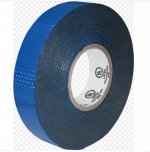
Another thing that seemed to help is if the wires are screwed onto the outlet wrapping that with the heavy duty rubber based electrical tape seemed to resolve some issues I had with motors running at full speed instantly . sometimes running high amp motors that when turned on didn't slowly ramp up sometimes a small spark would occur tape seemed to stop this also only used tape that is the heavy duty rubber stuff as normal electrical tape seemed to get dry when aged.

I had most my issues with 2000 watt 220 inverters or motors.

Sent from my G8141 using The Garage Journal mobile app
 
To avoid these ads, REGISTER NOW!
OP
S

Shiftless

Well-known member
Joined
Mar 9, 2014
Messages
14,577
Location
East Bay SFO
Negen:
Thanks for sharing your experience.

What’s “kitchens only bedded ground fault”? Was that a typo? I assume you meant to type NEEDED

No arc fault protection. Non GFCI 20 amp breaker.
I have a high quality 20 amp GFCI receptacle first in line from the sub panel. All the garage wiring (solid 12 ga) is 2 years new. EMT with separate green ground wire inside. One duplex receptacle per 4x4 box. Receptacles are industrial quality with wires entering the back and tightened with screw down clamp.
 
Last edited:

Lassen Forge

Well-known member
Joined
Apr 26, 2014
Messages
15,382
Location
The romantic hills of central Umbria, Italy,
The reason I don’t think it’s a true ground fault is that it always runs for a while before tripping the GFCI. If there was an internal short to ground, wouldn’t that trip right away? It delayed trip several times, right around 30 seconds of run time. (Estimated...I didn’t break out my stopwatch for this yet) :)

That's what's making me think it's the internal windings in the motor leaking current to the shell of the motor and creating a fault - When it's cold, it's fine, but as the motor warms up the ancient insulation starts to break down and allows a small current to pass and triggers the GFI. Once it cools back off, the insulation goes back to its original state, and you're fine - until the motor warms up again.

It's not a direct short (as in Arcen, Sparken, and Fizzpoppen), it's current leakage. GFI's are notoriously sensitive to this.
 

wyliesdiesels

Well-known member
Joined
Aug 14, 2012
Messages
20,067
Location
Modesto, CA
Technical question...

I have a vintage 1951 Craftsman half horse motor powering my Craftsman 100 drill press.
It runs fine when plugged into a non GFCI protected receptacle, but trips when using a GFCI circuit after running about 30 seconds with no load. If I bypass the ground connection by using the little gray 3 prong into 2 adapter, it runs fine on the GFCI circuit.

Is it safer to...
A:
run a separate non-code compliant circuit (no GFCI) dedicated for the drill press just so I can run a ground wire.

Or
B:
Use the 3 into 2 adapter on the existing circuit and rely on the GFCI to prevent shocks by its monitoring the balance between hot and neutral.


I suppose another option would be to replace the 67 year old motor with a new one that plays nicely with GFCI.

BTW, if anybody is looking closely at the pic of the motor, yes, I have the 4 pieces of threaded rod and cap nuts that belong there. I removed them for painting. I also removed the cord.

This only adds more non code compliant and unsafe things to the mix.

If the GFCI is tripping, its trying to tell you that there is an issue.

If you use that adapter and the frame is on concrete all you will have done is redirect the fault current...

Why not get the motor checked out?

Safety first

Thanks for you input guys.

I do have the luxury of time and I certainly do appreciate old machinery.

The reason I don’t think it’s a true ground fault is that it always runs for a while before tripping the GFCI. If there was an internal short to ground, wouldn’t that trip right away? It delayed trip several times, right around 30 seconds of run time. (Estimated...I didn’t break out my stopwatch for this yet) :)

I opened up the motor junction box to inspect wiring and replace the old cord. It had been replaced before, but I am going with a new molded plug replacement cord assembly. Of course the original wires had somewhat brittle insulation and there was some old electrical tape, but I will put the new cord on and new electrical tape to shield wire from the motor housing. Tape and/ or “liquid electrical tape goo” for extra wire insulation where it touches the housing.

Depends on the fault current and resistance...
 
OP
S

Shiftless

Well-known member
Joined
Mar 9, 2014
Messages
14,577
Location
East Bay SFO
Thanks guys. I’ll install the new cord and see if my motor will run OK on the GFCI circuit with the ground wire attached and the old wires better protected from rubbing against the frame.
 
OP
S

Shiftless

Well-known member
Joined
Mar 9, 2014
Messages
14,577
Location
East Bay SFO
UPDATE

New cord and plug installed. 14ga. Southwire SJOOW
Rubber grommet where it enters the housing. Strain relief inside.
Extra rubber based electrical tape between old wires and the motor frame.
Same kind of tape around the spliced neutral wire and the exposed terminals of the switch. The metal housing of the big flat rectangular capacitor was very close to the switch terminals. Seems to me that the cap should have a paper cover, but no remnants were found. :dunno:

Runs great now! No problems with leakage to ground at least for now. (Knocking on wood)
I bench tested it and let it run for 5 minutes.

Next step is to reassemble my drill press!

Thanks again guys for your guidance.:beer:
 

Attachments

  • A3ACEF0F-FC4F-4911-AC8B-91315B29163E.jpg
    A3ACEF0F-FC4F-4911-AC8B-91315B29163E.jpg
    96.8 KB · Views: 6
Last edited:
To avoid these ads, REGISTER NOW!
Top Bottom