
You are using an out of date browser. It may not display this or other websites correctly.
You should upgrade or use an alternative browser.
You should upgrade or use an alternative browser.
Old drafting set
- Thread starter LOTW
- Start date
Private Lugnutz
Well-known member
LOTW,
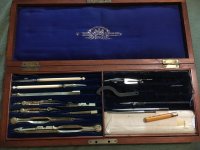
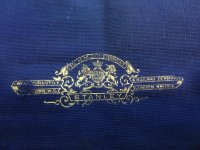
I would have that appraised by an antiques dealer if it was mine. It was made by Stanley of London in the 19th century, maybe early 20th century. The case (mahogany and brass), lining, and instruments are in terrific condition.
I would have that appraised by an antiques dealer if it was mine. It was made by Stanley of London in the 19th century, maybe early 20th century. The case (mahogany and brass), lining, and instruments are in terrific condition.
rlitman
Well-known member
LOTW,
I would have that appraised by an antiques dealer if it was mine. It was made by Stanley of London in the 19th century, maybe early 20th century. The case (mahogany and brass), lining, and instruments are in terrific condition.
That set is not new, however, Stanley of London is not a name of antiquity. Here's what it says on their website:
"Stanley London is pleased to offer fine brass reproductions of antique sextants, compasses, telescopes, and other surveying instruments and nautical gifts. These are handcrafted..."
Basically, Stanley of London imports handmade brass stuff from Asia. Anyway, that set does not appear to be one of their products, though who made it is beyond me.
On another note, that set is incomplete, and I'm not sure what that wrench even has to do with it.
driftpin
Well-known member
Yeah, if you have a pair of KONI motorcycle shocks, that pin-spanner may be useful, but I cannot fathom why it's in that collection. Is that a 'slip-stick' in the white paper envelope?
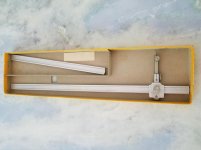
I picked-up an accessory from a well-known German (probably West German, at the time of manufacture) precision tool company, a drafting implement, and after researching it online, it's probably not-even worth advertising it for sale. It appears to be possible some sort of scaling up-or-down extruded aluminum bar mechanism, or possibly a circle scriber. Labeled Dietzgen (Germany) Ecobra.
My wife has a set of Dietzgen drafting tools she used as an electrical engineering student, 40+ years ago. I copped the compass for occasional use in projects, it's got a steel pin, which is replaced when necessary by a tapered graphite tip when you need to leave a pencil-mark.
Ebay has all-sorts of drafting toolsets none of which seem to be bringing-in any money. I think the only way you would be able to get some good money is if there was provenance with the item. A receipt from a known auction house, from the estate of Harley Earl, Zora Arkus-Duntov, Walter Chrysler, Phil Remington (I don't think he's deceased yet), or some other such person.
I believe that I read once that Walter Chrysler's railroad engineering apprentice toolbox, filled with the tools he made for his apprenticeship, are on-display in the lobby of the Chrysler Building in NYC.
Wonder if those white handles are ivory? Use a black light to illuminate them, if they fluoresce white or blue/white it's not ivory, though cellulose, bone, and ivory dust bonded with some type of resin will pass this test.
I picked-up an accessory from a well-known German (probably West German, at the time of manufacture) precision tool company, a drafting implement, and after researching it online, it's probably not-even worth advertising it for sale. It appears to be possible some sort of scaling up-or-down extruded aluminum bar mechanism, or possibly a circle scriber. Labeled Dietzgen (Germany) Ecobra.
My wife has a set of Dietzgen drafting tools she used as an electrical engineering student, 40+ years ago. I copped the compass for occasional use in projects, it's got a steel pin, which is replaced when necessary by a tapered graphite tip when you need to leave a pencil-mark.
Ebay has all-sorts of drafting toolsets none of which seem to be bringing-in any money. I think the only way you would be able to get some good money is if there was provenance with the item. A receipt from a known auction house, from the estate of Harley Earl, Zora Arkus-Duntov, Walter Chrysler, Phil Remington (I don't think he's deceased yet), or some other such person.
I believe that I read once that Walter Chrysler's railroad engineering apprentice toolbox, filled with the tools he made for his apprenticeship, are on-display in the lobby of the Chrysler Building in NYC.
Wonder if those white handles are ivory? Use a black light to illuminate them, if they fluoresce white or blue/white it's not ivory, though cellulose, bone, and ivory dust bonded with some type of resin will pass this test.
Attachments
Last edited:
Mark in Indiana
Well-known member
IMO: I'd keep it. I still have mine from high school drafting class (shortly after they quit using stone tablets). It gets used a few times a year for layout work on stuff to be cut that needs to be more precise than using a tape measure & a carpenter's pencil.
PugetDude
ALLIANCE MEMBER
I've still got my Dietzgen set; actually made a living with it for a couple of years early in my career. Now, not much more than a relic of a bygone era. ****, this thread is making me feel old....
Private Lugnutz
Well-known member
Stanley certainly is, though, rlitman. It's good to know there is a reproduction market, and, that this could be one of their products (which may explain its exception condition - and all the more reason to get it appraised by an expert!), but, I didn't mean "Stanley of London" as a formal name, about which I had no former knowledge. I meant Stanley, of London, as opposed to Stanley of New Britain, CT!That set is not new, however, Stanley of London is not a name of antiquity.
OP,
I am a member of WorthPoint, and a quick search reveals several similar cases at auction at reputable auction houses. They come up on a simple Google too. If it's a high quality fake, they'll know it right away, and you may feel a little sheepish about having taken it to them, but at least you won't be wondering!
rlitman
Well-known member
Stanley certainly is, though, rlitman. It's good to know there is a reproduction market, and, that this could be one of their products (which may explain its exception condition - and all the more reason to get it appraised by an expert!), but, I didn't mean "Stanley of London" as a formal name, about which I had no former knowledge. I meant Stanley, of London, as opposed to Stanley of New Britain, CT!
OP,
I am a member of WorthPoint, and a quick search reveals several similar cases at auction at reputable auction houses. They come up on a simple Google too. If it's a high quality fake, they'll know it right away, and you may feel a little sheepish about having taken it to them, but at least you won't be wondering!
Agreed. Anyway, I don't think it is a reproduction. Never implied that.
For starters, look at the slotted screws in the hinges.
...Wonder if those white handles are ivory? Use a black light to illuminate them, if they fluoresce white or blue/white it's not ivory, though cellulose, bone, and ivory dust bonded with some type of resin will pass this test.
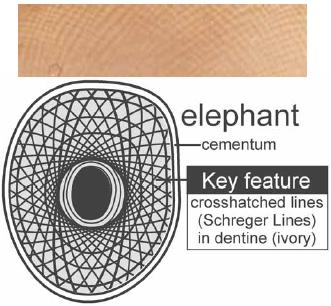
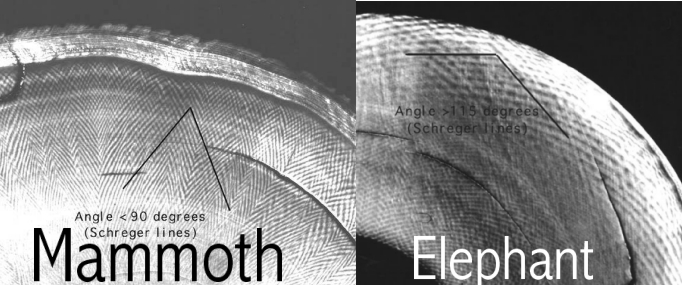
The easiest way to identify ivory is by looking at the Schreger lines. These are lines that show up when looking at the cross section of ivory. The angle of the lines can be used to distinguish elephant from mammoth (and mastodon) ivory.
https://www.realorrepro.com/article/Ivory-genuine-fake--confusing
Celluloid has parallel and repeating lines:

Ivory's lines intersect:
driftpin
Well-known member
The interesting thing about the Schreger lines is that they supposedly have different angles of intersection for current tusked animals like elephants, versus extinct animals like woolly mammoths. The Schreger lines of today's animals are narrower than extinct ones.
Agreed. Anyway, I don't think it is a reproduction. Never implied that.
For starters, look at the slotted screws in the hinges.
The easiest way to identify ivory is by looking at the Schreger lines. These are lines that show up when looking at the cross section of ivory. The angle of the lines can be used to distinguish elephant from mammoth (and mastodon) ivory.
https://www.realorrepro.com/article/Ivory-genuine-fake--confusing
Celluloid has parallel and repeating lines:
Ivory's lines intersect:
driftpin
Well-known member
I did look that one up, fun to use the internet but I don't trust wikipedia.
Agreed. Anyway, I don't think it is a reproduction. Never implied that.
For starters, look at the slotted screws in the hinges.
The easiest way to identify ivory is by looking at the Schreger lines. These are lines that show up when looking at the cross section of ivory. The angle of the lines can be used to distinguish elephant from mammoth (and mastodon) ivory.
https://www.realorrepro.com/article/Ivory-genuine-fake--confusing
Celluloid has parallel and repeating lines:
Ivory's lines intersect:
rlitman
Well-known member
The interesting thing about the Schreger lines is that they supposedly have different angles of intersection for current tusked animals like elephants, versus extinct animals like woolly mammoths. The Schreger lines of today's animals are narrower than extinct ones.
They absolutely converge at different angles. Here's a good example:

Private Lugnutz
Well-known member
Thanks. I misread.I don't think it is a reproduction. Never implied that.
Zeke
Well-known member
I have my mother's inking tools, compass, etc. She took drafting as part of being an art major in college during WWII. I think I can fine her leather stamping tools somewhere, but that's a bit OT.
I have purchased maybe 50 of these type sets.
None has been worth a bother and you can readily see your value on SOLD ebay items.
They do make fine gifts to friends.
There is almost always a set on my desk, simply for others to fiddle with and for me to give away.
They are beautiful sets.
I think the fanciest I still have is silver plated.
None has been worth a bother and you can readily see your value on SOLD ebay items.
They do make fine gifts to friends.
There is almost always a set on my desk, simply for others to fiddle with and for me to give away.
They are beautiful sets.
I think the fanciest I still have is silver plated.
Last edited:
I don't know if anyone mentioned this:
You can do a quick
Pin test
For ivory of any sort(this particular set will not be Mastodon or Mammoth but they work the same as elephant and elk)
Heat pin to red hot.
Poke suspected ivory in an inconspicuous spot.
It will smell like burnt hair if organic.
You can do a quick
Pin test
For ivory of any sort(this particular set will not be Mastodon or Mammoth but they work the same as elephant and elk)
Heat pin to red hot.
Poke suspected ivory in an inconspicuous spot.
It will smell like burnt hair if organic.
If you want to add to the things that make you feel old, I still have my log log decitrig slide rule right next to my drafting tools. It does almost as much as a $15.00 hand held calculator does today!!
Can it do addition?
VintageOkieDriver
Well-known member
I bought one of these at an estate sale recently it is an AMCO with 1330 stamped on the case made in West Germany. Would the "West Germany" marked on the tools make them more valuable?
I bought one of these at an estate sale recently it is an AMCO with 1330 stamped on the case made in West Germany. Would the "West Germany" marked on the tools make them more valuable?
Full retail store prices are usually 20 bucks.
100 bucks is a one in 10,000 chance or less.
I don't know about your particular set.
They're cool old throwbacks that are just slightly more useful than a box of typewriter ribbons or plain sliderules.
The one in my pic is 4 to 15 bucks.
Mine might get soldered to a lamp base....
Last edited:
VintageOkieDriver
Well-known member
I realize now they are not worth much however I thought the West Germany might be somewhat unique?
davethorik
Well-known member
I realize now they are not worth much however I thought the West Germany might be somewhat unique?
Just means it was made before the wall fell.
Dave455
Well-known member
O.k. guys, as a former draughtsman I may be able to assist here!
Firstly, there is little doubt in my mind that this set is genuine. W.F. Stanley were probably the most prolific manufacturer of drawing instruments in the 19th century, and that set is entirely typical. So 'Stanley London' definitely were a name of antiquity. I don't know when they ceased making drawing equipment, but I suspect early in the 20 th Century.
W.F. Stanley continued as a maker of navigational and surveying instruments until fairly recently. They made high quality prismatic compasses as well as compasses for boats until they were taken over, by SIRS navigation if memory serves!
I suspect that anybody using the Stanley name now is simply some chancer trying to cash in.
The bad news, that setisn't worth a hell of a lot. If you want a set of instruments to use, a 20 th century set will be so much nicer to use, and later sets by Harling or Thornton are still relatively inexpensive, so those older sets are not in great demand. That's another reason I suspect it's genuine - they've never been worth faking!
Firstly, there is little doubt in my mind that this set is genuine. W.F. Stanley were probably the most prolific manufacturer of drawing instruments in the 19th century, and that set is entirely typical. So 'Stanley London' definitely were a name of antiquity. I don't know when they ceased making drawing equipment, but I suspect early in the 20 th Century.
W.F. Stanley continued as a maker of navigational and surveying instruments until fairly recently. They made high quality prismatic compasses as well as compasses for boats until they were taken over, by SIRS navigation if memory serves!
I suspect that anybody using the Stanley name now is simply some chancer trying to cash in.
The bad news, that setisn't worth a hell of a lot. If you want a set of instruments to use, a 20 th century set will be so much nicer to use, and later sets by Harling or Thornton are still relatively inexpensive, so those older sets are not in great demand. That's another reason I suspect it's genuine - they've never been worth faking!