To avoid these ads, REGISTER NOW!

Old school residential HVAC tools

Firebrick43

Well-known member
Joined
May 12, 2015
Messages
14,088
Location
West central Indiana
My 25 year old central AC unit stopped the other day and it needs a new fan motor. In the process of checking everything out I pulled my digital IR temp gun to help figure out superheat and it didn't work. New 9V battery, would start and pull the trigger it would die and restart as if the battery was questionable in current output but another battery same thing. Seen same scenario with digital torque wrenches which is always why I stuck with split beams.

Ended up using the kids rectal thermometer to measure the pressure line (they won't use it again as they are older now) and it did ok. At work I always used a fluke with clamp on thermocouple but my personal fluke isn't that fancy and really don't want to drop coin on another DMM or some fancy thermocouple only device that will be dead the next time I use it. If I was doing it professionally I surely would have a nice fieldpiece digital manifold with the wireless clip on thermometers.

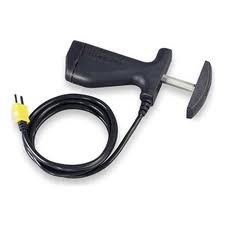
I used a pocket kitchen thermometer to measure Delta T on the plenum and registers(don't tell my wife) and got to thinking, they had to use something like this before the digital age. But how did they hold it against the lines to take the measurements (without just setting there manually holding it for a few minutes)

Doing some google and ebay searches there certainly were analog micron gauges but they looked to be ungainly things. Were they used in the field on residential systems?

All my professional experience came from working on mill water cooled refrigerant chillers for CNC machines well after digital age tools were in play, More curious to what was used back in the day.
 
To avoid these ads, REGISTER NOW!

bonneyman

Well-known member
Joined
Apr 22, 2010
Messages
8,815
Location
Desert SW
I had a few electronic gizmos when I worked in HVAC for almost 30 years. Most of my stuff was analog and/or old school. never had any issues. You don't have to spend $$$ to do A/C for the average home unit. I did mostly R22 systems with some R410a before I retired. Not a few times I had fellow technicians go bug-eyed when I pulled out analog meters and thermostats.
Were they as accurate as their digital equivalents? No. But if I dropped or fried one I didn't have to take out a mortgage to get a replacement.

If you are interested I can put together a short list for you - don't have the time right now.
 
OP
F

Firebrick43

Well-known member
Joined
May 12, 2015
Messages
14,088
Location
West central Indiana
I had a few electronic gizmos when I worked in HVAC for almost 30 years. Most of my stuff was analog and/or old school. never had any issues. You don't have to spend $$$ to do A/C for the average home unit. I did mostly R22 systems with some R410a before I retired. Not a few times I had fellow technicians go bug-eyed when I pulled out analog meters and thermostats.
Were they as accurate as their digital equivalents? No. But if I dropped or fried one I didn't have to take out a mortgage to get a replacement.

If you are interested I can put together a short list for you - don't have the time right now.
I would be interested in some pics or a list if you ever have time. Lots of history of other tools here, never seen HVAC stuff
 

mike93lx

ALLIANCE MEMBER
Joined
Dec 9, 2013
Messages
37,614
Location
Richmond, VA
It would be, But I am not interested in Jerry rigging it, it makes me feel dirty and cheap. And not in a frugal way

I am interested what the pros used in years past.
Quick, simple, cheap and effective doesn't mean jerry rigged. I take that classification as half-assed or corner cutting. Curious as to what bonneyman or any other former techs will say on it, though
 

bonneyman

Well-known member
Joined
Apr 22, 2010
Messages
8,815
Location
Desert SW
First off, having a good set of various hand tools is a must. Screwdrivers, wrenches, pliers, nutdrivers, etc. can be pulled from your tool boards and shop as all A/C units are put together like most other appliances. I used a Bucket Boss - a multi-pocketed nylon sheath that slid over a 5 gallon bucket. Can carry a tool of stuff in there. Later on I put together a smaller Bare-bones tool kit out of a Husky plastic tote I got from Home Depot. That way, I would carry the small tote up on the roof and could do most jobs, but if I needed anything specialized I'd make a trip down to the truck and put it at the base of the ladder. Then pull it up with a rope and hook. No sense risking falling because you didn't have both hands on the ladder.
Your mileage may vary - set up your tools according to what you need.
 

Attachments

  • IMG_3330.JPG
    IMG_3330.JPG
    135 KB · Views: 13
  • IMG_4516.JPG
    IMG_4516.JPG
    99.3 KB · Views: 14

bonneyman

Well-known member
Joined
Apr 22, 2010
Messages
8,815
Location
Desert SW
I started out with tools I could afford - usually old school ones. I did upgrade some over the years but in most cases went back to the old stuff.
Thermometers - analog dial, or mercury bulb styles.
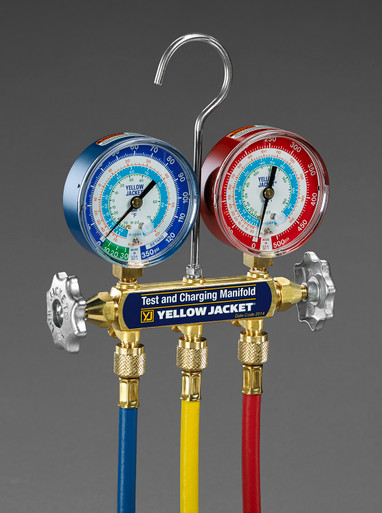
Gauges - I had one set of gauges and hoses for about 5 years. I finally got a second set when I dropped my first one and got caught with nothing to back it up with. I personally never went with electronic gauges, but started buying used manifolds and rebuilding/repairing them. I'm especially proud of the vintage set I restore, dates to probably the 1940's.
Meters - My first clamp meter was a Johnstone. Did volts, amps, ohms, millivolts, and temperature with an adaptor. Have secured a few others over the years but have migrated back to the old Amprobe "beetle meter". Doesn't need a battery for volts and amps, will work down to -5 deg, and will withstand a 5 foot drop.
Whatever works for ya.
 

Attachments

  • IMG_4214.JPG
    IMG_4214.JPG
    122.5 KB · Views: 7
  • IMG_3203.JPG
    IMG_3203.JPG
    126.9 KB · Views: 6
  • IMG_6259.JPG
    IMG_6259.JPG
    116.4 KB · Views: 6
  • IMG_8185.JPG
    IMG_8185.JPG
    129.5 KB · Views: 8
  • IMG_2745.JPG
    IMG_2745.JPG
    109 KB · Views: 9
  • IMG_3199.JPG
    IMG_3199.JPG
    135.7 KB · Views: 9

bonneyman

Well-known member
Joined
Apr 22, 2010
Messages
8,815
Location
Desert SW
Specialized equipment can be bought as the need/skill set arises.
A good quality capacitor tester is worth it's weight in gold (though with a clamp meter and separate voltage meter you can do long-hand style and check run caps.)
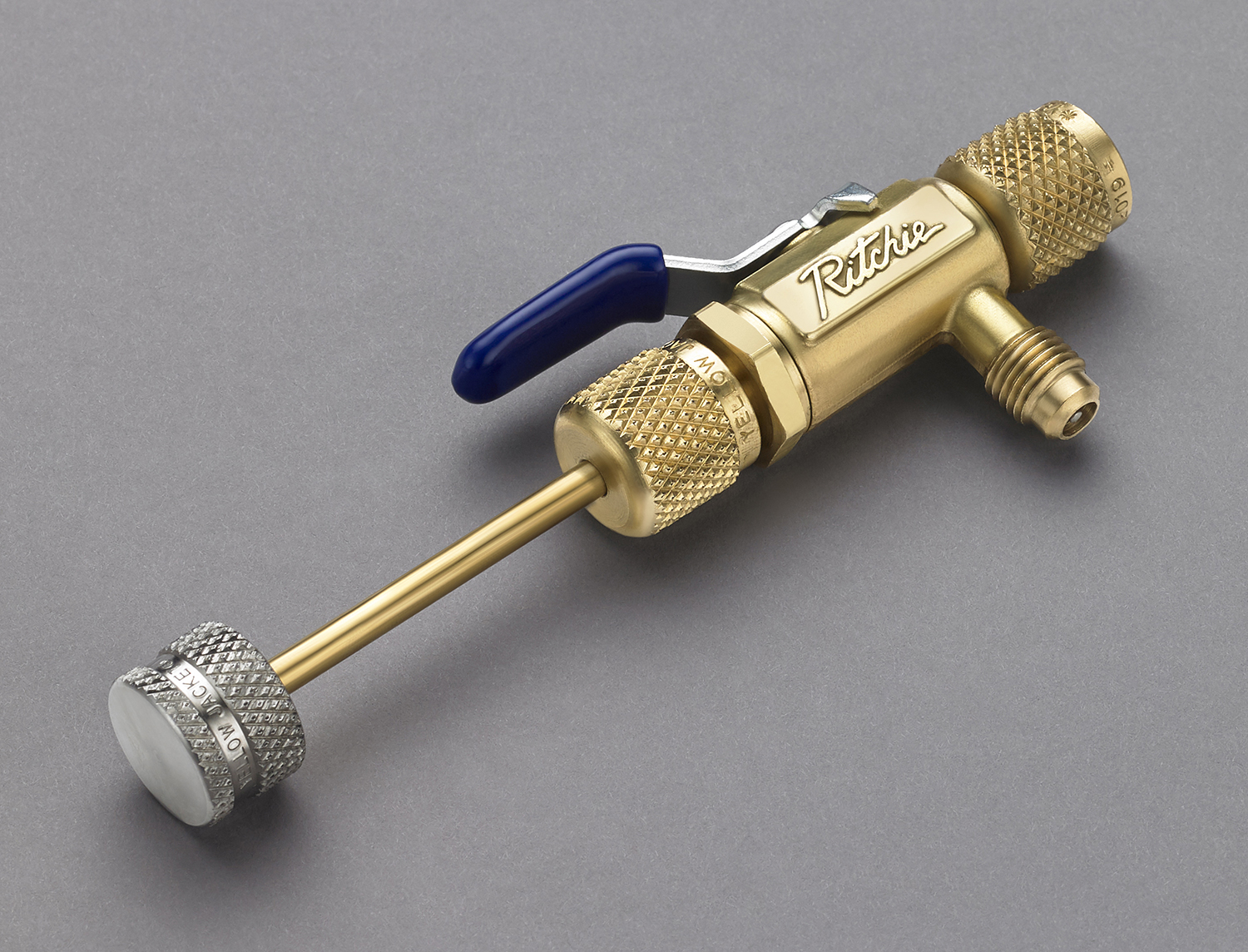
A schrader valve core remover is one expensive bit I'd get. Allows you to remove and replace a valve core without losing the charge.
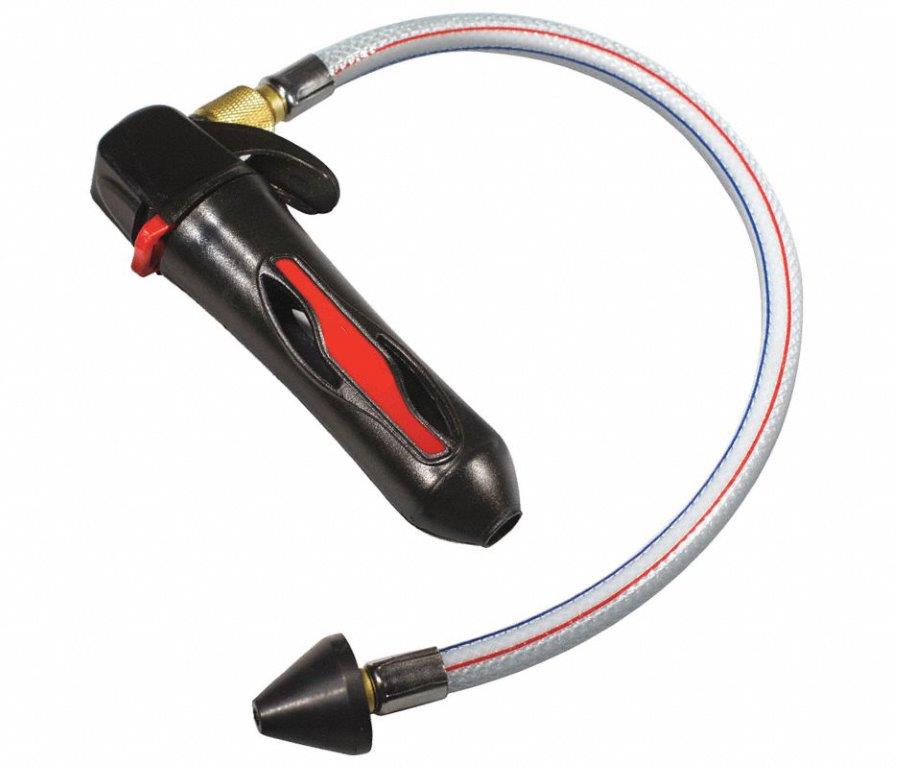
A condensate line cleaner is another fancy bit that I think one should have. Runs off of a CO2 cartridge, hand-held, small, with adapters allows you to safely blow out plugged restricted drains.
 

Attachments

  • IMG_3932.JPG
    IMG_3932.JPG
    116.2 KB · Views: 10
  • IMG_6837.JPG
    IMG_6837.JPG
    115.1 KB · Views: 10
Last edited:

bonneyman

Well-known member
Joined
Apr 22, 2010
Messages
8,815
Location
Desert SW
After years in the industry I discovered the value of flare wrenches. Bonney made some really good ones, but they can be hard to source. Any good set of flare wrenches will do.
Over time I accumulated various small screwdrivers and thermostat tools to adjust/clean stats and other small electrical switches. You can grab those as you need them.
One cool minidrivers I got was a pair of micro screw starters. Absolutely killer for taking thermostat screws out without dropping them. Works well on computers and stereo equipment, too!
 

Attachments

  • IMG_8514.JPG
    IMG_8514.JPG
    104 KB · Views: 8
  • IMG_8520.JPG
    IMG_8520.JPG
    116.5 KB · Views: 6
  • IMG_6093.JPG
    IMG_6093.JPG
    120.2 KB · Views: 10

bonneyman

Well-known member
Joined
Apr 22, 2010
Messages
8,815
Location
Desert SW
I used a ratchet and sockets for awhile, finally upgrading to ratcheting box wrenches in 1996. Gearwrench. Still have that set. Never broke one, tweaked one, or had one fail. And I wrenched on them hard!
Since then they've come out will all sorts of variations (super long, double box ends, flex, etc.), but whatever set you have handy will usually work fine.
 
OP
F

Firebrick43

Well-known member
Joined
May 12, 2015
Messages
14,088
Location
West central Indiana
Thank you. The rectal thermometer doesn't look that much different. Yesterday when checking the A coil that little drain buster would have been nice.

The second manifold set looks awesome and I wish modern ones had gauge faces that easy to read
 

American Locomotive

Well-known member
Joined
Jan 8, 2017
Messages
10,974
Location
Rhode Island
Second the valve core removal tool. It makes vacuuming the system down much faster, besides being able to replace valve cores "hot." Get the Appion one (or other brand name). The Amazon ones leak.

You can get multi-input thermocouple thermometers pretty cheap these days.
 
To avoid these ads, REGISTER NOW!

NOEYEZ

Well-known member
Joined
Jul 1, 2022
Messages
48
Quick, simple, cheap and effective doesn't mean jerry rigged. I take that classification as half-assed or corner cutting. Curious as to what bonneyman or any other former techs will say on it, though
We used Pres-tite tape (tar like tape that stuck to itself but could be re-used) to insulate the Taylor thermometer to the suction line or hold it in position against a coil assy.
 

OccupantRJ

Well-known member
Joined
May 15, 2009
Messages
11,128
Location
Eastern North Carolina
When I was still working there were 8 rooftop AC units that I dealt with. I also had a Bucket Boss to use for tools, a bucket to pull needed items up with, as a water bottle holder, and as a stool when needed. All the testing tools were analog and included the black beetle Amprobe. There were also folded paper sheets with information and color traced wiring diagrams in the Boss pockets along with alligator tipped jumper leads to allow spending as little time in the direct sun on the roof as possible. A straw hat along with a white cloth to drape from under it onto the back of the neck made it livable when up there. It gets hot around here, and is predicted to be 100 with a 115 feels like this weekend. Staying cool is as important as the other tools.
 

danski0224

Well-known member
Joined
Jan 29, 2005
Messages
13,440
Location
Near Naperville, IL
Doing some google and ebay searches there certainly were analog micron gauges but they looked to be ungainly things. Were they used in the field on residential systems?
Almost no one used to pull a vacuum, much less use a micron gauge, "back in the day".

I had a Thermal analog gauge, it was the only game in town.

Now, Blue Vac is the standard. Theirs is still the best.

Used to have a Cooper thermocouple box, used velcro to hold the sensors on. Used a PT chart and did the math. The best analog gauges were maybe 1% accurate, typical were +/- 3% or worse.

I went to digital gauges way back when Digi Cool was first released and never looked back. Absolutely no point in using analog gauges today.
 

Snapped-off

Well-known member
Joined
Feb 22, 2012
Messages
4,804
Location
Indiana
You can pick up k-type thermocouples pretty cheap, and k-type to banana adapters to plug straight into a cheap meter, if you end up doing anything additional in the future.
 
OP
F

Firebrick43

Well-known member
Joined
May 12, 2015
Messages
14,088
Location
West central Indiana
You can pick up k-type thermocouples pretty cheap, and k-type to banana adapters to plug straight into a cheap meter, if you end up doing anything additional in the future.
Well I wouldn't want to have to use a chart to do calculations from mV. I don't have a high end fluke, just a 114, its pretty basic. I do miss the 87 that I had at my previous jobs.

Ironically though I was helping a neighbor with a grain leg motor problem a year and half ago and really wished I had a good clamp on meter to measure amps.

Wife got me a klein CL700 for Christmas that year and I haven't had to use it yet. When you post prompted me to go and look at my meters, stupid me forgot that it not only had the K type adapter but a thermocouple as well. I don't know what's worse, forgetting where you put a tool only to buy a second identical one later(fuel pressure tester earlier this year, found the original minutes after hooking up the new one) or just plain forgetting even what tools you have or what they can do?

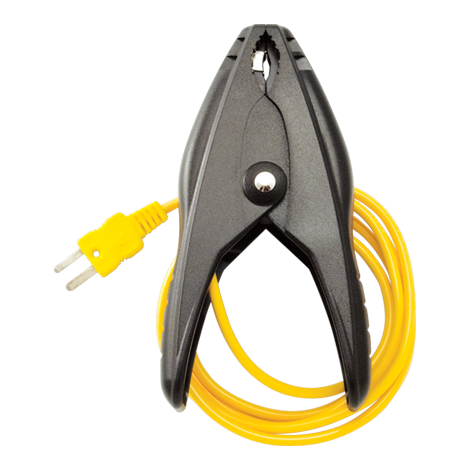
So I will just buy a k type clamp on thermocouple and I will be golden. I know I need to buy a new manifold set for 454/r32 as I am going to be putting in another mini split soon and supplyhouse has the appion valve core tool.
 

bonneyman

Well-known member
Joined
Apr 22, 2010
Messages
8,815
Location
Desert SW
When I was still working there were 8 rooftop AC units that I dealt with. I also had a Bucket Boss to use for tools, a bucket to pull needed items up with, as a water bottle holder, and as a stool when needed. All the testing tools were analog and included the black beetle Amprobe. There were also folded paper sheets with information and color traced wiring diagrams in the Boss pockets along with alligator tipped jumper leads to allow spending as little time in the direct sun on the roof as possible. A straw hat along with a white cloth to drape from under it onto the back of the neck made it livable when up there. It gets hot around here, and is predicted to be 100 with a 115 feels like this weekend. Staying cool is as important as the other tools.
Big 10-4! Watching for symptoms of overheating and heat stroke is a must. You don't want to get dizzy and fall off of a roof, or pass out high up where no one can see you and you cook to death unnoticed. Safety is a big concern.
Drink lots of water, rig up a portable umbrella stand, and if you feel yourself getting hot, get the heck off the roof. No job is worth roasting to death for.

Almost no one used to pull a vacuum, much less use a micron gauge, "back in the day".

I had a Thermal analog gauge, it was the only game in town.

Now, Blue Vac is the standard. Theirs is still the best.

Used to have a Cooper thermocouple box, used velcro to hold the sensors on. Used a PT chart and did the math. The best analog gauges were maybe 1% accurate, typical were +/- 3% or worse.

I went to digital gauges way back when Digi Cool was first released and never looked back. Absolutely no point in using analog gauges today.
Agreed, analog gauges are not as accurate as digital ones, but the OP was asking about old school options. For DIY'ers - and even beginner techs - quality analog gauges are the best bet. The cost of digital gauges alone was off-putting to me, and then having to worry about batteries, banging the delicate mechanism while you work, and then having to send them in for warranty work means you've gotta have a back up pair. One of my final jobs had a fellow tech missing his R-410a digital manifold in for its third warranty, and didn't have a spare. I lent him my analog set, as I was riding with another tech at the time and didn't need it.
For Yellow Jacket brand, analog for $200 a set and their digital for $1200 a set shows the disparity. One can always upgrade if the want.


You can pick up k-type thermocouples pretty cheap, and k-type to banana adapters to plug straight into a cheap meter, if you end up doing anything additional in the future.

I used such a setup when I was working. Last job I had my co-worker measure the temperature with his digital gauge set and I did the exact same unit with my setup. I was 2 degrees off from his as I recall.
The modern version of the one I used.
The Creme de la creme Fluke version which I snagged used.

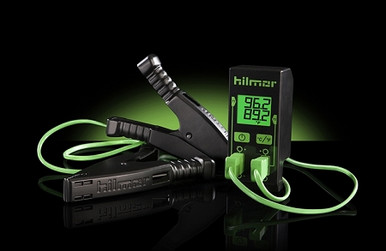
Most new meters have a temperature function already built in like you mentioned. There was a new multi-tap digital thermometer available that my final job would have required me to purchase if I was going to work there. Didn't take the job, but the tool was pretty impressive.


bonneyman

Well-known member
Joined
Apr 22, 2010
Messages
8,815
Location
Desert SW
Well I wouldn't want to have to use a chart to do calculations from mV. I don't have a high end fluke, just a 114, its pretty basic. I do miss the 87 that I had at my previous jobs.
No calculations needed. The probe adaptor converts the temperature it's reading to mv, so the millivolt scale on your multimeter displays the temperature.
 
OP
F

Firebrick43

Well-known member
Joined
May 12, 2015
Messages
14,088
Location
West central Indiana
Do you have a link to share for that type of thermocouple to banana jack adapter, or did I miss it?
I was ready to say BS myself but there are active converters apparently. Good to learn something. Of course there is yet another battery to be dead when one needs it.


Last edited:

OccupantRJ

Well-known member
Joined
May 15, 2009
Messages
11,128
Location
Eastern North Carolina
I was ready to say BS myself but there are active converters apparently. Good to learn something. Of course there is yet another battery to be dead when one needs it.


For my retirement use I think I might try one of the dual reading clamp on models of thermometers available on the jungle for less than $50.
 
To avoid these ads, REGISTER NOW!
Top Bottom