To avoid these ads, REGISTER NOW!

Ominous Humming Motor

Mike1919

Member
Joined
Dec 16, 2025
Messages
14
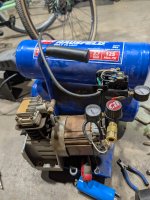
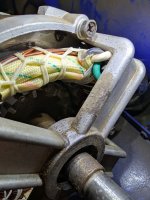
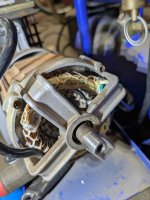
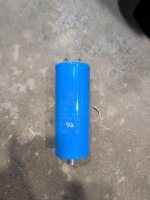
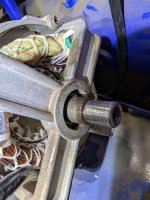
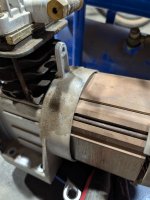
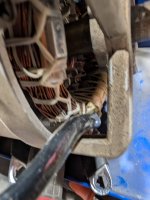
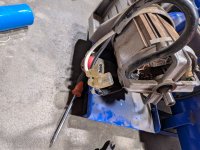
Hello folks, I just joined the forum and didn't want to start with a question in my intro post so here goes my second post! I recently got this CH twin tank air compressor for next to nothing with a motor that can't start itself, it just hums, loudly hums, it's very clean for its age and doesn't appear to be used that much. Anyways, I've dealt with this situation on previous compressors and the only two things I've ever come across is a start cap and a centrifugal switch, if it's not one of those I'm not quite sure where to go. This one has a 120 uf start capacitor which I changed because they're cheap and why not, and upon testing it with a capacitance test it read exactly 121.6 so I ruled that out. I can't get it to start even with the drain valve open on the tank which means there's zero tank pressure, I even removed the air line off the head and still nothing. I can turn the motor by hand with what I'd consider a normal amount of resistance for an air compressor, at least compared to the ones I've dealt with before, and I can kind of get it started by spinning it by hand, though twisting the fan while it's trying to start isn't something I enjoy doing, it takes a little more than a nudge, almost half a rotation. Initially when I replaced the capacitor it started just fine and sounded great but now I'm right back to square one. Any input on those who have dealt with this or highly educated in this subject would be greatly appreciated! Thank you folks and have a great evening!
 

Attachments

  • PXL_20251217_035932815.jpg
    PXL_20251217_035932815.jpg
    581.9 KB · Views: 40
  • PXL_20251217_035938306.jpg
    PXL_20251217_035938306.jpg
    542.2 KB · Views: 29
  • PXL_20251217_035902050.jpg
    PXL_20251217_035902050.jpg
    777.8 KB · Views: 27
  • PXL_20251217_035847783.jpg
    PXL_20251217_035847783.jpg
    558.9 KB · Views: 25
  • PXL_20251217_035922482.jpg
    PXL_20251217_035922482.jpg
    758 KB · Views: 26
  • PXL_20251216_021954976.jpg
    PXL_20251216_021954976.jpg
    488.7 KB · Views: 24
  • 17660189343656591032010132349041.jpg
    17660189343656591032010132349041.jpg
    546.4 KB · Views: 30
To avoid these ads, REGISTER NOW!

fitter30

Well-known member
Joined
Jun 23, 2019
Messages
2,976
Location
Peace Valley,mo
Good possibility that the centrifugal switch isn't closed to put the start capacitor in circuit. Kill power. Pull the end bell to inspect. There's a plastic / metal sheeve over the shaft that has to slide that moves arms to activate the switch. Even though it looks clean but rust can sometimes screw the mechanism up. Spray it with wd40 or something like it then move the plastic slide. Put back together.
 
OP
M

Mike1919

Member
Joined
Dec 16, 2025
Messages
14
Good possibility that the centrifugal switch isn't closed to put the start capacitor in circuit. Kill power. Pull the end bell to inspect. There's a plastic / metal sheeve over the shaft that has to slide that moves arms to activate the switch. Even though it looks clean but rust can sometimes screw the mechanism up. Spray it with wd40 or something like it then move the plastic slide. Put back together.
That's what I was concerned about but I couldn't find the switch, is there a possibility it's on the other side of the motor, and if so, can you even separate the motor from the compressor assembly?
 

Attachments

  • PXL_20251218_035924644.jpg
    PXL_20251218_035924644.jpg
    499.7 KB · Views: 25
  • PXL_20251218_035909520.MP.jpg
    PXL_20251218_035909520.MP.jpg
    801.5 KB · Views: 25
  • PXL_20251218_035959174.jpg
    PXL_20251218_035959174.jpg
    625.5 KB · Views: 26
  • PXL_20251218_035954256.jpg
    PXL_20251218_035954256.jpg
    745.1 KB · Views: 28

mm08822

Well-known member
Joined
Jan 13, 2012
Messages
5,925
Location
NJ
Possibly it's between motor and compressor but that seems odd.
Remove the 4 tie rods.....part #39

1766032965048.png
 
OP
M

Mike1919

Member
Joined
Dec 16, 2025
Messages
14
That's what I was kind of worried about, I had those out and fully pulled the end cap on the motor but could not for the life of me, separate the motor or even pull the rotor out of the pump
 

mm08822

Well-known member
Joined
Jan 13, 2012
Messages
5,925
Location
NJ
are we sure there's a centrifugal switch on those motors? I'm thinking usually no?
Not sure and since nothing shown in parts diagram, I think you are correct.

I would want to seperate the load from motor to further test. Need to establish if motor even able to run.
 

fitter30

Well-known member
Joined
Jun 23, 2019
Messages
2,976
Location
Peace Valley,mo
120 mfd capacitor is a start cap. That contact is open should be closed. Never seen a motor like that one. Looked up that motor only saw a diagram like the one you posted spray it give it a tap. Where is it located?
 

kerrynzl

Well-known member
Joined
Nov 8, 2013
Messages
5,054
Location
Tauranga, New Zealand
That's what I was concerned about but I couldn't find the switch, is there a possibility it's on the other side of the motor, and if so, can you even separate the motor from the compressor assembly?

The compressor check valve could be stuck open . The motor cant start against pressure
 
OP
M

Mike1919

Member
Joined
Dec 16, 2025
Messages
14
The compressor check valve could be stuck open . The motor cant start against pressure
That's what I was thinking but shouldn't that be negated if I tried starting it with the air line pulled off of the head?
 

walta

Well-known member
Joined
Jan 13, 2017
Messages
2,311
Location
Dutzow Missouri
Seems to me 120mf is too large a number to be in the circuit continuously. I don’t see a centrifugal switch that leaves us looking for some electronics that will shut down the start windings.

Could there be a current relay hidden in the pressure switch. Are there more than 2 conductors don’t count ground wire going from the motor to the switch?

I had a similar compressor that would trip the overload on startup seemingly at random. Seemed to happen more when it was cold. It would just hum and trip the overload. It was worse when connected to an extension cord or a 15 amp curcuit. The fix turned out to be the previous owner had changed the oil and used dinosaur oil when synthetic was required.

We need to consider has the new cap failed after the first start.
 
OP
M

Mike1919

Member
Joined
Dec 16, 2025
Messages
14
Seems to me 120mf is too large a number to be in the circuit continuously. I don’t see a centrifugal switch that leaves us looking for some electronics that will shut down the start windings.

Could there be a current relay hidden in the pressure switch. Are there more than 2 conductors don’t count ground wire going from the motor to the switch?

I had a similar compressor that would trip the overload on startup seemingly at random. Seemed to happen more when it was cold. It would just hum and trip the overload. It was worse when connected to an extension cord or a 15 amp curcuit. The fix turned out to be the previous owner had changed the oil and used dinosaur oil when synthetic was required.

We need to consider has the new cap failed after the first start.
I did find that suspicious too being such a large capacitor but didn't think too much of it as it seems pretty properitary to the compressor being threaded in and all, the old one was 120 and looked identical but who's to say someone didn't already change it before me with the wrong one. Upon further investigation of the pressure switch, it looks like there are only two wires not counting ground going to the motor itself and as for oil, that is a good idea because I did check it and found it to be very clean, surprisingly clean actually, as if it was just recently changed.
 

Attachments

  • PXL_20251219_044756332.jpg
    PXL_20251219_044756332.jpg
    807.2 KB · Views: 20

mm08822

Well-known member
Joined
Jan 13, 2012
Messages
5,925
Location
NJ
The wiring at the ps looks fine.

Next time you try to start it, read the voltage across each pair of ps terminals:
L1 - N
M1 - M2
L1 - M1
N - M2
 

justsam

Well-known member
Joined
Aug 20, 2010
Messages
1,267
Location
Penngrove, California
Where do the leads or terminals of the capacitor go? If the capacitor has terminals, how many leads are on them? Two leads on one terminal and one lead on the other? The 120 uF is a reasonable value in my mind for the start cap. for this application which does have a minor start up load, (frictional loss of compressor). If there is an unloader valve to release air pressure for start up, make sure it is OK. I did not see a legend for the exploded diagram, and a wiring diagram would also be convincing. Any part in the legend call "timer" or "current relay"?
 
Last edited:
To avoid these ads, REGISTER NOW!
OP
M

Mike1919

Member
Joined
Dec 16, 2025
Messages
14
Where do the leads or terminals of the capacitor go? If the capacitor has terminals, how many leads are on them? Two leads on one terminal and one lead on the other? The 120 uF is a reasonable value in my mind for the start cap. for this application which does have a minor start up load, (frictional loss of compressor). If there is an unloader valve to release air pressure for start up, make sure it is OK. I did not see a legend for the exploded diagram, and a wiring diagram would also be convincing. Any part in the legend call "timer" or "current relay"?
It looks like they just go into the windings which is where I become lost, the capacitor has two terminals consisting of a black and a white wire clipped on via spade terminals
 

Attachments

  • PXL_20251220_040623415.jpg
    PXL_20251220_040623415.jpg
    613 KB · Views: 12
  • PXL_20251220_040620486.MP.jpg
    PXL_20251220_040620486.MP.jpg
    706.5 KB · Views: 11
  • PXL_20251220_040641976.jpg
    PXL_20251220_040641976.jpg
    703.4 KB · Views: 15
OP
M

Mike1919

Member
Joined
Dec 16, 2025
Messages
14
The wiring at the ps looks fine.

Next time you try to start it, read the voltage across each pair of ps terminals:
L1 - N
M1 - M2
L1 - M1
N - M2
Thank you, I think I'm going to change the oil so I for sure know that there's a lightweight compressor oil in there and that they didn't put automotive oil in, then I'll put it together just enough to try to start it and start measuring voltages, another thing I found very odd is I couldn't find a circuit breaker, when the guy "demonstrated" it to me it hummed for a few seconds causing me to cringe but nothing ever happened. Here, when I try it, it just dims the lighting on my archaic household electrical system but still no breaker tripping if it even has one
 
OP
M

Mike1919

Member
Joined
Dec 16, 2025
Messages
14
Well, this is the final run, I'm putting new SAE 30 compressor oil in it, the oil that I drained was spotless, however it looked kind of thick but was hard to tell, I also noticed a bunch of this sealant around what looks like the pressure release switch which, to my knowledge, wouldn't have been factory, but I'm not sure. I'm trying another new capacitor just in case the other one was bad and have to put a new cooling fan on being I broke the other one, but that probably has nothing to do with starting. After this, I may just put it back together and use it to hold down a stack of manuals and receipts in my garage so they won't blow away in the wind.
 

Attachments

  • PXL_20251214_235436769~2.jpg
    PXL_20251214_235436769~2.jpg
    126.2 KB · Views: 15

djbmw

Well-known member
Joined
Jun 20, 2013
Messages
1,139
Location
Ottawa, Ontario, Canada
Take the motor apart and look for burn marks on the windings, or on the contactor/centrifugal switch.
A humming noise means that something isn't getting the electrical pixies that it needs - likely due to bad contact (from burns, debris, damage, etc.). Pop it apart and snap some pics. My tire machine motor had a burnt out contactor (last pic below) and would hum/buzz in a certain position. A few passes with sand paper and it was up and running within 20 min (I also cleaned it before re-assembling).

1766265349249.png
1766265361586.png
1766265370733.png
 
OP
M

Mike1919

Member
Joined
Dec 16, 2025
Messages
14
Take the motor apart and look for burn marks on the windings, or on the contactor/centrifugal switch.
A humming noise means that something isn't getting the electrical pixies that it needs - likely due to bad contact (from burns, debris, damage, etc.). Pop it apart and snap some pics. My tire machine motor had a burnt out contactor (last pic below) and would hum/buzz in a certain position. A few passes with sand paper and it was up and running within 20 min (I also cleaned it before re-assembling).

1766265349249.png
1766265361586.png
1766265370733.png
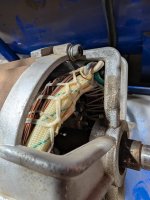
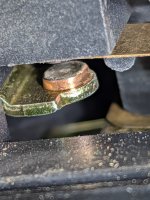
Here are the contactor points, I gave them a pretty decent sanding and am still getting the same results, it can start about 2/5 times regardless of pressure in the system or not, I'm going to try to get the rotor out but something is holding it to the compressor so I'm guessing the shaft is bolted straight to the connecting rod
 

Attachments

  • PXL_20251220_220134306.jpg
    PXL_20251220_220134306.jpg
    546.9 KB · Views: 15
  • PXL_20251220_220205372.jpg
    PXL_20251220_220205372.jpg
    383.8 KB · Views: 14
  • PXL_20251220_220244535.jpg
    PXL_20251220_220244535.jpg
    431.6 KB · Views: 13
  • PXL_20251220_220301682.jpg
    PXL_20251220_220301682.jpg
    361 KB · Views: 13

djbmw

Well-known member
Joined
Jun 20, 2013
Messages
1,139
Location
Ottawa, Ontario, Canada
Here are the contactor points, I gave them a pretty decent sanding and am still getting the same results, it can start about 2/5 times regardless of pressure in the system or not, I'm going to try to get the rotor out but something is holding it to the compressor so I'm guessing the shaft is bolted straight to the connecting rod
Those look good. How are the windings, rotor, stator, etc?
I dont see a start/run cap (im also on my phone and on the road so I cant really look at the images/tread in detail) so I imagine the motor uses a commutator. What is the condition of it, and the brushes?
 

mm08822

Well-known member
Joined
Jan 13, 2012
Messages
5,925
Location
NJ
Here are the contactor points, I gave them a pretty decent sanding and am still getting the same results, it can start about 2/5 times regardless of pressure in the system or not, I'm going to try to get the rotor out but something is holding it to the compressor so I'm guessing the shaft is bolted straight to the connecting rod
Sanding may have killed what ever life was remaining in the contacts. Did you take the voltage readings mentioned in post# 16 before/after?

The pic in post# 4 shows a bolt - part# 27. Drain the pump and open it to get access to the bolt. Can probably drive it out with a wooden dowel or light impacts from a center punch.
 

djbmw

Well-known member
Joined
Jun 20, 2013
Messages
1,139
Location
Ottawa, Ontario, Canada
Sanding may have killed what ever life was remaining in the contacts. Did you take the voltage readings mentioned in post# 16 before/after?

The pic in post# 4 shows a bolt - part# 27. Drain the pump and open it to get access to the bolt. Can probably drive it out with a wooden dowel or light impacts from a center punch.
Did you look at his pic? The contacts look beautiful. As long as they make contact with eachother, they have life left (hundreds of thousands of on/off cycles).
 

Stuart in MN

Well-known member
Joined
Sep 8, 2005
Messages
23,112
Location
Minneapolis
The thing about electrical contacts is they're typically plated with silver or some other metal, so sanding can remove that plating which will shorten their operating life. They'll work, but they'll corrode and/or deteriorate quicker from the small arcs that happen each time they're operated.
 

manwithtools

ALLIANCE MEMBER
Joined
Aug 24, 2015
Messages
13,849
Location
Lebanon, TN
Be sure you have a full voltage and wire size for a full 15 amps supplying that compressor. I have an older Emglo compressor of similar design and it will not start if not supplied with adequate voltage and current, it will just hum. It's been that way since new, I've never been able to use it on anything other than a 25' 12ga extension cord.
 

djbmw

Well-known member
Joined
Jun 20, 2013
Messages
1,139
Location
Ottawa, Ontario, Canada
The thing about electrical contacts is they're typically plated with silver or some other metal, so sanding can remove that plating which will shorten their operating life. They'll work, but they'll corrode and/or deteriorate quicker from the small arcs that happen each time they're operated.
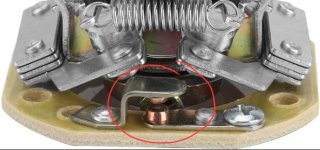
Perhaps they are on some motors (based on quality/power?),.. but certainly none that I recall working on. If you look up brand new replacement centrifugal switches you'll see they are bare copper (image attached for reference).

Edit: i was able to find a few silver plated ones (image attached). They seem to be more commonly used on older quality motors. Most mass produced motors that come with innexpensive equipment seem to be using straight copper though.
 

Attachments

  • 61TlfIBOWBL._AC_SL1500_.jpg
    61TlfIBOWBL._AC_SL1500_.jpg
    72.2 KB · Views: 6
  • 8c140b70-f459-423a-9ba1-b8e92b784665.dcca898131b639c1e8c6b3eb58dbf895.jpeg
    8c140b70-f459-423a-9ba1-b8e92b784665.dcca898131b639c1e8c6b3eb58dbf895.jpeg
    60.8 KB · Views: 4
Last edited:

dave*99

Well-known member
Joined
May 5, 2009
Messages
4,268
Location
Coastal NJ
Perhaps they are on some motors (based on quality/power?),.. but certainly none that I recall working on. If you look up brand new replacement centrifugal switches you'll see they are bare copper (image attached for reference).

Edit: i was able to find a few silver plated ones (image attached). They seem to be more commonly used on older quality motors. Most mass produced motors that come with innexpensive equipment seem to be using straight copper though.
It's important to note that low current contacts are often plated too. And burnishing is easier on the metals than sanding:

Sanding and burnishing both clean relay contacts, but burnishing (using specialized files or cardstock) is generally preferred over sanding for removing oxidation because it's less abrasive and designed to clean without removing precious metal plating, while sanding (with sandpaper) is riskier as it can leave grit and easily strip protective gold/silver flashes, causing future issues, especially on low-current relays. Burnishing polishes and reshapes contacts slightly for better connection, whereas sanding can create irregularities, making burnishing the safer, more effective method for preserving contact life and reliability.
 

fitter30

Well-known member
Joined
Jun 23, 2019
Messages
2,976
Location
Peace Valley,mo
Dressing or sanding contact is only for a emergency they will fail again welding themselves together. 3 volt drop across them 240 vac. Their either ready to be replace or in most cases the whole relay, switch or contactor.
 

djbmw

Well-known member
Joined
Jun 20, 2013
Messages
1,139
Location
Ottawa, Ontario, Canada
Dressing or sanding contact is only for a emergency they will fail again welding themselves together. 3 volt drop across them 240 vac. Their either ready to be replace or in most cases the whole relay, switch or contactor.
That certainly hasnt been the case across the electric motors that I've repaired. If i look at all of the 2hp to 8hp motors that I have sanded/polished the contactors of over the last 15 years, I still have 6 of those motors in operation today and they run quite well (2 tire changer motors, 1 fan motor for a high volume evacuation fan in my paint booth, 1 motor on my screw-drive vehicle lift, 2 motors for my zip-line lift tow).
 

fitter30

Well-known member
Joined
Jun 23, 2019
Messages
2,976
Location
Peace Valley,mo
That certainly hasnt been the case across the electric motors that I've repaired. If i look at all of the 2hp to 8hp motors that I have sanded/polished the contactors of over the last 15 years, I still have 6 of those motors in operation today and they run quite well (2 tire changer motors, 1 fan motor for a high volume evacuation fan in my paint booth, 1 motor on my screw-drive vehicle lift, 2 motors for my zip-line lift tow).
Haven't found a manufacturer that would recommend dressing contacts. Running service work can't take that chance. Has to be fixed right. What you do with your own equipment is different when getting paid. Electric work that i have done line voltage 94% 480, 3% 208/240, 3% 4160.
 
OP
M

Mike1919

Member
Joined
Dec 16, 2025
Messages
14
Sanding may have killed what ever life was remaining in the contacts. Did you take the voltage readings mentioned in post# 16 before/after?

The pic in post# 4 shows a bolt - part# 27. Drain the pump and open it to get access to the bolt. Can probably drive it out with a wooden dowel or light impacts from a center punch.
Sorry, I missed that one, here is what I got with the power on and the motor humming, line voltage read at 119 and the motor voltage straight off the contactor read 112 volts
 
To avoid these ads, REGISTER NOW!
Top Bottom