To avoid these ads, REGISTER NOW!

Options for meters with inrush?

gamp945

Well-known member
Joined
Jun 4, 2014
Messages
1,549
Hello all,

I am in the market for a new clamp meter. I'd like a model with inrush. I am not a pro, and am hoping to not spend a fortune to get a meter with inrush.

Please note that inrush is not the same thing as a "max" setting:
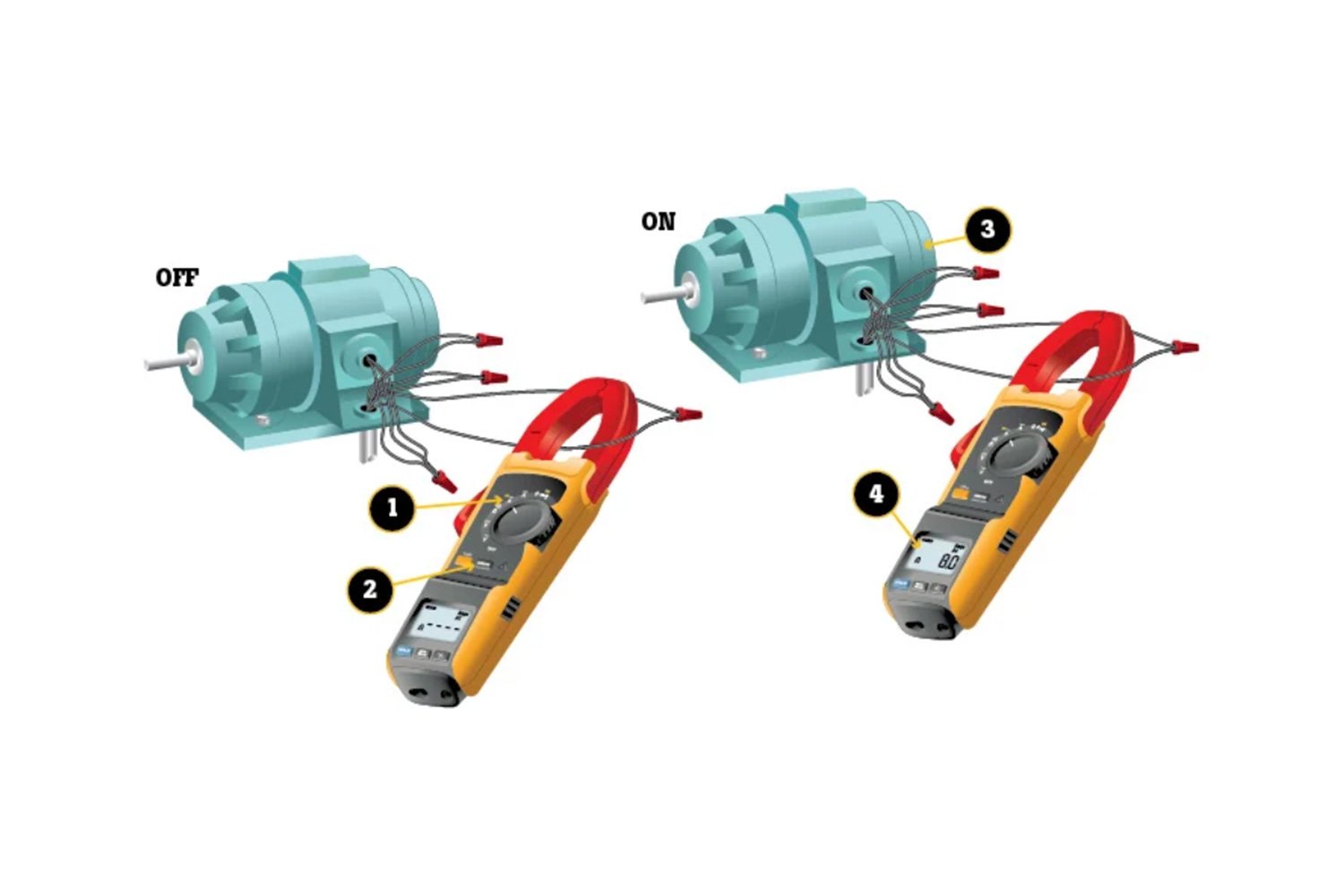
The obvious option is a Fluke 374, but these are about $400.

An alternate option is the Fieldpiece SC440 which costs about $180. I've read very mixed reviews about Fieldpiece though.

Another option is the grey-market (India, China, etc) Fluke 319. These are available on eBay for about $270. This is still more than I'd like to spend, but may be my best option for a good meter with inrush.

Any other options I should be aware of? Thanks for reading.
 
To avoid these ads, REGISTER NOW!

wyliesdiesels

Well-known member
Joined
Aug 14, 2012
Messages
20,192
Location
Modesto, CA
not many options for in-rush reading capability.

you definitely dont want to cheap out on your meter

I have a fluke 381....
 

Supernaut

New member
Joined
Feb 8, 2021
Messages
2
Location
Annapolis, MD
A cheap Mastech MS2108 on amazon ($90) gets good reviews. As far as cheaping out on a meter, I'd instead say don't overpay. If you're a pro, go ahead and spend for pro equipment. Fluke 381 approaches $500...
 
  • Like
Reactions: Max

Max

ALLIANCE MEMBER
Joined
Jun 16, 2018
Messages
3,385
Location
Georgia
A cheap Mastech MS2108 on amazon ($90) gets good reviews. As far as cheaping out on a meter, I'd instead say don't overpay. If you're a pro, go ahead and spend for pro equipment. Fluke 381 approaches $500...
Welcome to the forum Supernaut!

The problem with cheap meters is that you use a meter to tell you something. And if the meter is wrong, it can send you in the wrong direction when you are debugging something. It’s kinda like a torque wrench - the only thing worse than no torque wrench is a torque wrench that reads wrong. I am not really disagreeing with you - more just noting one reason why people do spend the money on higher quality meters..
 

rlitman

Well-known member
Joined
Oct 18, 2010
Messages
24,738
Location
Long Island
...The problem with cheap meters is that you use a meter to tell you something. And if the meter is wrong, it can send you in the wrong direction when you are debugging something. It’s kinda like a torque wrench - the only thing worse than no torque wrench is a torque wrench that reads wrong. I am not really disagreeing with you - more just noting one reason why people do spend the money on higher quality meters..
Perhaps, but I don't really see it that way. As I see it, any digital meter will do nothing more than provide a number, and it is up to the operator to interpret that result and in particular, its validity. I've been misled by DMMs before, and price wasn't a factor, but at least I have the wherewithal to know when the display is not to be trusted. OTOH, a good old analog Simpson has never steered me wrong, but isn't going to be able to provide an inrush reading, because d'Arsonval movements just have too much inertia for such a use.

I personally would use my Amprobe ACDC-52Nav for this, since I have it, but all AC/DC clamp meters work on the principle of a hall effect sensor and integrating chip, and depending on the OP's needs, most likely any one, including the Mastech will be just fine.
 
  • Like
Reactions: Max
To avoid these ads, REGISTER NOW!

Supernaut

New member
Joined
Feb 8, 2021
Messages
2
Location
Annapolis, MD
Welcome to the forum Supernaut!

The problem with cheap meters is that you use a meter to tell you something. And if the meter is wrong, it can send you in the wrong direction when you are debugging something. It’s kinda like a torque wrench - the only thing worse than no torque wrench is a torque wrench that reads wrong. I am not really disagreeing with you - more just noting one reason why people do spend the money on higher quality meters..
Thanks! Glad to be here. Long time lurker. I'll post more as my new garage gets built up.

Agree cheap meters can be a problem just like inaccurate torque wrenches. My approach is to pay for what I need, not overpay for something that I don't. I'm not a pro or amateur, somewhere in-between, so can cut some corners and square up others.

Funny you mention torque wrenches. I'm restoring an old car, and even with the most accurate wrench I still don't know what the torque spec should be since the factory manual is useless. But forums like this help me figure it out.
 
  • Like
Reactions: Max

Max

ALLIANCE MEMBER
Joined
Jun 16, 2018
Messages
3,385
Location
Georgia
Perhaps, but I don't really see it that way. As I see it, any digital meter will do nothing more than provide a number, and it is up to the operator to interpret that result and in particular, its validity. I've been misled by DMMs before, and price wasn't a factor, but at least I have the wherewithal to know when the display is not to be trusted. OTOH, a good old analog Simpson has never steered me wrong, but isn't going to be able to provide an inrush reading, because d'Arsonval movements just have too much inertia for such a use.

I personally would use my Amprobe ACDC-52Nav for this, since I have it, but all AC/DC clamp meters work on the principle of a hall effect sensor and integrating chip, and depending on the OP's needs, most likely any one, including the Mastech will be just fine.
Fair enough. To me, some of the most common reasons to get a better meter like a Fluke is better accuracy, better specs, and a presumption that the inputs are actually as protected as the manufacturer claims. For a clamp on current meter, it's not that likely that you'll care about absolute accuracy, and the input protection is irrelevant as you're not connecting to the voltage/current source.

Specifications may or may not be an issue. To be honest, for inrush current I'd use an oscilloscope. But for a DVM trying to measure inrush current, how fast it samples and how it determines the peak current is important. If you understand the specs and the trade-offs vs. what you are trying to measure there's no issue, but if you just want to clamp and go you may have issues. That's all I was trying to point out.

I have a Simpson 269 myself, but unless I am nulling something it stays in the cabinet. :)
 

MBfreak

MEMBER EMERITUS
Joined
Dec 10, 2010
Messages
2,301
Location
Linkoping , Sweden
And if it is AC current you want to register inrush peak on, use a traditional current transformer and conevert the current value to volts in a low ohm resistor , scope the voltage. They are often designed to measure within a fraction of a % at nominal value and can often measure more than 10 times nominal value within 5 %. And 60 Hz is no problem at all.

Ola
 
To avoid these ads, REGISTER NOW!
Top Bottom