To avoid these ads, REGISTER NOW!

Orienting a 5-15 receptacle

rick carpenter

Well-known member
Joined
Jan 20, 2011
Messages
3,781
Location
Huntsville, East Texas
Typically, they are oriented so that the ground is at the bottom. I saw a long time ago a recommendation the mount them ground up since something metal could slip behind a partially inserted ground down plug and short it out. On a Leviton 5-15 receptacle I just took out, the stamped lettering wants to make it ground up. And tonight, while perusing an electrician forum, one of the ads for Legrand fixtures shows 5-15 receptacles ground up. So ground up is technically right?

I tried doing that to a outlet I had to replace in my garage a while back. I have to tilt the plug up to make the ground connection first then the hot & neutral connections without being able to see any of them. This to me is crazy. I'm going to "fix" that one outlet back to being wrong!

How many of you install your receptacles ground up and how many install them ground down?
 
To avoid these ads, REGISTER NOW!

Norcal

Well-known member
Joined
Mar 16, 2008
Messages
13,758
Anyone who says either way is the correct way is flat wrong. It's personal preference or job specs, the NEC is silent on the issue. My personal preference is ground up, but mostly mount them down, my house, shop, garage, are all ground prong up.

Edit: On any professional electrical forum threads discussing receptacle orientation are quickly shut down.
 
Last edited:

larry_g

Well-known member
Joined
Apr 28, 2007
Messages
16,883
Location
oregon
There is no official code rule on this. Only local rules and opinions. AFAIK

lg
no neat sig line
 

FreddiFiche

Well-known member
Joined
Aug 8, 2011
Messages
126
Location
Minnesnowta
Most of my 'devices' don't care, barring the ones with an angled plug. Those devices with a angled plug, all angle down, requiring the ground to be on the bottom. (Unless you want to put extra strain on the cord where it enters the plug. Until manufacturers start switching, i won't be either. :)
 

Bert_

Well-known member
Joined
Dec 24, 2016
Messages
9,735
Location
NW Iowa
A lot of EE's like to spec ground up, but if you asked 90% of the population the answer would be a nearly unanimous "ground DOWN".

There is no rule so everybody is entitled to their opinion, but some opinions are still wrong:evil:
 

ddawg16

Well-known member
Joined
Jul 11, 2008
Messages
21,005
Location
S. California
Neither way is any safer than the other.

If you install it ground down....and say a knife falls on top of it....if the plug is slightly pulled out from the wall, the knife could come in contact with both blades and trip the breaker.

If you install it ground up....well, if the same knife falls on it, it hits the ground....but because the ground is just one point of contact, the knife will likely tip one way of the other. If it tips towards the neutral blade...no issue. If it tips towards the hot side...well...you hopefully trip the breaker before the gnd stays hot.

Do this experiment.....plug in a cord and see which direction the plug has more staying force. If your outlet is with the ground down, you will typically find it's harder to dislodge the plug pulling down on the cord. Lift up the cord and you will see the ground will slide out with less force...

If you're really worried about it, use a UK style plug and recpt.
 

grantw

Well-known member
Joined
Nov 10, 2016
Messages
249
Location
Bay Area, CA
I had to turn my Mom's RV outlet ground up so the 90 degree cord was not strained. This way it hangs cleanly down the wall and over to the trailer.

I'll rotate the outlet as needed, based on typical use. I do like ground up for shops personally.... but if I have a device with a 90 degree plug, I'll make sure the cord hangs down and is not strained.
 

gforce22

New member
Joined
Jan 11, 2018
Messages
1
As some others have said, it is totally up to the installer but......we all have our opinions!

With that said, I will offer mine. The idea that the ground up will keep something from shorting across the hot and neutral is valid but the situation it is trying to prevent would have to go something like this:

1) An outlet would need to have something plugged into it for starters
2) The outlet would need to be loose so the plug is falling out and exposing the blades
3) The blades would still need to be in far enough to keep making contact with the receptacle
4) "Something" would need to fall, get thrown, whatever, where the outlet with the loose but still contacting plug is at
5) That "something" would need to fit between the molded plug body and the receptacle
6) That "something" would also need to come in contact with both blades at the exact same time
7) That "something" would also need to be conductive

I happen to be an electrician with a degree in Mathematics but even I can't figure out the odds of this happening. There is a reason that most cases for ground up always talk about a knife or paper clip causing the problem. When in the world has anyone ever seen a knife, paper clip or some other thin metal object strike a receptacle??? If it was a clear cut safety improvement, it would be in the NEC.

Just trying to point out the not so obvious!
 
Last edited:

snyder

Well-known member
Joined
Dec 18, 2008
Messages
545
Location
Baltimore md.
One day,outlets will be made with the grounds on each receptacle facing each other.
The outlet will look the same either side up.
 

DirtyJersey

Well-known member
Joined
Sep 13, 2015
Messages
256
I like my receptacles with ground down because it looks like a cute little face.
Lol!
0b3f91b48216ed26f0c195c5f6de62ac.jpg


Sent from my LG-K550 using Tapatalk
 

tyme2par4

Well-known member
Joined
May 16, 2016
Messages
571
Location
NH
Most of my 'devices' don't care, barring the ones with an angled plug. Those devices with a angled plug, all angle down, requiring the ground to be on the bottom. (Unless you want to put extra strain on the cord where it enters the plug. Until manufacturers start switching, i won't be either. :)

They do not all angle down. I have at least one power strip with the ground pin up. I know I have seen other devices as well.

I tend to prefer ground up, but my house has a mixture of orientations.
 

Stuff

Well-known member
Joined
Aug 31, 2013
Messages
572
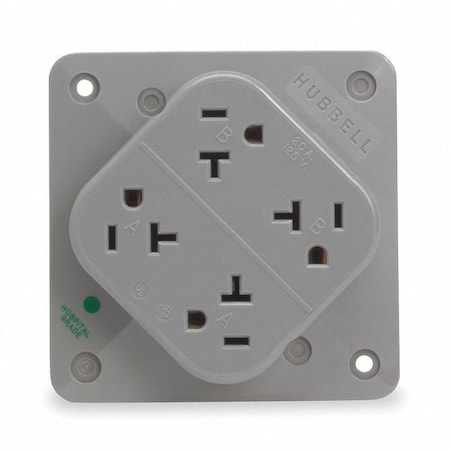
Yes, install a quad to cover all bases. This one has hot on top and bottom:
Z0-yt-fo5oy.JPG

This one has ground on top and bottom:
5490-W_large.jpg
 
To avoid these ads, REGISTER NOW!
OP
R

rick carpenter

Well-known member
Joined
Jan 20, 2011
Messages
3,781
Location
Huntsville, East Texas
As some others have said, it is totally up to the installer but......we all have our opinions!

With that said, I will offer mine. The idea that the ground up will keep something from shorting across the hot and neutral is valid but the situation it is trying to prevent would have to go something like this:

1) An outlet would need to have something plugged into it for starters
2) The outlet would need to be loose so the plug is falling out and exposing the blades
3) The blades would still need to be in far enough to keep making contact with the receptacle
4) "Something" would need to fall, get thrown, whatever, where the outlet with the loose but still contacting plug is at
5) That "something" would need to fit between the molded plug body and the receptacle
6) That "something" would also need to come in contact with both blades at the exact same time
7) That "something" would also need to be conductive

I happen to be an electrician with a degree in Mathematics but even I can't figure out the odds of this happening. There is a reason that most cases for ground up always talk about a knife or paper clip causing the problem. When in the world has anyone ever seen a knife, paper clip or some other thin metal object strike a receptacle??? If it was a clear cut safety improvement, it would be in the NEC.

Just trying to point out the not so obvious!

This is what I figured the reasoning for ground up would be. Ground down just looks normal to me, plus I don't live/work where ground up would be better.
 

coldh2o

Well-known member
Joined
May 21, 2013
Messages
1,428
Location
Ontario, Canada
I've heard the argument that with the ground up, the loose plug scenario could result in the ground losing connection, then whatever is plugged in becomes ungrounded.

I prefer ground down, just because it's the most common. Any arguments for/against either method seem to be very low percentages. I would think if there was a definite winner it would have been addressed in code by now.
 

Crazyjake8493

Well-known member
Joined
Sep 26, 2014
Messages
3,966
Location
Upstate NY
All personal preference. I install all mine ground up unless the cord would be strained that way. Heavy cords or power strips will hold better with the longer ground pin up. Although if a plug isn't holding regardless of orientation, it should be replaced. The prongs of a plug should never be visible.

In an old house you might see an occasional outlet ground up, indicating that it's a switched outlet. Some hospitals only allow ground up for all receptacles.

I typically see commercial mostly ground up, and residential ground down because they like it that way or think it looks "normal." To each their own, there's bigger electrical issues ignored on a daily basis to be focused on something like this.
 

Crazyjake8493

Well-known member
Joined
Sep 26, 2014
Messages
3,966
Location
Upstate NY
I've heard the argument that with the ground up, the loose plug scenario could result in the ground losing connection, then whatever is plugged in becomes ungrounded.

The ground pin is always a bit longer than that hot and neutral prongs, so that by the time the ground is completely removed, the hot and neutral have already been removed.
 

klassenl

Well-known member
Joined
Feb 20, 2016
Messages
713
Location
Southern Alberta
I personally have seen it happen twice where something has fallen "behind" the receptacle and shorted out. Once I left a stainless steel cover on a receptacle without putting the cover screws in and that evening it worked loose and fell on the prongs and made some sparks. We had a good laugh at the shop over that one. The other time a little kid of one of my friends managed to get a coin on there. His mom (my friend) was sonme what concerned about this. I told her not to worry because of the special set of circumstances that it takes for that to happen.
 

MikeF2316

Well-known member
Joined
Dec 29, 2012
Messages
9,605
Location
Thornhill, ON
My dad always insisted on ground down. That's the way I learned, that's the way i do it. Until GJ, I thought it was code too.
 

The Cobbler

Super Moderator
Staff member
Joined
Oct 24, 2013
Messages
25,905
Location
Niagara Region, Ontario, Canada
the normal here is ground down, and I understood it's code, but I can't be sure now.
anyway, the reason given to me was , if the plug falls out of the wall, the ground id the last prong to come out, protecting the ground to whatever is plugged in.
but
I did work in a fire resto many years ago, the homeowner had removed aluminum stair nosings from the basement stairs in preparation for new flooring. put the nosings on top of an old clunk to close fridge in the basement. after some time one of the nosings fell off the back of the fridge, fell behind and arced on a partially out fridge plug. caught the wood paneling on fire and did over 100k in damage ( 1990 ish)
had the ground pin been at the top, fire probably would not have happened.
 

coljar

Well-known member
Joined
Sep 26, 2010
Messages
6,244
Location
Belpre, Ohio
Right or wrong, I like the ground down and that's the way it's been with all my properties................and yes, that's the way my dad did it too.
 

Norcal

Well-known member
Joined
Mar 16, 2008
Messages
13,758
the normal here is ground down, and I understood it's code, but I can't be sure now.
anyway, the reason given to me was , if the plug falls out of the wall, the ground id the last prong to come out, protecting the ground to whatever is plugged in.
but
I did work in a fire resto many years ago, the homeowner had removed aluminum stair nosings from the basement stairs in preparation for new flooring. put the nosings on top of an old clunk to close fridge in the basement. after some time one of the nosings fell off the back of the fridge, fell behind and arced on a partially out fridge plug. caught the wood paneling on fire and did over 100k in damage ( 1990 ish)
had the ground pin been at the top, fire probably would not have happened.


It's not in the NEC, but code committees have refused to touch the issue might be in the Urban Legend Code. :D
 

alfredeneuman

Well-known member
Joined
Mar 3, 2011
Messages
4,580
Location
Fullerton, CA
The ONLY time I've ever heard a valid argument to the up/down issue was when we were building a Kindercare Day Care center. There was a note in the plans to orient the grounds up, the reason being that the toddlers would see the receptacle as a little "smileyface" :) and stick objects into them (this in the days before Tamper Resistant outlets).

All receptacles were to be mounted at +54" above finished floor.
Kindercare had to get a Code variance for the height because it didn't meet the requirements of the Americans with Disabilities Act (which limits switches and outlets to a maximum of 48" AFF for those in wheelchairs).
 

yeldogt

Well-known member
Joined
Jan 2, 2012
Messages
18,184
Always have mine installed with the ground on the bottom if on the wall -- it's easier for me to line up with the twin reference points. Typically coming out at from an upward angle -- it's easier.

I'm an old house guy so most of mine are horizontal anyway -- baseboard or wall moulding.
 

njc41980

Well-known member
Joined
Jun 21, 2017
Messages
619
Location
Idaho Falls
I've always understood that ground goes up if installed in a metal box, and ground goes down if installed in residential-style plastic boxes.
 

Crazyjake8493

Well-known member
Joined
Sep 26, 2014
Messages
3,966
Location
Upstate NY
the normal here is ground down, and I understood it's code, but I can't be sure now.
anyway, the reason given to me was , if the plug falls out of the wall, the ground id the last prong to come out, protecting the ground to whatever is plugged in.

The ground pin should always be longer than the hot and neutral prongs, so it should be the last one to disconnect regardless of outlet orientation. If any plug is coming out of an outlet with ease, the outlet should be replaced.
 

Norcal

Well-known member
Joined
Mar 16, 2008
Messages
13,758
The grounding prong should always be longer then the others, first make, last break.
 

rburke65

Well-known member
Joined
Nov 10, 2007
Messages
12,349
Location
Canfield, Ohio
Ok.....everyone who knows of someone or has experience with a knife falling, hitting a cord plunged into a receptical and shorting out, raise their hands......... That's what I thought.
 

wssix99

Well-known member
Joined
Mar 2, 2011
Messages
5,161
Location
Chicago, IL
Ok.....everyone who knows of someone or has experience with a knife falling, hitting a cord plunged into a receptical and shorting out, raise their hands......... That's what I thought.

Maybe folks should go off and stick some knives in outlets to experiment and put this to bed??? lol

In the end, all we have to do is look at the box for the most common electrical appliance out there, and the proper way is clearly instructed:

919-YOzmSRL._SX522_.jpg
 

lakeroadster

Well-known member
Joined
Jan 19, 2015
Messages
5,166
Location
Central Colorado
It's just like Thunder Road... the rules are there ain't no rules.


http://forums.mikeholt.com/showthread.php?t=82131

OK Bob is giving me a shot here, and just un-locked the tread. And I get the impression that he meant it better be good. :wink:

Three words:Tactile Ergonomic Response

If you conduct an experiment like this: and I do not seem to be finding any right now...

  1. Install one duplex up, and one down at table hieght (Or any hieght for that matter)
  2. Lay out a 3-prong extention cord on a table
  3. Have isolated un-influenced jack or jill homeowners types plug it in

I suspect that 9 of ten times that simply by picking up the plug they will naturally place the ground at the bottom in thier hand, and plug it into the ground down posistion. I challenge you all to try this at home....

The reason; Tactile ergonomic response, be it a righty or lefty your thumb will naturaly find its best grip, and the middle and index finger fing a comfortable position as well. That position will always be ground DOWN on all molded factory straight plugs, and likewise, 90 degree plugs where the thumb would naturaly find the back with the thumb in the UP position. (Granted there are some 'reversed 90 plgs on some gas dryers to accomadate a washer and dryer plugged into the same duplex) But for the most part it would be awkward to handle most plugs in any other method, as it requires craning the wrist, as we all know leads to carple-tunnel.......

Why do I know this.... Just got done working for a company that the owner thought / convinced it was a CODE to have ground up, and I had to deal with thier customers constant complaining until Iwould turn them over for them. One of those persons was an ergonomics specialist for a design firm here. We went at great legnth on the topic - untill he pointed out that most plugs have a tactile patch (A gripping surface) roughly the size and shape of a thumb on top, and another two smaller finger sized ones at the pointy sides. Mentioning this long-standing debate we all so often have, his responce was that "if it feels right - go with it", and mentioned another example of how traditionaly exterior door will often open "in" - it doesnt feel right any other way.
 
Last edited:

Lonnies Performance

Well-known member
Joined
Aug 20, 2017
Messages
267
Location
Pittsburgh, PA
My house was built with ground "up". I hate it.
All appliances seem to be made for ground "down" orientation.

All angled plugs & GFI plugs (such as blow dryers) want to fall out of my receptacles.

When I did my basement they were ground "down" & my new garage is as well.
 
To avoid these ads, REGISTER NOW!
Top Bottom