To avoid these ads, REGISTER NOW!

Outside Electric Service Panel Fire

ToddG

Well-known member
Joined
Oct 15, 2011
Messages
109
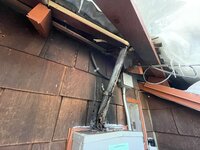
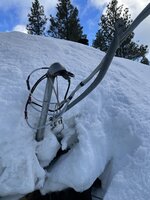
Over the winter, we had a significant amount of snow up at my cabin in Arizona and the snow slid down the roof and took out the service entry pipe. Luckily the fire that started was put out by the snow. Currently I can't even get up to the cabin to get it fixed as there's still too much snow.

Where should I start?

IMG_0105.JPGIMG_0103.JPGIMG_0104.JPG
 
To avoid these ads, REGISTER NOW!
OP
T

ToddG

Well-known member
Joined
Oct 15, 2011
Messages
109
The POCO did come out and snowshoed in to the cabin. He wasn't happy! They pulled the meter and said the wire to the pole will have to be replaced as well.
20230401_113422.jpg
 

Zeke

Well-known member
Joined
Aug 13, 2009
Messages
17,176
Location
Long Beach CA, the sewer by the sea.
They should be happy it didn't take out the transformer. About all you can do is install Sch 80 ridged service entrance conduit and guy it off in the opposite direction of the drop towards the ridge of the roof to prevent this. Remember the service drop is trying to pull the conduit down as it is. Unions are not allowed in the upper third or half (I forget) but you should use one continuous pipe. 3' above the roof and they will tie in at 18" or so. This all depends on the minimum distance from the grade all the way to the pole. With the snow build up is it obviously a hazard.
 

wyliesdiesels

Well-known member
Joined
Aug 14, 2012
Messages
19,995
Location
Modesto, CA
Is that a meter main or just a meter pan? The hardest part is gonna be sourcing either of those...

If its a meter main, gonna be very tough finding one that can match up to the existing footprint, with where the cables enter.

How did you get the pics?
 
OP
T

ToddG

Well-known member
Joined
Oct 15, 2011
Messages
109
Is that a meter main or just a meter pan? The hardest part is gonna be sourcing either of those...

If its a meter main, gonna be very tough finding one that can match up to the existing footprint, with where the cables enter.

How did you get the pics?
The POCO took the initial pictures. I snowshoed in and took additional.
 

mcbane

Well-known member
Joined
Jul 23, 2017
Messages
794
Location
California
Over the winter, we had a significant amount of snow up at my cabin in Arizona and the snow slid down the roof and took out the service entry pipe. Luckily the fire that started was put out by the snow. Currently I can't even get up to the cabin to get it fixed as there's still too much snow.

Where should I start?

IMG_0105.JPGIMG_0103.JPGIMG_0104.JPG
The root cause of your problem is improper location of the overhead electric service entrance, and merely guying a replacement conduit to the ridge line is unlikely to be a long term fix. Permanent solutions would be a) underground service entrance, which would require you to trench from the power pole to the new panel, or b) relocate the service drop to just off the gable end where it wont be obstructing sliding snow.

It looks like the green tag is relatively new, so perhaps you can still track down the original electrician and ask them to make it right. Even if NEC doesn't explicitly prohibit installing an overhead entrance near the eave line in snow country, that is an install that is just about guaranteed to fail.
 

tarmy

Well-known member
Joined
May 28, 2014
Messages
4,670
Location
Nor Cal
I undergrounded my service last year for this issue and trees falling. I had a tree take out my overhead service a few years ago and got lucky that no one was hurt or that the damage was too bad. I never thought of a fire being an issue.
Glad your place has only that damage and did not burn it all down OP.
 
Last edited:

wyliesdiesels

Well-known member
Joined
Aug 14, 2012
Messages
19,995
Location
Modesto, CA
The root cause of your problem is improper location of the overhead electric service entrance, and merely guying a replacement conduit to the ridge line is unlikely to be a long term fix. Permanent solutions would be a) underground service entrance, which would require you to trench from the power pole to the new panel, or b) relocate the service drop to just off the gable end where it wont be obstructing sliding snow.

It looks like the green tag is relatively new, so perhaps you can still track down the original electrician and ask them to make it right. Even if NEC doesn't explicitly prohibit installing an overhead entrance near the eave line in snow country, that is an install that is just about guaranteed to fail.
agreed. very little support where the mast is installed and the snow load was a recipe for disaster
 
To avoid these ads, REGISTER NOW!

rlitman

Well-known member
Joined
Oct 18, 2010
Messages
24,591
Location
Long Island
Has anyone looked inside the meter pan? The picture shows damage to the mast hub, but it might be ok under that. The distortion could be an artifact of the image, and not actual bending. It doesn't seem clear to me.
 

wyliesdiesels

Well-known member
Joined
Aug 14, 2012
Messages
19,995
Location
Modesto, CA
Has anyone looked inside the meter pan? The picture shows damage to the mast hub, but it might be ok under that. The distortion could be an artifact of the image, and not actual bending. It doesn't seem clear to me.
naw its definitely bent. look at the third photo. the top lip is crinkled and bent in the middle. no telling what happened to the buss bars etc inside... id definitely replace that..
 

rlitman

Well-known member
Joined
Oct 18, 2010
Messages
24,591
Location
Long Island
...look at the third photo. the top lip is crinkled and bent in the middle...
I do think you're right, but there's a shingle with a "bent" bottom edge right above the crinkle. Perhaps the cedar is actually curved, but I'm sure some pincushion is making it look worse. I hate wide angle cell phone photos for this reason. Though the green label under the crinkle doesn't appear to show the distortion (to your point). Anyway, I'd see what an electrician says before making judgement off a questionable photo.

Meter bus bars are serviceable and parts may be more available than full pans, but I agree that if the enclosure is no longer weatherproof, it's done.
 

Zeke

Well-known member
Joined
Aug 13, 2009
Messages
17,176
Location
Long Beach CA, the sewer by the sea.
Maybe a tap with a hammer and some gray paint. The hub looks roasted. Hope for your sake the circuit wires are in good shape. Maybe on the house side of the meter the buses didn't get too hot. I don't know what happens to a meter that is connected to a short on the POCO side. Something didn't give for a moment while that arced like crazy. I wonder what that sounded like.
 

Bert_

Well-known member
Joined
Dec 24, 2016
Messages
9,716
Location
NW Iowa
Maybe a tap with a hammer and some gray paint. The hub looks roasted. Hope for your sake the circuit wires are in good shape. Maybe on the house side of the meter the buses didn't get too hot. I don't know what happens to a meter that is connected to a short on the POCO side. Something didn't give for a moment while that arced like crazy. I wonder what that sounded like.
I've done that to meter sockets in the same shape as the OP's.

The arcing is normal when you short something on the line side. Usually burns until the wires aren't touching anymore. Transformer fuses aren't sized to protect against this
 

Zeke

Well-known member
Joined
Aug 13, 2009
Messages
17,176
Location
Long Beach CA, the sewer by the sea.
I've done that to meter sockets in the same shape as the OP's.

The arcing is normal when you short something on the line side. Usually burns until the wires aren't touching anymore. Transformer fuses aren't sized to protect against this
Maybe not but there are stories (true of false) about a short on the POCO side that took out the local transformer. I can see that this did arc long enough to destroy the riser. And that probably didn't take long. So all that heat may have very well reached the buses in the panel? We won't know until the OP reports back. Looks like definitely not a DIY job although I would do it. I was in my panel just before I sat down here. Jumping back to Frontier fiber and they need 120v near the box location. I had removed it when I installed a transfer switch. Not much more room in that cabinet. (old house and they built cabinets for the power back then — I like them).
 

Norcal

Well-known member
Joined
Mar 16, 2008
Messages
13,753
I've done that to meter sockets in the same shape as the OP's.

The arcing is normal when you short something on the line side. Usually burns until the wires aren't touching anymore. Transformer fuses aren't sized to protect against this
There is no protection on the secondary of PoCo transformers.
 

rlitman

Well-known member
Joined
Oct 18, 2010
Messages
24,591
Location
Long Island
Maybe not but there are stories (true of false) about a short on the POCO side that took out the local transformer. I can see that this did arc long enough to destroy the riser. And that probably didn't take long. So all that heat may have very well reached the buses in the panel? We won't know until the OP reports back. Looks like definitely not a DIY job although I would do it. I was in my panel just before I sat down here. Jumping back to Frontier fiber and they need 120v near the box location. I had removed it when I installed a transfer switch. Not much more room in that cabinet. (old house and they built cabinets for the power back then — I like them).
I saw a neighbor's mast fail like this. Arcing in the pipe created enough heat to ignite their vinyl siding. The power company disconnected them at the pole. That was a much bigger mess. Anyway, pole transformers aren't as well protected as most would expect, and I've seen them pop from overloading many times. A smoldering arc could conceivably consume enough power to do that, but it did not in my neighbor's case.

On a different occasion, the transformer across the street from me actually exploded when overloaded, blowing off the cover and spilling a fireball of burning oil all over the street. That made for a heck of a show.

There is no protection on the secondary of PoCo transformers.
That depends on your PoCo. I know for a fact that the transformer supplying my house has a secondary circuit breaker that has tripped many times. On my block, tree branches and wind have a history of slapping the old open copper wires between the poles, shorting the phases to a neutral tripping the secondary breaker, leaving me without power for up to a day each time until someone could reset it with a hot stick.

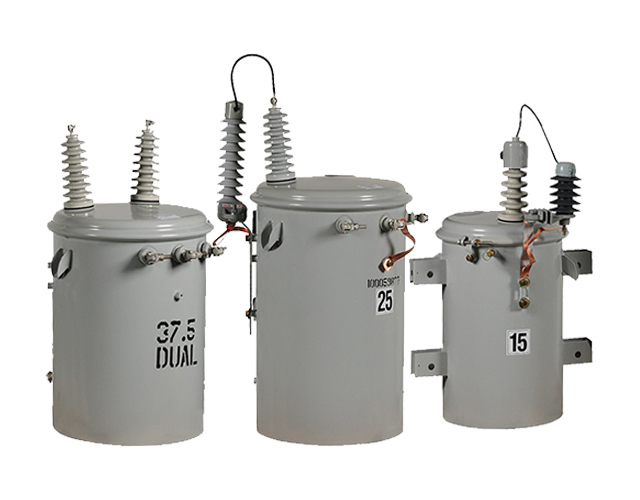
Look in Features - Optional Product Accessories here:

In this stock photo, you can see the circuit breaker is the lever with the ring end all the way on the left. Between it and the neutral is its indicator lamp.
11-16-21-Three-Phase-Round-Pole.jpg
 

wyliesdiesels

Well-known member
Joined
Aug 14, 2012
Messages
19,995
Location
Modesto, CA
That is NOT a circuit breaker. It is a tap-changer since that is a 3-phase ******. Notice it has 3 primary bushings and 4 secondary? The ring is so that it can be grabbed with a hot stick.

As to circuit breakers on single phase transformers, Ive never seen one on any ****** out here...
 

rlitman

Well-known member
Joined
Oct 18, 2010
Messages
24,591
Location
Long Island
...Notice it has 3 primary bushings and 4 secondary?...
And? Looks like Delta to Wye to me, which is just about every 3-phase transformer I see here (again, every system has its way of doing things, and Wye service is the norm here). A tap changer looks very different, and I can't imagine why one would fit a hot stick, since you wouldn't ever be changing the ratio of a pole transformer hot, and tap changers on substations (which may be done on-load) are totally different animals.

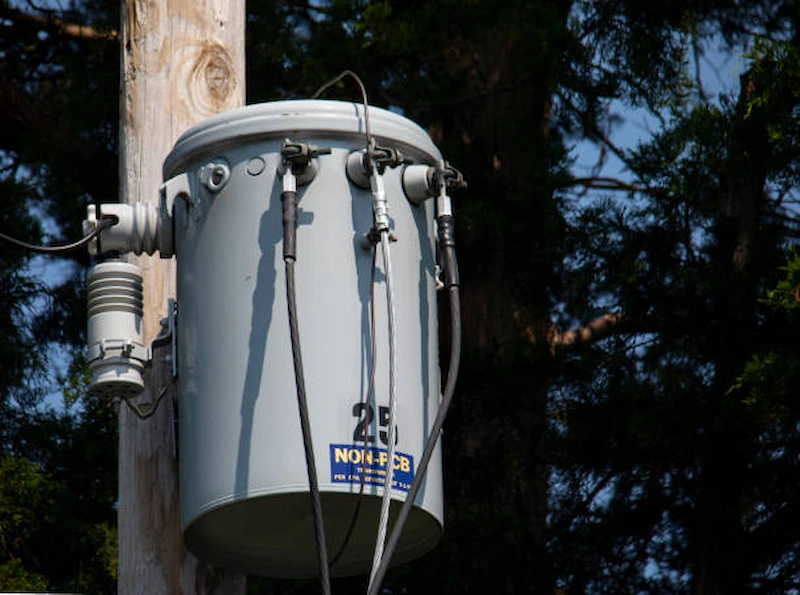
Here's a single phase with a circuit breaker (another stock photo):
Electric-Pole-Transformer.webp
 
To avoid these ads, REGISTER NOW!
Top Bottom