To avoid these ads, REGISTER NOW!

Owning Diagnostic Tools for Stuff You Lack Skill to Fix Yourself

oldschoolcraft

Well-known member
Joined
Dec 31, 2017
Messages
1,829
Location
Bay Area, California
I love watching YouTube videos from tradesmen showing off their tools. I've been watching some HVAC guys this weekend and they're showing off a lot of diagnostic tools I never heard of, don't know how to use, and wouldn't know how to fix any problem that they uncover anyway.

It gave me an idea that I might consider buying some various trade-specific diagnostic equipment and learn how to use it, even if I won't be able to fix the underlying problem. It will give me the heads up that I should call an expert.

This would be like having an at-home blood pressure tester even if you don't know what to do about hypertension, because if it gets really high you know it's time to go to the doctor and can give them some trending data.

There's also lots of YouTube videos on diagnosing stuff with tools that could be followed to learn. For example, I dealt with a hot water heater issue recently and never touched one before, but with my multimeter, I was able to diagnose the thermostat by following YouTube videos. I have an older car and an OBD2 reader gives me codes that I've been able to google the codes and figure out what was wrong.

I'm thinking there's probably some of these HVAC test tools that could be useful, maybe some plumber gauges to check water pressures. Maybe some telecomm tools to measure signal strength of coax cables. I don't know, just throwing some rough ideas out there.

Again, not saying that I will be able to fix the problem myself, but having the diagnostic tool might turn an "I think something might be wrong with X but maybe it's my imagination" to "the X is pushing 0.5 reading on the meter, and is supposed to be reading 0.8, it's time to call the pro to fix it"

Also, sometimes experts aren't as expert as you'd hope, and they might say "I can't find anything wrong, here's your service fee, call me back in a week if it's still an issue" and I can turn around and say "but the X reading is 0.5" and maybe guide them in the right direction.
 
To avoid these ads, REGISTER NOW!
OP
O

oldschoolcraft

Well-known member
Joined
Dec 31, 2017
Messages
1,829
Location
Bay Area, California
I should add that the cost, size, and long-term usefulness of the diagnostic equipment is what will determine a lot for me. For example as a car owner who only works on his own car, it doesnt make sense to buy a $5k scan tool that has a $1k annual subscription.

And if there was some hypothetical testing equipment that was cheap but took up an entire cabinet of space, that would also be silly to own.

But if there's some $100 HVAC meter that's the size of an iPhone and in 20 years it will still be useful, then that might qualify as making sense to own.
 

Beerhippie

Well-known member
Joined
Oct 13, 2023
Messages
10,336
Location
Far NE Oregon
For HVAC, a multimeter and a good set of pressure gauges is most of what you need. A good thermocouple thermometer would really round it out.

But to even understand things like the relationship between pressures and temperatures in an HVAC system will require a fair amount of learning--otherwise, you have no idea what you're looking at. It's not like an OBD reader where it gives you a code to look up.
 
OP
O

oldschoolcraft

Well-known member
Joined
Dec 31, 2017
Messages
1,829
Location
Bay Area, California
For HVAC, a multimeter and a good set of pressure gauges is most of what you need. A good thermocouple thermometer would really round it out.

But to even understand things like the relationship between pressures and temperatures in an HVAC system will require a fair amount of learning--otherwise, you have no idea what you're looking at. It's not like an OBD reader where it gives you a code to look up.
Maybe I'm too much of a nerd but the learning is most of the fun. I didn't really enjoy the actual labor of changing my radiator and water pump recently, it was only fun because it forced me to learn a lot of about the car's coolant system. I can't believe how little I knew about it before.
 

toolenthusiast

Well-known member
Joined
Jan 21, 2017
Messages
723
The knowledge is far more important than the tools, even diagnostic tools.

Example: the other day my home’s power was messed up after I popped a breaker a couple times. I had a sweet Fluke DVOM on hand, that much is sure. But that didn’t help me know what to prod inside the breaker panel, much less how to do the tests and see that one leg was dropping to 80V every time it was loaded. My electrician friend was able to quickly diag it, narrow it down to a bad connection outside the house, and tell me exactly what to say on the phone to make sure that the utility actually tested it thoroughly and repaired it properly. He did all this with a cheapo Klein meter.

Now if his Ranger had died in my driveway I could have given him my scan tool, DVOM, borescope, oscilloscope, anything… and he would probably still be sitting in the driver’s seat pushing buttons on the computer while I was under the hood finding a vacuum leak with a can of starting fluid or locating a bad ground with a simple test light :thumbup:

I seem to recall my sociology and anthropology professors both saying “specialization is the foundation of human society”.
 

P0234

Well-known member
Joined
Aug 6, 2012
Messages
3,241
Location
NoVA
But to even understand things like the relationship between pressures and temperatures in an HVAC system will require a fair amount of learning--otherwise, you have no idea what you're looking at. It's not like an OBD reader where it gives you a code to look up.
OBD2 readers will give you a code alright, but it won't help much in many cases, great example is something like a lean 02 sensor condition, guaranteed several times a day there is someone at the parts store buying a new 02 sensor because their hommie's reader told them it needed a new 02 sensor.
 

Beerhippie

Well-known member
Joined
Oct 13, 2023
Messages
10,336
Location
Far NE Oregon
OBD2 readers will give you a code alright, but it won't help much in many cases, great example is something like a lean 02 sensor condition, guaranteed several times a day there is someone at the parts store buying a new 02 sensor because their hommie's reader told them it needed a new 02 sensor.
Still beats hell out of my '85 Vanagon, where the accepted method for diagnosing a bad sensor is to just start replacing them until you find the one that fixes the problem.
 

isb cornbinder

Well-known member
Joined
Nov 3, 2010
Messages
7,072
Location
Pacific South West, BC, Canada
I should add that the cost, size, and long-term usefulness of the diagnostic equipment is what will determine a lot for me. For example as a car owner who only works on his own car, it doesnt make sense to buy a $5k scan tool that has a $1k annual subscription.

And if there was some hypothetical testing equipment that was cheap but took up an entire cabinet of space, that would also be silly to own.

But if there's some $100 HVAC meter that's the size of an iPhone and in 20 years it will still be useful, then that might qualify as making sense to own.
Our company was HVAC. One of the most annoying events was when the inexperienced tried to direct the tradesman. One thing a person cannot buy is hands-on time and real training. There were a few times when the tradesman walked away. There is lots of work, out there.
 

P0234

Well-known member
Joined
Aug 6, 2012
Messages
3,241
Location
NoVA
Still beats hell out of my '85 Vanagon, where the accepted method for diagnosing a bad sensor is to just start replacing them until you find the one that fixes the problem.
Does it? What happens if you replace all four and you still have a P0175?
 

charbar

Well-known member
Joined
Feb 6, 2021
Messages
2,010
Location
Midwest
Owning diagnostic tools for stuff you lack the skill to fix yourself............


Sounds like plenty of mechanics and shops I know of so why not? :lol: $10k scanner and all they know how to do with it is read codes and turn a vent solenoid on and off.
 

Beerhippie

Well-known member
Joined
Oct 13, 2023
Messages
10,336
Location
Far NE Oregon
Does it? What happens if you replace all four and you still have a P0175?
No OBD or anything resembling it. Basic Bosch ignition and FI. There are more like a dozen sensors that can be tested if you have the right lab set-up--or just start swapping parts. I know some mechs who specialize in the Vanagons and they just keep a full set of sensors on hand for this reason.

O2 sensor (only one) is the most common and fortunately, can be replaced for about $20, if you don't mind doing some wire splicing.
 
Last edited:

jayemm

Well-known member
Joined
Dec 18, 2018
Messages
1,592
Location
up high down low
I think it's easy to get 'tool lust' with diagnostic equipment, but seeing that I only own and work on 1 car and in the 10 years since new hasn't thrown any trouble lights, I stopped at going no further than acquiring a ~$50 OBD2 code scanner. It gives (and graphs) live data plus the usual stuff. Supposedly at least some manufacturer specific codes*.
I had the itch to upgrade (for the "what if" or the "it'd be nice to know" should it occur) but saw no use in functions which don't apply to my car like: oil light reset, TPMS, electric parking brake, and some others. Other things like SAS (steering angle sensor) , ABS (except sensor or maybe wiring which I could do myself) , SRS (I ain't foolin' with airbags) or transmission (anything internal) can be diagnosed by whoever is going to fix it because I'm not messing around with what I lack the knowledge of and probably many of the tools. I have no desire, equipment, experience or knowledge to pull my transmission and try to fix something inside...... but my scanner told me there's a problem inside.
*Regarding manufacturer specific codes -- you may only get some unless you have an expensive scanner that does a deeper interrogation. Or that scanner that is advertised as reading ABS or SRS codes just happens to not cover your model of car. You have to check to see if your vehicle is covered for the functions they advertise.
This is just my view as a DIY guy who does the basics. The professionals on this board could paint you a broader picture.
 

JradM

Well-known member
Joined
Sep 4, 2019
Messages
1,828
Location
Alberta
Hard to imagine this would work out in many scenarios. Usually you need the fancy diagnostic equipment because you know how the system works and need the tool to rule out various possibilities. At least that's what I think looking at this from the bottom-up.

E.g. an OBDII scanner is a handy tool to diagnose a car - but the code just gives you a clue, not a solution. It often just tempts the uninformed to "fire the parts cannon".

Or you take a simple diagnostic tool like a multimeter... How much utility would you get from it unless you know what it does and what you're looking for? If you do, then you're not "using a diagnostic tool for stuff you lack skill to fix yourself". At that point you actually ought to be able to fix the problem.

Maybe I just need an example so I can conceptualize this?

By all means, grab some tools and try it out. It just seems to me like understanding the diagnostic results would go hand-in-hand with understanding what you're diagnosing - at which point how would you NOT know how to fix it?
 

Basskiller

Well-known member
Joined
Feb 7, 2009
Messages
491
Location
s cal
For HVAC, a multimeter and a good set of pressure gauges is most of what you need. A good thermocouple thermometer would really round it out.

But to even understand things like the relationship between pressures and temperatures in an HVAC system will require a fair amount of learning--otherwise, you have no idea what you're looking at. It's not like an OBD reader where it gives you a code to look up.
Huh? newer systems have an led with a sticker that gives you the diagnostic code.
 

VolvoRyan

Well-known member
Joined
Dec 29, 2019
Messages
1,339
Location
Kentuckiana, USA
Still beats hell out of my '85 Vanagon, where the accepted method for diagnosing a bad sensor is to just start replacing them until you find the one that fixes the problem.

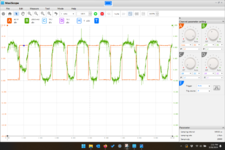
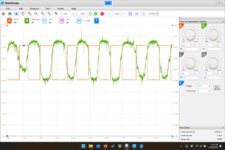
Lab scopes are a lot of fun to play with on older cars. The Bosch EFI manuals from the time would indeed say "Replace with known good".... but "known good" is a question mark now. Lab scopes let you test what you couldn't test before. I used the scope to set up an AMM on 1980's Bosch LH-Jet.

-Ryan

Screenshot 2024-03-28 141124.png
 

Attachments

  • Screenshot 2024-03-28 141124.png
    Screenshot 2024-03-28 141124.png
    638.1 KB · Views: 3

VolvoRyan

Well-known member
Joined
Dec 29, 2019
Messages
1,339
Location
Kentuckiana, USA
I have an older car and an OBD2 reader gives me codes that I've been able to google the codes and figure out what was wrong.

I had to laugh. Until recently, I never had a car new enough to have OBD-II. That's saying more about how much of a curmudgeon I am than anything else. ;)

As to your question, ultimately, you buy what your budget and interests allow. There's lots of tools, books, and stuff that'll let you get your foot into the door of whatever you'd like to learn. See how deep you want to go.

-Ryan
 
To avoid these ads, REGISTER NOW!

Beerhippie

Well-known member
Joined
Oct 13, 2023
Messages
10,336
Location
Far NE Oregon
I had to laugh. Until recently, I never had a car new enough to have OBD-II. That's saying more about how much of a curmudgeon I am than anything else. ;)

As to your question, ultimately, you buy what your budget and interests allow. There's lots of tools, books, and stuff that'll let you get your foot into the door of whatever you'd like to learn. See how deep you want to go.

-Ryan
And I still don't!
 

rust in the eye

Well-known member
Joined
Oct 2, 2017
Messages
2,875
Location
Chicagoland
I guess it makes sense if the cost of the tool is less than a diagnostic fee. Owning the diagnostic equipment isn't a panacea guaranteed to provide a clear diagnosis. They will narrow down guesswork but you still need some understanding of the system you're servicing to know WHY something is out of range, it's not always a component failure.
In the automotive world "P" codes have sold lots of un-needed various sensors and devices for the big box stores. DIYer guesswork is their best friend.
 
Last edited:

VolvoRyan

Well-known member
Joined
Dec 29, 2019
Messages
1,339
Location
Kentuckiana, USA
To the OP: keep being curious and learning. I do my best to learn everyday.

Agreed! A common joke is that this stuff is "cheaper than psychiatry".... but it's kinda true. As I'm getting older, I sure feel my brain tapping around for the connections that it used to make easy. Gotta keep it exercised.

-Ryan
 

Beerhippie

Well-known member
Joined
Oct 13, 2023
Messages
10,336
Location
Far NE Oregon
That’s not something to brag about. You’re polluting unnecessarily, and if you’re in a collision a modern car will cleave through yours like a hot knife through butter.
Well, if it'll make you happy, I'll just run out and invest the down-payment for a modest home in a modern vehicle, which will depreciate the moment I start the engine (or whatever it uses).

I keep my old rigs in optimal running condition. As for the argument that it's dangerous:

1) What business of yours is that? Besides, it sounds like you'd rather get rid of us "olds" to make more room for you.

B) With the rigs on the roads these days, which seem to be designed to be as dangerous as possible to anyone not inside of them, a Sherman tank is a little out-armored.

Trying to figure out how my little four-banger is less efficient than a Hummer, F250 or Ram truck....
 

f121

Well-known member
Joined
Dec 8, 2018
Messages
2,086
Location
UK
I should add that the cost, size, and long-term usefulness of the diagnostic equipment is what will determine a lot for me. For example as a car owner who only works on his own car, it doesnt make sense to buy a $5k scan tool that has a $1k annual subscription.

Agree, but buying a used $5k scan tool for $500 with no subscription might make sense, depending on that car owners ability to interpret the output of the scan tool.
 

Aileron

Well-known member
Joined
Apr 15, 2019
Messages
483
Location
outside
That’s not something to brag about. You’re polluting unnecessarily, and if you’re in a collision a modern car will cleave through yours like a hot knife through butter.
but yet you want to diagnosis refrigerant hvac systems without a license and have no knowledge of what your doing? Kinda the pot calling the kettle black isn it? Also, JMO, I dont think the modern car will "cleave" through anything, they are designed to shed and have crumple zones for impacts.
 

toolenthusiast

Well-known member
Joined
Jan 21, 2017
Messages
723
but yet you want to diagnosis refrigerant hvac systems without a license and have no knowledge of what your doing? Kinda the pot calling the kettle black isn it? Also, JMO, I dont think the modern car will "cleave" through anything, they are designed to shed and have crumple zones for impacts.
And here you are, rambling on even though you clearly don’t know who you’re replying to and who said what :thumbup:
 

dchawk81

Well-known member
Joined
Jul 31, 2014
Messages
14,464
I was flying blind as a truck owner until I got the OEM diagnostic software. It opened my eyes bigly and saved me a ton of shop time.

When I do take it to the shop, I get ripped off less often when they realize I can scan it myself.

I also take it when I'm looking at used trucks. It makes the salesman leave me alone. Nothing they can say will "sell" me a truck.

Most people can learn anything if they really want to. So I say if it interests you and you can afford the tools, go for it.

It's not like HVAC techs and electricians are born knowledgeable.
 

toolenthusiast

Well-known member
Joined
Jan 21, 2017
Messages
723
they are designed to shed and have crumple zones for impacts.
They do indeed have crush zones. The overall structure is vastly more rigid, tougher, harder, and stronger than previous cars due to hardened steels, cast metals, boron alloys, heat treatments, et cetera. The crush zones deform in a controlled manner at pre-determined locations to keep the occupants safe.

Older cars, OTOH, were made entirely of mild steel in very basic geometries, meaning that the entire vehicle would crush… crush your legs… crush your head… crush your kids… and so on.
 
To avoid these ads, REGISTER NOW!
Top Bottom