

You are using an out of date browser. It may not display this or other websites correctly.
You should upgrade or use an alternative browser.
You should upgrade or use an alternative browser.
Owning Diagnostic Tools for Stuff You Lack Skill to Fix Yourself
- Thread starter oldschoolcraft
- Start date
but yet you want to diagnosis refrigerant hvac systems without a license and have no knowledge of what your doing? Kinda the pot calling the kettle black isn it? Also, JMO, I dont think the modern car will "cleave" through anything, they are designed to shed and have crumple zones for impacts.
And here you are, rambling on even though you clearly don’t know who you’re replying to and who said what
I temp banned both these guys, but rather than delete these posts I’m leaving them up as an example of pure stupidity.
He said it beats having a vanagon without OBD2 at all, and I was implying it doesn't if you end up replacing stuff that OBD2 misguided you on. Especially since with OBD2 you have twice the number of 02 sensors as downstream 02s arrived at the same time.How are you gonna get a P0175 on a 1985 Vanagan, which predated OBD2 by 9 years?
MBfreak
MEMBER EMERITUS
Older cars, OTOH, were made entirely of mild steel in very basic geometries, meaning that the entire vehicle would crush… crush your legs… crush your head… crush your kids… and so on.
This is pure BS
The MB W111/112 series of sedans, coupes and cabs had very advanced crumble zones and also designed so that pedals would not damage your lower legs, the engine would be pushed below the trans tunnel and roofpillars solid enough. Steering wheel that had a large flat area and collapsing steering column.
This was from 1959.
Ola
This is pure BS
The MB W111/112 series of sedans, coupes and cabs had very advanced crumble zones and also designed so that pedals would not damage your lower legs, the engine would be pushed below the trans tunnel and roofpillars solid enough. Steering wheel that had a large flat area and collapsing steering column.
This was from 1959.
Ola
VolvoRyan
Well-known member
Older cars, OTOH, were made entirely of mild steel in very basic geometries, meaning that the entire vehicle would crush… crush your legs… crush your head… crush your kids… and so on.
This is pure BS
The MB W111/112 series of sedans, coupes and cabs had very advanced crumble zones and also designed so that pedals would not damage your lower legs, the engine would be pushed below the trans tunnel and roofpillars solid enough. Steering wheel that had a large flat area and collapsing steering column.
This was from 1959.
Ola
Oh, the kids these days.....
Indeed, MB was always ahead of the game. The Europeans in general were pretty good. As a Volvo geek, I've been interested in impact safety for years. I got into an accident forever ago in a Volvo 245... basically a 1960's 140-series, but with McPherson suspension. The car was several feet shorter. It deformed like butter, exactly as designed. I felt nothing in the driver seat. Was supposed to have a bruise from the seatbelt. No bruise.
But, yup, old cars will crush all your things.....

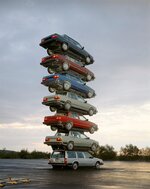
-Ryan
Reading comprehension...he has a 1985 Vanagon. A 1985 Vanagon doesn't have OBD2.He said it beats having a vanagon without OBD2 at all, and I was implying it doesn't if you end up replacing stuff that OBD2 misguided you on. Especially since with OBD2 you have twice the number of 02 sensors as downstream 02s arrived at the same time.
Might want to check a mirror. I KNOW his vanagon doesn't have OBD2. What I said is that not having OBD2 can be better than having OBD2 and not knowing how to use it, at least financially. However, nothing is worse than CIS, so he has that going for him.Reading comprehension...he has a 1985 Vanagon. A 1985 Vanagon doesn't have OBD2.
I mean either way you gotta know how the system works.Might want to check a mirror. I KNOW his vanagon doesn't have OBD2. What I said is that not having OBD2 can be better than having OBD2 and not knowing how to use it, at least financially. However, nothing is worse than CIS, so he has that going for him.
Like thinking a bad sensor read means a bad sensor is dumb thinking, because the sensors entire job is to give good or bad readings depending on how the system is operating.
If you have a low oil sensor and it lights up at you, you don't go OMG I need a new oil sensor. You go OMG I'm probably low on oil. So you check the oil. Only when there's plenty of oil and it still lights up at you to do you consider the oil level sensor suspect.
VolvoRyan
Well-known member
Might want to check a mirror. I KNOW his vanagon doesn't have OBD2. What I said is that not having OBD2 can be better than having OBD2 and not knowing how to use it, at least financially. However, nothing is worse than CIS, so he has that going for him.
At least with CIS, you can get a gauge on the system and check pressures to figure out which unobtanium object you need. Thank gawd Volvo got away from it early for other flavors of Bosch injection....
-Ryan
MBfreak
MEMBER EMERITUS
There is NO WORSE injection system than BOSCH KE Jetronic.
One of the many real idiotic "features" is that the lower the fuel mass thru the injector ( ie on low load) the lower the atomization pressure and the worse the atomization when you need it the most.
Another goodie :
The fuel distributor on ie a MB500 SL 91 has three electrohydraulic adjusters:
For lambda
For gearbox smooth gearchange
For anti slip
Otherwise a wonderful car.
I have rebuilt 4 with Megasquirt 1 and EDIS.
Wonderful results.
Ola
One of the many real idiotic "features" is that the lower the fuel mass thru the injector ( ie on low load) the lower the atomization pressure and the worse the atomization when you need it the most.
Another goodie :
The fuel distributor on ie a MB500 SL 91 has three electrohydraulic adjusters:
For lambda
For gearbox smooth gearchange
For anti slip
Otherwise a wonderful car.
I have rebuilt 4 with Megasquirt 1 and EDIS.
Wonderful results.
Ola
There is NO WORSE injection system than BOSCH KE Jetronic.
One of the many real idiotic "features" is that the lower the fuel mass thru the injector ( ie on low load) the lower the atomization pressure and the worse the atomization when you need it the most.
Another goodie :
The fuel distributor on ie a MB500 SL 91 has three electrohydraulic adjusters:
For lambda
For gearbox smooth gearchange
For anti slip
Otherwise a wonderful car.
I have rebuilt 4 with Megasquirt 1 and EDIS.
Wonderful results.
Ola
KE feels like the worst of both worlds.
VolvoRyan
Well-known member
There is NO WORSE injection system than BOSCH KE Jetronic.
One of the many real idiotic "features" is that the lower the fuel mass thru the injector ( ie on low load) the lower the atomization pressure and the worse the atomization when you need it the most.
Another goodie :
The fuel distributor on ie a MB500 SL 91 has three electrohydraulic adjusters:
For lambda
For gearbox smooth gearchange
For anti slip
Otherwise a wonderful car.
I have rebuilt 4 with Megasquirt 1 and EDIS.
Wonderful results.
Ola
I'm always amazed that various flavors of K-Jet were so long lived past the 1970's. Let's find another way to muck with the fuel pressure electrically. It all seemed a bit of a step backwards from D-Jet and L-Jet, which predated it and were all electric to start with.
I've heard that early Motronic can be a real headache to deal with. We didn't get that on our side of the pond.
-Ryan
I start at motronic.I'm always amazed that various flavors of K-Jet were so long lived past the 1970's. Let's find another way to muck with the fuel pressure electrically. It all seemed a bit of a step backwards from D-Jet and L-Jet, which predated it and were all electric to start with.
I've heard that early Motronic can be a real headache to deal with. We didn't get that on our side of the pond.
-Ryan
A lot of them probably have way out of spec caps now. I replaced a 153 that had a hilariously bad hunting idle (AC on and it would nearly die and then rev up to 1500, got worse as the loop got stupider) that no one could fix with the parts cannon. 173 has a newer idle control routine and simpler internals. idles like a charm. no mechanical changes.
MBfreak
MEMBER EMERITUS
Volvo Ryan
KE Jetronic turned out to be the most expensive fuel system ever made by Bosch.
And they made many excellent systems but KE Jetronic was the typical result of any engineering that try to
get a half bad system work by painting it over with another half bad technology.
In sharp contrast:
I have had the pleasure of working on a 300 SL cabriolet from 1960 with direct injection.
Wonderful.
Ola
KE Jetronic turned out to be the most expensive fuel system ever made by Bosch.
And they made many excellent systems but KE Jetronic was the typical result of any engineering that try to
get a half bad system work by painting it over with another half bad technology.
In sharp contrast:
I have had the pleasure of working on a 300 SL cabriolet from 1960 with direct injection.
Wonderful.
Ola
OP
oldschoolcraft
Well-known member
As far as the OBD code not being enough to know what is wrong, it's been my very limited experience that when I google search my car plus the OBD code, I come across some discussion of this code being common in my car and due to some specific reason.
In my car, I forget the exact codes, one might have been lean air, another air-fuel mix, and one of them means the Mass Airflow Sensor is dirty, which happens once per year unless I do it in advance, and the other code meant I didn't tighten the gas cap fully, which only happened ONCE in my entire life.
Maybe newer cars, the code might have 1,000 causes. It seems like there's a probability matrix. Such that in a given car, the code might be caused by X 80% of the time, and if not that then caused by Y 10% of the time, and then there's 10 other possible causes of 1% likelihood each.
If that's the case then it seems reasonable that before you take the car to a pro, if the 80% cause is something you can easily do yourself cheaply like drop $20 on a new sensor that's easy to change, then as a gambling man, it makes sense to try the most common things, and if that fails, then the pro comes in to actually do the diagnostic work.
In my car, I forget the exact codes, one might have been lean air, another air-fuel mix, and one of them means the Mass Airflow Sensor is dirty, which happens once per year unless I do it in advance, and the other code meant I didn't tighten the gas cap fully, which only happened ONCE in my entire life.
Maybe newer cars, the code might have 1,000 causes. It seems like there's a probability matrix. Such that in a given car, the code might be caused by X 80% of the time, and if not that then caused by Y 10% of the time, and then there's 10 other possible causes of 1% likelihood each.
If that's the case then it seems reasonable that before you take the car to a pro, if the 80% cause is something you can easily do yourself cheaply like drop $20 on a new sensor that's easy to change, then as a gambling man, it makes sense to try the most common things, and if that fails, then the pro comes in to actually do the diagnostic work.
Sensor is a bad example. Makes people think of oxygen sensors.As far as the OBD code not being enough to know what is wrong, it's been my very limited experience that when I google search my car plus the OBD code, I come across some discussion of this code being common in my car and due to some specific reason.
In my car, I forget the exact codes, one might have been lean air, another air-fuel mix, and one of them means the Mass Airflow Sensor is dirty, which happens once per year unless I do it in advance, and the other code meant I didn't tighten the gas cap fully, which only happened ONCE in my entire life.
Maybe newer cars, the code might have 1,000 causes. It seems like there's a probability matrix. Such that in a given car, the code might be caused by X 80% of the time, and if not that then caused by Y 10% of the time, and then there's 10 other possible causes of 1% likelihood each.
If that's the case then it seems reasonable that before you take the car to a pro, if the 80% cause is something you can easily do yourself cheaply like drop $20 on a new sensor that's easy to change, then as a gambling man, it makes sense to try the most common things, and if that fails, then the pro comes in to actually do the diagnostic work.
richfinn
Well-known member
As far as the OBD code not being enough to know what is wrong, it's been my very limited experience that when I google search my car plus the OBD code, I come across some discussion of this code being common in my car and due to some specific reason.
In my car, I forget the exact codes, one might have been lean air, another air-fuel mix, and one of them means the Mass Airflow Sensor is dirty, which happens once per year unless I do it in advance, and the other code meant I didn't tighten the gas cap fully, which only happened ONCE in my entire life.
Maybe newer cars, the code might have 1,000 causes. It seems like there's a probability matrix. Such that in a given car, the code might be caused by X 80% of the time, and if not that then caused by Y 10% of the time, and then there's 10 other possible causes of 1% likelihood each.
If that's the case then it seems reasonable that before you take the car to a pro, if the 80% cause is something you can easily do yourself cheaply like drop $20 on a new sensor that's easy to change, then as a gambling man, it makes sense to try the most common things, and if that fails, then the pro comes in to actually do the diagnostic work.
Without live data PIDs, OBD scan tools are pretty useless to be honest, you can use the live data to focus on anomalies before you start pinpoint testing with a multimeter or scope.
In the old days pre OBD/EOBD and even pre blink codes, you had to learn how to use an ignition scope and gas analyser, before serial data became a thing we used parallel testing where you would hook a breakout box between the ECU and harness you were testing and follow the Bosch test plan for that system (basically analysing pin data)
We only really dealt with Bosch/Rover MEMs and Fords EEC systems back then so the tools were manageable (but expensive)
The thing nowadays is accessibility to components on vehicles, you can use the live data to save hours of dismantling to get to stuff!!!
VolvoRyan
Well-known member
I start at motronic.
A lot of them probably have way out of spec caps now. I replaced a 153 that had a hilariously bad hunting idle (AC on and it would nearly die and then rev up to 1500, got worse as the loop got stupider) that no one could fix with the parts cannon. 173 has a newer idle control routine and simpler internals. idles like a charm. no mechanical changes.
I have a friend in .nl that was making conversion harnesses to convert Volvos from Motronic to LH-Jet. I dunno why/how LH- brains have been so long lived.
Volvo Ryan
KE Jetronic turned out to be the most expensive fuel system ever made by Bosch.
And they made many excellent systems but KE Jetronic was the typical result of any engineering that try to
get a half bad system work by painting it over with another half bad technology.
In sharp contrast:
I have had the pleasure of working on a 300 SL cabriolet from 1960 with direct injection.
Wonderful.
Ola
I don't doubt the costs of KE-Jet. Just to tune anything with a mechanical system to an engine has to cost a lot to develop. I'm always amazed that some markets used plain ol' K-Jet without Lambda until the 1990's.
Must have been incredible to work on that SL! I'm always fascinated by that era of engineering.
-Ryan
jayemm
Well-known member
In my prior post I mentioned that I have a ~$50 scanner (some are slightly cheaper) and it gives live data. What I forgot to mention is that it also lists the most common causes of the trouble codes it displays so it at least gives you some things to check out in an effort to fix it yourself before resorting to a pro.As far as the OBD code not being enough to know what is wrong, it's been my very limited experience that when I google search my car plus the OBD code, I come across some discussion of this code being common in my car and due to some specific reason.
In my car, I forget the exact codes, one might have been lean air, another air-fuel mix, and one of them means the Mass Airflow Sensor is dirty, which happens once per year unless I do it in advance, and the other code meant I didn't tighten the gas cap fully, which only happened ONCE in my entire life.
Maybe newer cars, the code might have 1,000 causes. It seems like there's a probability matrix. Such that in a given car, the code might be caused by X 80% of the time, and if not that then caused by Y 10% of the time, and then there's 10 other possible causes of 1% likelihood each.
If that's the case then it seems reasonable that before you take the car to a pro, if the 80% cause is something you can easily do yourself cheaply like drop $20 on a new sensor that's easy to change, then as a gambling man, it makes sense to try the most common things, and if that fails, then the pro comes in to actually do the diagnostic work.
VolvoRyan
Well-known member
In my prior post I mentioned that I have a ~$50 scanner (some are slightly cheaper) and it gives live data. What I forgot to mention is that it also lists the most common causes of the trouble codes it displays so it at least gives you some things to check out in an effort to fix it yourself before resorting to a pro.
Honestly, if you're using good parts, a swing and a miss on a diagnostic is perfectly fine. Making the wrong call can often teach you more than getting it right the first time.
-Ryan