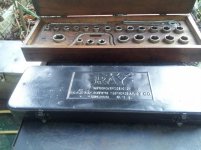
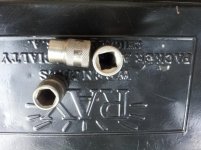
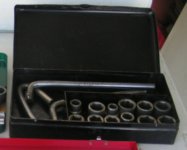
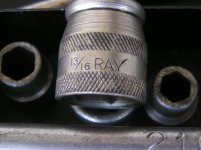
Not sure which came first, a proper shoulder on the socket or on the fastener. Years ago had the debate with crusty old men with grease under their nails, and the way they figured, much of the first standard parts and tools were for locomotives, not cars. Most of the tech. migrated from the rail yards. You had a lot of cast components being held together at machined locations, meaning the mating location for the fasteners were drilled and machined flat on the fastener side, nut on one piece, bolt on the other. Spread washers, plate, lock, grip, I doubt they were universally used or their necessity was understood. So the drilled hole location was necessarily recessed somewhat after drilling to produce a flat surface for the nut or bolt, or not. So, welded thin wall sockets could fit, grip and hold, but they didn't have much in the way of strength. Enter the forged socket, and it had the strength advantage, but the early efforts at chamfer and shoulder were probably hit or miss. Throw in the fact those brittle mainly iron fasteners were flat or nearly so, but not shouldered and contacted on the whole face at once, and that sorta gets you to why they were the way they were. At least that's what these old guys thought, could of just been dumb and dumber chewing the cud and washing it down with beer, that went on a lot.