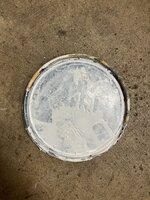
I own a house where the prior owners were, by my standards, extremely picky interior decorators. Many rooms are painted a bit different shade of yellow/tan and a few other colors in some odd optimization. Eventually I will repaint all close color groups rooms to common colors to reduce the number of colors needed for touchup etc. BUT I have a lot of old (~8+ years old) paint cans now. Several are going bad. It is a pain and expensive to color match these for paint touchup and wall repairs given age and paint company reformulations. Plus I have younger sons who inevitably do little boy things to damage parts! They are now mostly past their peak destruction years ... but there is backlog of touchup work that is now needed.
Does it make sense to pour remaining salvageable LaTeX paint in better sealed cans while I still can do so? Could this give me more shelf life if stored cool and relatively stable temp? I was thinking about transferring paints to wide mouth glass mason jars (stored in mostly dark and heated but cool basement) and labeling. I thought those might seal better at the rims/top with glass being impermeable and inert to store better. Or would I be better off buying new paint cans to transfer the paints into? New paint cans are surprisingly expensive (!) AND I noticed that newer black plastic paint cans with metal caps are also not faring well in long term storage. I am not sure if this is due to the cans being worse than previous generations or post 2010 ish reformulated paints having poorer shelf life. I understand that a clean can lip is absolutely necessary to seal well. But the can coatings on metals do not seem to work well and allow the tops to corrode/oxidize and that then damages or ruins the paint while cutting down storage life. Is it possible that 100% plastic cans could be better or perhaps better quality coated metal cans than what the paints (mostly upper grade) came with?
Would something else be better than glass mason jars with sealed screw lids for storage? Glass seems ideal, but I am not sure the lids will prove any better. But I noticed you can buy stainless lids with seals for Bell Mason jars and could go that way. Is doing anything more exotic like displacing air in the top with nitrogen also worthwhile?
Also, a related question. Is it better to color match old paint for limited repairs to compensate for age and fading, or to stick to standard colors? I am leaning toward the latter since the manufacturers might try to more carefully maintain those base colors over time.
Does it make sense to pour remaining salvageable LaTeX paint in better sealed cans while I still can do so? Could this give me more shelf life if stored cool and relatively stable temp? I was thinking about transferring paints to wide mouth glass mason jars (stored in mostly dark and heated but cool basement) and labeling. I thought those might seal better at the rims/top with glass being impermeable and inert to store better. Or would I be better off buying new paint cans to transfer the paints into? New paint cans are surprisingly expensive (!) AND I noticed that newer black plastic paint cans with metal caps are also not faring well in long term storage. I am not sure if this is due to the cans being worse than previous generations or post 2010 ish reformulated paints having poorer shelf life. I understand that a clean can lip is absolutely necessary to seal well. But the can coatings on metals do not seem to work well and allow the tops to corrode/oxidize and that then damages or ruins the paint while cutting down storage life. Is it possible that 100% plastic cans could be better or perhaps better quality coated metal cans than what the paints (mostly upper grade) came with?
Would something else be better than glass mason jars with sealed screw lids for storage? Glass seems ideal, but I am not sure the lids will prove any better. But I noticed you can buy stainless lids with seals for Bell Mason jars and could go that way. Is doing anything more exotic like displacing air in the top with nitrogen also worthwhile?
Also, a related question. Is it better to color match old paint for limited repairs to compensate for age and fading, or to stick to standard colors? I am leaning toward the latter since the manufacturers might try to more carefully maintain those base colors over time.
Last edited: