rshimizu12
Well-known member
Does anyone make a pex crimp tool for small spaces.? Perhaps there crimp tool that crimps from the side. Or has angled tip for crimping....?


Good luck, that's insanely tight.I am thinking 1 to 4 inches of clearance

tool looks like the red crimper hereOetiker clamps. Spend as little or as much as you want on the pliers. In tight spaces I like the ones that ratchet and "trap" the sides of the clamp.

Does anyone make a pex crimp tool for small spaces.? Perhaps there crimp tool that crimps from the side. Or has angled tip for crimping....?
This is what I was suggesting in the 2nd post.tool looks like the red crimper here
 www.milwaukeetool.com
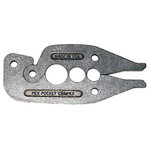
I have that too and have that with my general tools in case of an emergency because its small but not that small like the op seems to need.I've got an oddball pex tool that's basically a set of steel jaws that you use a pair of vice grips to slowly close, in turn crimping the copper ring. So, you can get weird angles / spaces.
But, I've never used it.
That is very pricey and why the expansion over crimp?
M12 FORCE LOGIC Press Tool Kit with Jaws | Milwaukee Tool
MILWAUKEE® M12™ FORCE LOGIC™ Press Tool Kit with Jaws is the lightest press tool with a one-handed, in-line design. The cordless press tool features a one-handed, in-line design
I'd do expansion before crimp, though. Unless the tubing is already in
Yes, I know it's expensive. To be fair, a budget wasn't statedThat is very pricey and why the expansion over crimp?
Better flow rates since the pipe expands to fit over the fitting, instead of the fittings reducing the ID of the pipe.That is very pricey and why the expansion over crimp?
I have heard they are terrible to use. Need tons of room and they are a lot of effortMight look into a manual extender since I do that not for a living.
They also suffer from the same issue as first generation cordless expanders, in that they don't rotate. Not rotating the die with every expansion effort leads to unevenly expanded PEX, which is a large source of leaks.I have heard they are terrible to use. Need tons of room and they are a lot of effort
Yep, that's it! I thought it might be possible to use the vicegrips 90* offset from the crimping tool, thus being usable in spots where there isnt enough space for the normal long handled tool.I have that too and have that with my general tools in case of an emergency because its small but not that small like the op seems to need.
Its a bit cumbersome to use for me but it saved the day a few times.
It also helps that it does 1/2,3/4&1”.
Note that not all Pex is designed / rated to be expanded and use the expansion style fittings. Make sure you have the proper pipe if you go the expansion route. It's rare to find it around here you're talking existing work. New construction is more split, but the compression style is still more common since the pipe and fittings are cheaper.Might look into a manual extender since I do that not for a living.
Yes pics would be nice and I like your idea of using offset vice grips which I did not thought about.Yep, that's it! I thought it might be possible to use the vicegrips 90* offset from the crimping tool, thus being usable in spots where there isnt enough space for the normal long handled tool.
Also, angled head crimpers are available.
Don't think the OP has added any pictures, so it's tough to say what exactly the constraints are.
Might just go right back to soldering copper to get the maximum flow then.I have heard they are terrible to use. Need tons of room and they are a lot of effort
What a roller coaster!Might just go right back to soldering copper to get the maximum flow then.
Thanks for the info.
This here.With some planning ahead, maybe crimp your connection first, then move it in to the confined space. I did that in a few places when replumbing my house last winter.
Show pictures of what you’re trying to do.
Yeah and sometimes my brain is switched off.What a roller coaster!

Don't use pex from the diverter/temp control to the head. That should be copperYeah and sometimes my brain is switched off.
My high flow shower/spout required 3/4” copper between the fixtures but in my infinite wisdom I feed the whole thing with 3/4” pex.
So there goes the flow.
Brushed up on my soldering skills on my current job which also provided me with more than ample 3/4” copper pipes so its tempting.
The expansion PEX is larger. I have the crimper that I bought to replace a couple of hose bibs that froze and it was fine. Then I used it to install two water filters and by the time I installed two ball valves and four 90's, even though it was 3/4, it wasn't much larger than 1/2 copper and the pressure in the house dropped off considerably. It's really not that noticeable now unless someone runs a sink or flushes the toilet while someone else is in the shower, but before we got used to it, it sucked. I replaced the water heater a couple months ago and a plumber buddy loaned me his expansion tool and some PEX and the fittings, that type of 3/4 PEX was about the same size as the copper and it was so much nicer to work with that I will buy my own if I have another plumbing fiasco come up.That is very pricey and why the expansion over crimp?
Don't use pex from the diverter/temp control to the head. That should be copper
Expansion and contraction between two fixed points that are likely behind something ridgid like tile. At least that's how I've understood itWhy is that a concern? Not aware of that one and have fed the head with pex on a few. (Hope I didn’t screw something up!)
You didn't screw anything up. Though the PEX will flow a TINY bit less than copper, the difference isn't significant downstream of a shower valve. The only place this matters is on a bathtub install where the pipe going down from the valve to the spout must be copper. Otherwise the small restriction of PEX may allow the showerhead to drip while the tub is being filled.Why is that a concern? Not aware of that one and have fed the head with pex on a few. (Hope I didn’t screw something up!)
Fair point, but there's plenty of room for the PEX to curve into a C, and in any case neither the valve nor the wall elbow are rigidly connected to the tile. Both should be screwed to the framing.Expansion and contraction between two fixed points that are likely behind something ridgid like tile. At least that's how I've understood it
I bet basically no one puts a curve in.... Straight shot between a rigidly mounted valve and (hopefully) drop earYou didn't screw anything up. Though the PEX will flow a TINY bit less than copper, the difference isn't significant downstream of a shower valve. The only place this matters is on a bathtub install where the pipe going down from the valve to the spout must be copper. Otherwise the small restriction of PEX may allow the showerhead to drip while the tub is being filled.
Fair point, but there's plenty of room for the PEX to curve into a C, and in any case neither the valve nor the wall elbow are rigidly connected to the tile. Both should be screwed to the framing.
Well, I'm not one to suggest following in my footsteps (that hardly ends well for anyone, most of all myself), but in my last tub/shower I installed a niche between the diverter valve and the shower heads, so there was no straight path up anyway. The shower before that had the diverter facing each side, and I sweated in copper 90 degree stub-outs into that to turn them up and arc into my drop ears.I bet basically no one puts a curve in.... Straight shot between a rigidly mounted valve and (hopefully) drop ear
Yeah I did that once and it was “discovered” by the customer.Don't use pex from the diverter/temp control to the head. That should be copper